
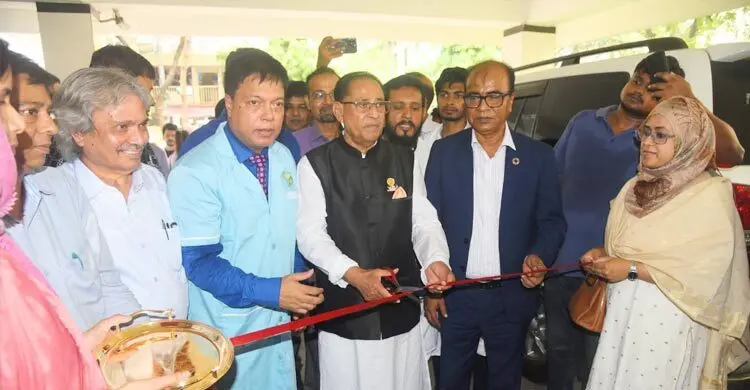
Veterinary medical teams will give first aid and advice at sacrificial animal markets across the country, Fisheries and Livestock Minister Md Abdur Rahman has said.
The minister said this at the Department of Livestock Services (DLS) premises in Dhaka on 13 June, at the launch of the medical services programme for sacrificial animal markets.
This year a total of 1,752 veterinary medical teams will work at 19 markets in Dhaka and at 1,082 permanent and 2,016 temporary sacrificial animal markets across the country. The teams will help buyers choose healthy animals and advise on the health of animals brought to market. Agent banking services of various banks will be available at the markets, and the DLS hotline 16358 is open for emergencies.
Hide training and market rules
To ensure hide quality, 31,799 professional and non-professional meat processors have been trained in skinning and preserving the hides of sacrificial animals properly. Posters, leaflets, courtyard meetings, TV talk shows and radio programmes are under way to encourage people to sacrifice animals at designated places while protecting the environment, and to remove sacrificial waste. Special attention will be paid so that neither buyers nor sellers are harassed unnecessarily, and enough law enforcement personnel will be deployed at the markets.
As in previous years, a farmer who sells an animal from his own home will not have to pay the market levy (hasil). A farmer who wants to take animals to a distant market cannot be forced to unload them on the way. If someone sells an animal on the way to market, lease collectors cannot forcibly take a toll or levy from him. Markets must not be set up on highways or anywhere they could disrupt traffic, and vehicles carrying sacrificial animals will be given priority on roads and bridges so that animals are not held up and no artificial shortage is created.
Law enforcement agencies and district administrations have been asked to take the necessary steps to ensure the safety of animals and sellers while livestock are transported by road, rail and waterway, and to prevent the hijacking of trucks carrying sacrificial animals.
Source: Jagonews24. First published in Bengali on The Agro News.
Comments
(0)