
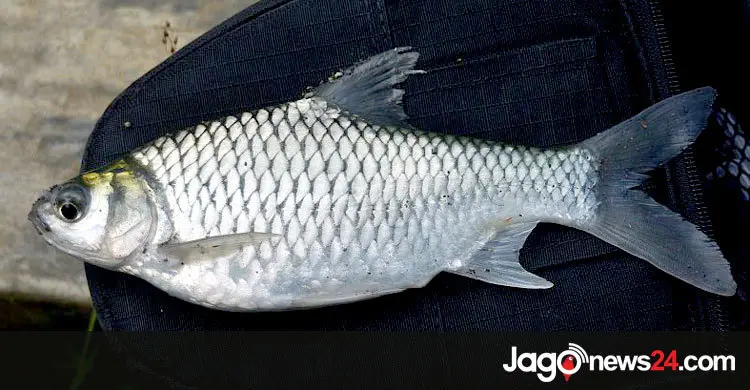
Thai sarputi is a fish species from Southeast Asia. It was imported into Bangladesh from Thailand in 1977. It looks like the native sarputi, but its colour is brighter and more attractive.
Features
Thai sarputi is very tasty. It is a hardy, high-yielding fish that can survive in adverse conditions, even in warm water with little oxygen.
Where to farm it
Countless ponds, ditches and water bodies are scattered across the country. Most low-income farmers have one or two medium-sized ponds or ditches near their homes, which are dry for much of the year. With a little renovation, these unused village ponds can easily be made fit for farming.
Production
Compared with rui-type carps, Thai sarputi gives higher output at much lower cost, in less time and with simpler management. It can also be farmed very successfully alongside improved species in mixed culture. In six months a Thai sarputi fry grows to an average of 200–250g, and the fish can be farmed twice a year in the same pond.
Pond size and preparation
A pond of 5 to 30 decimals is suitable. A larger one does no harm, but it is better if it does not exceed one acre. The depth should be 1.5 to 2 metres, or three to four haat.
The pond must be well prepared before stocking. In the dry season, drain all the water and dry the bottom soil in the sun for 10–15 days, then plough it. If the pond cannot be dried, steps must be taken to kill predatory fish and other harmful animals.
Lime and fertiliser
Apply quicklime at 1kg per decimal. Seven days after liming, apply 4kg of cow dung, 150g of TSP and 100g of urea per decimal. Spread the fertiliser on the pond bottom and mix it well into the soil with a spade, then fill the pond with water.
Stocking
Once you are fully sure there is enough plankton, the fish's natural food, in the pond, stock 60–65 Thai sarputi fry of 1.5 to 2 inches per decimal.
Feeding
Every morning and afternoon, scatter rice bran or wheat bran across the pond as supplementary feed at 4 to 6 per cent of the total weight of fish in the pond. If food runs short, immediately apply 150–200g of urea and TSP per decimal. Thai sarputi generally likes soft grass, so small amounts of duckweed, water lettuce, napier grass and banana leaves can be given every day.
Netting and harvest
Net the pond once a month to find the average weight of the fish and increase the amount of feed gradually.
After five to six months, each fish will weigh an average of 200–250g. It is then fully ready for market and can be sold for at least Tk 80 a kg.
Source: Jagonews24. First published in Bengali on The Agro News.

Comments
(0)