
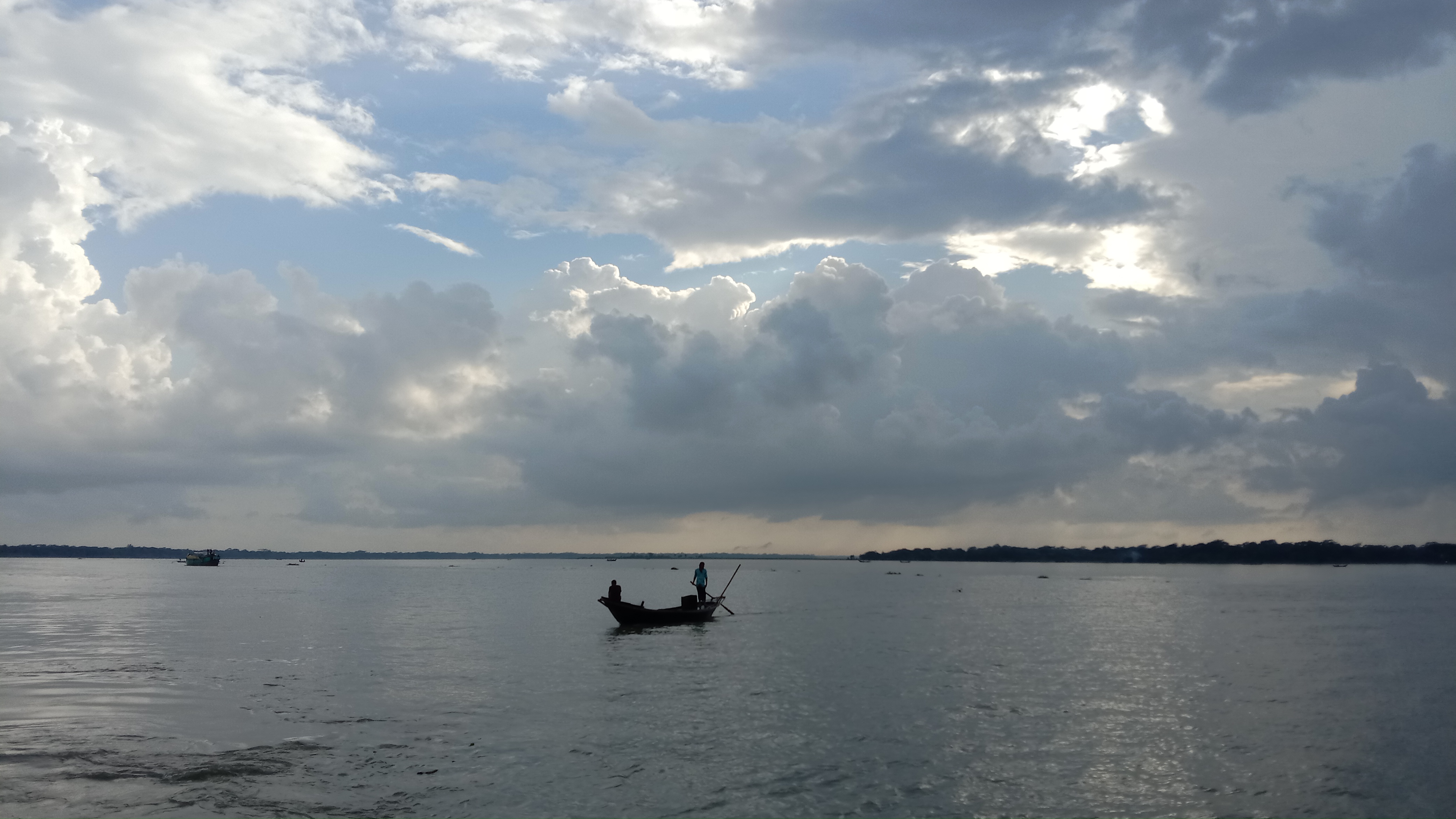
A joint task force detained 150 fishermen and seized 35 trawlers on the Payra river in Taltali upazila of Barguna district in an overnight drive that ran until dawn on Friday, 24 October 2025. According to the fisheries department, the fishermen were caught fishing in breach of the government's 22-day ban on hilsa fishing, which is imposed every year so that mother hilsa can spawn in safety.
The drive was carried out by a joint team of the upazila administration, the fisheries department, the Coast Guard and the river police, Jagonews24 reported at 12:54 pm that day. The owner of each trawler was fined Tk 1,000, and all the seized trawlers were ordered to be kept in the custody of local union parishad members until 12 midnight on Friday.
How the overnight drive unfolded
The fisheries department said that, as the end of the ban drew near, many fishermen were getting ready to go out on the river ahead of time. Acting on a tip-off, several agencies of the administration jointly began a continuous drive at different points on the Payra river on Thursday night, according to the department's account carried in the report.
During that drive, 150 fishermen were detained together with 35 trawlers. The fishermen and their boats were then brought to the Joyalbhanga area of Taltali upazila. The report does not name any of the fishermen, does not say exactly where each trawler was stopped and does not give any quantity of fish found on board; none of those details is added here.
The penalty imposed on the spot was a fine of Tk 1,000 on the owner of each trawler. The trawlers were not handed back at once: officials ordered that they remain in the custody of local union parishad (UP) members until 12 midnight on Friday. The report does not say which officer or court imposed the fines, or under which provision.
What the officials said
Sebak Mondal, the Taltali upazila land officer, described the operation to Jagonews24. "These fishermen were caught red-handed while fishing during an all-night drive on the Payra river," he said. "Legal action against them is under way for the offence of breaking the ban to protect mother hilsa."
The Barguna district fisheries officer told the paper that all the agencies involved had worked on the ban from its first day. "The district administration, the upazila administration, the fisheries department, the river police and the Coast Guard have been active from the start to make sure the ban is properly enforced," he said. "Our drives will continue until the ban ends."
The account that the fishermen were fishing during the ban comes from these officials and the fisheries department. The report carries no statement from the detained fishermen or from the owners of the trawlers.
The 2025 ban ran from 4 to 25 October
The Jagonews24 report closed with a line saying that the government had imposed the 22-day ban from 12 October to 2 November. Those were not the dates of the 2025 ban. At a press conference at the Ministry of Fisheries and Livestock on 29 September 2025, the ministry announced that the Department of Fisheries would run its special drive to protect mother hilsa from 19 Ashwin to 9 Kartik 1432 in the Bengali calendar, that is, from 4 to 25 October 2025, Desh Rupantor reported that day. The Bengali edition of The Daily Star had reported the same dates a day earlier, quoting the Barishal district fisheries officer, and on 9 October it wrote that the ban would stay in force until 25 October.
The Taltali drive therefore took place on the last nights of the 2025 closure. That fits the fisheries department's own remark that fishermen were preparing to go out because the ban was nearing its end.
The ministry said the 22 days had been set to include the four days before the Ashwin full moon and the three days after the new moon. It said the period was fixed in line with the views of the Bangladesh Fisheries Research Institute (BFRI), other agencies concerned and, in particular, fishermen. Because both the full moon and the new moon of the breeding season are important for spawning, the period was drawn to take in both phases so as to protect as much breeding as possible. The programme was called the Mother Hilsa Conservation Campaign 2025.
Under the government notification, catching, transporting, storing, marketing, buying, selling and exchanging hilsa were banned throughout the country for the 22 days. The ministry said the notification had been issued under rule 13 of the Protection and Conservation of Fish Rules 1985, made under the fish conservation law of 1950, to make sure that mature hilsa could lay their eggs safely. Hilsa fishing was also to stop completely for the same 22 days in the sea, along the coast and in the estuaries.
The ministry added three more measures for the period:
- the entry of fishing trawlers from outside the country's waters would be strictly controlled;
- dredging in the rivers would be stopped completely;
- besides fisheries officers, the navy, the river police, the Coast Guard, the air force and all other law-enforcement forces would take part in the drive.
Rice for fishing families and the record of 2024
During the closure the government supports fishing families with rice under the Vulnerable Group Feeding (VGF) programme. For 2025, the ministry said, 620,140 fishing families in 165 upazilas of 37 districts would receive VGF rice at 25 kg per family. It put the total rice needed for the whole programme at 15,503.50 tonnes.
The ministry also gave the results of the previous year's campaign, which ran for 22 days from 13 October to 3 November 2024. In that period, it said, 2,169 mobile courts were held and 9,813 drives carried out; 54.86 tonnes of hilsa were seized, 612.11 lakh metres of net were destroyed and Tk 75.27 lakh was collected in fines.
Citing BFRI research, the ministry said that because of the 2024 ban, 52.5 per cent of mother hilsa had been able to spawn safely, and that this had added 44.25 thousand crore jatka and fry to the hilsa stock. The fry and young fish, called jatka, that come from these eggs grow into mature hilsa in later seasons.
Enforcement in the first days of the 2025 ban
Early in the 2025 closure, The Daily Star's Bengali edition reported on 9 October that fishing was still going on in the hilsa sanctuaries despite the ban, at night in the main breeding areas of the Meghna, Kalabadar, Tentulia and Bishkhali rivers. Its reporters saw seasonal fishermen casting nets in small canals and rivers; when law-enforcement teams came, they pulled in their nets and escaped through narrow channels.
Figures from the Barishal divisional fisheries office for 4 to 7 October, quoted in the same report, showed that 57 people had been sentenced to prison terms and Tk 2.08 lakh had been collected in fines. By then 604 kg of hilsa and illegal nets worth Tk 1.82 crore had been seized. Fisheries officials had inspected 832 markets, 810 landing stations and 467 river points.
A senior assistant director of the divisional fisheries office told the paper that large-scale drives were being run with drone surveillance and mobile courts. An upazila fisheries officer in Hijla said that with drones they could now watch fishermen from several kilometres away and move quickly. The Barishal district fisheries officer said seven people had been arrested with locally made weapons after patrol teams were attacked by fishermen in Bakerganj and Hijla at the start of the month.
The report also said that in Patuakhali and Barguna many fishermen were catching hilsa in the dark despite strict drives by the local administration. The Taltali upazila nirbahi officer told the paper that local people in the Fakirhat area had caught some fishermen and handed them over to the administration.
What the law provided on 24 October 2025
The hilsa closure is set under the Protection and Conservation of Fish Act 1950 and the Protection and Conservation of Fish Rules 1985, which the government made under section 3 of the Act. Rule 13 of the Rules was inserted in 2005 and replaced in 2011, according to a text of the Rules compiled by the Department of Fisheries up to October 2011.
In that compiled text, rule 13(1)(b) bars anyone from catching hilsa, and from carrying, transporting, offering, selling, exposing or possessing it, throughout the country along with the hilsa spawning grounds during the peak spawning period. It marks the spawning ground with four boundary points: Mayani Point in Mirsarai, Chattogram, in the north-east; Paschim Sayed Awlia Point in Tazumuddin, Bhola, in the north-west; North Kutubdia Point in Cox's Bazar in the south-east; and Lata Chapali Point in Kalapara, Patuakhali, in the south-west. The 2011 text set the period at 11 days around the first full moon of the Bengali month of Ashwin; by 2024 and 2025 the closure ran for 22 days, as the ministry's announcements show. Rule 13(2) says that fish caught with any kind of gear in breach of the rule may be seized and forfeited.
On the date of the Taltali drive, the penalties were those set by the Protection and Conservation of Fish (Amendment) Ordinance 2025 (Ordinance No. 34 of 2025), dated 29 June 2025, which said it would take effect at once. Its section 4 amended section 5 of the 1950 Act. As amended, the breach of any rule made under section 3, or of any prohibition notified under section 4, is punishable with rigorous imprisonment for a term which may extend to two years, or with a fine which may extend to Tk 5 lakh, or with both. Before the Ordinance, the prison term could not be less than one year and could extend to two years, and the fine could extend to Tk 5,000.
The same Ordinance raised the penalties for offences involving current jal, the fine monofilament net that the Act bans under section 4A. Manufacturing, fabricating, importing, marketing or storing current jal became punishable with rigorous imprisonment which may extend to three years and a fine which may extend to Tk 10 lakh. Carrying, transporting, owning, possessing or using it became punishable with rigorous imprisonment which may extend to one year, or a fine which may extend to Tk 2 lakh, or both. The Ordinance also defined a "fish sanctuary" and gave the government power to declare such sanctuaries, where catching fish or other aquatic organisms is barred permanently or for a set period.
Section 6 of the Act allows a person specially empowered by the government to arrest without warrant anyone committing a breach of the rules if that person's name and address are unknown or are refused, and says that fishery officers empowered by the government have the same powers of search, seizure and investigation as a police sub-inspector. Under section 7, offences under the Act are cognizable, a court takes cognizance only on the complaint or report of a fishery officer or of a police officer not below the rank of sub-inspector, and they are tried by a Metropolitan Magistrate or a Magistrate of the first class, who may try most of them summarily.
The hilsa and its October spawning
The hilsa, or ilish (Tenualosa ilisha), is the national fish of Bangladesh and belongs to the herring family Clupeidae, according to Banglapedia, the national encyclopedia. Its body is strongly compressed, with silvery scales. It can reach 60 cm in length, though most fish caught measure 35 to 40 cm, and a large hilsa weighs about 2.5 kg. Females grow faster and are usually larger than males, and the fish matures in one to two years.
The hilsa is anadromous: it lives and feeds in the sea and swims up the rivers to breed in fresh water. Its eggs float freely, the larvae hatch in the rivers, and the young grow in the river channels before going down to the sea to feed and grow, returning as mature adults. A large female may produce up to two million eggs, Banglapedia says. The fish spawns more or less all year, with a minor season in February and March and the major season in September and October, which is why the main closure falls in Ashwin and Kartik.
Young hilsa are known as jatka. Banglapedia describes them as hatching from the floating eggs and staying in the nursery grounds, where they feed and grow; in about six to ten weeks they reach about 12 to 20 cm and start descending to the sea. Catching jatka is also restricted under the fish rules, because it is very damaging to the hilsa fishery.
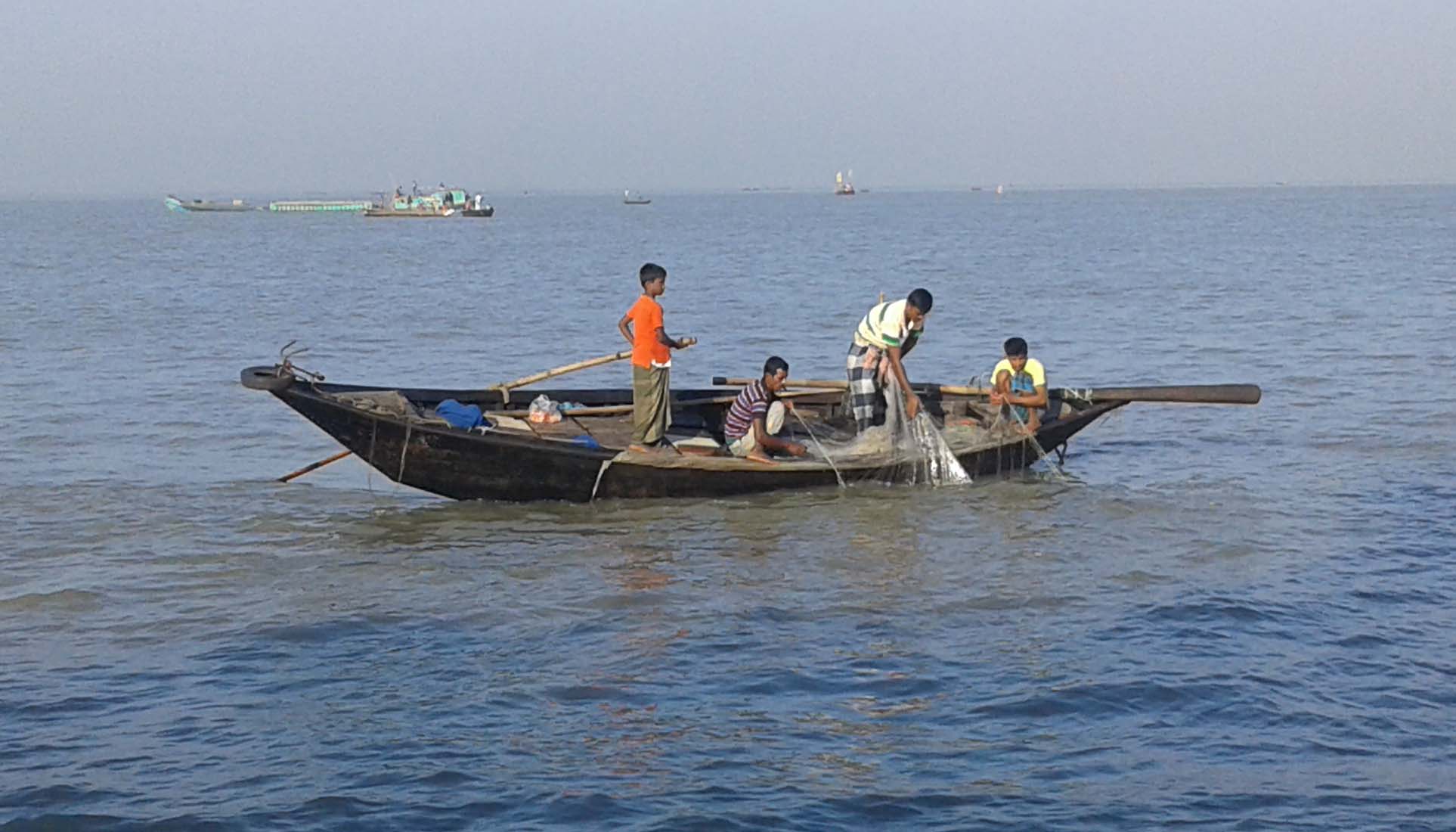
Banglapedia records that until about 1972 the hilsa fishery was mainly in the upstream rivers, among them the Padma, Meghna, Karatoya, Rupsa, Shibsa and Payra, and that it later became concentrated in the lower rivers, the estuaries, the coast and the sea. Adult hilsa are caught mainly with fixed or drifting gill nets known as chandi jal. In the rivers fishermen usually work from non-mechanised boats in teams of one or two boats, while at sea they use mechanised boats or trawlers of 10 to 13 metres.
Hilsa output before the 2025 season
Hilsa output had fallen before the 2025 season. In April 2025 The Daily Star reported, citing Department of Fisheries data, that production in the 2023-24 season had dropped to its lowest in seven years. According to the Barishal Divisional Fisheries Office, output stood at 5.29 lakh tonnes, around 42,000 tonnes less than the previous year.
The paper set out the earlier figures, which had shown a steady rise:
- 2018-19: 5.32 lakh tonnes
- 2019-20: 5.50 lakh tonnes
- 2020-21: 5.65 lakh tonnes
- 2021-22: 5.66 lakh tonnes
- 2022-23: 5.71 lakh tonnes
- 2023-24: 5.29 lakh tonnes
Experts quoted in the report linked the fall to erratic weather, overfishing, shallowing river routes and the growing effects of climate change. A scientific officer at BFRI's riverine station in Chandpur said bad weather had kept many fishermen from going out to sea or into the rivers, and pointed to a navigability crisis on the main hilsa migration routes, among them the Meghna-Tetulia, the Payra-Bishkhali and the Sundarbans. "Hilsa typically prefer water with a depth of over five metres, but in many of these routes, depth has fallen to two or three metres, obstructing the natural migratory flow," he said.
A deputy director of the Barishal divisional fisheries office told the paper that fewer hilsa were coming through the main migration routes. He said many fishermen still caught jatka illegally and that guarding hundreds of kilometres of rivers and estuaries was nearly impossible.
Taltali, the Payra and Barguna's rivers
Taltali is one of the newer upazilas of Barguna. According to the upazila's official portal, the government's ECNEK meeting decided in January 2012 to divide Amtali upazila and create Taltali, and the notification was issued on 25 April 2012. The upazila covers 258.94 square kilometres. It is bounded on the west by the Burishwar river and Barguna Sadar upazila, on the east by the Andharmanik river and Kalapara upazila of Patuakhali, on the south by the Tengragiri forest and the Bay of Bengal, and on the north by the Kachupatra and Pachakoralia rivers and Amtali upazila.
The 2011 census counted 88,004 people in Taltali, 43,707 men and 44,297 women, the portal says, with a density of 541 people per square kilometre. The upazila has one police station, seven union parishads, 13 markets and 48 cyclone shelters, and people travel mainly by road and by trawler on the rivers. Its main rivers are the Andharmanik, the Burishwar, the Pachakoralia and the Payra. Its sights include Ashar Char, Fatrar Char, Sonakata sea beach, the Fatrar forest and eco park and a Rakhine village.
The area's history is tied to the Payra. The portal records that Gulishakhali thana, which covered today's Amtali, Barguna and Kalapara, was founded in 1859 with its headquarters at Gulishakhali village on the bank of the Payra. River erosion later forced the thana headquarters to move to Amtali, and Amtali became an upazila in 1982.
Barguna district covers 1,509.42 square kilometres and had 804,777 people at the 2011 census, according to Banglapedia. It became a district in 1984. Banglapedia lists the Bishkhali, Baleshwari, Burishwar, Payra, Andharmanik and Gajalia as its notable rivers. The Burishwar, 158 km long and under tidal influence, flows past Amtali into the Bay of Bengal; the Bishkhali, 96 km long, runs past Betagi, Bamna, Barguna and Patharghata and joins the sea through the mouth of the Baleswar-Haringhata. Banglapedia lists agriculture as the main source of income, at 62.67 per cent.
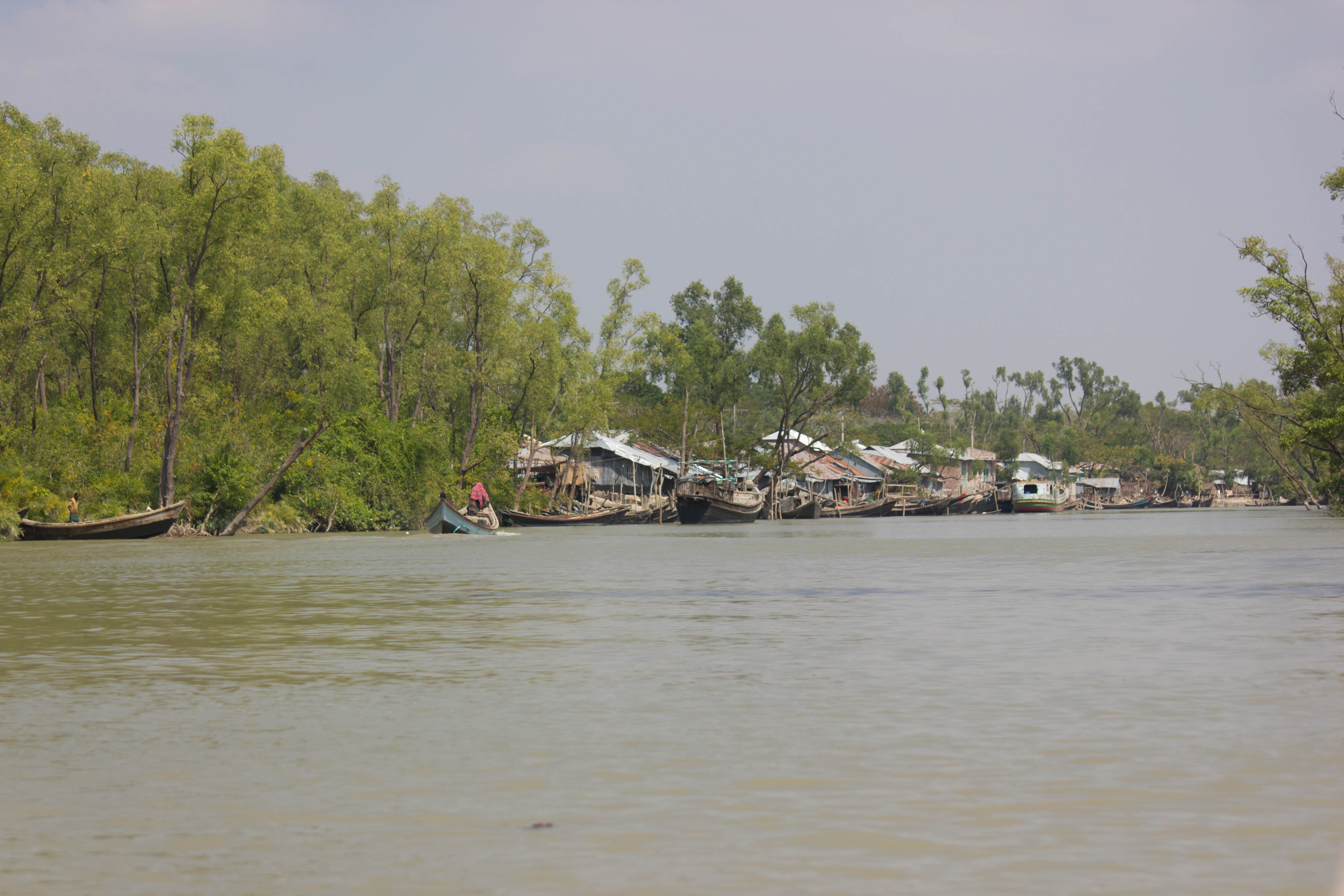
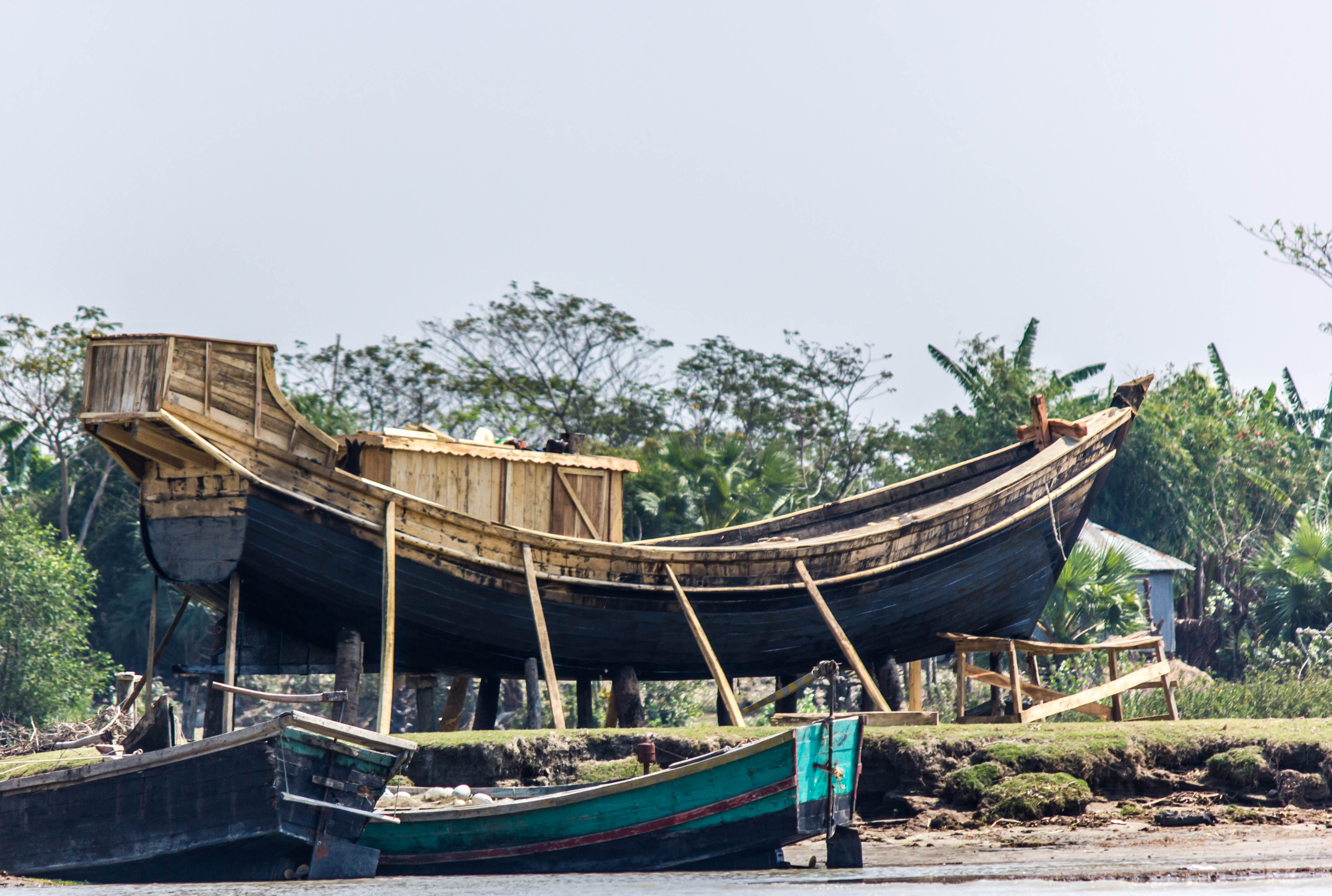
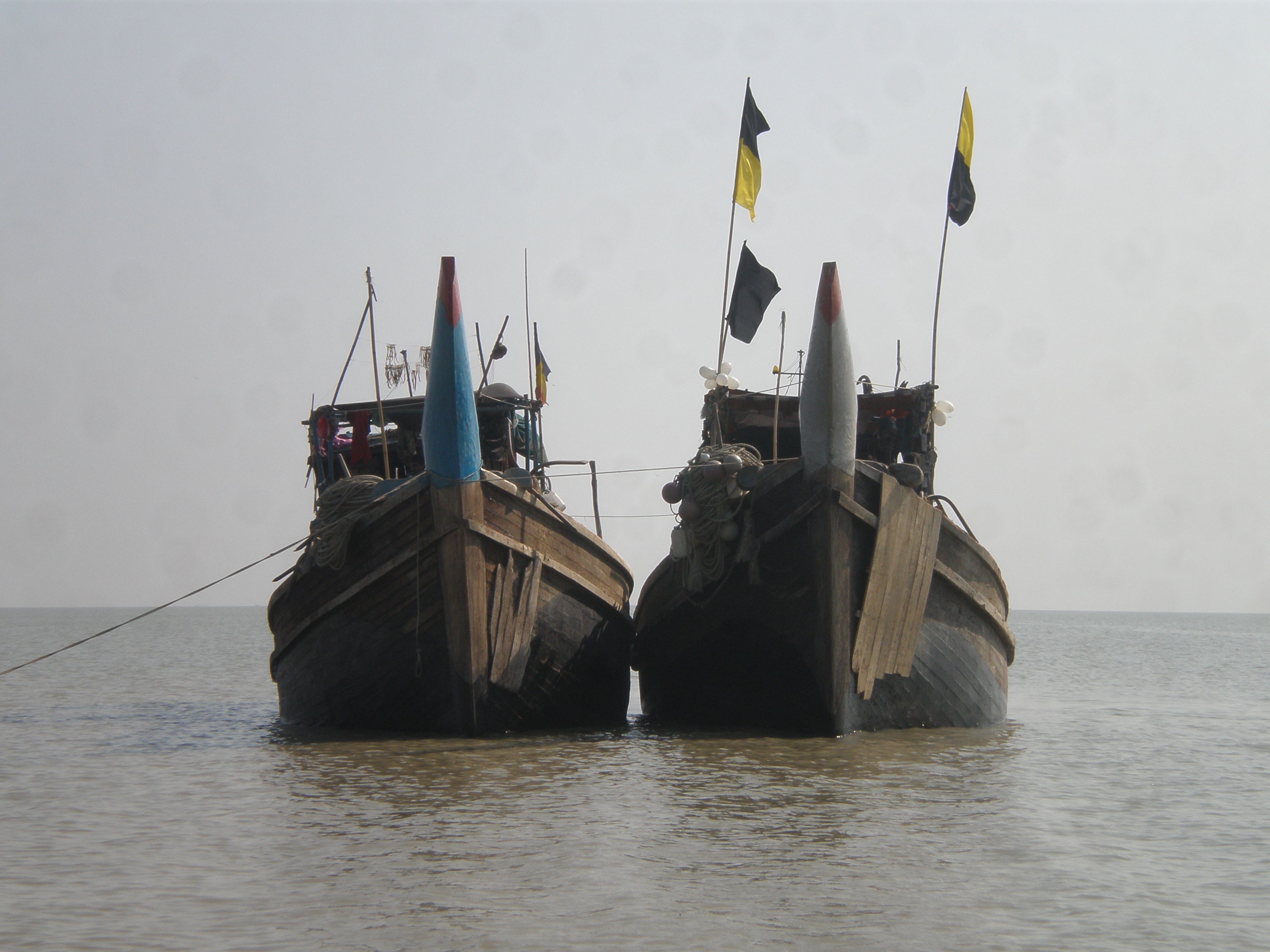
Photo: Arabi Abrar / Wikimedia Commons (CC BY-SA 4.0). The top picture shows the Payra river at Payrakunja in August 2022, as background; it is not a picture of this drive.
Sources: Jagonews24 ("150 fishermen detained, 35 trawlers seized for fishing in defiance of the ban", 24 October 2025), Desh Rupantor ("Hilsa fishing closed for 22 days from 4 October", 29 September 2025), The Daily Star Bangla (28 September 2025 and 9 October 2025), The Daily Star ("Hilsa production hits seven-year low", 7 April 2025), Laws of Bangladesh (Protection and Conservation of Fish Act 1950; Ordinance No. 34 of 2025), the Department of Fisheries' compiled text of the Protection and Conservation of Fish Rules 1985, Taltali upazila portal, Banglapedia.
Comments
(0)