
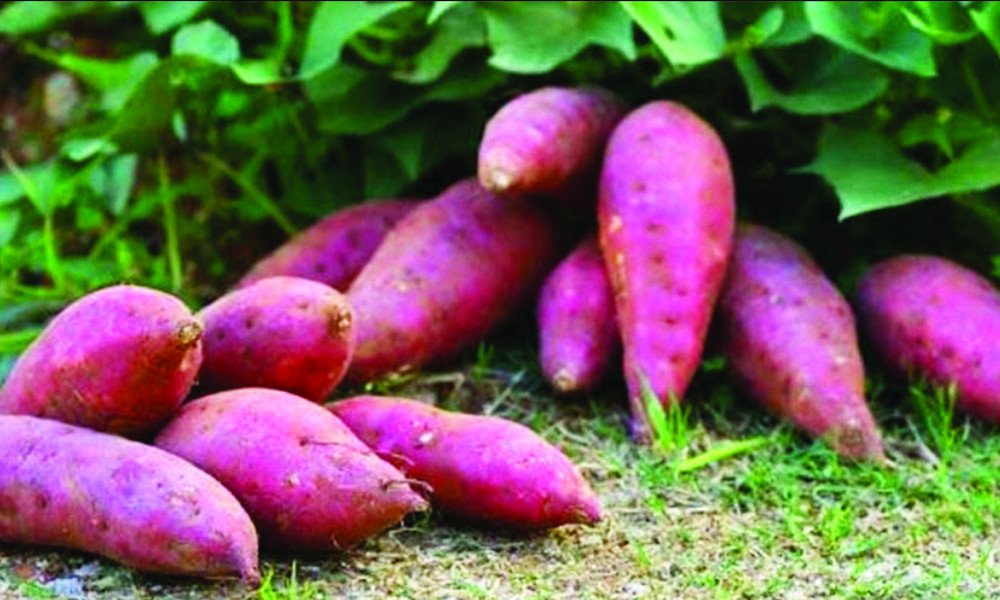
Sweet potato is a neglected crop in Bangladesh, yet it is a staple food in China, Papua New Guinea and several African countries. In many countries, including the United States, it sells for more than the ordinary potato. Its nutritional value, market price and use as a vegetable and as cattle fodder make it highly important, and by the FAO's reckoning it is an important crop worldwide.
The sweet potato is a creeping herbaceous vine. Its scientific name is Ipomoea batatas and it belongs to the Convolvulaceae family. In a tropical climate it is perennial and, once planted, survives year after year. Growing sweet potato is profitable in the rabi season, while in the kharif season it pays to grow it as a vegetable, leafy green or fodder.
Varieties and planting material
Many varieties of sweet potato are grown in different parts of Bangladesh, and improved varieties yield far more than local ones. Tripti and Kamala Sundari are two high-yielding varieties, giving 30–40 tonnes per hectare. They have purple stems, dark green leaves, white tuberous roots and light yellow flesh, with a small amount of carotene.
For vines or cuttings, growers can contact agricultural research centres and sub-stations, the horticulture farm of Bangladesh Agricultural University and various nurseries of the Department of Agricultural Extension (DAE).
Planting
The right time to plant cuttings is from mid-October to mid-November. The land should be ploughed deep, with repeated ploughing to make the soil fine and break up large clods, which helps the sweet potato grow well.
Each cutting should be 25–30 cm long. Top cuttings, with the terminal bud, give the highest yield; where top cuttings are available, middle cuttings are better not planted. Old vines should not be used as cuttings. When planting a middle cutting, make sure the base end goes into the soil.
With rows 60 cm apart and cuttings 30 cm apart (for improved varieties), a hectare needs 55,555 cuttings and a bigha 7,705. Two or three nodes of each cutting should be laid flat 3–4 cm deep in the soil, with the upper part bent upright. If the weather is dry at planting, trim a few leaves, and water the base of the cuttings if the soil lacks moisture.
Fertiliser, irrigation and care
Most farmers in the country apply too little fertiliser to sweet potato. To get the desired yield, fertiliser must be applied in balanced doses: per hectare, 10 tonnes of cow dung, 140 kg of urea, 100 kg of TSP and 150 kg of potash. Where land lacks sulphur or zinc, the required fertiliser should be applied.
Sweet potato is a drought-tolerant crop, so it generally needs little irrigation, though it can be watered when needed. The field must be kept weed-free until the vines cover it.
Harvest
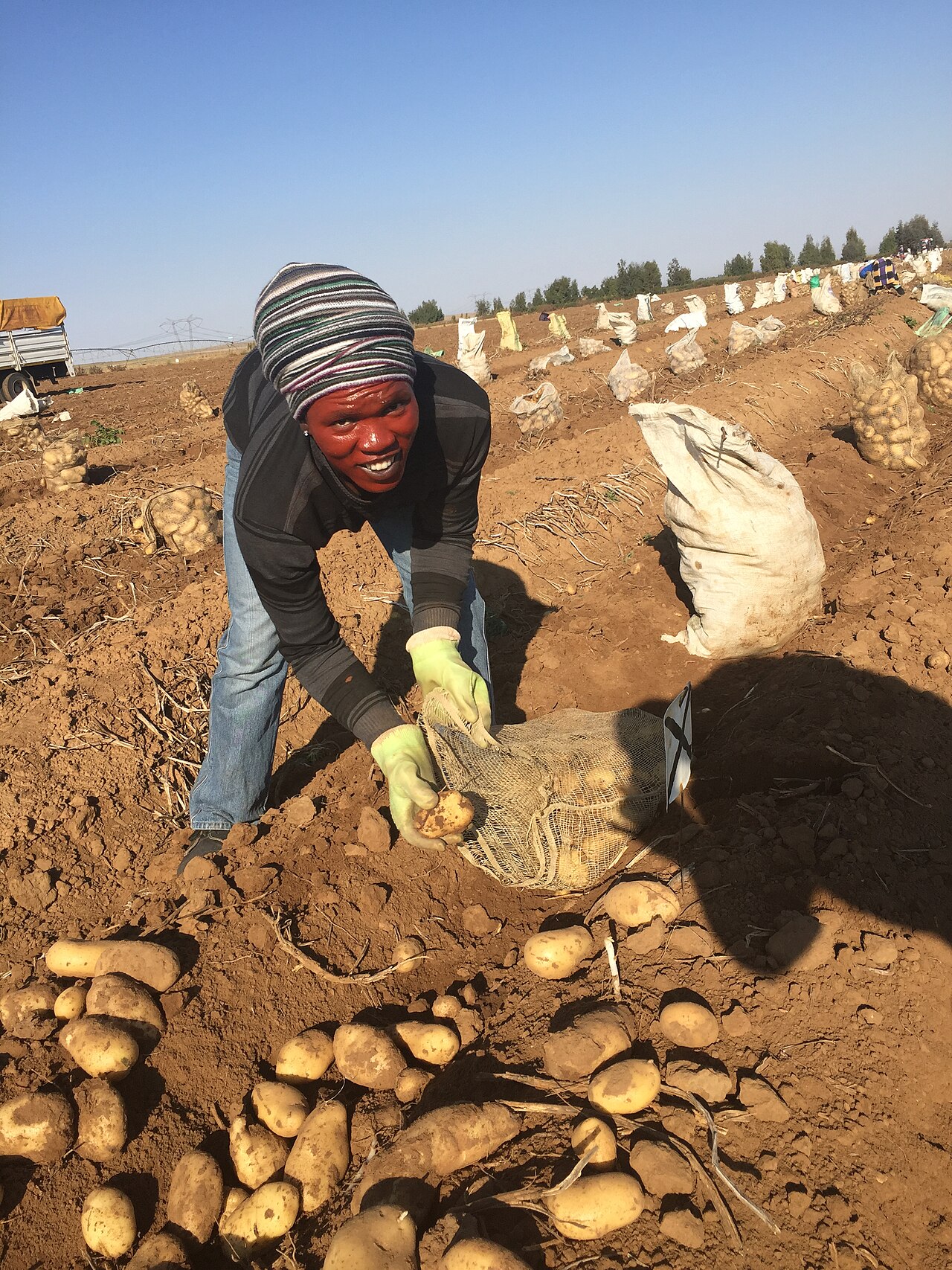
The crop is harvested after about 150 days, but it should be lifted by March. Rather than yanking the tubers off the vine, cutting them free with a sharp knife before storing keeps them from disease.
Source: Staff Correspondent. First published in Bengali on The Agro News.
Comments
(0)