
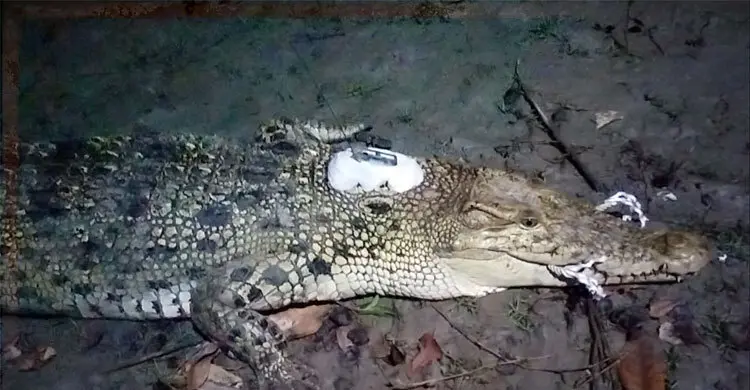
One of four crocodiles fitted with satellite tags in the Sundarbans is roaming the confluence of the Panguchi, Baleshwar and Kacha rivers, causing fear among fishers in the area who collect shrimp fry.
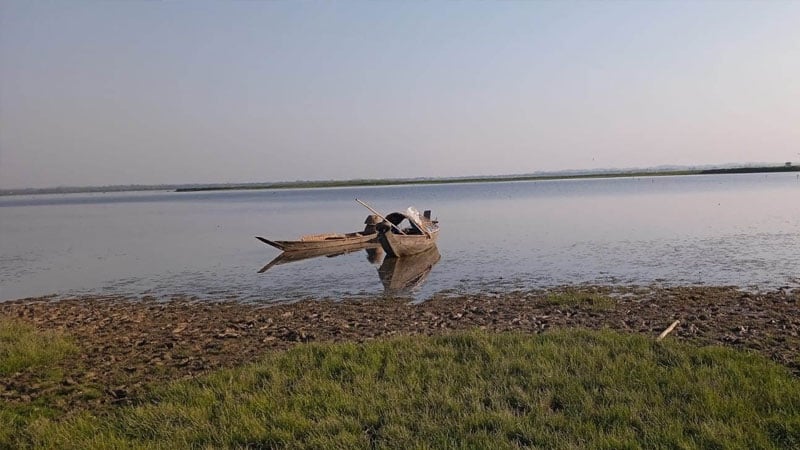
The four crocodiles were tagged and released into the Sundarbans to study the behaviour and movements of saltwater crocodiles. Three have stayed inside the forest, but one has come out towards human settlements. According to the latest information, it has passed Mongla and Rampal from the Sundarbans and is now at the meeting point of the Panguchi at Morrelganj, the Kacha in Pirojpur and the Baleshwar at Sarankhola.
Howlader Azad Kabir, officer in charge of the Karamjal Wildlife Breeding Centre in the Sundarbans, confirmed this, citing the expert team monitoring the crocodiles' movements.
Fry supply hit
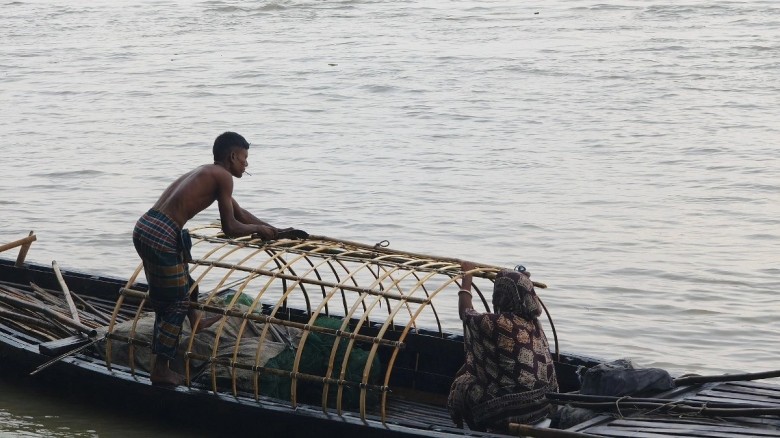
As news of the crocodile's presence spread, fear took hold among fishers who collect fry of bagda (tiger) shrimp. Many are not going into the river, and the depots in Morrelganj and Sarankhola that supply the fry, known locally as "white gold", now face a shortage.
Selim of the Sannyasi launch ghat depot in Morrelganj said panic spread among the fry collectors once word got out that the crocodile was at the three-river confluence, and so the depot is short of fry.
About 100 km in 12 days
Howlader Azad Kabir said satellite tags had been fitted to four saltwater crocodiles of the Sundarbans. Three later returned to the forest, but one travelled a long way and is now at the confluence of the Panguchi at Morrelganj, the Kacha in Pirojpur and the Baleshwar at Sarankhola. The crocodile covered about 100 kilometres in just 12 days, and he said it had made the long journey in search of a safe environment for itself.
He added that no detailed study had been done before on where and how the crocodiles of the Sundarbans move. "Every year we breed crocodiles artificially and release them into the Sundarbans. So far about 200 crocodiles have been released from the wildlife breeding centre. But their movements and where they go afterwards have never been studied. That is why this research is being done with satellite tags, and it lets us keep a better watch on the crocodiles' behaviour and movements."
Kazi Muhammad Nurul Karim, divisional forest officer of the Sundarbans East Forest Division, said satellite tags had earlier been used for research on turtles, but this is the first such study of crocodiles in the Sundarbans. The crocodile research project has been taken up by IUCN and GIZ, and the crocodiles will be monitored for the next year. The four crocodiles in the study are two females and two males.
Source: Jagonews24. First published in Bengali on The Agro News.
Comments
(0)