
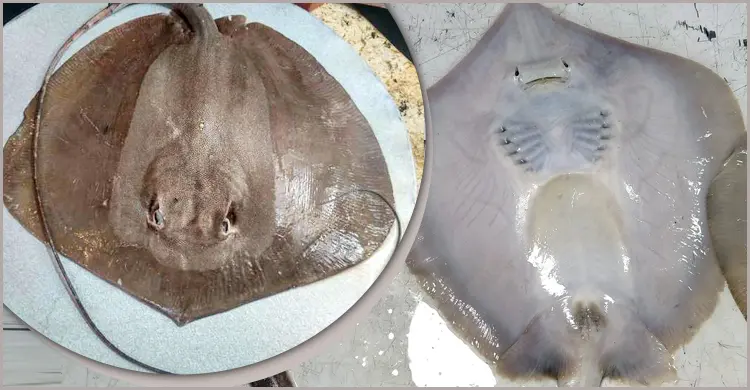
Many species of creatures live on the seabed. Some are calm by nature, while others rule the sea. In shape and characteristics these animals are in no way behind land animals, and in ferocity, speed and hunting skill they often outdo them. One lazy creature of the sea is the shapla pata fish, known in English as the stingray.
It is a fish of the shallow waters of temperate seas and spends most of its time inactive. It is so lazy that it stays still even when fine grains of sand settle on its body. At high tide, however, stingrays drift along with the tide.
Body and hunting
Its scientific name is given as Myliobatoidei. Stingrays are essentially carnivorous and live for 15 to 25 years. The fish grows up to 6.5 feet in height and can weigh up to 790 pounds.
The stingray's eyes are at the front of its body, while its mouth, nostrils and gills are on its underside. Its sharp eyes are very useful for catching prey. Its outer covering has electrical sensors called the ampullae of Lorenzini. When prey comes close, it overpowers it with an electric shock. It can also crush the shells of small creatures and oysters with its teeth.
When a stingray moves, it swims by rippling its body like a wave, and other stingrays move around with it. Its whip-like tail helps it swim and is also very useful for protection.
The spine on a stingray's tail is highly venomous, and anyone who comes into contact with the venom risks death. According to Greek mythology, Odysseus, the great king of Ithaca, was struck down by his son Telegonus with the venom of a stingray's tail.
Protected but still sold
Stingray skin is economically very valuable. In many countries it is used to make shoes, bags and other goods.
The International Union for Conservation of Nature (IUCN) has listed the stingray as a near-threatened species. Stingrays play an important role in protecting marine biodiversity. In Bangladesh, catching and selling stingrays is a punishable offence.
Despite the ban, the fish is being sold openly. Those concerned fear that if the killing continues, the fish may one day become extinct. The fisheries department has also called for a ban on all fishing in the stingray's habitats.
Source: Jagonews24. First published in Bengali on The Agro News.
Comments
(0)