
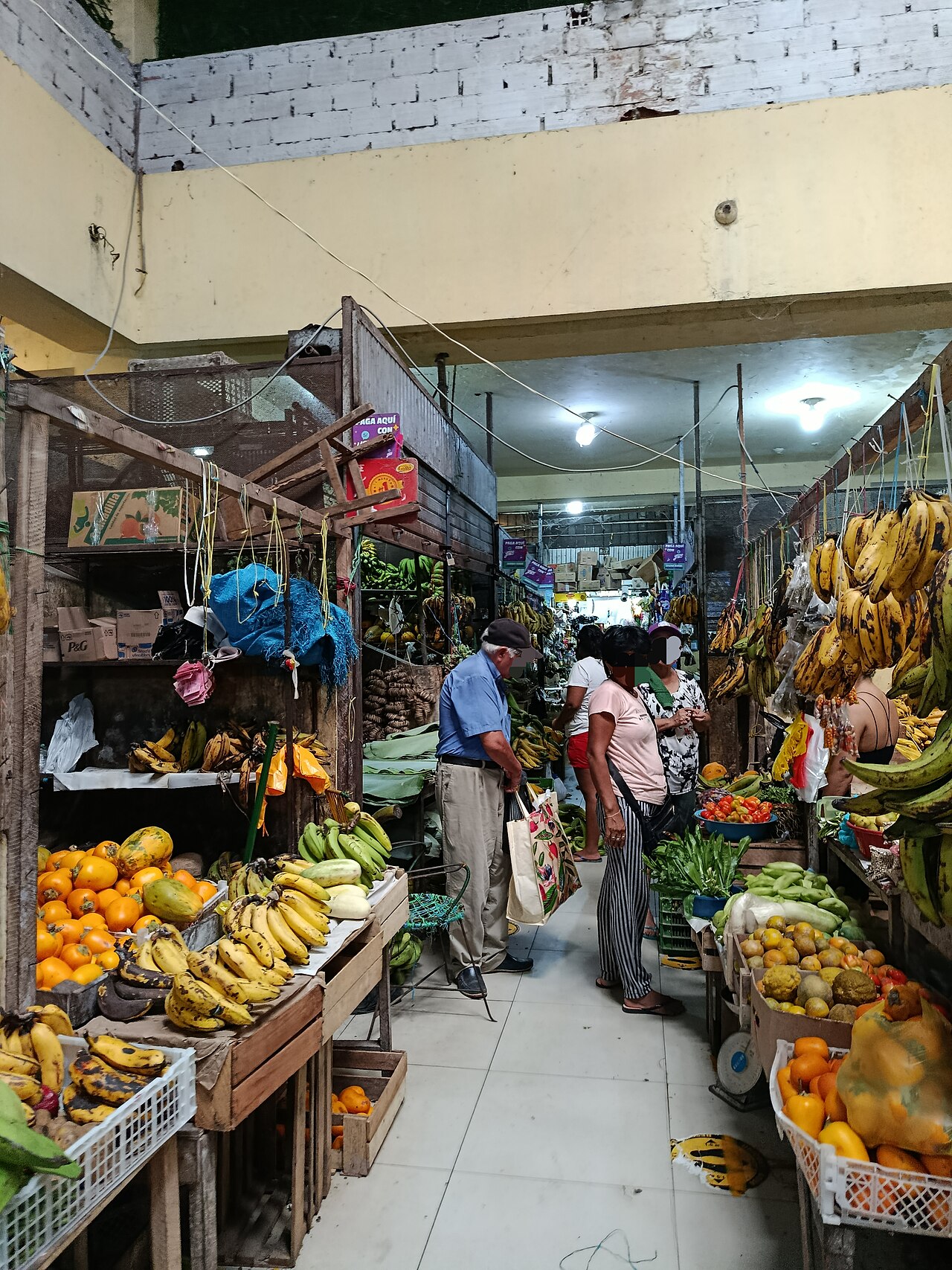
Diet surveys that only ask whether people ate a fruit, a vegetable or a fish can miss how much biodiversity is slipping off their plates, CGIAR researchers write in a piece published on 26 November by the network's Multifunctional Landscapes science programme. Under the common food-group scores, they point out, one banana counts the same as five native Amazonian fruits.
The World Health Organization lists diversity among the four principles of a healthy diet, defined as a wide variety of nutritious foods “within and across food groups”. Indicators such as the Household Dietary Diversity Score and Minimum Dietary Diversity for Women measure diversity between groups. Counting the distinct species a person eats, called dietary species richness, measures it within them. Studies in Nature Food in 2025 linked higher species richness to nutrient adequacy in low- and middle-income countries and to lower mortality in Europe, and plant species richness to lower greenhouse gas emissions and land use.
Colombia wrote the idea into national advice in 2025. Its family welfare institute (ICBF) and the University of Antioquia released a food guide built on biodiversity, food sovereignty and real, minimally processed food, drawn up with communities in 13 food territories: native fruits, roots and fish in the Amazon, potato, maize and quinoa in the Andes, fish, seafood and coconut on the Caribbean coast.
To check whether people actually eat that diversely, the researchers use ANQ-24, a non-quantitative 24-hour recall first developed and validated in Kenya by Tosin Akingbemisilu, Francis Oduor and Celine Termote of the Alliance of Bioversity International and CIAT. The interview takes 10 to 15 minutes, codes every food to its species, links it to food composition tables and yields several standard diet indicators from one recall.
The team is adapting the tool for sites in Peru, Colombia, Kenya and India. For Ucayali in Peru and Cumbal in Colombia, they merged food tables from Peru, Colombia, Ecuador and Brazil into a larger Amazonian database. The diet questions sit in the same survey as the landscape and household modules, so what a person ate can be linked to the farms, forests and practices around them.
The study in Ucayali, the authors write, shows how quickly local biodiversity can slip off the plate, and how food-group scores can miss it. If diversity is one of the pillars of a healthy diet, they argue, it should be measured both between food groups and within them.
Photo: Ángeles Nicolle / Wikimedia Commons (CC0)
Source: CGIAR

Comments
(0)