
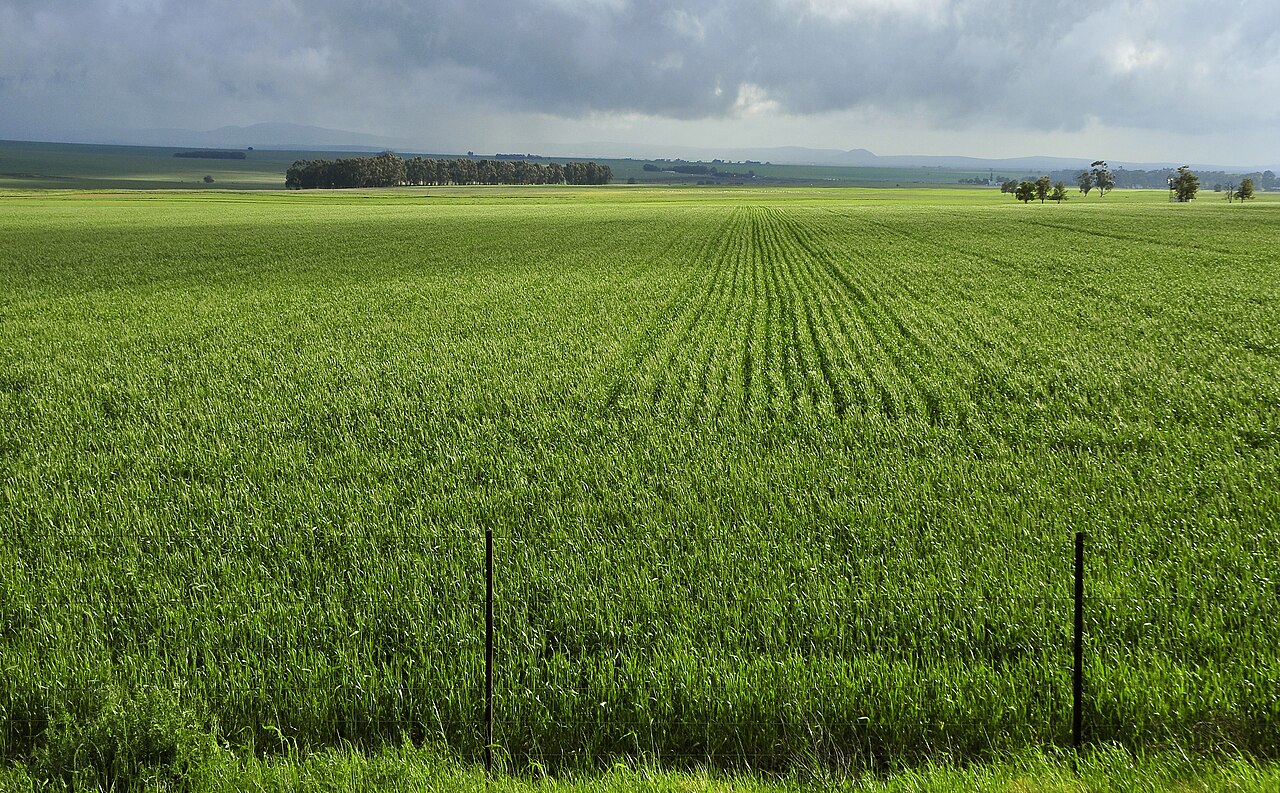
South Africa will probably need to import more wheat in the 2026-27 season than last year because its own harvest is in poor condition, Wandile Sihlobo of the Agricultural Business Chamber (Agbiz) writes in an analysis carried by FarmingPortal.
The Crop Estimates Committee puts the 2026-27 winter wheat crop at 1.8 million tonnes, down 8 percent on the previous season and the smallest expected harvest in eight years, after months of dryness and a smaller planted area. Sihlobo expects imports to rise to around 2.0 million tonnes from 1.8 million tonnes last season, in a marketing year that runs from October 2026 to September 2027, and says estimates may still change.
World wheat prices have climbed sharply. US hard red winter wheat traded below $300 a tonne through April but is now about $351, nearly 20 percent higher than at the end of April and roughly 56 percent up on a year ago. Sihlobo attributes the rise to disruption at Ukrainian shipping ports after Russian attacks, diesel shortages in parts of Russia and summer heat and drought in Europe.
He argues the problem is logistics rather than supply. The International Grains Council forecasts 2026-27 world wheat production at 820 million tonnes, 3 percent less than last season but well above the long-term level of about 790 million tonnes, with stocks expected at 278 million tonnes. If the disruptions ease, prices could get some relief, which would benefit importers such as South Africa.
On food prices, Statistics South Africa data show consumer food price inflation edged up to 0.7 percent in August from 0.6 percent in July, among the lowest levels since 2010, helped by a record 21.6 million tonne summer grain and oilseed crop. Sihlobo expects food inflation to stay moderate this year and possibly rise in 2027 if the forecast El Niño drought affects the next crop, which is planted from mid-October.
Photo: LBM1948 / Wikimedia Commons (CC BY-SA 4.0)
Source: FarmingPortal



Comments
(0)