
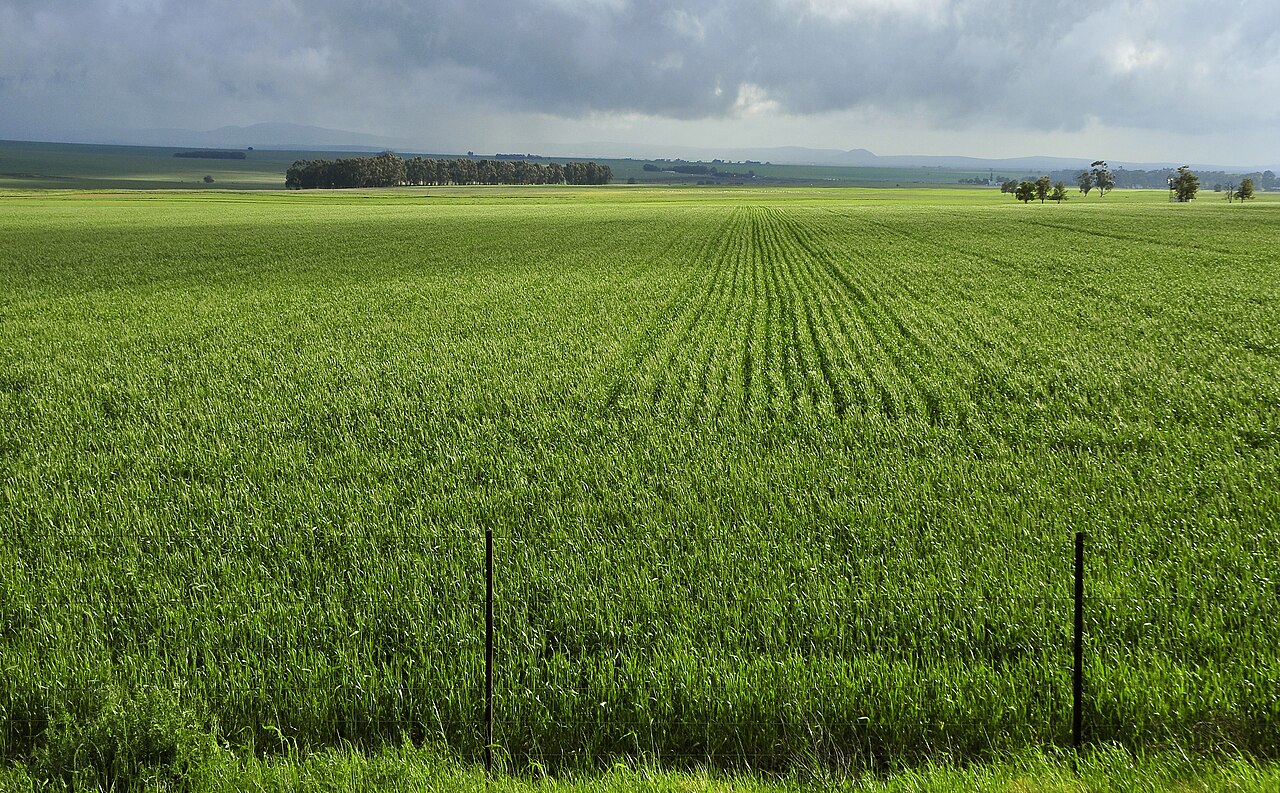
South African farmers are already paying for next year's harvest as diesel and fertiliser costs climb steeply, and a strong El Niño could turn it into an expensive crop that also yields less, according to an analysis published by FarmingPortal.
On the surface the country is comfortable: food and non-alcoholic beverage inflation was only 1.1% in August 2026, two good summer-grain seasons have left maize supplies ample, and above-normal rain in 2025/26 improved dams and soil moisture. But at farm level, diesel rose by about R2.94 a litre (0.05% sulphur) and R3.15 (0.005%) in September, and Central Energy Fund data in late September pointed to further under-recoveries of about R2.60 and R3.00 for October, which would take 0.005% diesel to around R33.05 a litre wholesale, above previous records.
Fertiliser is the other big exposure. The World Bank expects its fertiliser price index to rise by more than 30% in 2026, with urea up close to 60%, and South Africa imports more than 80% of its fertiliser. Grain SA estimates fertiliser at 30% to 50% of variable costs for grain and oilseed producers and diesel at 13% to 15%. Because crops harvested in early 2027 are financed, fertilised and planted in 2026, the analysis argues, those costs stay in the crop even if conflicts ease; a weaker rand magnifies them, so a 20% dollar price rise combined with a 10% fall in the rand means roughly a 32% local increase.
NOAA's Climate Prediction Center put the chance of a very strong El Niño in late 2026 and early 2027 at more than 90%, and South Africa's Department of Agriculture expects below-normal rain and higher temperatures across many areas this summer. The analysis stresses that El Niño raises risk rather than guaranteeing drought, but that higher costs spread over fewer tonnes push up the cost per tonne, so higher grain prices in a drought do not mean higher farm profits.
Wheat is a structural weak point: South Africa uses more than 3.5 million tonnes a year and imports roughly 40% to 50%, Grain SA says wheat area is at its lowest in 97 years, and the 2026 crop is estimated at about 1.76 million tonnes, some 7.5% below 2025, while canola has grown from about 34,000 hectares in 2010 to about 192,300 hectares. Poor harvests among rain-fed smallholders elsewhere in Southern Africa could also pull on South African grain, and higher costs reach poorer households through informal traders, who handle an estimated 40% of the country's food trade, at a time when 22% of households reported inadequate or severely inadequate access to food in 2025.
Photo: LBM1948 / Wikimedia Commons (CC BY-SA 4.0)
Source: FarmingPortal
Comments
(0)