
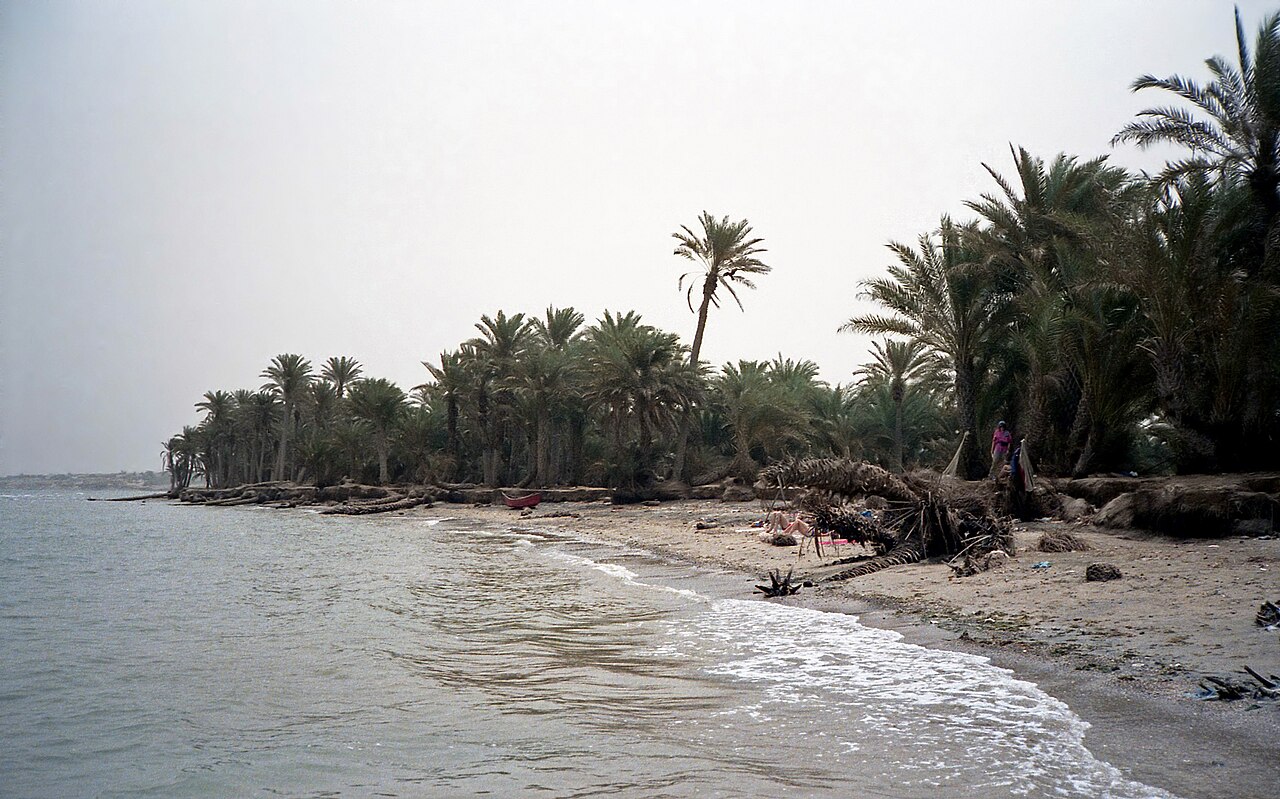
How far south of Makkah did the Prophet Muhammad (peace be upon him) travel to trade before his prophethood? Muhammad Tazammul Haque takes up the question in the sixteenth part of Prothom Alo’s "Lands of the Seerah" series. Khadijah, he writes, engaged him in trade and sent him to the market of Hubasha (Souq Hubasha), as recorded in Abd al-Razzaq al-San’ani’s al-Musannaf (hadith 9472).
The writer cites Hakim ibn Hizam, Khadijah’s cousin and a close friend of the Prophet in his youth. According to Ibn Sa’d’s al-Tabaqat, Hakim saw the Prophet at Hubasha: Khadijah had sent him with her servant Maysarah, and the two bought and sold cloth from al-Janad and other goods and returned to Makkah with a good profit. The market was held for eight days every year in the month of Rajab. In another account, Hakim himself bought al-Janad cloth from the Prophet there.
The writer also locates the market. Tihamah is the strip along the eastern shore of the Red Sea from Bab al-Mandab to the Gulf of Aqaba, and according to Yaqut al-Hamawi’s Mu’jam al-Buldan, Souq Hubasha was a market of Tihamat Asir. Historians place it at the head of Wadi Qanuna, where four valleys meet; the site, in today’s al-Qunfudhah district, is about 400 km from Makkah.
"Hubasha" means to gather, the writer explains. Ample water and dates drew many Arab tribes to this homeland of the Awsam tribe. Gold, graphite and kohl were important goods; there were large stores of wheat, dates and leather, and Yemeni cloth came from al-Janad. One account says Hakim ibn Hizam bought the Companion Zayd ibn Harithah at this very market.
The Prophet used to say he had seen no better employer than Khadijah, who always kept extra food aside as a gift for him and his companion on their return. The market thrived until 197 AH, the writer notes. That year the market supervisor appointed by the Abbasid governor of Makkah was murdered, and on the advice of Makkah’s jurists Hubasha was closed for good, like the other markets of the pre-Islamic era.
The Prophet’s link with Yemeni cloth lasted to the end of his life, Tazammul Haque writes. Anas ibn Malik reported that he once led the prayer wearing an embroidered Yemeni cloth (Musnad Ahmad, hadith 13787), and Aishah reported that he was shrouded in three white Yemeni sheets (Sahih al-Bukhari, hadith 1264).
Photo: Bernard Gagnon / Wikimedia Commons (CC BY-SA 3.0)
Source: Prothom Alo

Comments
(0)