
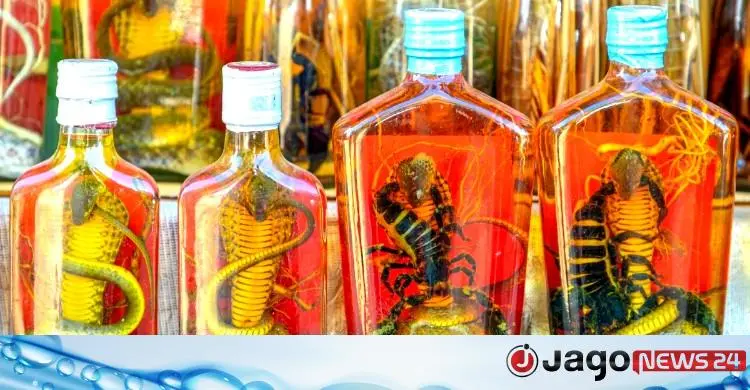
In the busy local markets of South-East Asia, rows of "snake wine" can be seen lined up on the front shelves of shops. The name gives away its speciality: a small snake inside a bottle of wine or spirit, which gives the drink a distinctive taste and smell.
It may make the skin crawl, but these clear bottles really do contain a dead viper coiled inside the liquor. The drink has been served at home, at ceremonies and in inns and restaurants in the region for more than 2,000 years. Used as a medicine or remedy in the healing houses of Chinese dynasties, snake wine became a favourite drink of South-East Asian people and an inseparable part of their culture.
From the Zhou dynasty to today
The practice of steeping a whole snake in clear spirit in a glass bottle dates back more than 2,000 years to the Western Zhou dynasty of China. Today it is popular in Vietnam, Laos, Thailand and southern China.
According to a Times of India report, it is served by steeping a snake in rice wine or wine made from high-quality grain. Sometimes scorpions, ginseng or local herbs are also added. The ethanol in the liquor breaks down the toxic proteins in the snake and destroys the venom's potency, so the drink carries no risk. For those who do not want a whole bottle, a smaller option is a snake cut into pieces and served in a small glass of liquor with its blood.
Medicine and status symbol
Its use began as a traditional Chinese medicine. Chinese medical practitioners and botanists have long regarded snake as a warming food that removes damp. In South-East Asia it is commonly believed to help with rheumatic pain and chronic fatigue and to improve blood circulation, and the region's folk tales describe the drink as a natural tonic.
Beyond medicine, snake wine is seen as a status symbol in local markets. Residents like to honour a guest at home by serving snake wine, and it is also sold in small bottles for foreigners to take home as a souvenir.
Source: Jagonews24. First published in Bengali on The Agro News.



Comments
(0)