
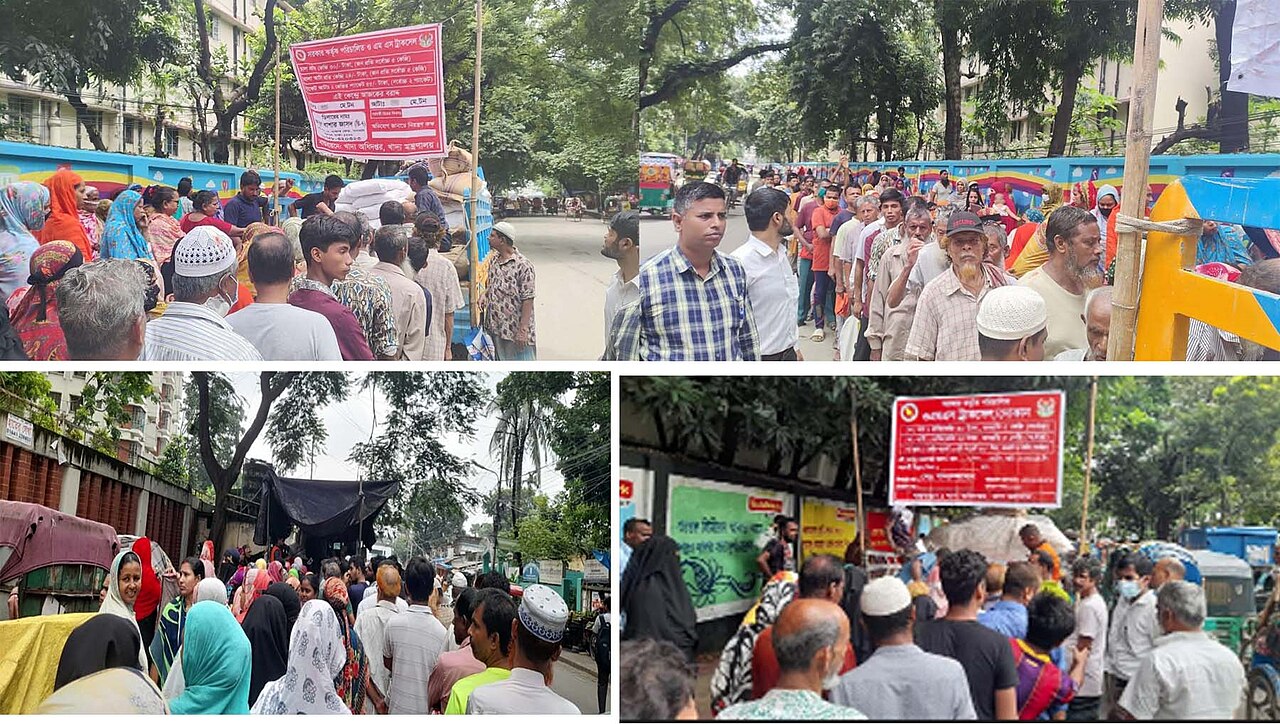
Economic reports forecast growth and falling inflation, yet low-income and middle-class households run out of money by the middle of the month, banker and economic analyst Shoeb Shamya Siddique writes in a Dhaka Post column. His central point is that falling inflation does not mean falling prices, only that prices are rising a little more slowly; purchasing power once lost does not come back by itself. The views are the writer's own.
He cites Bangladesh Bureau of Statistics figures: overall inflation fell to 8.27 percent in October and food inflation to 6.40 percent, the lowest in 54 months, but non-food inflation rose to 9.89 percent, the highest in 41 months. Wages grew 7.63 percent, below inflation. Quoting the World Bank's October update, he writes that growth fell to 3.4 percent last fiscal year, about 2.1 million people fell below the international poverty line, and the national poverty rate rose for a fourth straight year to about 22.5 percent.
On world markets, he notes that the Food and Agriculture Organization's food price index fell 1.2 percent in October from the previous month to 133.9 points, but was still 5.9 percent higher than a year earlier, with wheat and maize cheaper but rice and sugar dearer. Lower international prices rarely reach consumers, he argues, after passing through importers, wholesalers, traders and retailers, while syndicates, hoarding, middlemen and extortion on the roads add hidden costs at home.
He proposes several steps. First, strong national buffer stocks of rice, lentils, edible oil and sugar, built up by importing when world prices fall and released in a crisis. Second, wider OMS and TCB sales and a digital food card for low-income urban workers, with distribution outside working hours and online booking. Citing the World Bank, he writes that merging scattered food subsidies into family cards and better-targeted cash support could keep a further 2.85 million people out of poverty.
His third proposal concerns farmers directly: cold stores at upazila level, farmer cooperative marketing centres and more transport of farm produce by rail and water, so that farmers get fair prices and consumers pay less. He also calls for visible action against informal tolls and transport syndicates, a transparent digital database of prices from import to retail, and a three-month emergency market programme, a six-month food and protection plan and a three-year reform outline, with progress reported publicly.
Economic success, he writes, is not measured only in GDP, reserves or exports, but in whether a mother can give her child nutritious food and a worker can buy the family's groceries after a day's work. The lower-middle and middle classes, who are not on any poverty list, are breaking into savings, borrowing and quietly cutting back on their children's nutrition and medical care, he writes.
Photo: Press Information Department / Wikimedia Commons (public domain)
Source: Dhaka Post

Comments
(0)