
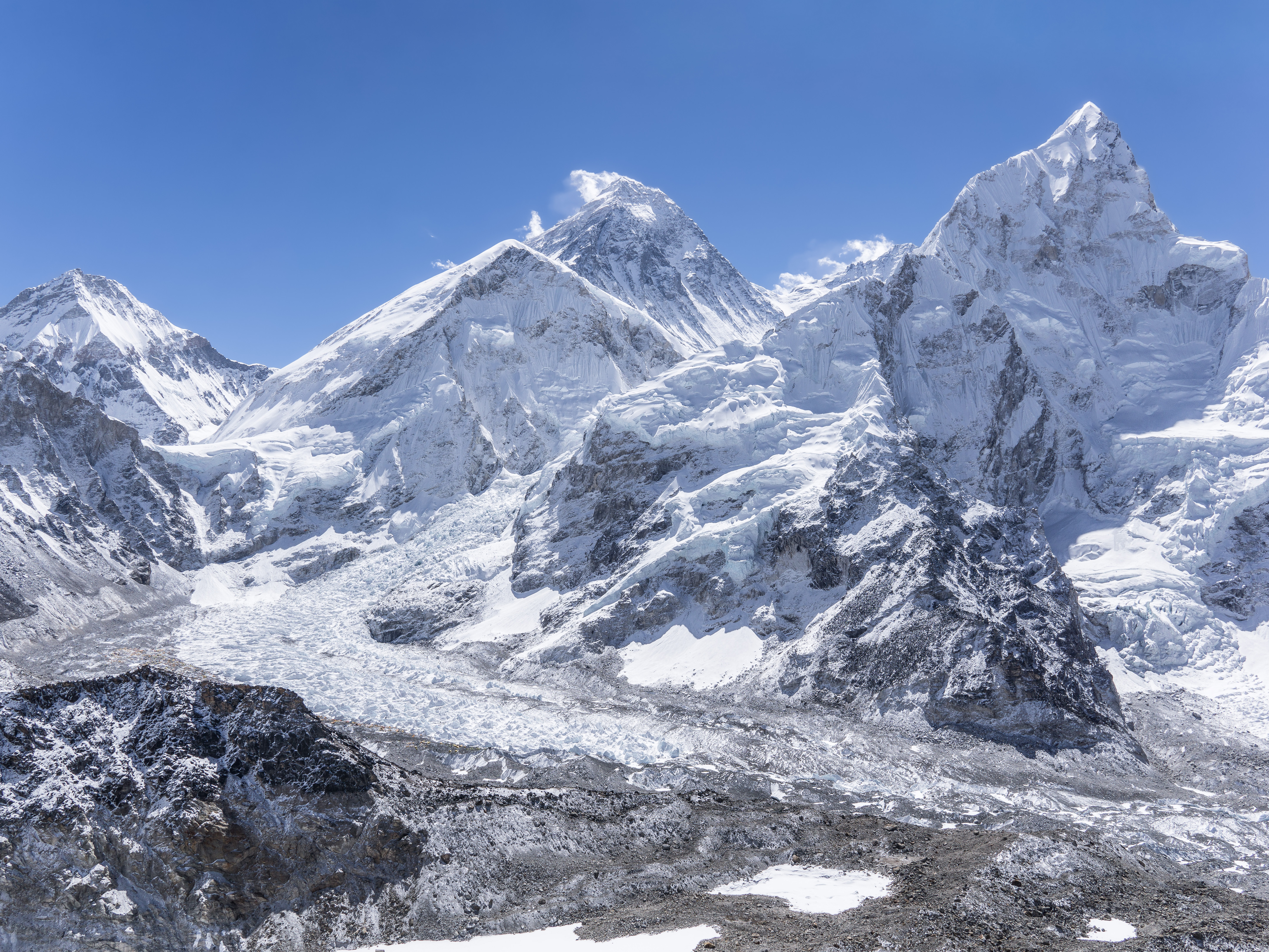
Ikramul Hasan Shakil, a 31-year-old mountaineer from a farming family in Bagchala village of Fulbaria union in Kaliakair upazila, Gazipur, reached the summit of Mount Everest on Monday, 19 May 2025. He had set out on foot from Inani beach in Cox's Bazar on 25 February and, by Jagonews24's account, walked about 1,372 kilometres through Bangladesh, India and Nepal before the climb. When the news reached Bagchala that afternoon, neighbours, relatives and people from far and near crowded into his family's home, Jagonews24 reported on 20 May.
Jagonews24 described the climb as a world record and Shakil as the seventh Bangladeshi to stand on top of Everest. Other reports of 19 and 20 May said the same about his place in that list, and bdnews24.com wrote that he had covered the distance from the sea to the summit faster than the Australian climber who first did it in 1990. How those claims were made, and what was still only a claim on the day, is set out below.
Joy in Bagchala village
The house in Bagchala filled up soon after the news arrived. Neighbours and relatives came first, and then ordinary people from other villages, Jagonews24's Gazipur correspondent reported. The family received a stream of congratulations, and the paper wrote that not only the family but the whole area was proud of the son of a farming household. With tears in her eyes, Shakil's mother told the visitors stories about him.
His mother told Jagonews24 that she had last spoken to her son on the Friday night before the summit and had been very anxious ever since. For three days she had hardly been able to eat for worry. She said she had prayed to Allah for his success and for his safe return, and she broke into tears when she heard that he had reached the top.
Neighbour Arif Hossain told the paper that Shakil had been very bright since childhood and that the people of the village had always been fond of him. "We got the news of his success just after noon," he said. "A son of our Bagchala village has conquered Everest, and we are very happy and proud. Shakil from our village has flown Bangladesh's red and green flag on Mount Everest, the highest peak in the world."
Another neighbour, Abdur Razzak, pointed at the family's homestead. "We could never have imagined that Shakil would climb so high from this broken house," he said. "Because of Shakil, people all over the world know our village today."
Kaliakair's Upazila Nirbahi Officer (UNO), Kawsar Ahmed, said he had learned of the summit through local journalists. "We are happy and proud of this achievement," he told Jagonews24. "We are trying in various ways to get in touch with him."
The eldest son of a farming family
Shakil was born in Bagchala and grew up there. He is the eldest son of the late Khabir Uddin, a farmer, and his wife, a homemaker, and he has two younger brothers, Sajib Ahmed and Sakib Ahmed. After their father died in 2019, their mother took charge of the household. Sajib farms the few bighas of land their father left, and Sakib works at a factory in the area, Jagonews24 reported.
The paper described the homestead in detail. It has three houses on three sides of a yard. The one on the northern plot is dilapidated, the one on the southern plot is used to keep the family's cattle, and the family lives in the house on the eastern side. It was this house that the neighbour had in mind when he spoke of a "broken house".
Shakil went to Bagchala Government Primary School, passed his SSC from Janata High School and his HSC from Pear Ali College. From an early age he was drawn to writing, reading and travel, and by May 2025 he had written six books on the Liberation War and on travel, according to Jagonews24.
Kaliakair and Fulbaria: the land Shakil comes from
Kaliakair is one of the upazilas of Gazipur district in Dhaka division. Banglapedia, the national encyclopaedia of Bangladesh, gives its area as 314.13 square kilometres and lists the Turag, the Bangshi and the Salda as its main rivers, with the Boali, Hawla, Ujan and Markaj beels and the Goala and Betjuri canals. It borders Mirzapur and Sakhipur upazilas to the north, Savar and Dhamrai to the south, Gazipur Sadar and Sreepur to the east and Mirzapur to the west. According to Wikipedia's entry on the upazila, Kaliakair thana was formed in 1923 and became an upazila in 1983.
Banglapedia's entry on the upazila records agriculture as the main source of income at 51.5 per cent, with services at 15.4 per cent and commerce at 13.63 per cent, and names paddy, jute, sugarcane and mustard as the main crops, with mango, jackfruit, banana, papaya, litchi, blackberry, pineapple and guava as the main fruits. About 8,400 hectares, or 26.73 per cent of the upazila, is forest land. The same entry lists Fulbaria among the upazila's unions and records that freedom fighters attacked a Pakistani army post at Uttar Para in the union during the 1971 war.
In the 2022 population and housing census of the Bangladesh Bureau of Statistics, Kaliakair had 694,608 people in 212,838 households, against 483,308 people in the 2011 census. Gazipur district as a whole covers 1,806.36 square kilometres and is home to Bhawal National Park, the Gazipur Safari Park and, in Kaliakair itself, the country's hi-tech business park.
From Inani beach on foot: the Sea to Summit walk
Shakil called the expedition "Sea to Summit". It was organised by the Bangla Mountaineering and Trekking Club, with the PRAN group as its title sponsor, Jagonews24 reported. He was also a youth advocate of the United Nations Development Programme (UNDP) in Bangladesh, as UNDP's press release of 25 February described him, and he used the walk to carry a message against plastic pollution.
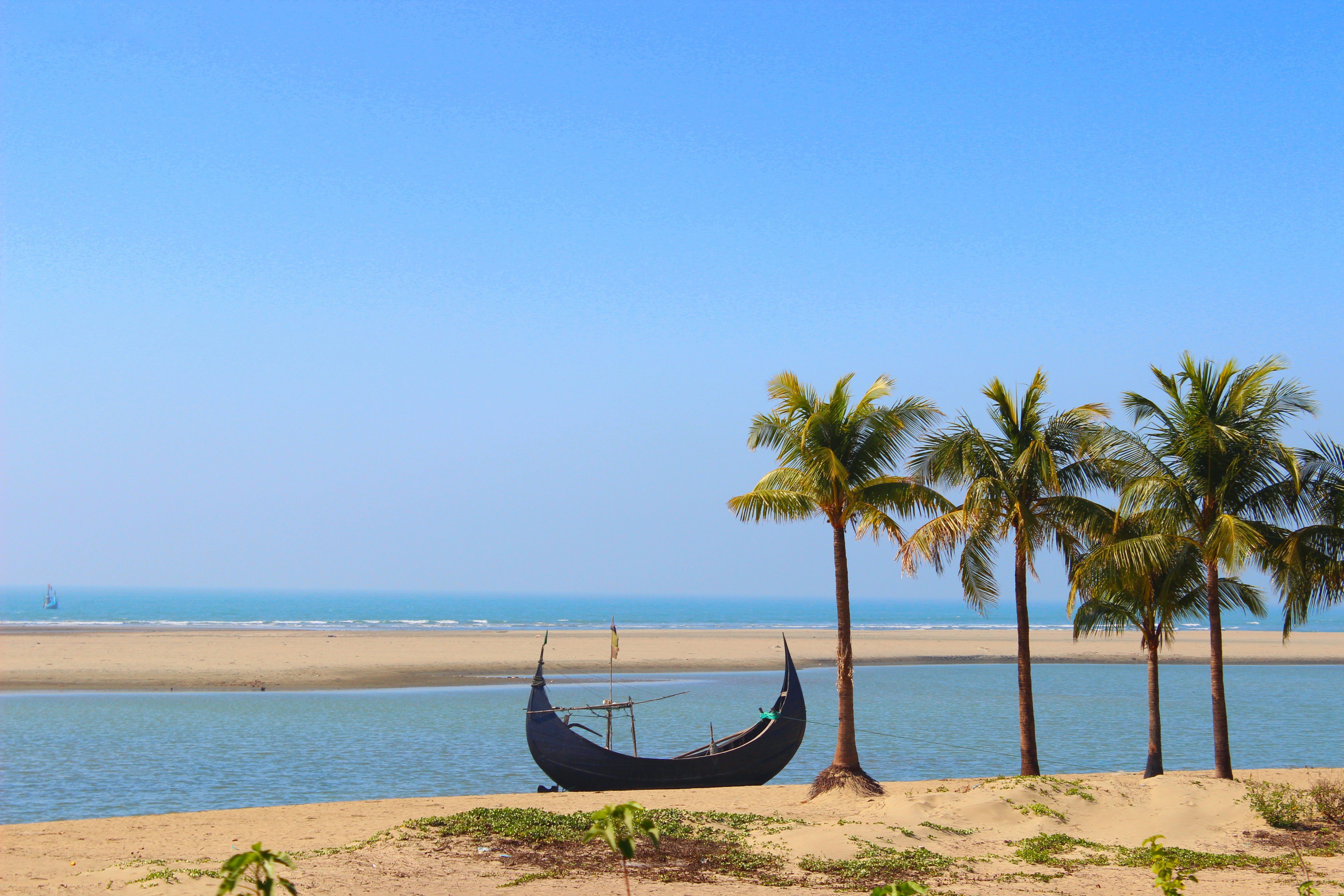
The walk began at 11 in the morning on 25 February 2025 on Inani beach, according to a UNDP press release issued that day. A flag-off ceremony was held on the beach and attended by UNDP's resident representative in Bangladesh. The plan was to walk about 1,300 kilometres across Bangladesh, India and Nepal within 90 days and then climb the 29,031-foot peak. Inani is part of the long Cox's Bazar sea beach in Ukhia upazila: an 18-kilometre stretch known for the black and green coral stones that lie along its shore. The Cox's Bazar beach as a whole runs about 120 kilometres and is the country's best-known tourist destination.
From Inani he walked north through Chattogram, Feni, Cumilla and Munshiganj and reached Dhaka 12 days later, Prothom Alo reported on 9 March 2025. He had covered 440 kilometres by then. "I had not fixed in advance where I would spend the night or what I would eat," he told the paper. "I eat whatever I find on the road. I carry only water, dates and some chocolate. At night I stay at the home of someone I know or at a government dak bungalow."
At a press conference in Gulshan, Dhaka, on 9 March, he explained the plan in detail. The founder of the Bangla Mountaineering and Trekking Club said there that the club had seen Shakil's ability on his earlier Great Himalaya Trail walk, but that success on a mountain depended on much more than one's own capacity, good weather above all, so that the summit could not be taken for granted. Shakil said he planned to resume walking on 12 March through Tangail, Bogura and Panchagarh into India, but that his Indian visa had not yet come through and the expedition was still short of money. "This is an expensive expedition," he told Prothom Alo. "The support I have received from the partner organisations is not enough. I still need 20 lakh taka more, and I am trying in different ways to raise it."
The rest of the route was recorded by Prothom Alo on the day of the summit. After a few days' break he walked through Gazipur, Tangail and Sirajganj and reached Panchagarh, at the northern tip of Bangladesh, on 28 March. He crossed into India the next day, walked through Jalpaiguri and Darjeeling, and entered Nepal on 31 March. Having walked, by that paper's count, nearly 1,400 kilometres, he reached Everest Base Camp on 29 April.
From base camp to the top
Like other climbers on the Nepal side, Shakil spent the following weeks getting his body used to the altitude. Prothom Alo reported that he left base camp on a rotation on 6 May, climbed as high as Camp 3 and came back down to base camp on 10 May; such a rotation is an essential part of preparing for the final climb. For the summit attempt he left base camp and reached Camp 2 on 16 May, Camp 3 on 17 May and Camp 4 on 18 May. From Camp 4 he made the summit push early on 19 May.
Prothom Alo reported on the afternoon of 19 May that he had reached the summit at 6:30 in the morning, Nepal time, and that his Nepali travel agency had confirmed the news to the paper. The coordinators of his expedition posted on his Facebook page at 2:10 that afternoon that they had just heard that Shakil had summited and was well, and that details could not yet be given because there was no network. In bdnews24.com's report published that night, the founder of the organising club said that Shakil had summited at 6 in the morning and had walked from Inani beach to the top of Everest in just 84 days, against the 90-day target he had set out with.
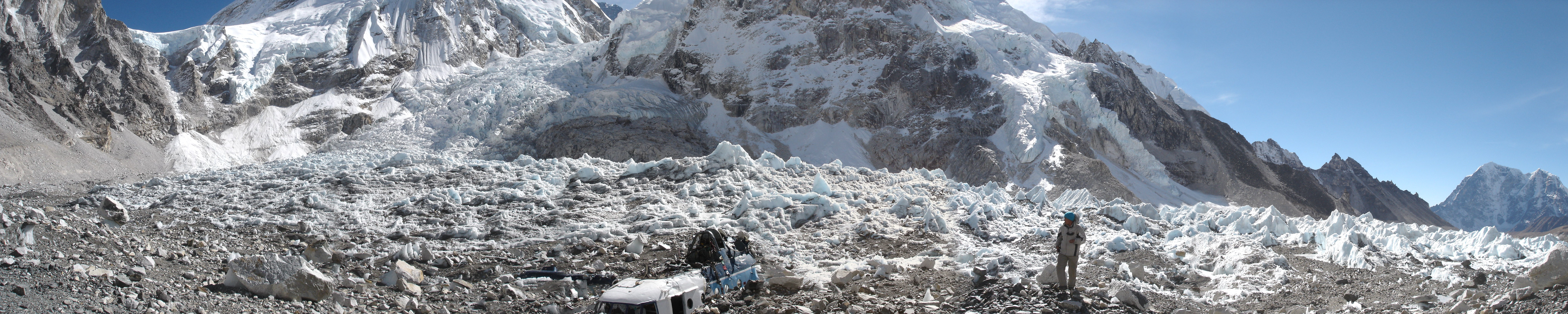
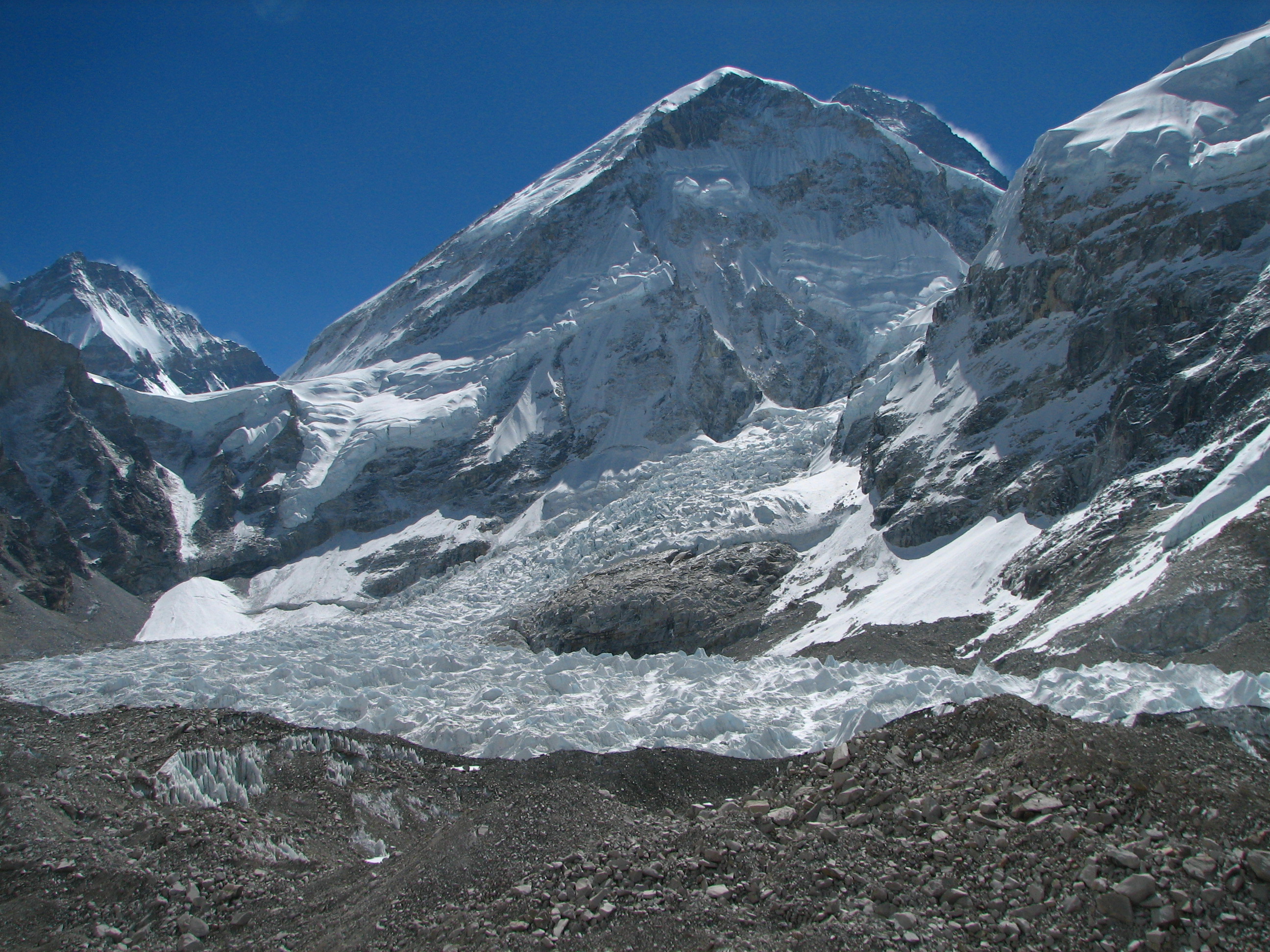
Shakil approached the mountain from Nepal. The standard route on that side is the south-east ridge, the line taken by Tenzing Norgay and Edmund Hillary on the first ascent. Climbers on this side usually reach Kathmandu, travel to Lukla and trek up the Khumbu valley to the south base camp on the Khumbu glacier, which lies above 5,000 metres. From there the route goes up the long and hazardous Khumbu Icefall to Camp 1 and on through the higher camps to the summit. The route is not technically the hardest, but altitude sickness, weather, wind, avalanches and the icefall make it dangerous.
Everest, from the sea to the summit
Mount Everest, known in Nepal as Sagarmatha and in Tibet as Chomolungma, is the highest mountain on Earth above sea level. It stands in the Mahalangur range of the Himalayas, and the border between Nepal and China runs across its summit. A joint survey by Nepal and China in 2020 set its height at 8,848.86 metres, which is the 29,031 feet given in the reports of Shakil's climb. Tenzing Norgay of Nepal and Edmund Hillary of New Zealand made the first recorded ascent on 29 May 1953.
Most climbers cover only part of that height on foot, because they start from base camps that are already above 5,000 metres. The nearest sea to the summit is the Bay of Bengal, so a climber who wants to climb the whole of Everest's height has to start on that coast. That was the idea behind Shakil's route from Inani beach.
The first person to do it was the Australian mountaineer Tim Macartney-Snape, who had already been among the first two Australians to climb Everest in 1984. In 1990 he set out from Gangasagar on the Bay of Bengal in India on 5 February, walked about 1,200 kilometres through India to the Nepal border and on to the mountain, and reached the summit. He called his expedition "Sea to Summit". Prothom Alo wrote that the Australian's journey of 1,200 kilometres in 96 days had inspired Shakil, who gave his own expedition the same name.
The seventh Bangladeshi, and the record claims
Prothom Alo set out the list of Bangladeshis who had stood on Everest before Shakil in its report of 19 May. Musa Ibrahim was the first, on 23 May 2010. M A Muhit climbed it twice, in 2011 and 2012. Nishat Majumder became the first Bangladeshi woman on the summit on 19 May 2012, and Wasfia Nazreen followed on 26 May 2012. Sajal Khaled, the fifth, reached the top on 20 May 2013 and died on the way down. After a gap of 11 years, Babar Ali reached the summit on 19 May 2024. Shakil followed him, which is why Jagonews24, bdnews24.com and The Financial Express all called him the seventh Bangladeshi to climb Everest.
The record was a separate matter, and the reports of the day put it in different ways. Jagonews24 wrote that he had set a world record by walking about 1,372 kilometres from Cox's Bazar to the summit. bdnews24.com, in a report carried by The Financial Express, said that by finishing in 84 days he had broken the long-standing record of Tim Macartney-Snape, who had walked over 1,200 kilometres from Gangasagar and taken more than three months. When the walk began, UNDP had described it as an attempt that "could set a new Guinness World Record" if completed, and Prothom Alo had written in March that a Guinness record was within reach. None of the reports of 19 and 20 May cited here says that Guinness World Records had confirmed a record by then.
The distance was also given differently. Before the walk, UNDP and Prothom Alo gave the plan as about 1,300 kilometres. On the day of the summit Prothom Alo wrote that he had walked nearly 1,400 kilometres to base camp, while Jagonews24 gave the whole route as about 1,372 kilometres through Bangladesh, India and Nepal.
A climber shaped by the Himalaya
Shakil came to Everest with years of training and climbing behind him. He took his basic and advanced mountaineering courses at the Nehru Institute of Mountaineering in Uttarkashi, India, a training school founded in 1965, Prothom Alo reported. He had climbed Kyajo Ri (6,186 metres), Draupadi Ka Danda II, Himlung Himal (7,126 metres) and Dolma Khang (6,332 metres) in the Himalaya.
He first became widely known in 2023, when he walked the Great Himalaya Trail, a route of about 1,700 kilometres that crosses Nepal from its western border to the Kanchenjunga region in the east. The Dhaka Tribune reported on 18 July 2023 that he had finished it on 9 July at Kanchenjunga North Base Camp at Pangpema, 5,142 metres up, after crossing 29 difficult passes, 14 of them above 5,000 metres, and that he was the first Bangladeshi to complete it. The Bangladesh embassy in Kathmandu held a reception in his honour later that month, Spotlight Nepal reported on 27 July 2023, describing him as a prolific writer of travelogues.
A walk with a message on plastic
Shakil had recently become a UNDP youth advocate on plastic pollution, Prothom Alo reported in March, and the walk was meant to carry that message. "This journey is not just about setting a record; it's a call to action against plastic pollution," he said in UNDP's press release of 25 February. "By traveling from the Bay of Bengal to the world's highest peak, I want to inspire people to rethink their plastic use and take active steps toward protecting our environment." Prothom Alo reported in March that along the way he was urging people to give up single-use plastic and cut carbon emissions, and UNDP said he wanted to show that even the hardest expeditions could be done without harming the environment.
The problem he was walking against is a large one in Bangladesh. A World Bank study released in December 2021 found that annual plastic consumption per person in the country's urban areas had tripled from 3.0 kilograms in 2005 to 9.0 kilograms in 2020, and put Dhaka's figure at 22.5 kilograms, well above the national urban average. The Bank noted that much of the plastic waste ends up in rivers and other water bodies, and recalled that Bangladesh had been the first country in the world to ban plastic shopping bags.
Photo: Matheus Hobold Sovernigo / Wikimedia Commons (CC BY-SA 4.0). The top picture shows Mount Everest and the Khumbu glacier seen from Kala Patthar in Nepal, as background; it is not a picture of Shakil's expedition.
Sources: Jagonews24 (20 May 2025), Prothom Alo (9 March and 19 May 2025), bdnews24.com (19 May 2025), The Financial Express (20 May 2025), UNDP Bangladesh (25 February 2025), Dhaka Tribune (18 July 2023), Spotlight Nepal (27 July 2023), World Bank (20 December 2021), Banglapedia, Bangladesh Bureau of Statistics census 2022, Wikipedia


Comments
(0)