
For many growers in the Upper Midwest, the extra work of managing crops right through the 2026 season paid off. It was one of the main differences between fields that finished strong and those that gave up bushels before harvest, according to Louis Kuisle, a field agronomist for Mustang Seeds.
Crops in his southeast Minnesota territory had solid yield potential, helped by good heat units and generally favourable weather, but they also faced heavy disease pressure. "You could find just about any crop disease you wanted to in a corn field this year," Kuisle said, listing southern rust, tar spot, northern corn leaf blight and bacterial leaf streak, along with bacterial diseases such as Goss's wilt.
Corn rootworm numbers were flat or slightly down, reflecting a cooler spring and better pest management. Corn also suffered some stalk quality problems from disease combined with late rain and wind, and tall plants and some higher planting populations led to lodging in soybeans.
Growers who chose a more targeted fertiliser programme, split their nitrogen and other nutrients, ran micronutrient packs or applied fungicide "were really rewarded this season", Kuisle said. With strong yield potential and weather that favoured disease, the extra passes were easier to justify even as farmers tried to stretch every dollar.
That is not true every year. Management cannot rescue a crop from drought or flood, and the effect of any product depends on timing, application, soil type and the rest of the system. Kuisle's advice is to run trials on one's own farm to see whether a product works on that ground.
Scouting is central. "Most fungicides are preventative products, not curative," he said; they work best applied just before or as a disease appears, because once it is established, bushels are usually already lost. Walking fields also shows when a threat is fading, which saves money when resources are tight.
On seed, he warns against planting every acre to the newest hybrid. No single product beats every disease, so growers should plant a mix of corn and soybean products with different genetic backgrounds, new and proven. "You don't want to put all your money on one horse."
One problem is growing: flush after flush of waterhemp in soybeans. Kuisle urges growers to use several herbicide modes of action, watch new trait pipelines, and use this season's scouting notes and trial results to plan next year.
The article was supplied to CropLife by the seed company GDM.
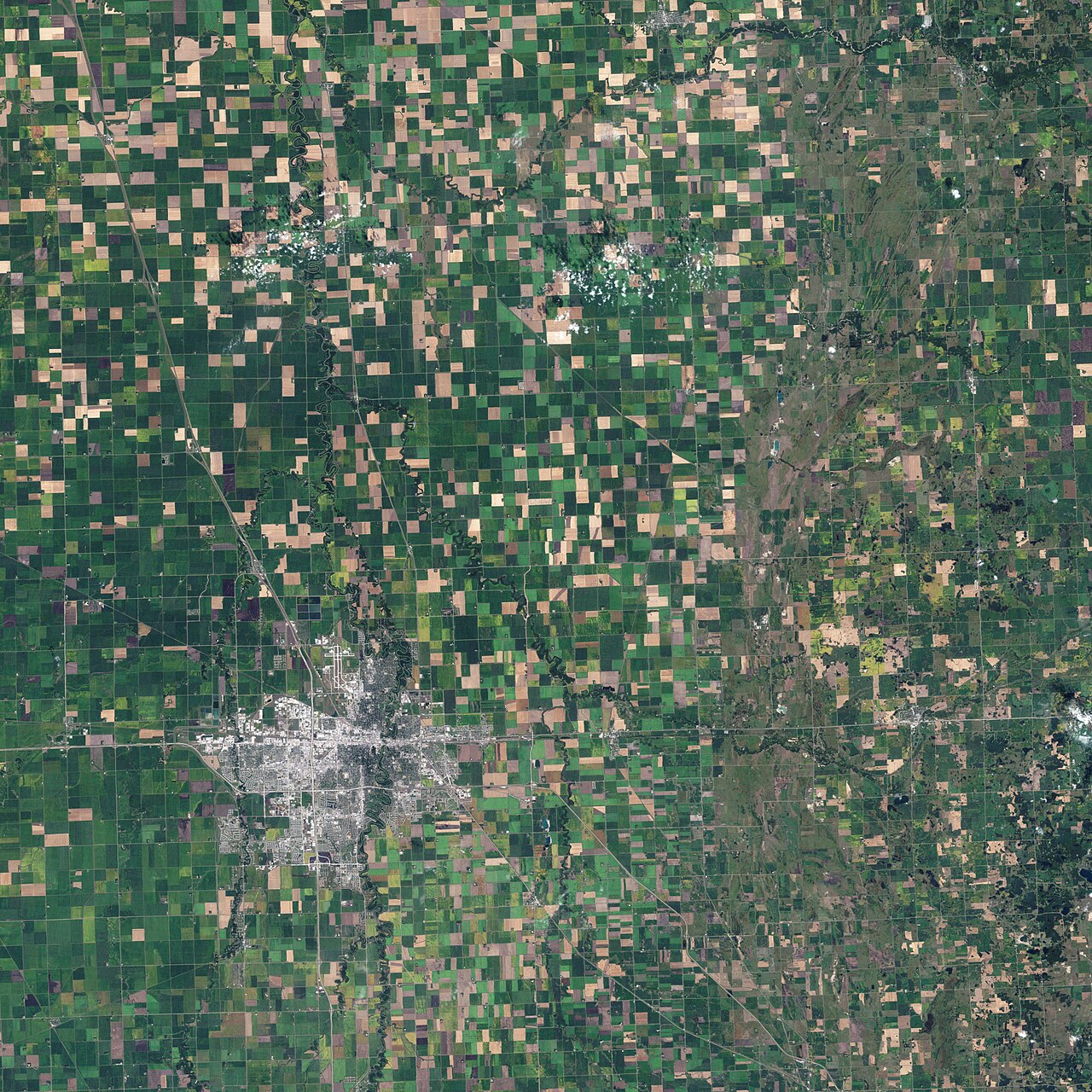
Photo: NASA Earth Observatory, Jesse Allen / Wikimedia Commons (Public domain)
Source: CropLife

Comments
(0)