
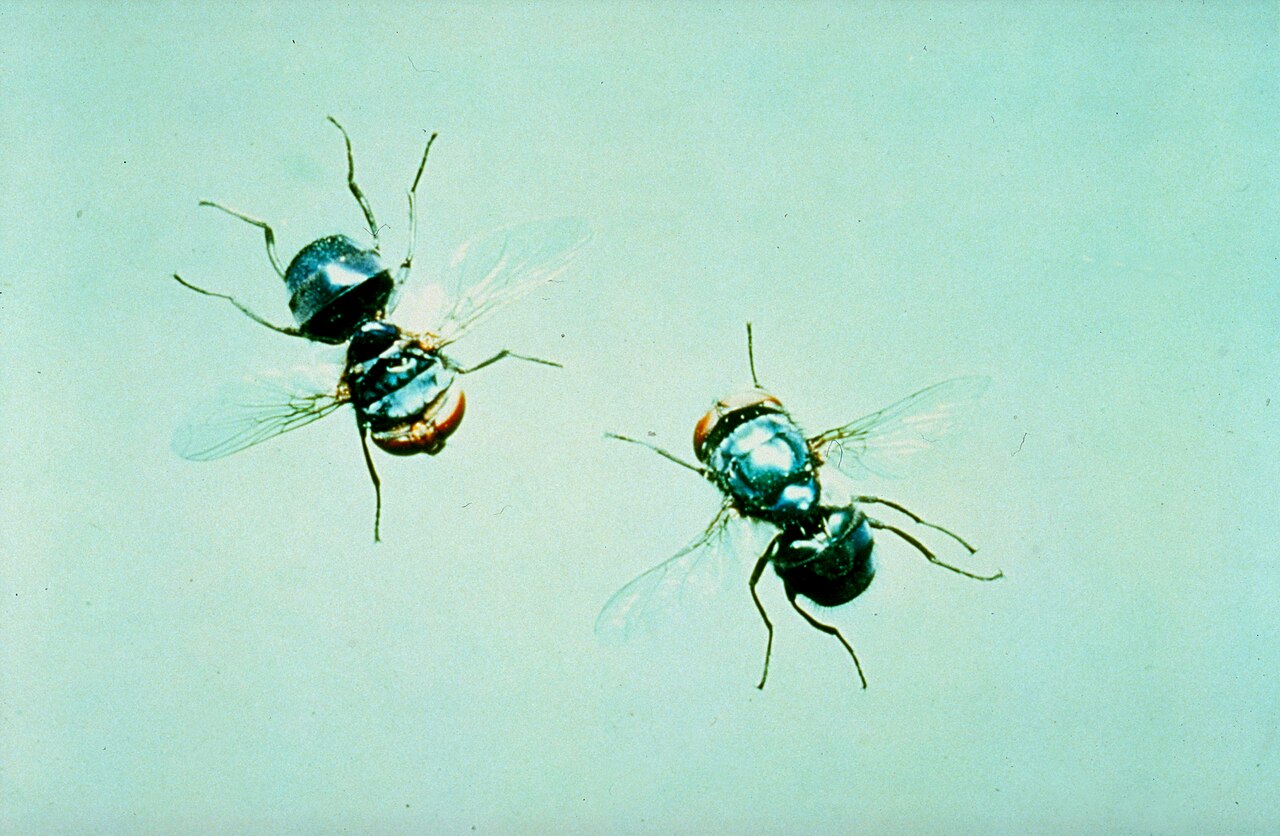
New World screwworm, a parasitic fly whose larvae eat living flesh and which threatens the US cattle herd, is spreading fast in the Southwest after unusually wet, warm weather. Screwworms infested 64 cattle, dogs, horses and other domestic animals so far this month, up from 34 in October and three in September, according to US Department of Agriculture data reported by Reuters and carried by The Cattle Site.
USDA has recorded 149 cases in domestic animals since June, plus two in wild elk, and 73 were active as of last Thursday, up from two at the end of September. The pest was first found in a calf in Texas in June after moving north through Mexico, then in New Mexico, and last month it reached Arizona, which now has nine active cases in four counties.
The main brake on the outbreak is the sterile insect technique: sterile males released in large numbers mate with wild females, whose eggs then fail to hatch. USDA is releasing every sterile fly it has in the southwestern US and along Mexico's northern border, but supply is short. "The major contributing factor is the natural progression of the pest and the limited supply of sterile male screwworm flies," said Arizona state veterinarian Dr. Ryan Wolker. The Army Corps of Engineers is overseeing construction of a sterile fly plant in South Texas due to open next year.
A technical fix is being tested. Researchers in Panama have made progress with NovoFly, sterile flies genetically engineered to produce only males, which could double sterile fly output because females are of no use in eradication, said USDA Under Secretary Dudley Hoskins. "The tests so far have demonstrated everything we were hoping they would," he said. USDA plans to produce NovoFly at the Texas facility once it opens in April if testing goes well, though production will take time to ramp up.
Officials said the cattle imports from Mexico that resumed in August through Arizona and New Mexico did not drive the spike, since the animals are inspected several times before entry. Instead, rain linked to El Niño, with Hurricanes Rachel and Polo bringing late-season moisture to Arizona and Mexico, created good conditions for the fly. Veterinarians expect winter temperatures in parts of Texas, New Mexico and Arizona to stay too mild to kill it, so ranchers, hunters and pet owners are being urged to watch their animals closely.
Photo: CSIRO / Wikimedia Commons (CC BY 3.0)
Source: The Cattle Site

Comments
(0)