
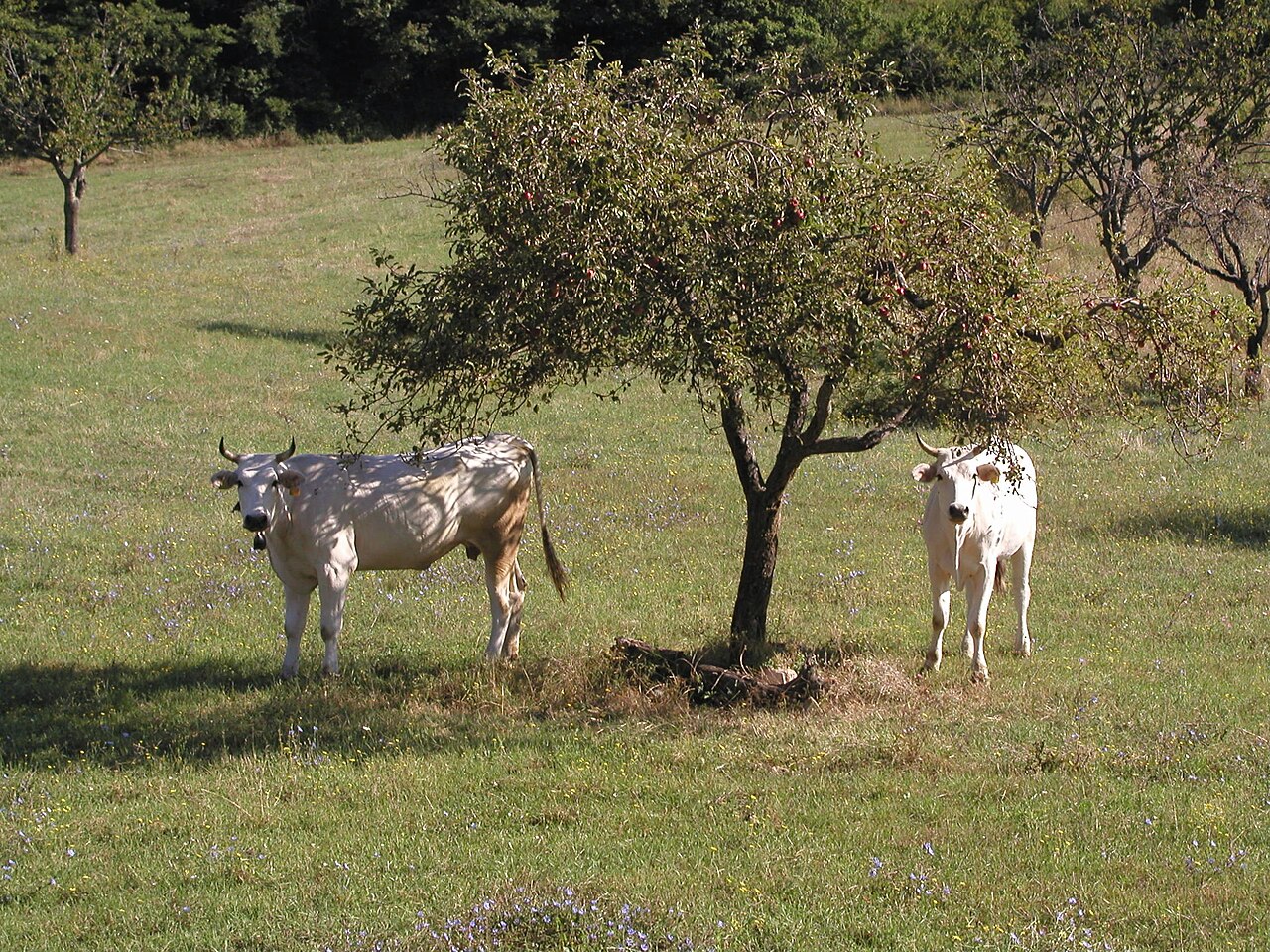
Babylonstoren, one of the oldest working farms in South Africa's Cape Winelands, raises a herd of Chianina, the large white Italian beef breed, and sells the meat only through its own restaurant and online shop. Herdmaster Kobus Lambrechts described how the herd is run to Annelie Coleman of Farmer's Weekly South Africa.
The herd was set up in 2015 by the late Christo Botha, using genetics from Christiaan Daniel de Jager, who founded South Africa's first Chianina stud, O-La-La. It now numbers 48 animals. Chianina are among the largest cattle breeds in the world, valued for fast growth and lean beef, with a carcass yield of up to 65%, Lambrechts said. The farm aims for carcasses of 350kg to 450kg, and animals are generally slaughtered at around 18 to 24 months.
The cattle graze natural veld and planted pastures, with barley hay grown on the farm as a supplement. The team watches how much grazing is left in each field before moving the herd, to rotate it and prevent overgrazing. "We do not use growth hormones," Lambrechts said. A health programme recommended by the herd's local veterinarian covers vaccinations and preventive treatments, and with foot-and-mouth disease concerns in the Western Cape, sanitising sprays at the gates disinfect vehicles before they enter.
Heifers are put to the bulls at around two years old, because the bulls are big and the team wants the heifers developed enough to mate safely. Birth weights run between 45kg and 60kg, weaning weights at six months between 250kg and 350kg, average daily gain is about 2kg, and the pregnancy rate is 92%. Selection looks at structure, strong feet, fertility, temperament, health, growth and mothering ability; muscling matters, but "not at the expense of soundness and easy calving".
Keeping the beef in-house gives the farm control over quality, maturation, processing and traceability, and lets it use more of each carcass, from steaks and mince to boerewors, bresaola and salami. For Heritage Day in 2023 one ox was turned into 1.6km of boerewors to show customers how much one animal yields.
Lambrechts believes there is plenty of room for Chianina in South Africa's stud and commercial herds, including in crossbreeding, and urged more farmers to give the breed a chance.
Photo: Peter von Wesendonk / Wikimedia Commons (CC BY-SA 3.0)
Source: Farmers Weekly South Africa

Comments
(0)