

The number of rooftop gardeners is growing day by day. Plants are grown in tubs and drums: some grow fruit, some vegetables. Some succeed and some do not. Gardeners make small mistakes, which is why plants do not fruit even with care. Here are some tips that may make success easier.
First, remember that a plant in a tub or drum must be fed. Unlike plants in nature, it cannot gather food for itself. You must also watch for disease and act on it, and be patient.
Soil and feeding
1. Always mix some cocopeat with the soil. Do not let the base of the plant stay soggy, or it will get many diseases; the soil should be moist but not soggy. With cocopeat you can water less. Cocopeat (powdered coconut husk) holds water, yet does not let water collect at the base in heavy rain. Being light, it does not add weight to the roof. It also contains some nutrients that help growth. Seedlings sprout and grow faster in cocopeat, and do better than in soil.
2. The "biryani" for plants is rotted mustard-cake water. Rot the mustard oil cake in a clay pot for at least 5 days; 7 or 15 days is better. Rot it in a little water, then add more water. It is very beneficial. It smells a little, so you can add a little molasses. If you rot it on the roof, the smell will not reach the house. Do not give it during rain. Pond-bottom mud is also very good for plants.
3. Soil contains many harmful fungi, enough to kill plants. So when preparing soil, add some Biodama Solit. This is a beneficial fungus that kills harmful elements in the soil and also works as an organic fertiliser. The soil becomes loose and light.
Seeds, spacing and support
4. Whatever you plant, make sure the seed is of a good variety. Good seed gives a good crop; otherwise all the work is wasted however much care you take. Raising your own seedlings from seed is best, because there is no guarantee that a seedling bought in the market is of a good variety. Treat seed with fungicide by soaking it for a while in water mixed with fungicide. Mancer and Metaril are two fungicides.
5. More plants, more yield: this is a wrong idea. Do not crowd many plants into a small space. Plant sparsely, or plants will not get enough nutrients. Only two plants in a fruit crate; one plant in a tub. Crates and tubs must drain.
6. Building a trellis on a roof is difficult because there are no posts. Tie sticks around a fruit crate to make one easily. Containers for climbing plants are better a little deep. The best organic fertiliser is leaf compost, then vermicompost, then cow dung. Leaf compost is not easy to find and costs more, but vermicompost is easy to get. It is best to mix at least 40% organic fertiliser with the soil.
Pests, crops and flowering
7. Harmful insects strongly dislike neem pesticide; it irritates them and they cannot nest on the plant. Spray neem pesticide on the leaves of all plants once every seven days. Spraying Epsom salt once a month is good, and so is spraying hydrogen peroxide mixed with water once a month.
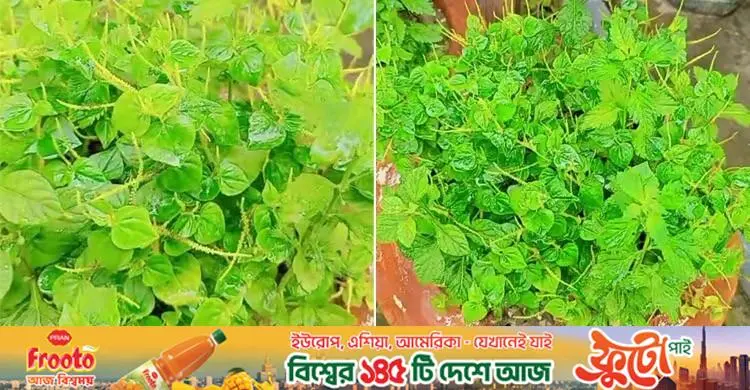
8. You can grow stem amaranth, pui shak, red amaranth and coriander, which you can eat in just 25 days. Put a net around red amaranth. Leafy greens give quick results, which will motivate you. If pui shak leaves get spots, cut the leaves, spray fungicide, or pull up the plant and replant. Urea makes pui shak grow fast. DAP fertiliser helps cucumber growth. Cucumber plants need fungicide sprays from time to time. In strong sun, mulching the base gives the best results. Mulching means covering the base with special polythene or with dry leaves or straw.
9. After flowering, spray Pranofix or Miracuran on the leaves late in the afternoon. It is good to keep two groups of fungicide at home, such as Mancer and Metaril, and spray once every 15 days. Keep Agromind Gold or another micronutrient at home and spray at least once a month. Flowers can drop because of excessive heat, rain, lack of food, disease or rapid changes in weather. They can also drop if pollination does not happen, so pollinate by hand: rub the anther of the male flower onto the female flower.
Source: Staff Correspondent. First published in Bengali on The Agro News.

Comments
(0)