
Practices that cut greenhouse gas emissions from rice will only spread across Asia if they also make money for farmers, speakers told Rice Day: Transforming the Rice Sector in Asia, an event held on 7 October during Bangkok Climate Action Week, the International Rice Research Institute (IRRI) reported on November 25. The event was organised by the Global Methane Hub, IRRI, the FAO and GIZ, with the Climate and Clean Air Coalition (CCAC), Asia Philanthropy Circle and SIGMA as collaborators, and drew nearly 100 representatives.
Decades of research have produced proven methods, including alternate wetting and drying, better fertiliser management, direct seeding and crop residue management. But knowing they work does not mean farmers can or will adopt them. Carsten Schmitz-Hoffmann of GIZ said low-emission production must become financially worthwhile and that scaling it must deal with the costs and risks farmers face when changing established practices.
Dr Bjoern Ole Sander, IRRI's senior scientist for climate change and country representative for Thailand, presented digital monitoring and reporting tools, including RiceMoRe and the ORYZA crop model, which can inform farm decisions, climate reporting and investment. Lesly Goh of the University of Illinois Urbana-Champaign called for shared information systems instead of isolated pilots, and James Morris of the CCAC urged linking farm and emissions data to finance decisions. Dr Atthawit Watcharapongchai of the Thai Rice project described a mix of training for extension officers, farmer demonstrations and community champions.
Putsadee Puangprakhon, a rice farmer from Buriram who took up farming after 15 years in an office, described the uncertainty of depending on a crop for household income amid changing rainfall, extreme weather and scarce irrigation water, and showed how rice straw can grow mushrooms instead of being burned.
Buyers spoke of market rewards. Jasberry's Peetachai Dejkraisak described selling certified organic rice in the United States and Europe, and Dr Jutarat Pattanatorn of CP Extra said premiums for sustainable rice must cover any extra cultivation costs. Supachai Thammasiri of Thailand's Bank for Agriculture and Agricultural Cooperatives warned that lenders must weigh how new practices affect farmers' incomes and ability to repay. Dr Chitnucha Buddhaboon of Thailand's Rice Department and James Symons of TerraNex agreed that farmers on narrow margins cannot carry the full cost of changes that deliver wider environmental benefits.
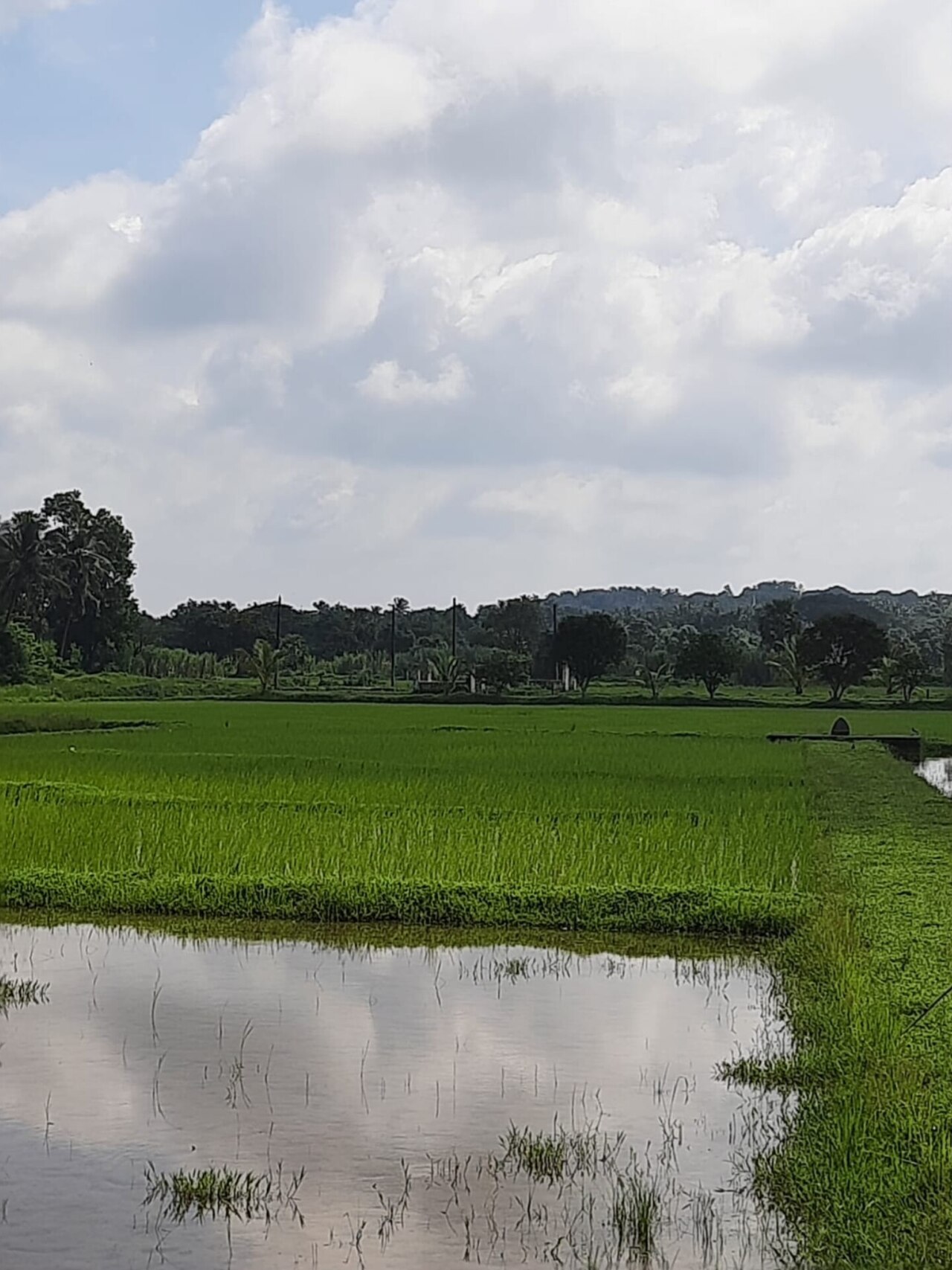
Photo: Prathvi Acharya / Wikimedia Commons (CC BY 4.0)
Source: IRRI
Comments
(0)