
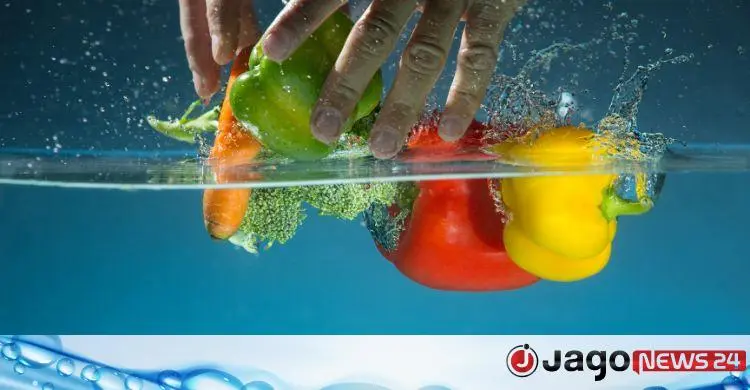
Fresh fruit and green vegetables at the market are a pleasing sight. But behind that comfort lies another reality: the risk of harmful pesticides.
The Bangladesh Food Safety Authority (BFSA) has repeatedly said that unplanned and excessive pesticide use is making our daily food risky. The good news is that cleaning produce the right way can reduce a large part of this risk.
On National Safe Food Day today, 2 February, here is how to clean raw vegetables and fruit to reduce the effect of pesticides.
Salt water
This is the best-known and most effective home method. Mix two teaspoons of ordinary salt into a litre of lukewarm water and soak fruit or vegetables in it for at least 15 to 20 minutes. Various studies have found that this considerably reduces the residues of some harmful chemicals, including formalin.
Vinegar solution
Soaking fruit for a while in a mixture of one part vinegar to nine parts water may remove harmful bacteria and pesticides. But leafy vegetables and soft fruit should not be left long in vinegar water, as it can spoil their taste and texture. It is safest not to leave them for more than 5 to 10 minutes.
Running water
Before cutting vegetables, wash them well under clean running tap water, rubbing gently by hand. This easily removes dust, soil and loose pesticide from the surface.
Peeling
For fruit and vegetables such as cucumber, carrot, apple or bottle gourd, peeling is quite effective, because in most cases pesticide collects in the outer layer. Peeling reduces the risk from chemicals that have not been absorbed inside. But it is important to wash the produce well before peeling too.
Brief blanching
Steaming vegetables such as cauliflower, cabbage or broccoli in lightly hot water for 1 to 2 minutes and throwing that water away significantly reduces the effect of pesticides. Washing them in cold water afterwards before cooking makes the food even safer.
No soap or detergent
In trying to clean too thoroughly, never use detergent or soap to wash fruit and vegetables. The BFSA has clearly warned that these chemicals can get into the food and create new health risks. Clean water and the right amount of time are the safest solution.
The advice is drawn from the Bangladesh Food Safety Authority's food safety guidelines and public awareness publications.
Source: Jagonews24. First published in Bengali on The Agro News.


Comments
(0)