
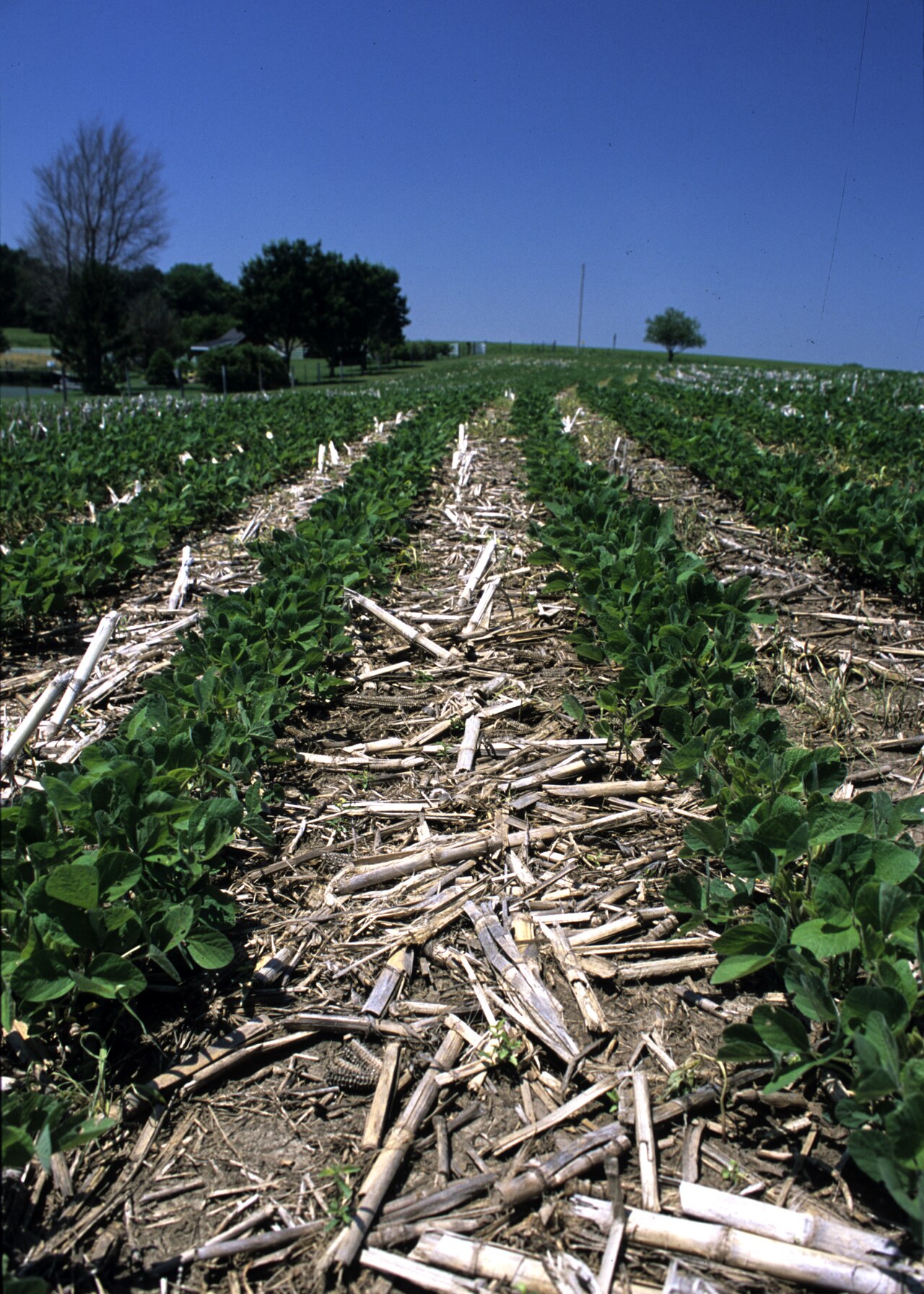
Red crown rot, an emerging soybean disease, is turning up in more Midwestern states and can cause severe localised yield losses, plant pathologists told DTN crops editor Matthew Wilde. This year Iowa joined the list, with its first two cases confirmed in mid-August and mid-September.
The disease is caused by the soilborne fungus Calonectria ilicicola. First detected in North Carolina in 1972, it reached Illinois in 2018 and is now widespread there; Ohio found it in 2025 and Wisconsin has reported two cases in two years. It infects roots, stunting plants and killing them early. "There's horror stories out there from people losing 50% to 70% of yields in patches where it's bad," said Daren Mueller, a plant pathologist at Iowa State University Extension and Outreach, adding that the Des Moines County field had many plants with no pods, or pods with no beans.
Symptoms are easy to confuse with sudden death syndrome: yellowing, interveinal chlorosis, wilting and plant death in the reproductive stages, and a reddish discolouration at the base of the stem, sometimes with white fungal growth and reddish-brown spore structures. Infected roots rot so badly that plants pull out easily, "like pulling a pencil out of the soil," Mueller said. Horacio Lopez-Nicora of The Ohio State University urged farmers to watch yield monitors for sharp drops, dig up suspect plants and have them tested rather than assume it is SDS.
Once established, the pathogen survives in soil and is unlikely to be eradicated, so the aim is to stop soil moving. Cover crops, no-till and conservation tillage limit erosion, while deep tillage only spreads the fungus. Researchers advise harvesting infected fields last, cleaning equipment between fields, especially in this year's wet conditions, and rotating for a year or two to non-host crops such as corn, sorghum, wheat or oats; alfalfa is a host and should be avoided.
Damon Smith, a field crops pathologist at the University of Wisconsin-Madison, said some fungicide seed treatments, including Syngenta's Saltro and Victrato, have shown promise in curbing severity and losses, and more varieties are being bred with resistance. "Right now, it's important to scout and diagnose the disease," he said.
Photo: Lynn Betts, USDA NRCS / Wikimedia Commons (Public domain)
Source: DTN / Progressive Farmer
Comments
(0)