
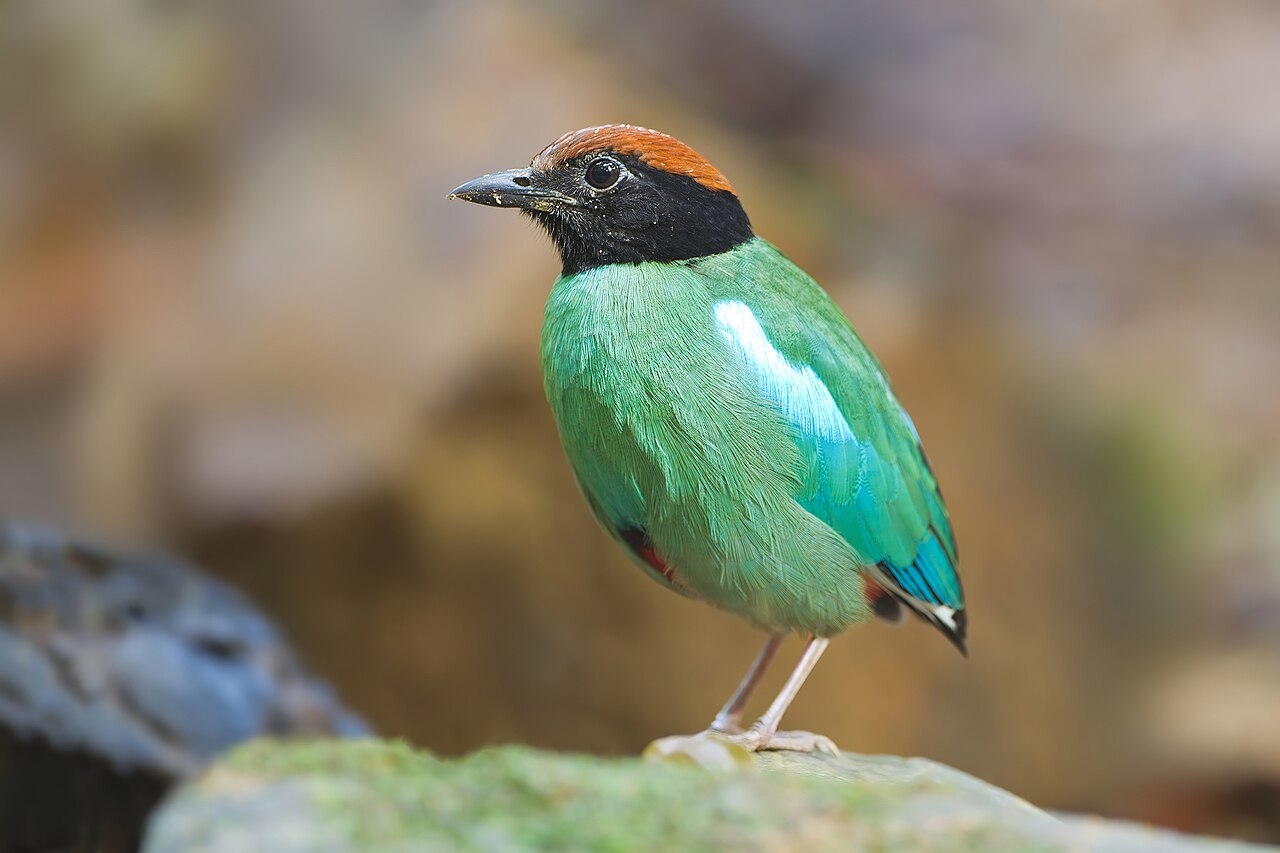
Bird and wildlife specialist A N M Aminur Rahman has written about his research on the breeding of the rare hooded pitta in the dense village groves of Satshoiya in Fakirhat, Bagerhat. According to his account, no nests, eggs or chicks of the bird have been recorded anywhere in Bangladesh except these groves.
He first visited Satshoiya, the home village of ornithologist Sharif Khan, about 30 years ago but did not see the bird. Research on its breeding ecology began in 2012, building up photographs, measurements and other data on nests, eggs and chicks. On one visit he saw a pitta land on an old branch with its beak full of earthworms, a sure sign that a nest was close by. On another visit, on 5 July the following year, he photographed a non-venomous snake and 10 to 12 species of birds and butterflies in the groves before the pitta appeared.
Known in Bengali as halti, sabujabh sumcha or nil pakhi, the hooded or green-breasted pitta (Pitta sordida) is a plump, short-tailed bird 19 centimetres long and weighing 65 grams. It has a reddish-brown crown, an olive-green back washed with blue, a bright red vent and blue wing tips, and lives across South and Southeast Asia as well as Bangladesh.
It breeds from March to September, calling through the night. The pair builds a tent-like nest of twigs and leaves on or just above the ground, the female lays four to six white or creamy-white eggs, and both parents incubate them for 15 to 20 days. It lives five to seven years.
The author says the research measurements were taken carefully and within the rules, and asks everyone other than researchers not to look for the birds' nests, approach them or photograph them, for the sake of conservation. Venomous snakes are also common in the pittas' habitat.
Photo: JJ Harrison / Wikimedia Commons (CC BY-SA 3.0)
Source: Prothom Alo


Comments
(0)