
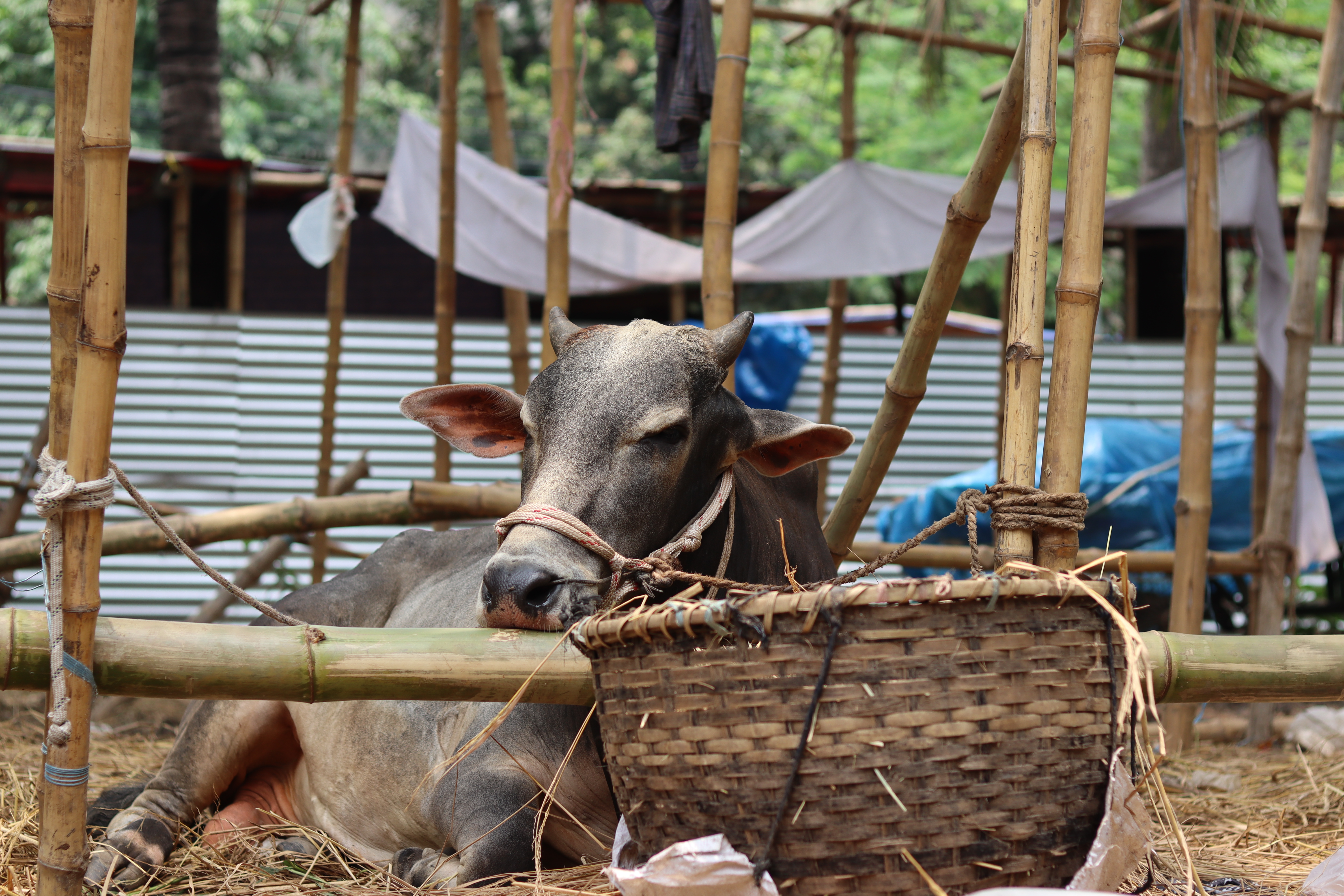
Medium-sized cattle drew the biggest crowds at Rajshahi's traditional City Haat on Thursday, 21 May 2026, as the city's animal market filled up ahead of Eid-ul-Azha. Farmers and buyers from the district's upazilas packed the market, and farmers told Jagonews24 that many buyers, weighing what they could afford against the needs of their families, were choosing medium cattle over big ones. Small cattle were also selling well.
What buyers were looking for on 21 May
A visit to the City Haat around midday on 21 May found more buyers gathered in front of medium cattle than in front of big ones, Jagonews24 reported. The strongest interest was in animals priced between Tk 80,000 and Tk 1 lakh. Alongside local cattle brought in from various districts, there was an ample supply of medium-sized cattle raised on farms, so buyers were finding animals they liked and sellers were hoping for good sales.
Small cattle were moving too. With limited budgets and small families in mind, many buyers were paying between Tk 70,000 and Tk 80,000 for an animal, and low- and middle-income buyers showed particular interest in these cattle because they were relatively cheap.
Anisur Rahman Milon, an official of Rajshahi University, bought a medium cow for Tk 1 lakh 5 thousand. He told Jagonews24 that in the present market it was hard for many people to buy a big cow, so, considering the size of his family and his budget, a medium cow had seemed best. He said he had found the cow he wanted at the market and that the price was fairly reasonable.
Shamim Patwari, who had come to look at medium and small cattle, said big cattle cost much more than before, so most people were turning to medium ones. He said quite a few good cattle were within his budget as well.
People involved in the trade gave Jagonews24 a reason rooted in the city itself. Rajshahi, they said, is not a big commercial city like Dhaka, and middle- and low-income people make up a larger share of its population. Known as an education city, it is also home to many teachers, salaried workers and members of civil society, many of whom consider a medium or small cow the most suitable animal for a sacrifice made by one household alone. Most buyers were therefore weighing their means and needs and leaning towards medium cattle.
Rajshahi: an education city on the Padma
Rajshahi is a metropolitan city on the north bank of the Padma River, close to the border with India, and the administrative seat of both Rajshahi division and Rajshahi district. It is the largest city of North Bengal. It is sometimes called the City of Education because it is home to many well-known educational institutions, and it has long been known for silk; the head offices of the Rajshahi Agricultural Development Bank and the Barind Multipurpose Development Authority are in the city. Rajshahi municipality was formed in 1876 and became a city corporation in 1991; the city corporation area is bounded on all sides by Paba upazila.
At the 2022 census Rajshahi city had 553,288 people in 213,467 households. The district as a whole had 2,915,009 people in 775,245 households, an average of 3.67 people per household, and about 37.58 per cent of its people lived in urban areas. The district's literacy rate for people aged seven and over was 75.17 per cent, against a national average of 74.80 per cent.
The University of Rajshahi, where the buyer quoted above works, is the second-oldest university in Bangladesh. The Rajshahi University Act was passed by the East Pakistan Provincial Assembly on 31 March 1953, and the university began in temporary buildings before moving its offices to a permanent campus in 1964. Its main campus is at Motihar on the eastern side of the city, and its 59 departments are organised into 12 faculties.
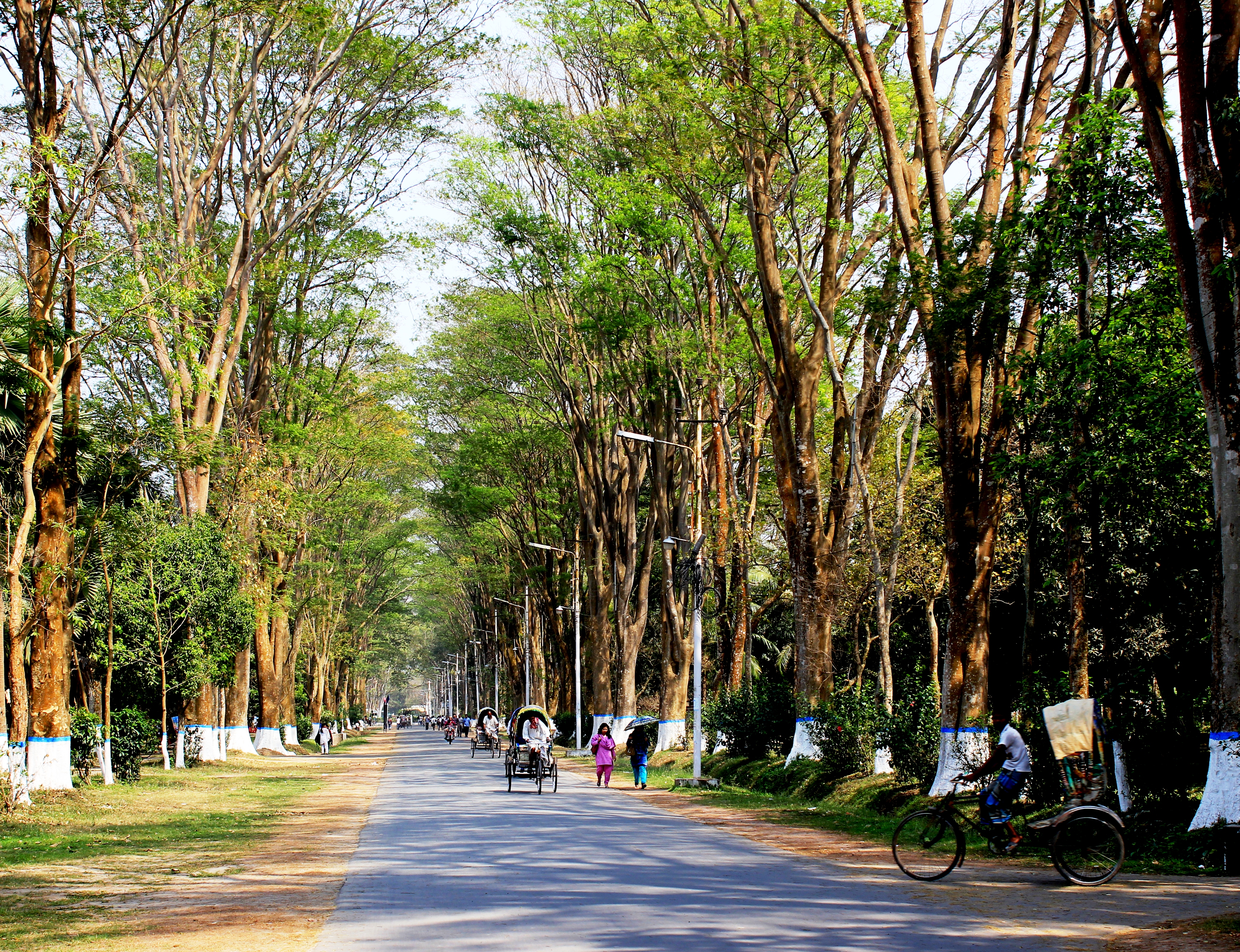
Farmers bring what the market wants
Farmer Kamal Mia came to the City Haat from Chapainawabganj with about 35 medium and small cattle. He told Jagonews24 that he had brought more medium and small cattle this time because he understood the Rajshahi market. These animals were selling faster than big cattle, he said, and buyers showed interest when they heard the price.
Another farmer, Abdul Khalek, said that although feed and transport costs had risen, farmers had prepared mostly medium cattle, keeping buyers' purchasing power in mind. Cattle weighing 3 to 5 maunds were in the highest demand this year, he said. The maund (mon) is the traditional South Asian unit of weight still used in livestock markets; throughout Bangladesh one mon is taken as 40 kilograms.
Farmers said that because Rajshahi's buyers wanted medium cattle, part of the big cattle had been sent to large markets in Dhaka and elsewhere in the country, but there was still an ample supply at the City Haat. The market's leaseholders said sales would rise further as Eid drew nearer, and that for now both buyers and sellers were satisfied because supply was good.
Rising costs had been a theme of the season for weeks. On 11 May, Bangla Tribune spoke to farmers in Godagari, Tanore, Paba and Durgapur upazilas of Rajshahi who said they had raised their animals by local methods but that the prices of feed and medicine had gone up, so their costs were higher and they hoped for fair prices. On 18 May Ekhon TV quoted a farmer who said that if farmers did not get Tk 800 to Tk 850 a kilogram this Eid, they would make a loss. Earlier in the year, on 18 February, Prothom Alo had reported that beef in Rajshahi's markets had risen from Tk 750 to between Tk 780 and Tk 800 a kilogram before Ramadan; a butcher said a bundle of straw now cost Tk 8 and that buying a cow at the City Haat carried a charge of Tk 800, against Tk 550 to Tk 600 before.
Chapainawabganj, where Kamal Mia brought his cattle from, is the north-westernmost district of Bangladesh and part of Rajshahi division. It is bounded to the north and west by the Malda and Murshidabad districts of India's West Bengal, to the east by Naogaon and to the south-east by Rajshahi district, and it became a district in its own right in 1984. Figures from the Department of Livestock Services (DLS) Rajshahi divisional office, published by Bangla Tribune on 11 May, put the district's farms at 13,942, with 117,010 cattle, 84,801 goats and 12,922 sheep; it had 215,244 animals for sacrifice against a demand for 121,202.
The City Haat, north Bengal's big cattle market
Samakal described the Rajshahi City Haat on 11 May as the market known as the largest cattle market of the northern region, and Ekhon TV called it the largest in the north on 18 May, when trading there was beginning to pick up. Farmers told Ekhon TV that cattle of every kind came to the market from Rajshahi, Bagmara, Pabna, Kushtia and Jashore.
The market is relatively young. Prothom Alo reported in April 2025 that the City Haat was started in Rajshahi city after 2001, about 10 kilometres from the older Damkura haat in Paba upazila, and that it sits on Sundays and Wednesdays. At that time, the paper reported, a buyer at the City Haat paid a toll of Tk 800 for a cow and the seller paid Tk 200. Before Eid-ul-Azha in 2025, Bangladesh Sangbad Sangstha (BSS) reported that the market, which meets twice a week for the rest of the year, traded every day in the Eid season, from dawn until late at night.
Earlier Eid reports from the same market show the same preference. On 1 June 2025, BSS found medium cattle the most common at the City Haat and the buyers' favourite, mostly selling for Tk 1 lakh to Tk 1 lakh 20 thousand; slightly bigger cattle sold for Tk 2 lakh to Tk 2 lakh 20 thousand and small ones for Tk 65,000 to Tk 1 lakh. The Paba upazila livestock officer told BSS then that 213 veterinary medical teams had been formed to check animals' health at Rajshahi's markets. On 3 June 2024, Bangla Tribune reported a slow first day of the City Haat's weekly 'big haat' before Eid because large traders from outside had not come, with sellers saying no sacrificial cow could be had for under Tk 1 lakh that year; one buyer said seven people had pooled Tk 15,000 each to buy one cow together.
For the 2026 season, BSS reported on 19 May that crowds were growing at the City Haat, the Baneshwar haat and other markets in the district as Eid approached. Machines to detect counterfeit notes had been installed, veterinary medical teams were ready to identify animals fattened by artificial means, law enforcement agencies were keeping special watch for the safety of buyers and sellers, and the administration had arranged help so that traders from distant places could take the animals they bought away by truck.
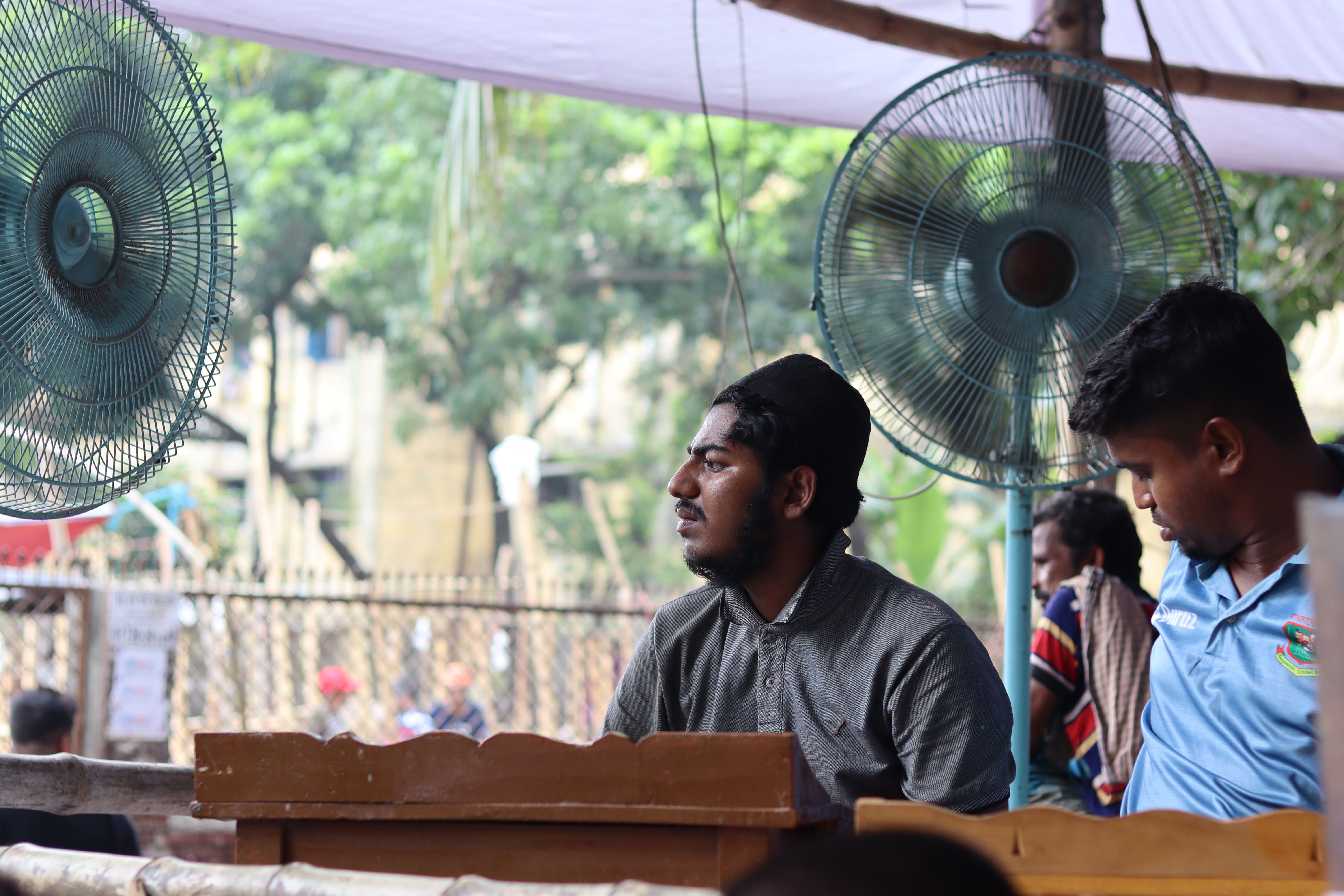
Rajshahi district's animals for Eid 2026
According to the district livestock office, quoted in the Jagonews24 report, 463,011 animals had been prepared for sacrifice in Rajshahi district this year: 104,841 cattle, 3,425 buffalo, 311,339 goats and 43,406 sheep. Against this the district's demand was about 371,058 animals, leaving a surplus of about 92,000 that would be sent to other districts. BSS, reporting the same figures on 19 May, put the exact surplus at 91,953.
The district had about 26,234 livestock farms, large and small, according to the DLS figures reported by BSS and Bangla Tribune. The district livestock office told BSS that the animals on these farms had been fattened by natural, local methods without harmful hormones or steroids, while farmers said the high price of feed had made production somewhat more expensive this year. Ekhon TV reported on 18 May that the livestock department expected about Tk 1,000 crore worth of animals to be traded in Rajshahi district this year.
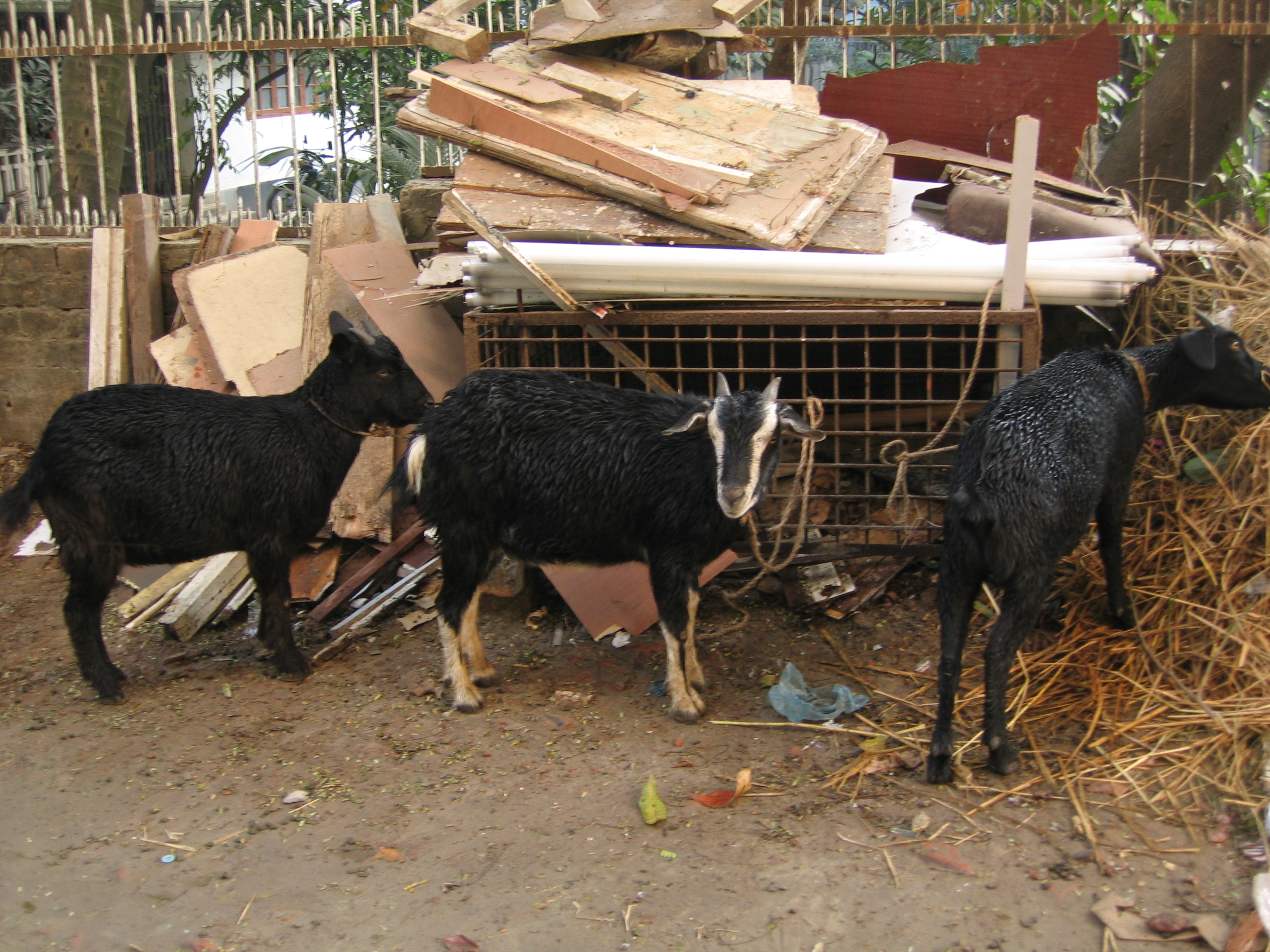
Goats make up most of the district's stock, and BSS noted that a large share of the animals raised on Rajshahi's farms were cattle and the well-known Black Bengal goat. The Black Bengal is a small, compact goat, usually black but sometimes brown, white or grey, with short legs and small horns; an adult male weighs about 25 to 30 kilograms and a female about 20 to 25 kilograms. It is popular in Bangladesh because it needs little feed and breeds quickly, the female giving birth twice a year to one to three kids at a time, and it is valued for its meat and skin.
The district's counts have stayed in the same range for several years. Bangla Tribune reported in June 2024 that Rajshahi had 466,196 animals prepared for sacrifice that year, including 83,365 cattle, 3,769 buffalo and 342,753 goats. BSS reported on 1 June 2025 that 496,893 animals had been prepared in the district, far more than its demand.
Rajshahi division and the national picture
Rajshahi division had the largest number of sacrificial animals of any division in 2026. DLS divisional figures reported by Bangla Tribune on 11 May put the animals in the division's eight districts at 4,305,628, against a demand of about 2.4 million, leaving a surplus of 1,870,539. The animals had been raised on 224,483 farms, large and small, and they were to be sold at 302 markets across the division.
Naogaon led the division with 797,515 animals against a demand of 386,837, followed by Bogura with 756,537 against 447,580. Pabna had 653,588 animals, Sirajganj 617,723, Natore about 475,000 and Joypurhat 326,573, according to the same figures. Samakal, citing the divisional livestock office on 11 May, said the division's stock included 833,783 bulls, 209,940 bullocks, 363,890 cows, 20,661 buffalo and 2,498,238 goats, as well as 378,730 sheep and other animals.
Nationally, the Ministry of Fisheries and Livestock announced at a press conference at the Secretariat on 3 May that 12,333,840 animals were available for sacrifice against a likely demand of 10,106,334, leaving a surplus of more than 2.2 million. They comprised 5,695,878 cattle and buffalo, 6,632,307 goats and sheep and 5,655 animals of other species. More than 3,600 cattle markets would be held across the country, 27 of them in Dhaka, and animals would again be sold online without any toll or market fee, the minister said.
Samakal set these figures against earlier years on 4 May. The number of animals prepared had been 12,447,337 in 2025, when 3,310,603 went unsold; 12,980,367 in 2024; 12,536,333 in 2023; and 12,124,389 in 2022. In 2025, 9,136,734 animals were sacrificed. DLS officials told the paper that the count was compiled from data collected by field staff of the department's upazila offices, using stratified random sampling that covered at least 1 per cent of each upazila.
The date of Eid itself was fixed on 18 May, when the National Moon Sighting Committee, meeting at the Baitul Mukarram National Mosque, announced that the Dhul Hijjah moon had been sighted and that Eid-ul-Azha would be celebrated on Thursday, 28 May, Prothom Alo reported.
The border and the end of Indian cattle
District livestock officer Dr Md Atoar Rahman told Jagonews24 that local farmers had once suffered losses because of Indian cattle coming in. This time, he said, extra surveillance had been put in place at the border so that cattle could not enter illegally, and the administration was working to protect local farmers' interests. He added that because supply in the Rajshahi region exceeded demand this year, the market was expected to stay stable, and that surveillance and monitoring at the markets had been stepped up.
Government policy pointed the same way. At the 3 May press conference the minister said a policy decision had been taken to close cattle markets near the border to protect local farmers, because foreign animals had in the past entered through some markets close to the border, Prothom Alo reported. On 9 May the state minister for fisheries and livestock told journalists in Natore that the government had no plan to import animals because small and marginal farmers would lose out, and that Border Guard Bangladesh (BGB) had already been given strict instructions to stop animals entering from neighbouring countries, Ajker Patrika reported. BSS reported on 19 May that, under government instructions, no Indian cattle could enter through the border that year and that the border markets would stay closed.
The change had been years in the making. Rajshahi's divisional livestock director told Samakal on 11 May that for 10 to 12 years Indian animals had not been needed and local animals had met the demand, and traders told the paper that the markets had once been full of white Indian 'boulder' cattle until smuggling stopped. Bangla Tribune reported on 11 May that, while Indian cattle once dominated the markets of this border region, strict surveillance at the border had ended that trend in recent years and local interest in raising livestock had grown.
On the morning of 21 May, Protidiner Bangladesh reported that the BGB was following a 'zero tolerance' policy against illegal cattle entry and had deployed extra members and set up checkposts in eight high-risk border districts, Chapainawabganj among them, using drones, searchlights and thermal devices alongside joint operations with the local administration, police and intelligence agencies.
Sacrifice rules, cattle types and the livestock department
The choice between a big cow, a medium cow and a share follows from the rules of the sacrifice itself. Eid-ul-Azha falls on the 10th of Dhul Hijjah, and the sacrifice may be made after the Eid prayer and on the following days. Banglapedia notes that a camel, cow or buffalo can be sacrificed in the names of seven persons, while a lamb or goat is sacrificed in the name of one person only; animals must be of a specific age and free from defects such as blindness or broken legs or horns, and the meat is customarily divided into three parts, for the household, for relatives and for the poor. Cows, goats and buffalo are the animals usually sacrificed in Bangladesh.
Most cattle in Bangladesh are indigenous zebu animals, according to Banglapedia. Local cattle are less prone to disease and tolerate heat better than pure and crossbred animals, and improved local types include Pabna cattle, Red Chittagong, Munshiganj cattle and North Bengal Grey cattle. Exotic breeds such as Holstein-Friesian, Sahiwal and Sindhi have been crossed with local cattle to raise production.
The Department of Livestock Services, whose district office supplied Rajshahi's figures, is the government department under the Ministry of Fisheries and Livestock responsible for the livestock sector. It traces its origin to a veterinary unit formed in 1795, which became the Civil Veterinary Department in 1883, and it has offices in every upazila, from which people get livestock and veterinary services. Ahead of the 2026 Eid, the ministry said that no animal could be brought to a market without a health check certificate and that each large market in Dhaka would have veterinary medical teams to examine the animals, BSS reported on 20 May.
Photo: Wasiul Bahar / Wikimedia Commons (CC BY-SA 4.0)
Sources: Jagonews24, Bangladesh Sangbad Sangstha (BSS), Bangla Tribune, Samakal, Prothom Alo, Ekhon TV, Ajker Patrika, Protidiner Bangladesh, Banglapedia, Wikipedia
Comments
(0)