
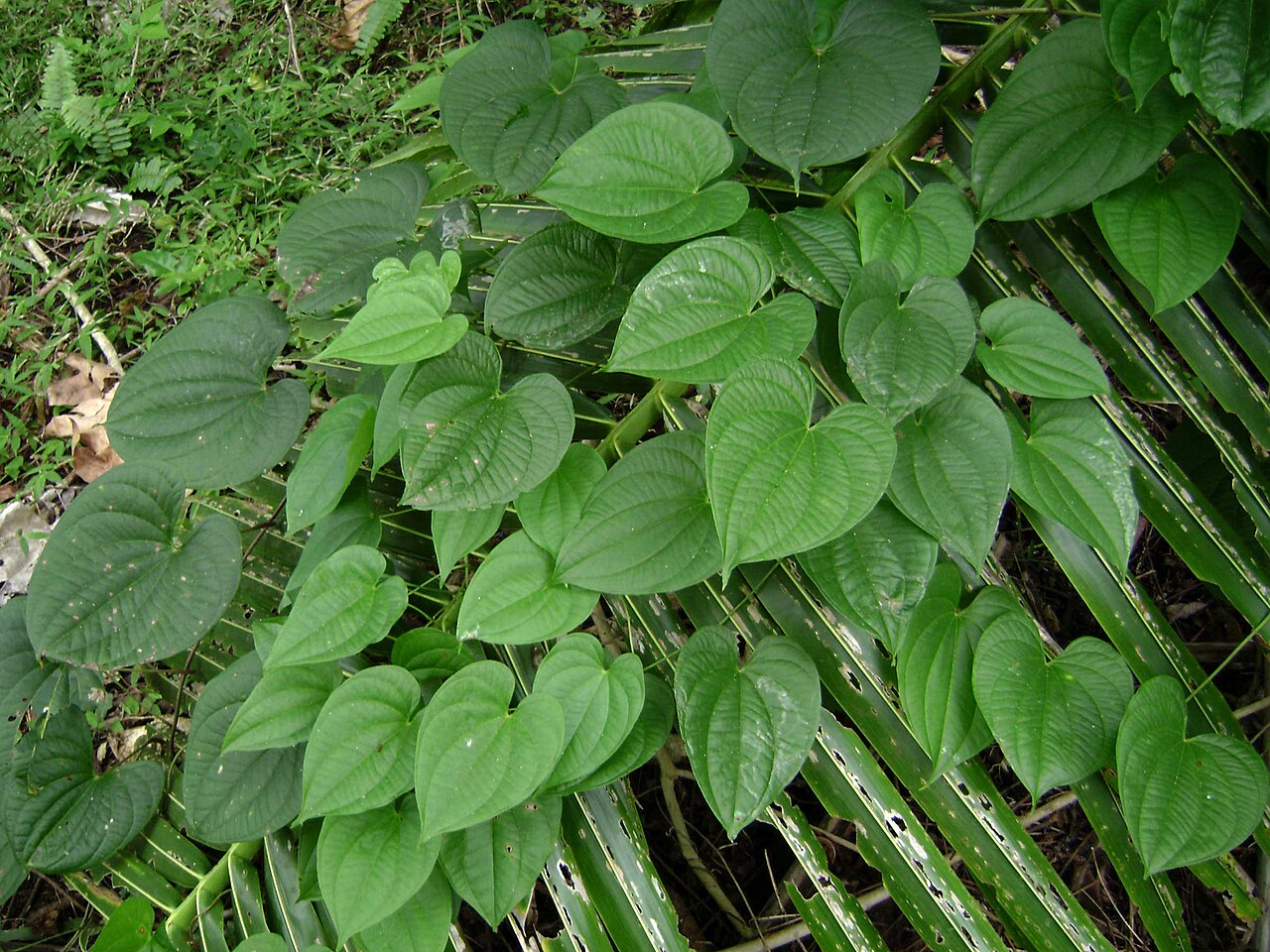
The purple yam, or mete alu, is a tuber crop eaten as a vegetable across Bangladesh. It is rarely grown commercially, but in every district it climbs trees, fences and trellises around the homestead — and it deserves more attention than it gets.
The plant
A monocot climbing vine known by many local names — gor alu, mete alu, guichcha alu, lema alu, dhusri alu. It occupies the whole monsoon season, so choose land that neither waterlogs in heavy rain nor lacks irrigation.
Planting
Treat the seed tuber before planting — 2 g of a carbendazim or mancozeb fungicide per litre — to prevent collar rot, its one serious disease. Plant with the eye upward, four fingers below the surface, a month or so before the rains; irrigate every 10–15 days if the soil is dry and mulch with straw or water hyacinth.
Care
Keep the mound weed-free from emergence, taking care not to loosen the soil at the base or wound the vine with the hoe. Give the vine a trellis, a tree or a fence to climb.
Pests and disease
Almost none. Sucking insects occasionally appear and can be controlled with a carbaryl spray; the fungicide-treated seed guards against rot.
Harvest
When the cold sets in around Kartik–Agrahayan (October–November) the leaves yellow and the vine dries. Lift the tubers once it has died back fully — the yam is then mature, tastier and better as seed.
Low risk, no disease to speak of, and a use for waste ground: for a country short of vegetables it is a crop worth reviving.
Photo: The purple yam vine (Dioscorea alata) — Tauʻolunga / Wikimedia Commons (CC BY-SA 3.0)
Comments
(0)