
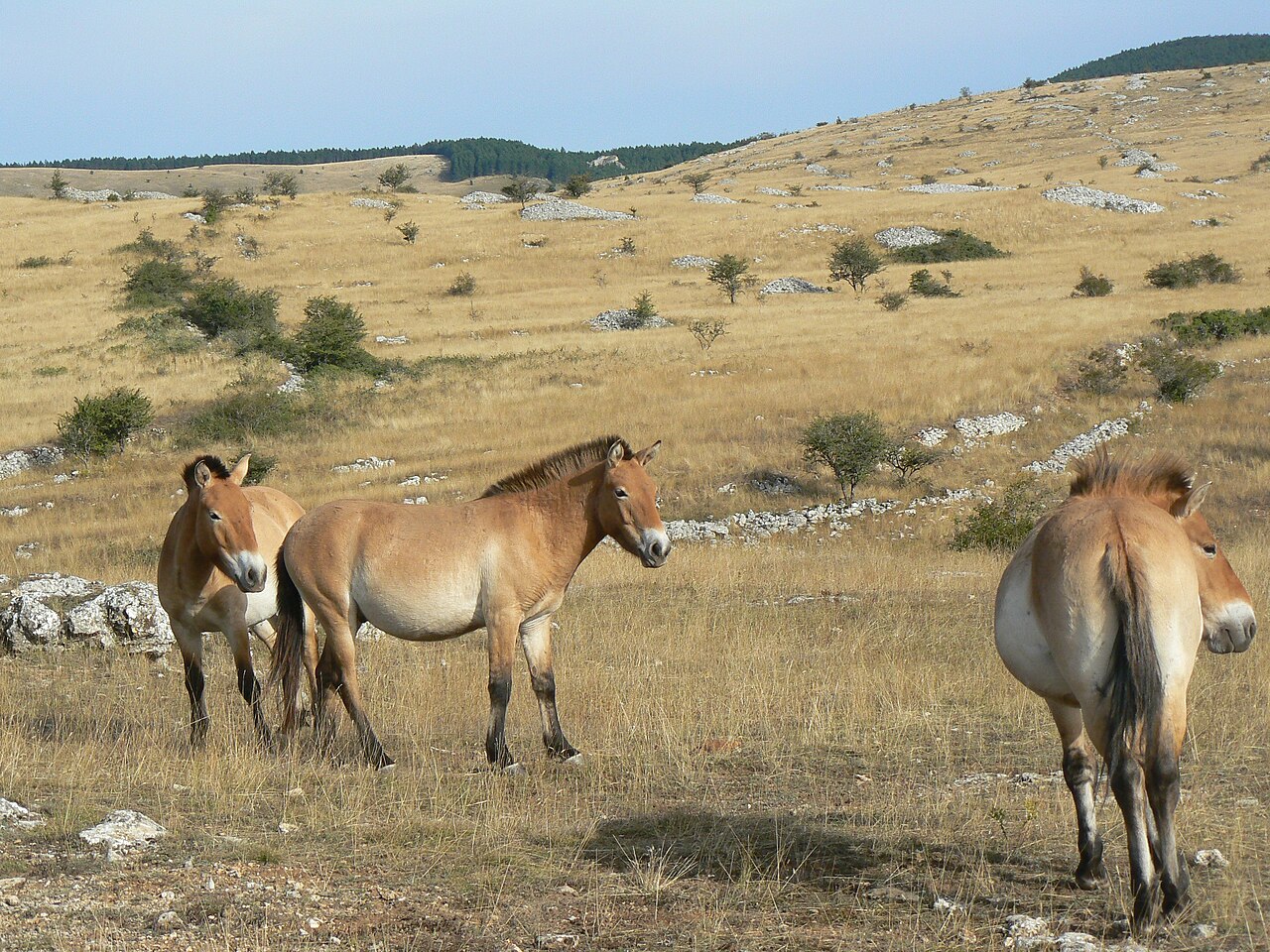
Two foals of the Przewalski's horse, the world's last truly wild horse, have been born on Kazakhstan's steppe, believed to be the first there in nearly 200 years, Down To Earth reports from a UN Environment Programme statement.
The mares Tess and Umbra gave birth on 22 and 30 August at a remote sanctuary. The births are the result of a decades-long effort to save the species and "rewild" Kazakhstan's grasslands, where human encroachment had sent biodiversity into decline. "The community-based protection of these rangelands that led to the birth of this foal is one of the great conservation success stories of the last decade," said Susan Gardner, director of UNEP's Ecosystems Division.
Przewalski's horses once roamed Central Asia in large numbers, but hunting, habitat loss to farming and competition from livestock wiped them out in the wild; the last was seen in the Gobi Desert in 1969. They survived in European zoos, where a breeding programme kept the gene pool diverse. Since 2024, 22 horses have been airlifted from European zoos to the Alibi Reintroduction Centre, where they learn skills such as digging through snow for food.
In 2005 Kazakhstan launched the Altyn Dala Conservation Initiative to restore 75,000 square kilometres of steppe and semi-desert damaged by overgrazing, unsustainable farming and climate change; it has been named a UN World Restoration Flagship. Large grazers keep plant growth in check, which reduces wildfire risk, loosen topsoil with their hooves and return nutrients in their manure. "Well-managed pastoralism can help keep these landscapes healthy, for both wildlife and livelihoods," Gardner said.
The foals will stay with their harems in a 56-hectare enclosure; if a new stallion is accepted next year, the groups should be released into the wild in May. Conservation officials aim to have 40 horses in Kazakhstan by 2029 and eventually a free-roaming population that needs no human help.
Photo: Ancalagon / Wikimedia Commons (CC BY-SA 3.0)
Source: Down To Earth
Comments
(0)