
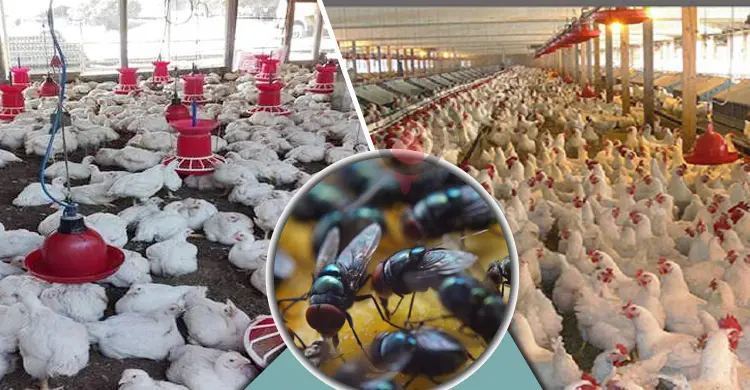
Flies spread various diseases and germs on poultry farms, and many birds sometimes die as a result. Fly infestations have several causes. Flies breed most at temperatures of 16 to 40 degrees Celsius; below 12 degrees their breeding stops, and as the temperature rises they become active and breed. Above 45 degrees Celsius, however, fly eggs and larvae die.
What attracts flies
Poor litter management is largely to blame for flies on a farm: wet, damp or caked litter, keeping old litter next to the farm, reusing the previous flock's litter for a new flock, using litter without treatment, and not turning the litter regularly. High humidity also plays a part; in the rainy season especially, moisture in the air makes litter damp easily, creating ideal conditions for flies to breed.
Flies also increase if rotting material is near the farm, such as dead chickens, fruit peel or fruit waste dumped close by, or if droppings are not cleaned regularly. Flies increase when birds have loose droppings, and coccidiosis can also lead to more flies.
Steps to drive flies away
- Keep litter clean and dry, and change wet or damp litter quickly.
- Bury dead chickens in the ground away from the farm.
- Clean droppings regularly and keep the area around the farm clean.
- Use lime, bleaching powder and disinfectant regularly.
- Find the source of flies on the farm and destroy it.
- Do not keep the previous batch's litter around the farm; dispose of it somewhere far away.
Turpentine oil can be sprayed around the farm to help drive flies away. Various preparations containing insecticide are available; sprayed around the farm at the prescribed dose, they kill adult flies.
There are also preparations containing cyromazine that are used in feed and destroy fly eggs and larvae. An ammonia reducer can also be used in the litter, which reduces flies at least to some extent. To keep chickens healthy, the farm must be kept free of flies.
Source: Jagonews24. First published in Bengali on The Agro News.

Comments
(0)