
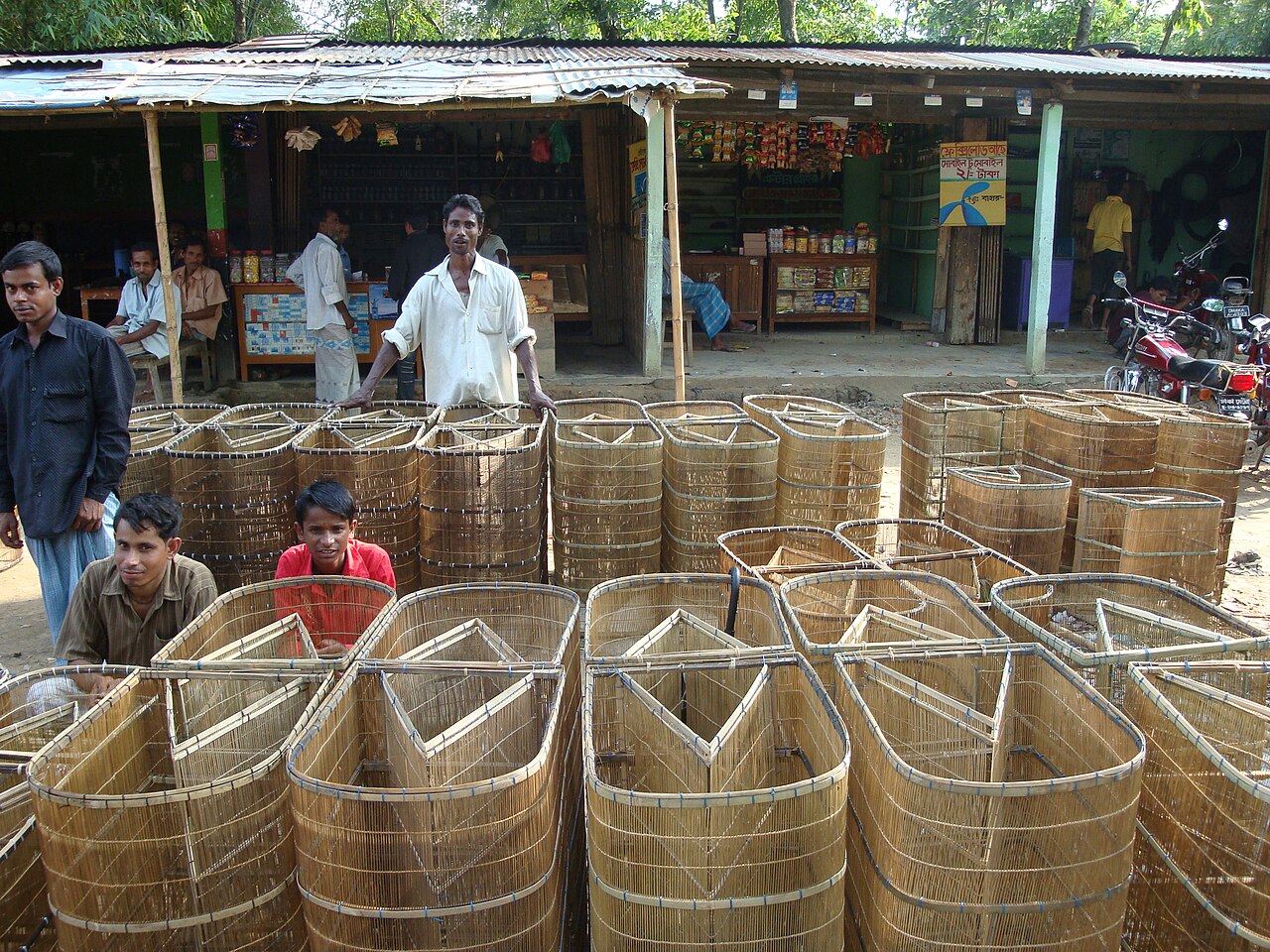
In Nesarabad, Pirojpur, the traditional bamboo fish trap known as the chai is still very much alive. Some 15,000 men and women in at least 18 villages of the upazila, among them Karfa, China-Bunia, Baldia, Jalabari, Mahmudkati, Atghar-Kuriana, Katakhali, Kanta-Bunia and Chiltala, are directly or indirectly involved in making and selling chai or fishing with them.
Local people say families in Umarer Par village of Bisharkandi union have been weaving chai and fishing with them for more than 200 years. Muli and moral bamboo is cut and split, soaked in water for several days, then dried in the sun and shaved into thin, flexible strips. These are shaped into a frame of a set design and bound with thread to make the trap.
Men usually cut the bamboo, prepare the strips and build the frame; women patiently weave the strips into the finished trap. Small native fish are caught with muli-bamboo chai, larger fish with bigger traps of moral bamboo, and the design varies with the catch, from boal, gajar, shol and magur to tengra, koi, bheda, baim and taki.
A chai sells for about Tk 300 to 400 depending on size and quality. Besides the local haats there is a separate chai market at Atghar-Kuriana, and traps made in Nesarabad go to Pirojpur and other parts of the south. Some people also make a living gathering the bamboo and aquatic plants the trade depends on.
When the monsoon fills canals, beels, ditches and low land, the traps are set where the current and the fish run, and lifted at dawn with koi, tengra, shol, magur, baim and taki inside. Abdur Rahim of Chimtala said the fish feed the family and the surplus is sold at market. Abdul Gafur Ali of Baldia said many families also earn from selling the traps themselves.
Local people complain, however, that they get little support from the agriculture department to keep the tradition going.
This report is based on information from Bangla Tribune's Barishal correspondent.
Photo: Balaram Mahalder / Wikimedia Commons (CC BY-SA 3.0)
Source: Bangla Tribune

Comments
(0)