
A joint team of the fisheries department, river police and upazila administration detained 20 fishermen at various points on the Sandhya river in Nesarabad upazila of Pirojpur on Saturday 25 October 2025, the last day of the 22-day hilsa conservation drive, Jagonews24 reported on the morning of 26 October. The operation lasted all day. Several thousand metres of banned current net and a number of fishing trawlers and boats were seized.
At 11pm that night a mobile court sentenced some of the 20 detained fishermen to jail terms of different lengths and to fines, and the seized nets were set on fire. The report did not say how many of the men were sentenced, how long the terms were, how large the fines were or what happened to the others, and it named none of the fishermen.
Who led the drive and what the officers said
According to the report, the drive was led by Nesarabad Upazila Nirbahi Officer Zahidul Islam, upazila fisheries officer Faria Konok and river police officer-in-charge (OC) Subrata Kumar. Other local administration officials were also present.
Faria Konok said fishing is completely banned during the government's ban, which exists to protect mother hilsa in the breeding season. Even so, she said, some fishermen, whom she called dishonest, had been breaking the law and fishing in the river. She said drives of this kind to protect mother hilsa would continue.
Subrata Kumar, the OC of Nesarabad river police, said his force always took a firm stand on hilsa conservation and that its main aim was to make ordinary fishermen aware and encourage them to follow the law. Drives against lawbreakers would continue, he said, while those who followed the rules would go on receiving support.
The report closed with a claim attributed only to unnamed people concerned: that the administration's firm stand and awareness work had drawn a positive response and raised awareness among ordinary people in the area. It gave no name or figure in support of that statement. The report carried no comment from the detained fishermen or their families.
The 22-day ban of 2025
The national fisheries and livestock adviser announced the Mother Hilsa Conservation Campaign 2025 at a press conference at the ministry on 29 September 2025, Desh Rupantor reported that day. The ban ran for 22 days, from 4 to 25 October, which the Department of Fisheries gave in the Bengali calendar as 19 Ashwin to 9 Kartik 1432. The period covered the four days before the Ashwini full moon and the three days after the new moon, and the timing was set on the opinions of the Bangladesh Fisheries Research Institute (BFRI), other agencies and fishermen. Both the full moon and the new moon were described as important for spawning.
During those days catching, transporting, selling, storing and exchanging hilsa were banned, and catching hilsa in the sea, on the coast and in estuaries was also fully banned. The announcement added that incursions by trawlers would be strictly controlled and that river dredging would be stopped. Bangla Tribune put the coastal breeding area covered at about 7,000 square kilometres. By the department's account on 16 October, reported by the state news agency BSS, the drive was being carried out in 178 upazilas across 38 districts.
The ban had grown over time. A peer-reviewed study in Frontiers in Marine Science records that the brood hilsa ban was extended from 11 to 22 days on 13 September 2016. The year before this story, the 2024 campaign had run from 13 October to 3 November.
What the law says about the ban and current nets
The ban rests on the Protection and Conservation of Fish Act 1950 (East Bengal Act XVIII of 1950), through Rule 13 of the Protection and Conservation of Fish Rules 1985. In the text of the rules as compiled up to October 2011 by a district fisheries officer, Rule 13 forbids catching hilsa, and carrying, transporting, offering, selling, exposing or possessing it, throughout the country during the peak spawning period. That text marks the spawning ground by four points: Mayani in Mirsarai, Chattogram; Paschim Sayed Awlia in Tazumuddin, Bhola; North Kutubdia in Cox's Bazar; and Lata Chapali in Kalapara, Patuakhali. At that date the peak period was still the older one of 11 days around the full moon. Fish caught in breach of the rule may be seized and forfeited.
Current net has its own provision. The Act defines "Current Jal" as a fishing net made of monofilament synthetic nylon fibre of different mesh sizes. Section 4A, inserted by an ordinance of 2002, says no person shall manufacture, fabricate, import, market, store, carry, transport, own, possess or use it. So the net itself was illegal in any month of the year, ban or no ban.
The penalties had changed shortly before this drive. The Protection and Conservation of Fish (Amendment) Ordinance 2025 (Ordinance No. 34 of 2025), dated 29 June 2025 and in force at once, rewrote section 5 of the Act. As the official text reads:
- Breach of a rule made under section 3 or of a prohibition notified under section 4: rigorous imprisonment of up to two years, or a fine of up to Tk 5 lakh, or both. The earlier wording was one to two years, or a fine of up to Tk 5,000.
- Carrying, transporting, owning, possessing or using current net: rigorous imprisonment of up to one year, or a fine of up to Tk 2 lakh, or both. The earlier wording was one to three years, or a fine of up to Tk 5,000.
- Manufacturing, fabricating, importing, marketing or storing current net: rigorous imprisonment of up to three years, and also a fine of up to Tk 10 lakh. The earlier wording was three to five years and a fine of up to Tk 10,000.
Press reports at the start of the 2025 ban, including those of The Daily Star on 28 September and Bangla Tribune on 5 October, still gave the older one-to-two-year term and Tk 5,000 fine.
The Act also explains how such cases move. Under section 5A a court that convicts a person must direct the confiscation of any article used or intended to be used in the offence. Under section 6 fishery officers empowered by the government have the same powers of search, seizure and investigation in such an offence as a police sub-inspector. Under section 7 a court may take up a case only on the complaint or report of a fishery officer or of a police officer not below that rank, and offences other than the manufacture or trade of current net may be tried summarily.
Mobile courts work under a separate law, the Mobile Court Act 2009 (Act No. 59 of 2009). It lets an empowered executive magistrate take up on the spot an offence under the laws in its schedule that is committed or discovered in the magistrate's presence, convict the accused on a confession and impose a penalty. Whatever the other law provides, a mobile court may not impose more than two years in prison, and any fine must stay within the limit that law sets. If a magistrate thinks a case too serious for those limits, the Act requires a regular case to be filed instead.
Other drives in Pirojpur in the same season
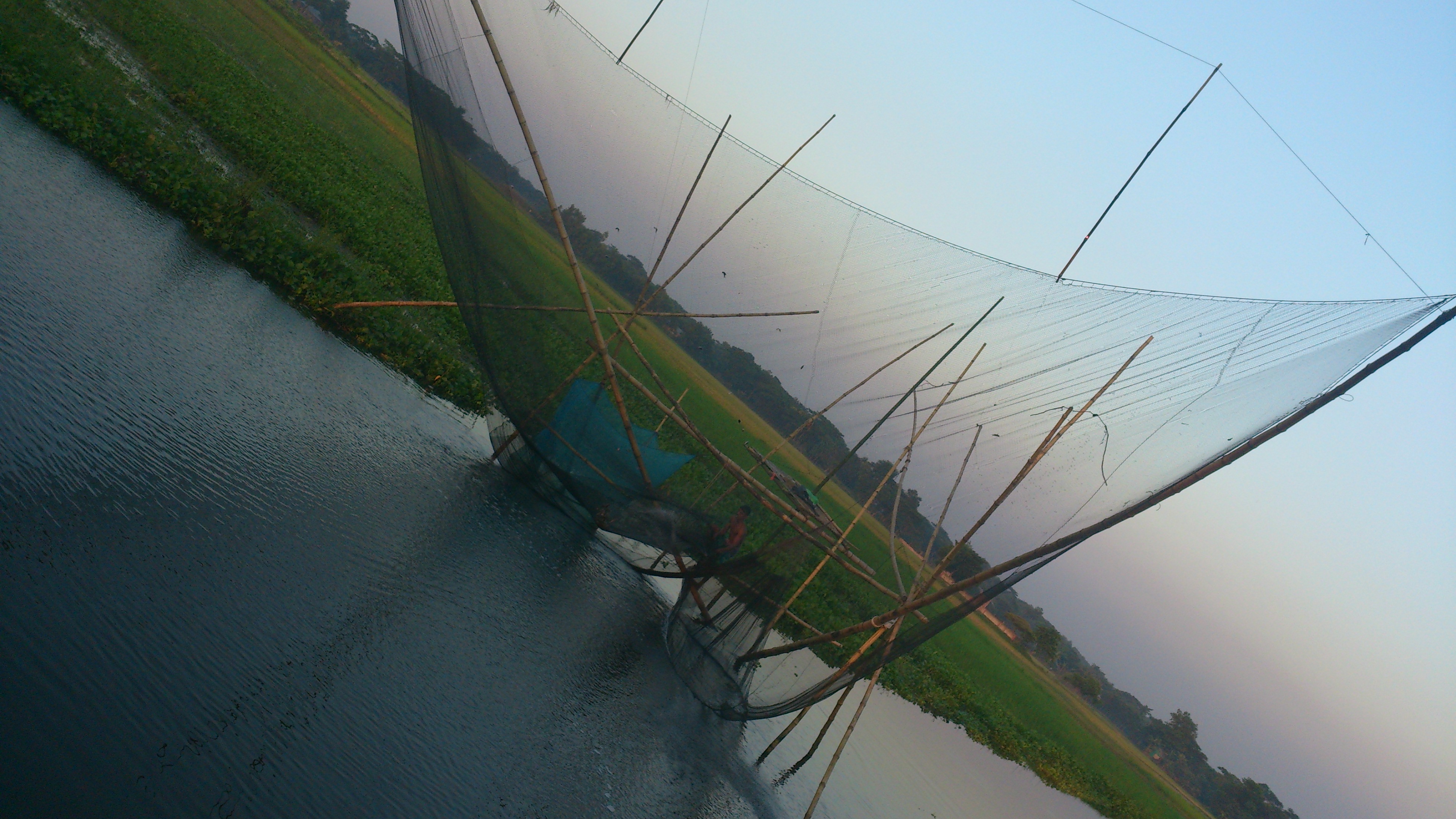
The Nesarabad operation was one of several reported in Pirojpur district during the ban. BSS carried these earlier ones:
- In Indurkani upazila, BSS reported on 9 October that a mobile court on the Baleshwar river, at the Lahuri and Char Gazipur areas, recovered 2,500 metres of banned current net and six charghera nets. Fishermen fled when they sensed the team and left their nets in the river. The nets were burned at the upazila parishad premises.
- Also in Indurkani, on the Kocha river, a drive on 11 October seized 1,000 metres of illegal net and a behendi net and burned them on the upazila administration's field. River police took part.
- In Kawkhali upazila, on the Sandhya itself, a drive led by the fisheries officer arrested two fishermen at night, BSS reported on 17 October. Officers seized 4,000 metres of net, two boats and 5 kg of hilsa. A mobile court gave each man 17 days in prison, the fish went to orphanages, the net was burned and the boats were destroyed in the river.
- On 18 October a Bangladesh Navy team seized 30,000 metres of nets, which BSS said had an estimated market value of Tk 10.50 lakh, in the estuaries of the Sandhya and Kancha rivers in Kawkhali, and burned them on the Sandhya's bank at Amrajhuri. The officer leading it said the warship BNS Banouja Kushiyara was working in Barguna, Pirojpur and nearby areas and would stay on the campaign until 25 October.
The drives came after a poor season in the district. Prothom Alo reported from Pirojpur on 24 September 2025 that fishermen on the Kaliganga, Kacha and Baleshwar, which it called the district's main rivers, were not getting the expected catch even in the peak season. Fishermen blamed the catching of jatka, the young hilsa, and illegal gear including current net. The district fisheries officer pointed instead to submerged sandbars, said dredging could bring the fish back, and said campaigns against jatka catching and illegal nets were going on. At the Bekutia Bridge market, the report said, hilsa of 1 to 1.5 kg sold at Tk 2,600 to 3,200 per kg, and fish of 500 g to 1 kg at Tk 1,400 to 2,400.
Nesarabad and the Sandhya river
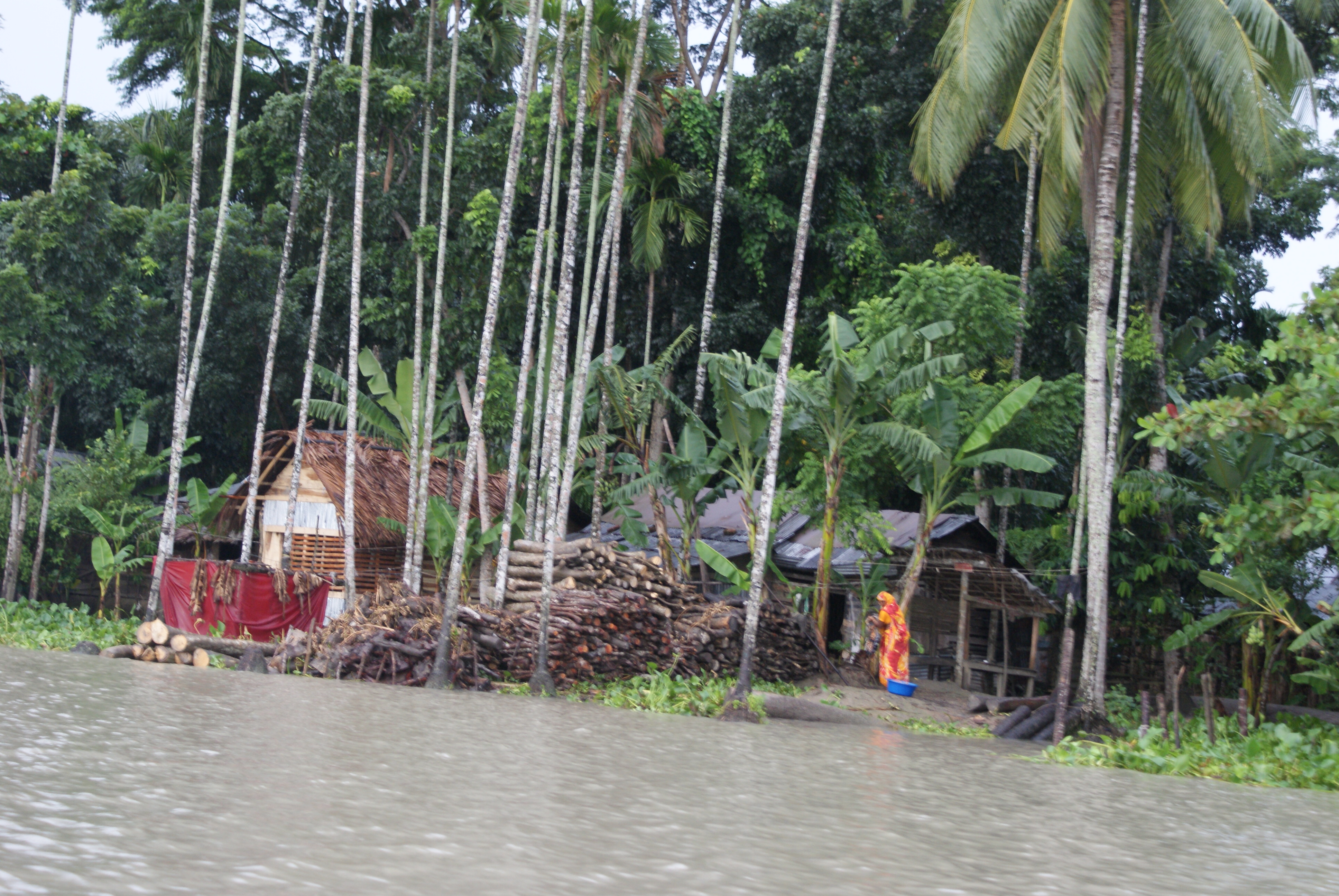
Nesarabad, also known as Swarupkati, is one of the seven upazilas of Pirojpur district in Barishal division. Banglapedia, the national encyclopedia, records that its thana was formed in 1906, that it became an upazila in 1983 and that it took the name Nesarabad in place of Swarupkati in 1985. It covers 200.33 square kilometres and has 10 unions, and it borders Banaripara to the north and Nazirpur and Pirojpur Sadar to the west. Banglapedia gives its population as 211,032.
Banglapedia describes an economy built mainly on farming and trade. It lists agriculture at 36.17 per cent of livelihoods and commerce at 30.05 per cent, with paddy, jute, betel leaf and vegetables among the crops, and guava, hog-plum, banana, coconut and betel nut among the goods it sends out. There are 24 hats and bazars, and coconut fibre is the noted industry. The entry gives no separate figure for fishing. It lists the main rivers as the Swarupkati, Kaliganga, Bainakati and Belua, and notes the Gabkhana canal and 40 nautical miles of waterway; it does not list the Sandhya by name.
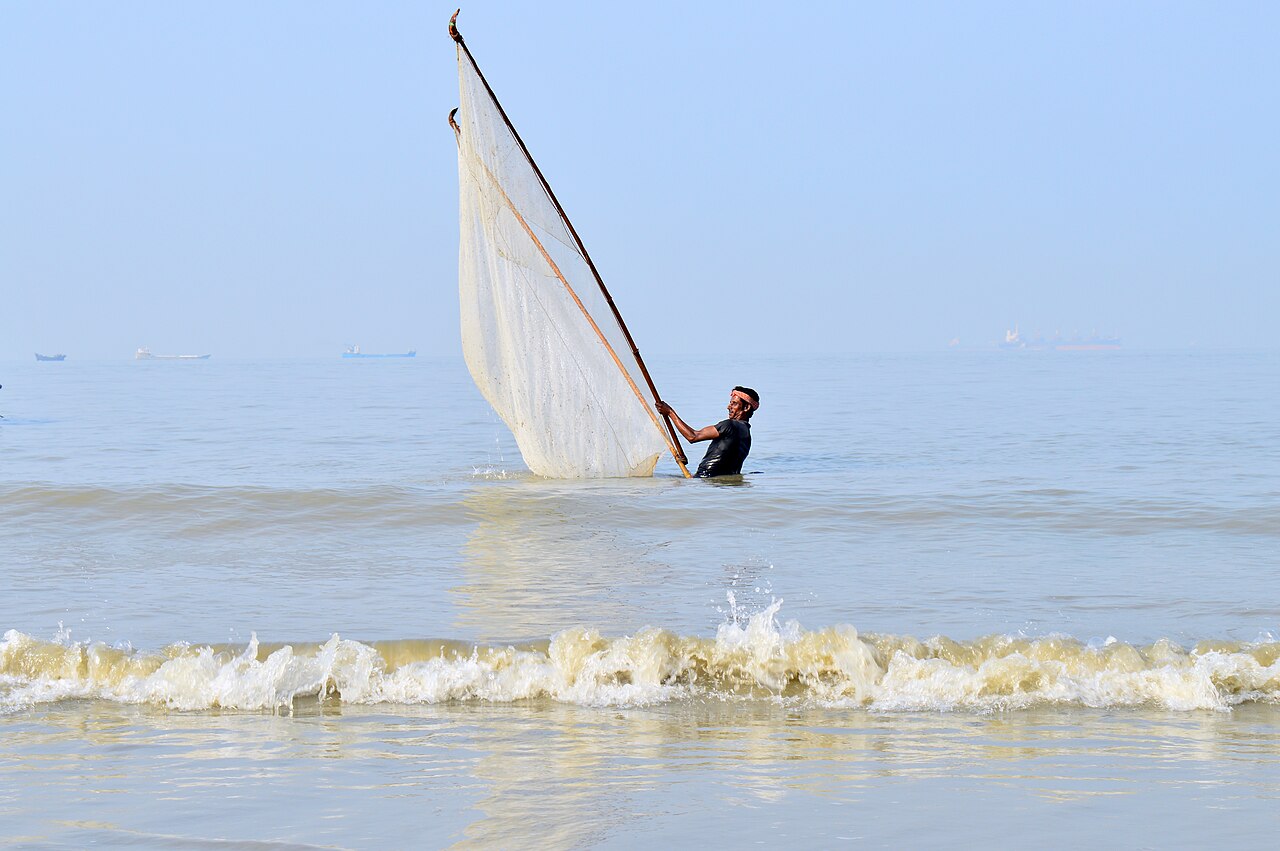
The Sandhya is described in the Bengali Wikipedia, which cites a 2015 book on the country's rivers, as a winding tidal river of the Barishal and Pirojpur districts, 61 kilometres long and on average about 590 metres wide. It leaves the Arial Khan at Rahmatpur in Babuganj upazila of Barishal and runs to Dhumritala in Pirojpur Sadar upazila, where it joins the Kacha. Water flows all year and boats of many sizes use it; the inland water transport authority classes it as a third-class waterway.
What the campaign looked like nationally
By 16 October the Department of Fisheries reported 5,085 drives and 1,175 mobile court operations nationwide, with 1,301 cases, 1,047 jail sentences and Tk 42.43 lakh in fines, BSS said. Authorities had seized 428.47 lakh metres of illegal net and 57.1 metric tonnes of hilsa, which went to orphanages, and an auction of seized gear had brought Tk 31.13 lakh to the government. Nine people had been injured during operations. The Army, Navy and Air Force were helping with surveillance and enforcement.
River police kept their own tally. A press release carried by BSS on 16 October said they had arrested 1,275 people across the country since 4 October and seized about 19 crore metres of illegal net, 15,796 kg of fish and 506 boats, with 421 mobile courts lodging 278 cases. Regional figures showed the same pattern:
- The Barishal divisional fisheries office reported 57 people jailed and Tk 208,000 in fines for 4 to 7 October, with 604 kg of hilsa and illegal nets worth Tk 1.82 crore seized, The Daily Star reported on 9 October. The same report quoted the Barishal district fisheries officer as saying seven people were arrested after a patrol team was attacked in Bakerganj and Hijla early in the month.
- In Manikganj, 70 fishermen had been jailed by 18 October at points along the Padma and Jamuna, and the district fisheries officer reported 2.897 metric tonnes of hilsa and 106,950 metres of net seized since the start of the ban.
- On the Meghna at Hijla, river police reported on 21 October 825,000 metres of illegal net, 180 kg of hilsa and seven boats seized in a day-long drive with drone surveillance and leaflets for the public.
For comparison, the department's account of the 2024 campaign, given at the 2025 press conference, listed 2,169 mobile courts held through 9,813 operations, 54.86 metric tonnes of hilsa seized, 612.11 lakh metres of net destroyed and Tk 75.27 lakh in fines.
The river police, the force whose local OC took part in Nesarabad, began on 12 November 2013 as a special unit of Bangladesh Police. BSS reported on 27 September 2025 that it had 11 zones, 122 outposts and around 2,000 personnel nationwide, and that its additional DIG for the southern division, which has 600 to 700 of them, called that inadequate for its river routes. Most patrols, the report said, rely on local shallow engine boats, which are slower.
Why hilsa are protected in October
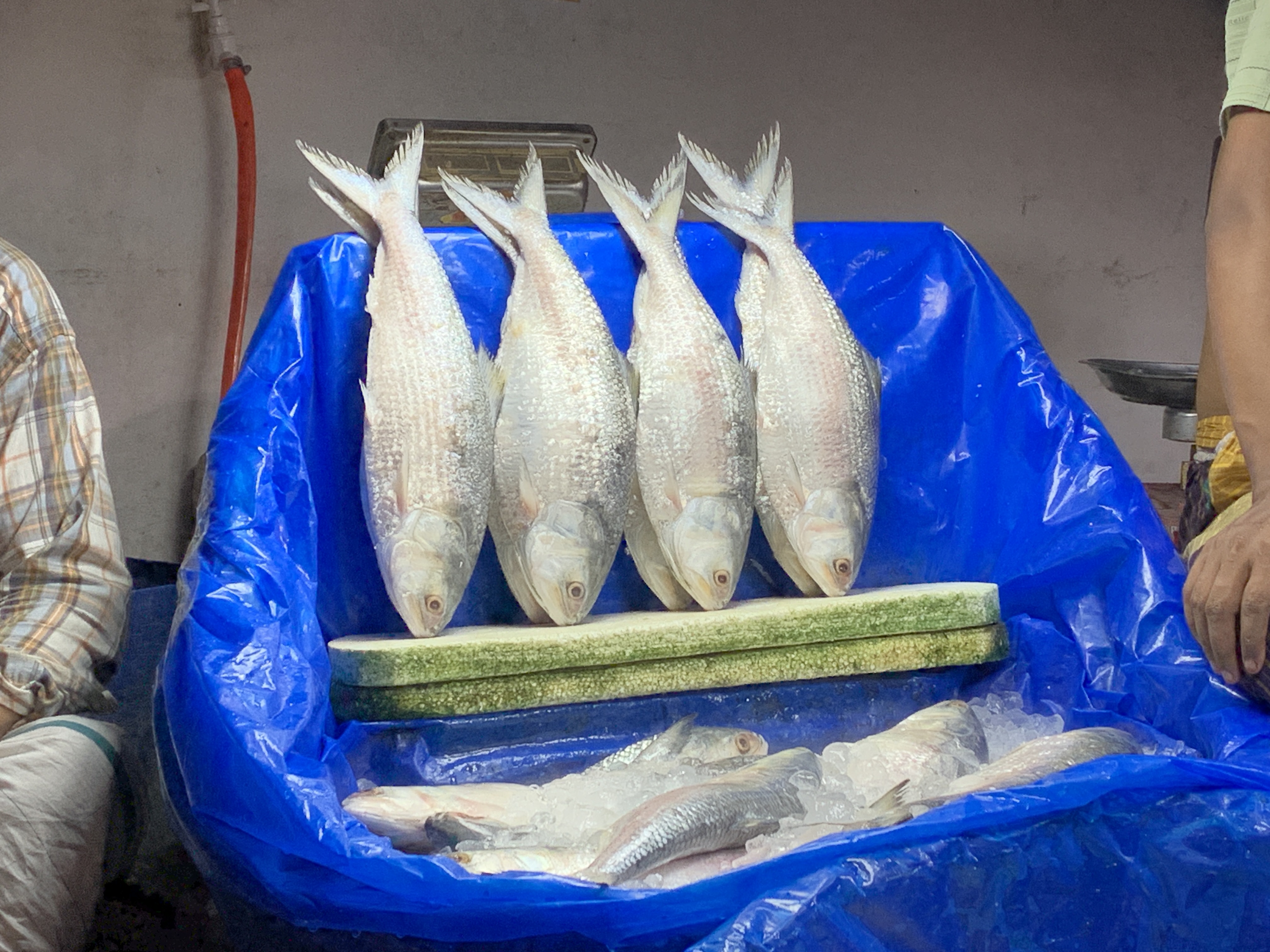
Hilsa, Tenualosa ilisha, is Bangladesh's national fish and a member of the herring family. Banglapedia describes it as an anadromous fish: adults come up rivers from the sea to breed in fresh water, the eggs float free, the larvae grow in river nursery areas and the young move down to the sea to feed. It spawns throughout the year, with a minor season in February and March and the major one in September and October. It matures in one to two years, a large female may carry up to 2 million eggs, and common specimens measure 35 to 40 cm. The young fish, jatka, are heavily caught on their way down to the sea.
An October closure therefore aims at the fish that have come in to spawn. An associate professor at Patuakhali Science and Technology University told The Daily Star in October 2025 that catching the fish before they breed disrupts the reproductive cycle. BFRI research presented at the 2025 announcement found that the 2024 ban had allowed 52.5 per cent of mother hilsa to spawn safely.
The fishery is a large one. A study cited in Frontiers in Marine Science put Bangladesh's share of the world hilsa catch at 86.7 per cent, with India at 8 per cent and Myanmar at 4 per cent. The same paper says hilsa makes up about 12 per cent of the country's annual fish production, that about half a million people depend on the fishery directly, and that about 2.5 million more work in processing, transport and marketing. Catches fell to a low of 199,032 tons in 2002, and Bangla Tribune cited 2.98 lakh metric tons for 2008-09. The catch had reached 5.33 lakh metric tons in 2018-19. Growth then slowed, The Daily Star reported in July 2023, to 3.3 per cent in 2019-20, 2.68 per cent in 2020-21 and 0.25 per cent in 2021-22. That report cited BFRI as saying banned nylon monofilament nets at river mouths were a major barrier to spawning fish.
The October ban is one part of a wider plan. The Hilsa Fishery Management Action Plan of 2005 set up five sanctuaries and prohibits catching hilsa under 25 cm, and a sixth sanctuary, 83 km of the Meghna in the Hizla and Mehendiganj area of Barishal, was declared on 10 September 2018. The legal gill net mesh was raised from 4.5 cm to 6.5 cm on 15 July 2020. The 2011 text of Rule 13 lists the first five sanctuaries: stretches of the lower Meghna, the Shahbazpur channel, the Tetulia and the lower Padma, closed from March to April, and the Andharmanik in Patuakhali, closed from November to January.
Rice for fishing families and their complaints
The ban came with food aid for those it kept off the water. The government announced VGF rice for 620,140 fishing families in 165 upazilas across 37 districts, at 25 kg per family, for a total of 15,503.50 metric tonnes. By 16 October, BSS reported, 99.34 per cent had been distributed.
The aid did not settle every objection. A fish trader quoted by Bangla Tribune on 5 October said many fishermen who were not on the list missed out. In Bhola, bdnews24 reported on 3 October, the district had 169,886 registered fishers against an unofficial estimate of about 2.5 lakh, and fishers there said the season had been poor, that fish had only begun to appear near its end, and that a start on 12 October would have been better. The district fisheries officer said the decision lay with higher authorities.
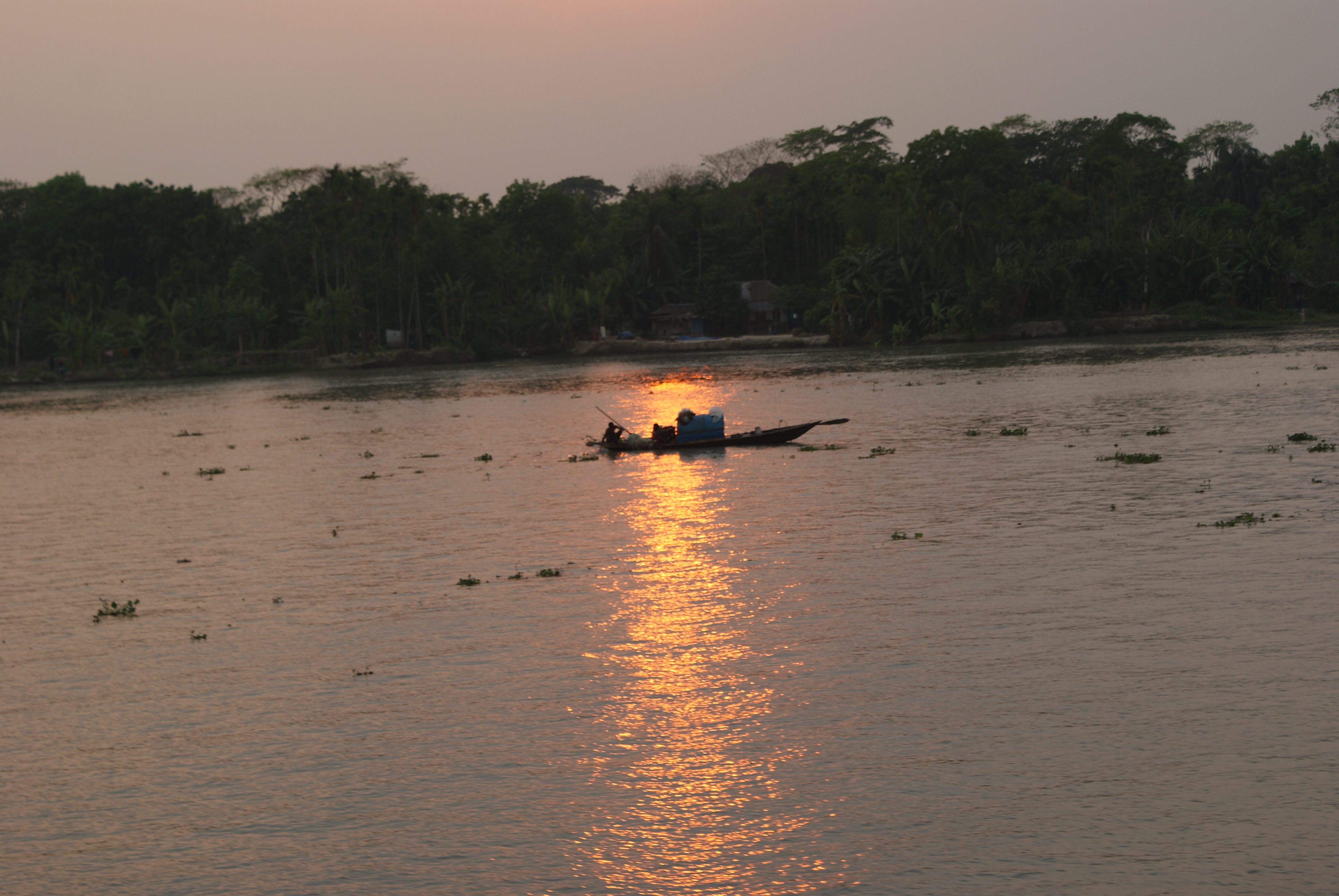
Photo: Nazmulhuqrussell / Wikimedia Commons (CC BY-SA 4.0). The top picture shows fishing on the Sandhya river at Banaripara, Barishal, as background; it is not a picture of this drive.
Sources: Jagonews24 ("20 fishermen detained on the last day of the hilsa conservation drive in Pirojpur", 26 October 2025), Laws of Bangladesh (Protection and Conservation of Fish Act 1950; Ordinance No. 34 of 2025; Mobile Court Act 2009), a compiled text of the Protection and Conservation of Fish Rules 1985, BSS, Desh Rupantor, Bangla Tribune, bdnews24, The Daily Star, Prothom Alo, Frontiers in Marine Science, Banglapedia, Bengali Wikipedia.

Comments
(0)