
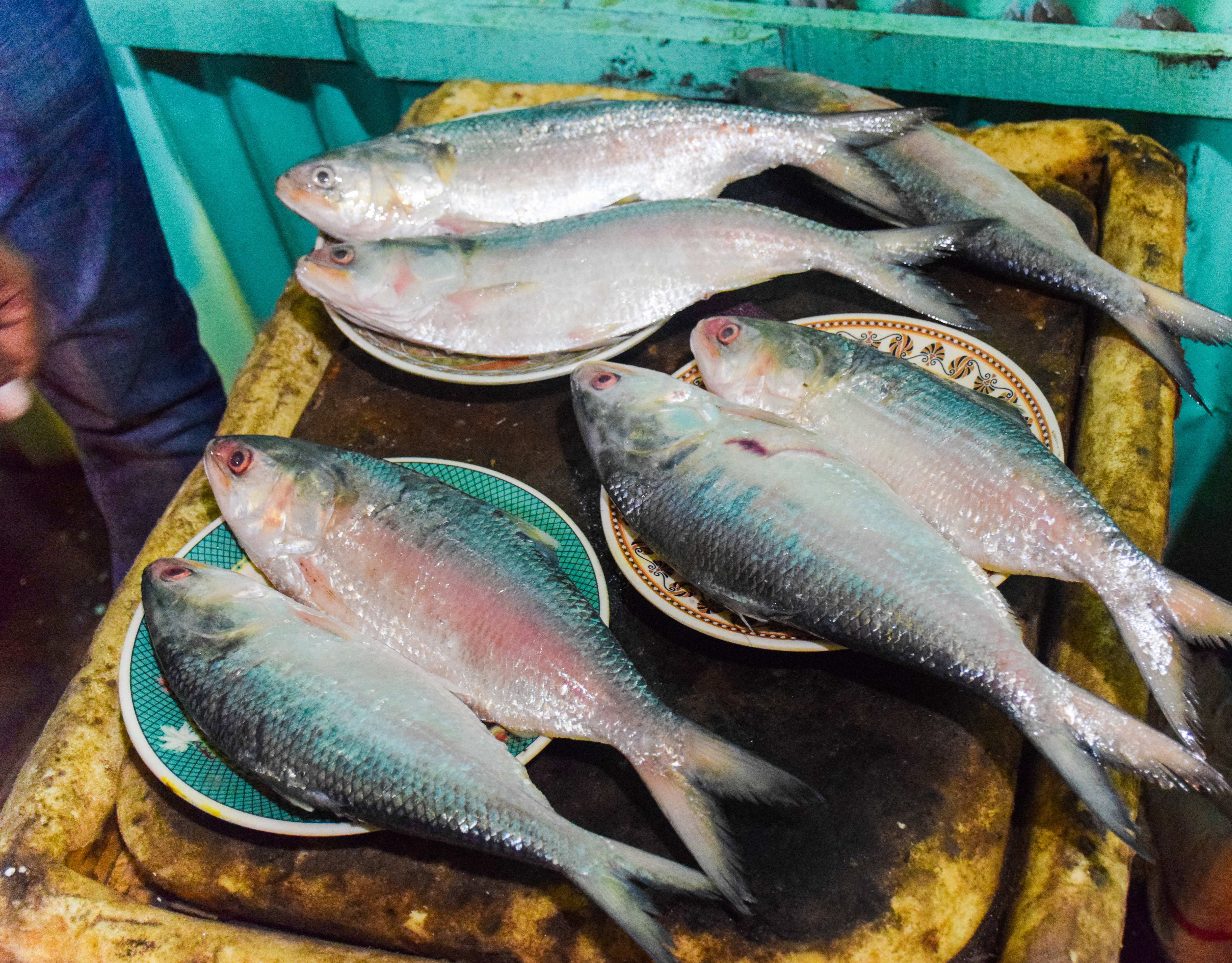
A mobile court in Kawkhali upazila of Pirojpur district sentenced a fisherman to 17 days' simple imprisonment on the morning of Saturday, 11 October 2025, for catching hilsa in the Kacha river in breach of the government's ban on hilsa fishing, Jagonews24 reported that day. The court was led by Sudipta Debnath, Kawkhali's assistant commissioner (land) and executive magistrate, during a drive on the river, and the fisherman was detained there before he was sentenced.
The ban was the core of the Mother Hilsa Conservation Drive 2025, a 22-day closure that the Ministry of Fisheries and Livestock set from 4 to 25 October so that mature hilsa could spawn undisturbed in their peak breeding season. For those 22 days, catching, transporting, storing, marketing, buying, selling and bartering hilsa were banned throughout the country.
The sentence on the Kacha river
According to the Jagonews24 report, the jailed fisherman was Bellal Fakir, 38, of Bekutia village in Kawkhali upazila. He was detained during the drive on the Kacha and sentenced there by the mobile court. The report gave no detail of the size of the catch, the net or the boat.
Sudipta Debnath told the paper that the fisherman had been punished for catching hilsa in defiance of the ban, and that the drive to protect mother hilsa would continue. The sentence was the mobile court's own: 17 days of simple imprisonment, as the report describes it. The report mentioned no fine.
The 22-day ban of October 2025
The Daily Star's Bengali edition reported on 28 September 2025 that the dates had been fixed at a meeting chaired by the fisheries and livestock adviser. The Barishal district fisheries officer, Ripon Kanti Ghosh, told the paper that the ban would start on 4 October and run until 25 October, with the aim of raising production through safe breeding, and that catching, transporting, selling, storing and exchanging hilsa would be prohibited while a special conservation drive was under way.
Bangla Tribune, reporting on 5 October, set out the ministry's reasoning. The 22 days were drawn to include the four days before the full moon of the Bengali month of Ashwin and the three days after the following new moon. The closure applied to about 7,000 square kilometres of coastal hilsa breeding grounds, and the ministry said it had issued its notification under rule 13 of the Protection and Conservation of Fish Rules 1985, made under the Protection and Conservation of Fish Act 1950, banning the catching, transport, storage, marketing, buying, selling and barter of hilsa across the country.
The ministry told the paper that the main spawning season had usually been taken as 15 to 17 days around the Ashwin full moon, but that the government had lengthened the closure because researchers found that hilsa spawn at the new moon as well as at the full moon. Navy ships were to work alongside the civil administration in the inland sea, coastal areas and rivers, and, as in the two previous years, were to patrol around St Martin's Island, Cox's Bazar and Kutubdia. Fishing trawlers were to be kept out of the designated waters and all dredging in the rivers was to stop for the period.
The fisheries and livestock adviser told a press conference at the Secretariat that the ministry hoped the 2025 drive would be better organised and more effective than the year before. The ministry also said that mobile courts would sit regularly throughout the 22 days.
Why October: how hilsa breed
The hilsa, Tenualosa ilisha, known locally as ilish, is the national fish of Bangladesh. Banglapedia, the national encyclopedia, describes it as a member of the herring family Clupeidae with a strongly compressed, metallic silver body that commonly measures 35 to 40 centimetres, although it can reach 60 centimetres; a large fish weighs about 2.5 kilograms. Females grow faster than males and are usually larger, and the fish matures in one to two years. It is a fast swimmer and feeds mainly on plankton.
The hilsa is anadromous: it feeds and grows in the sea and the estuaries and runs up the rivers to breed. The eggs float free, the larvae hatch upstream, and the young grow in the river channels before going down to the sea, returning as mature adults to complete the cycle. Banglapedia notes that a large female may produce up to 2 million eggs. Hilsa spawn more or less throughout the year, but there is a minor season in February and March and a major one in September and October, which is why the October closure is timed for the fish coming in from the sea.
The young, 6 to 10 centimetres long and called jatka, are caught in large numbers as they migrate towards the sea in some of the main rivers. Banglapedia lists that catch, together with silted rivers, blocked migration routes, the loss of spawning, feeding and nursery grounds, and river pollution, among the causes of the decline the fishery suffered around 2000. A survey by the Bangladesh Fisheries Research Institute in 1992-94 put the yearly jatka catch from January to April at about 3,500 to 4,000 tonnes, more than half of it in the Meghna.
Researchers quoted by Bangla Tribune said that in this season shoals of mother hilsa rush in from the sea to the rivers, and that the government therefore bans hilsa fishing for three weeks every year to keep their breeding undisturbed. An associate professor of aquaculture at Patuakhali Science and Technology University told The Daily Star's Bengali edition on 9 October 2025 that catching hilsa before they spawn breaks the breeding cycle and badly affects production, and that public awareness was also important to secure a safe breeding season.
What the law provided on 11 October 2025
The ban rests on the Protection and Conservation of Fish Act 1950 (East Bengal Act XVIII of 1950). Section 3 of the Act lets the government make rules that, among other things, prescribe the seasons in which killing or catching a prescribed species is banned, prohibit all fishing in all or specified waters for a specified period, and set the minimum size below which a prescribed species may not be killed or sold. Section 4 lets the government ban, by notification and for a specified period, the catching, carrying, transporting or possession for sale of fish below the prescribed size.
The penalty for breaking those rules had been changed a few months before the 2025 drive. The Protection and Conservation of Fish (Amendment) Ordinance 2025, Ordinance No. 34 of 2025, dated 29 June 2025 and in force at once, rewrote section 5(1) of the Act. From then on, a breach of any rule made under section 3 or of a prohibition notified under section 4 was punishable with rigorous imprisonment for up to two years, or a fine of up to 5 lakh taka, or both. Before the Ordinance, the section had set a prison term of not less than one year and up to two years, or a fine of up to 5,000 taka; several press reports at the start of the 2025 drive still quoted that older wording.
The same Ordinance changed the penalties for current jal, the monofilament nylon net that section 4A of the Act bans outright: rigorous imprisonment of up to three years and a fine of up to 10 lakh taka for making, importing, marketing or storing it, and up to one year, or a fine of up to 2 lakh taka, or both, for carrying, owning, possessing or using it. It also added to the Act a definition of a fish sanctuary and a power for the government to declare one, where catching fish or other aquatic animals may be banned permanently or for a set period.
Other provisions stayed as they were. Under section 5A, a court that convicts a person under the Act or its rules must order the confiscation of anything used or intended to be used in the offence. Under section 6, a person specially empowered by the government may arrest without warrant someone breaching the rules whose name and address are unknown or in doubt. Section 7 makes offences under the Act cognizable, lets a court take cognizance only on the complaint or report of a fishery officer or of a police officer not below the rank of sub-inspector, reserves trial to a metropolitan magistrate or a magistrate of the first class, and allows most offences to be tried summarily.
How a mobile court works
Much of the enforcement during the ban took the form of mobile courts. The Mobile Court Act 2009 gives an executive magistrate, empowered in writing by the government or by the district magistrate, a limited power to take cognizance of certain offences on the spot and impose punishment, in the interest of law and order and crime prevention. Under section 6, when an offence under a law listed in the Act's schedule is committed or uncovered in the magistrate's presence, the magistrate may take cognizance of it there and then and convict the accused on the basis of his admission.
Section 7 sets out the procedure. The magistrate frames a brief written charge, reads and explains it to the accused, and asks whether he admits it. An admission is recorded and signed or thumb-printed by the accused and by two witnesses present, and the magistrate then imposes the punishment he thinks fit in a written, signed order. If the accused denies the charge and his explanation is satisfactory, he is discharged; if it is not, the case is sent to a court with jurisdiction to try it.
Section 8 caps any prison term a mobile court may impose at two years, whatever the parent law provides, while any fine within the limit set by that law may be imposed. Section 13 gives a person aggrieved by a mobile court's sentence the right to appeal to the district magistrate of the area. In Kawkhali the court was led by the assistant commissioner (land); in neighbouring Indurkani upazila, the state news agency BSS reported, a mobile court on 8 October was led by the upazila nirbahi officer.
The first week of the drive in Barishal division
Pirojpur is one of the districts of Barishal division. The Daily Star's Bengali edition reported on 9 October 2025, from figures of the Barishal divisional fisheries office, that drives between 4 and 7 October had led to 57 people being jailed and fines of 2 lakh 8 thousand taka, and to the seizure of 604 kilograms of hilsa and illegal nets worth 1 crore 82 lakh taka. Fisheries officials had inspected 832 markets, 810 landing stations and 467 river points.
The same report said that fish were still being caught in five sanctuaries despite the ban, mostly at night on the Meghna, Kalabadar, Tentulia and Bishkhali, the main breeding grounds, and that seasonal fishermen pulled in their nets and escaped through narrow canals when patrols arrived. Patrol teams had been attacked by fishermen in Bakerganj and Hijla early in the month, and the Barishal district fisheries officer said seven people had been arrested with local weapons. Officials said drones let them watch fishermen from several kilometres away that year, and a senior assistant director of the divisional fisheries office said drives were being run on a wide scale through drone surveillance and mobile courts.
In Patuakhali, the Barguna district fisheries officer told the paper, 23 mobile courts had carried out 93 drives on 7 October alone, seizing 1,945 metres of net worth about 37 lakh taka, filing 10 cases and jailing five fishermen, with fines of 64,000 taka. In Munshiganj, four mobile courts carried out 26 drives between 4 and 7 October and seized 73 kilograms of hilsa and 1 lakh 80 thousand metres of illegal net worth 36 lakh taka, but no one was arrested or fined; the district fisheries officer said hilsa had not yet come upstream from the southern Padma and Meghna. In Chandpur, the river police detained three fishermen and seized three boats, some hilsa and illegal current net.
Closer to Kawkhali, BSS reported on 9 October that a mobile court run jointly by the upazila administration and the Department of Fisheries in Indurkani upazila of Pirojpur had seized 2,500 metres of banned current net and six charghera nets on the Baleshwar river, in the Lahuri and Char Gazipur areas, the day before. The fishermen fled on seeing the enforcement teams and left the nets in the river, and the nets were later burnt in public at the upazila parishad. The upazila fisheries officer said regular patrols and drives were being carried out on the Baleshwar to protect mother hilsa.
Bangla Tribune reported on 5 October, from conversations with the drivers of vessels that travel the rivers at night, that hilsa were caught after dark from the Dhaleshwari below Munshiganj along the Meghna to the mouth of the Sandhya at Muladi and Shikarpur, and on the Tentulia in Bhola, while mobile courts worked on the rivers mainly by day. The additional deputy commissioner of Bhola told the paper that the river police, Ansar and Coast Guard would patrol by day and by night, and that action would be taken against anyone trying to catch hilsa.
Pirojpur, Kawkhali and the Kacha river
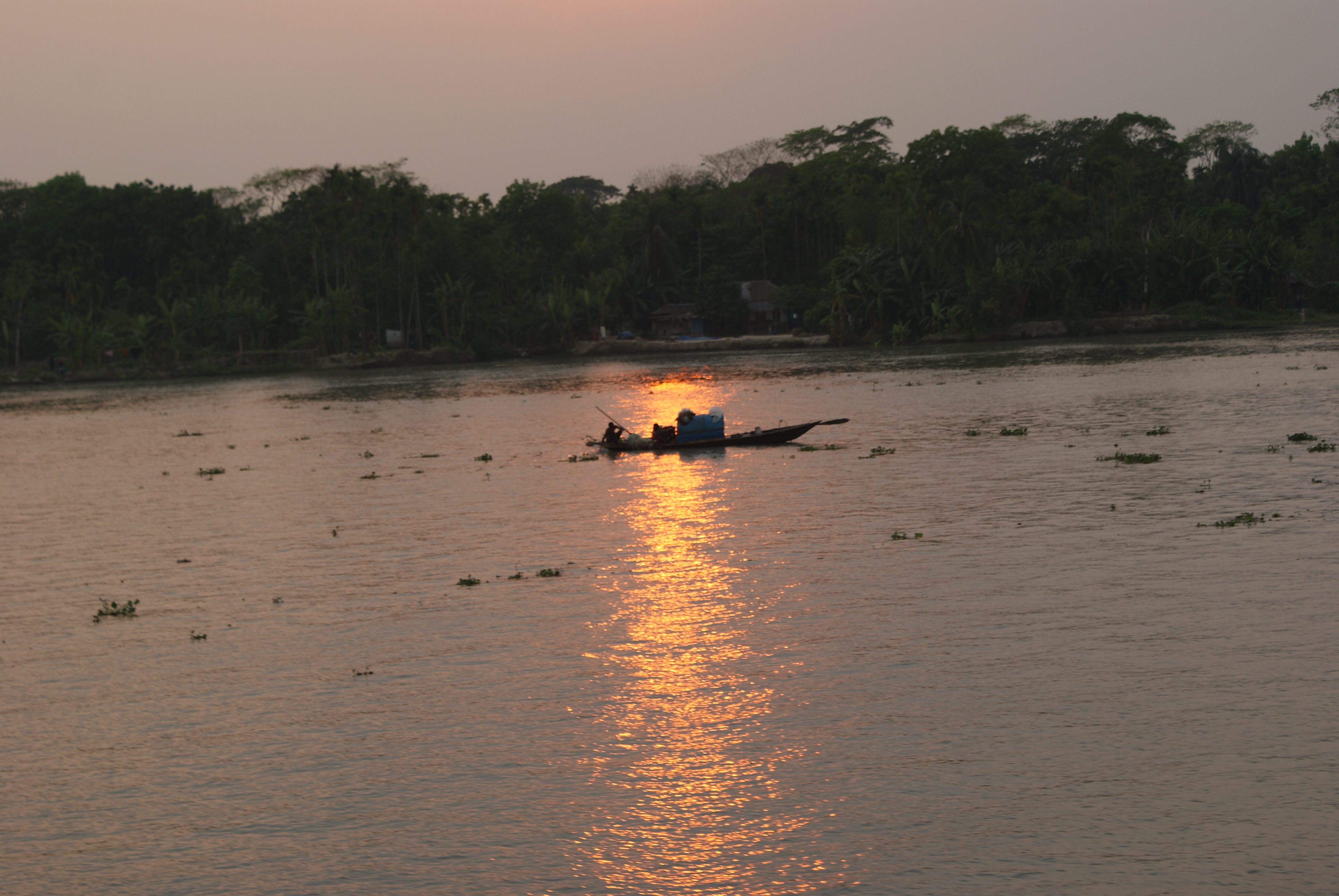
Pirojpur district covers 1,277.80 square kilometres in the south-west of Barishal division. Banglapedia describes it as bounded by Gopalganj and Barishal districts to the north, Barguna to the south, Jhalokati to the east and Bagerhat to the west, and lists its main rivers as the Baleshwari, Swarupkati, Katcha and Kaliganga. The district was formed in 1984 and has seven upazilas, and the 2011 census counted 1,113,257 people in it. Banglapedia lists agriculture as the leading source of income in the district, at 50.82 per cent.
Kawkhali is the smallest of the seven upazilas, at 79.56 square kilometres, with five unions and, in the 2011 census, 70,130 people. It became a thana in 1906 and an upazila on 1 August 1983. Its main rivers are the Swarupkati, Nalchity, Kaliganga and Katcha, and it has 55 kilometres of waterway. Banglapedia lists paddy, chilli, betel leaf and pulses as its main crops, amra (hog plum) and mankachu (giant taro) as its main cash crops, and shital pati, the cool reed mat, as a noted cottage industry, and it records 109 fisheries in the upazila.
The Kacha, which Banglapedia spells Katcha, rises in the Hularhat and Kawkhali area and flows past the Parerhat steamer station and Gazir Char before meeting the Baleshwar, which runs on to the Bay of Bengal under the name Haringhata.
Asked about the ban, Pirojpur's deputy commissioner told Bangla Tribune that the district administration would do whatever the government's instructions required to protect mother hilsa. A hilsa trader at Parerhat told the paper that traders spent the ban largely idle, that many people used it to mend damaged boats and nets, and that many fishermen did not receive the government's VGF rice because their names were not on the list; those who did not get it, he said, went through great hardship.
Aid for fishermen and the record of earlier drives
To support fishing families who could not work during the closure, the ministry said, 620,140 listed fisher families in 165 upazilas of 37 hilsa districts would receive rice under the VGF (vulnerable group feeding) programme during the 2025 drive, 25 kilograms per family.
The ministry gave Bangla Tribune the results of the 2024 drive, which ran for 22 days from 13 October to 3 November that year: 2,169 mobile courts and 9,813 drives, 54.86 tonnes of hilsa seized, 612.11 lakh metres of net destroyed and fines of 75 lakh 27 thousand taka collected. According to research by the Bangladesh Fisheries Research Institute cited in the same report, 52.5 per cent of mother hilsa were able to spawn safely during the 2024 ban, adding 44.25 thousand crore jatka to the stock.
Production figures give the background to the drive. The ministry told Bangla Tribune that hilsa production had been 2 lakh 98 thousand tonnes in 2008-09 and 5 lakh 65 thousand tonnes in 2020-21. The Daily Star reported on 7 April 2025, citing Department of Fisheries data and the Barishal divisional fisheries office, that production fell to 5.29 lakh tonnes in 2023-24, the lowest in seven years and about 42,000 tonnes less than the year before. The paper put earlier production at 5.71 lakh tonnes in 2022-23, 5.66 lakh in 2021-22, 5.65 lakh in 2020-21, 5.50 lakh in 2019-20 and 5.32 lakh in 2018-19.
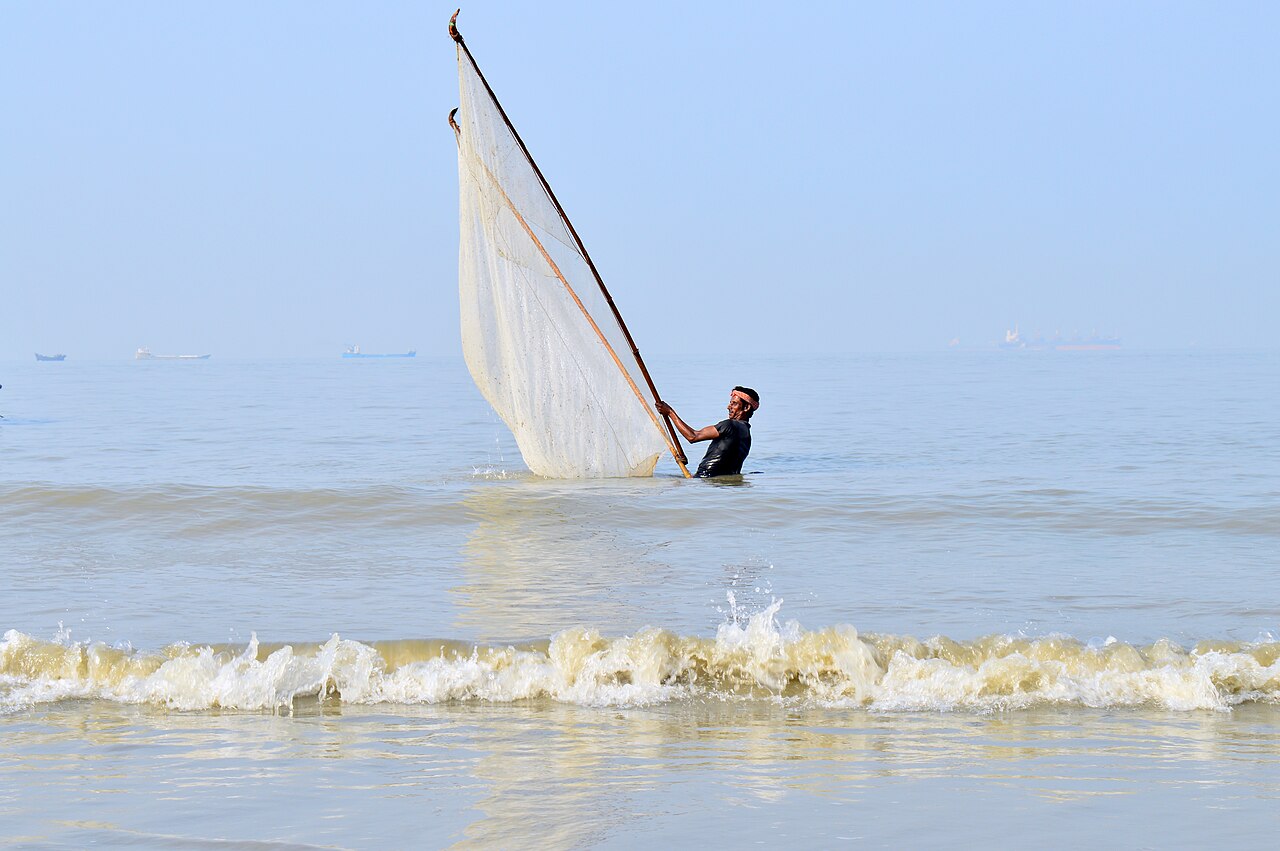
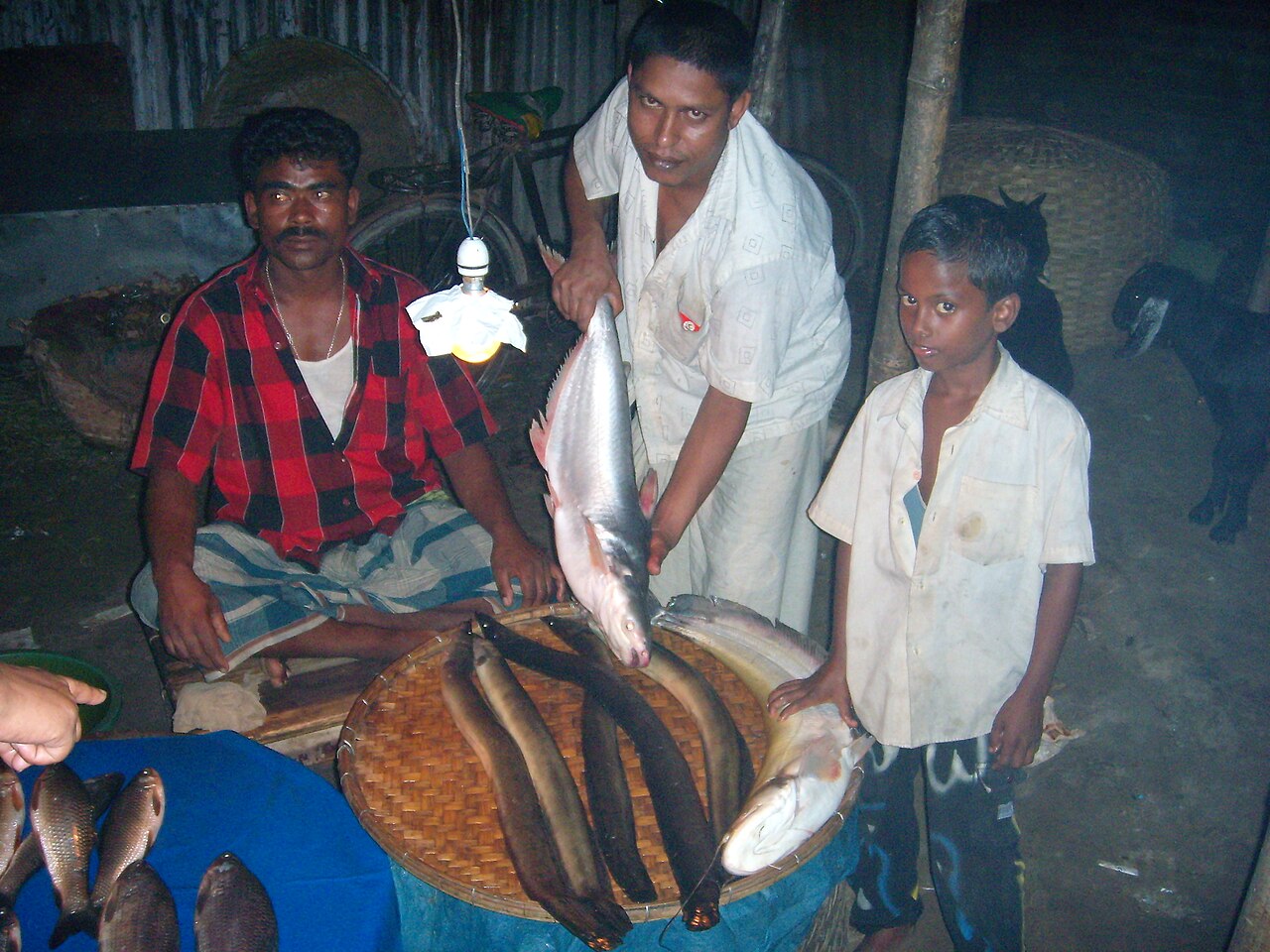
Banglapedia describes the hilsa fishery as resting mainly on mature adults caught as they migrate through the estuaries and river channels, with drifting or fixed gill nets known as chandi jal from non-mechanised boats on the rivers and from mechanised boats of 10 to 13 metres or trawlers at sea, and a chain of collector boats, wholesale markets and traders carrying the fish to inland markets. It notes that the fishery supplied nearly 16.4 per cent of the country's fish production and that about 2 million fishermen and traders were engaged in hilsa fishing.
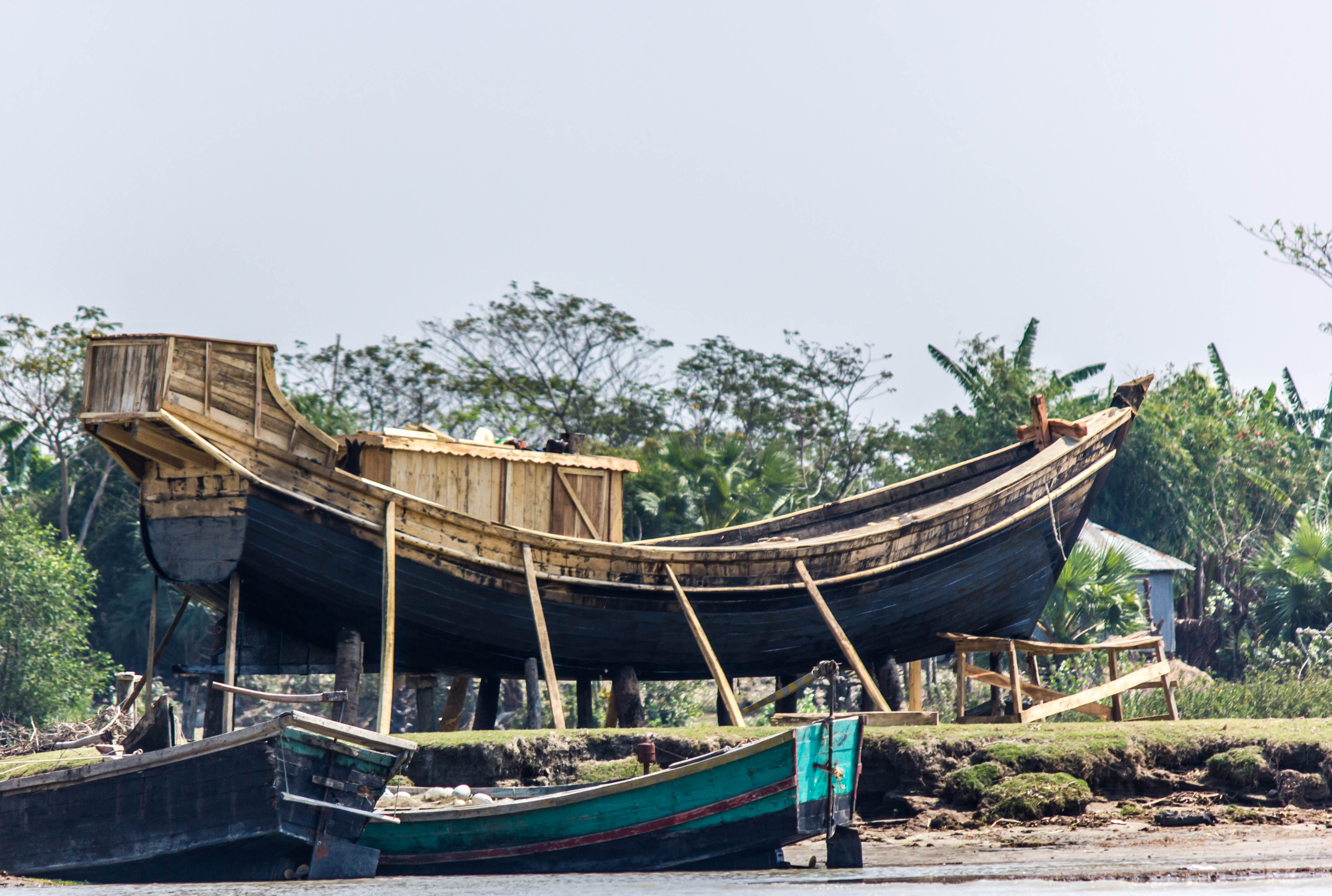
Photo: Fahad Faisal / Wikimedia Commons (CC BY-SA 4.0). The top picture shows a hilsa from the Padma river, as background.
Sources: Jagonews24 (11 October 2025), Bangla Tribune (5 October 2025), The Daily Star Bangla (28 September and 9 October 2025), The Daily Star (7 April 2025), BSS (9 October 2025), Laws of Bangladesh (Protection and Conservation of Fish Act 1950; Protection and Conservation of Fish (Amendment) Ordinance 2025; Mobile Court Act 2009), Banglapedia.
Comments
(0)