
With loan instalments hanging over them, fishermen are casting their nets in the rivers but not finding the hilsa they hoped for. Even in the peak season the fish is missing from Pirojpur's rivers, and the fishermen are in despair. They say catching jatka (young hilsa) and fishing with illegal nets have emptied the rivers of hilsa, and that if jatka are not properly protected the district will lose its hilsa heritage.
Pirojpur's main large rivers are the Kaliganga, Kocha and Baleshwar. From a distance it looks as if rows of boats are busy with the hilsa catch and shoals of the tasty Kocha and Kaliganga hilsa are coming in, but close up the reality shows. Fishermen have been casting nets for two or three days without the catch they expected. The odd hilsa that turns up is very small. They go home disappointed. The southern district has several rivers, including the Kocha, Kaliganga, Baleshwar and Sandhya, where only a few years ago hilsa were caught in shoals.
At the confluence of the Kaliganga and Kocha, fishermen were seen busy at work, but after leaving their nets out for long periods they were hauling them in without the hilsa they wanted. Several said they had been fishing this way for days without success. Some said their families had to go hungry, and on top of that there was pressure from NGO loan instalments. Some fishermen fishing illegally had reduced the hilsa in the river, they said, but if the fisheries authorities took proper steps there would be fish in the river again.
Prices out of reach at Bekutia
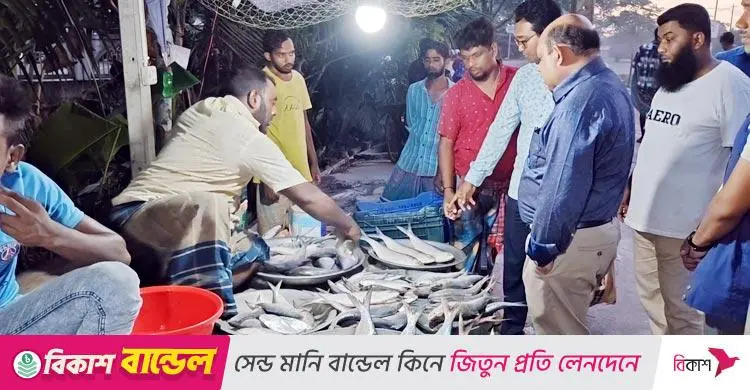
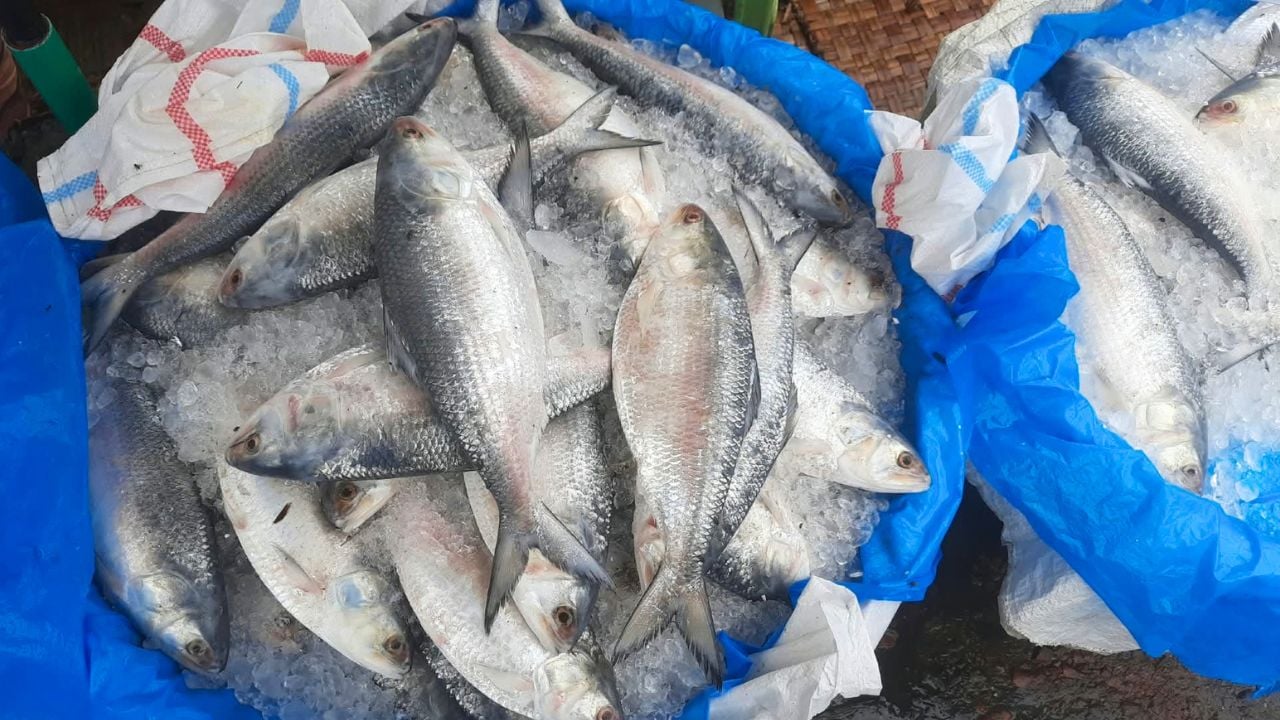
A hilsa market sets up every afternoon at both ends of the Bekutia bridge, Pirojpur's best-known hilsa market. Locals and travellers bound for Khulna and Barishal often cannot resist buying there. With Pirojpur's rivers now short of hilsa, this market too lacks fish, and buyers often leave empty-handed. What hilsa there is sells at sky-high prices: fish of 1 to 1.5 kg sell at Tk 2,600 to Tk 3,200 a kg, and fish of 500 g to 1 kg at Tk 1,400 to Tk 2,400 a kg, beyond the reach of ordinary people. Locals are demanding proper jatka conservation and other necessary steps, and an inquiry into why hilsa is so expensive.
Locals say illegal nets and catching jatka have emptied the district's rivers, and that the district fisheries department's hilsa conservation measures are not enough. The catch of a few years ago is no longer seen; people fish all day without finding hilsa, and because of price alone most people in the district cannot taste it.
Fishermen and traders speak
Mahtab Uddin, fishing on the Kaliganga, said they used to catch a lot of fish but for several years had not. "A main reason is fishing with various illegal nets, including set nets, chargora nets and current nets," he said. "After fishing all day we go home with nothing. Often the family goes hungry, and on top of that there are the NGO instalments. There is no way out now except to run away from home. If the government does not take tough steps to protect jatka, there will be no more fish in this river."
Fisherman Abdul Jalil said set nets kill the fish, which is why they were not getting hilsa. "It is the peak hilsa season but hilsa are not coming into the nets. There are no longer as many hilsa in the river as before."
Yasmin Akter, buying at the Bekutia market, said she had expected good hilsa this year at an affordable price, but that had not happened. Hilsa were scarce and prices much higher than last year: fish she had bought for Tk 1,000 last year cost Tk 600 to 700 more per kg this year for the same weight.
Content creator Hasif, also buying at Bekutia, said prices were very high. He bought two fish weighing 1 kg 600 g together and paid Tk 2,700.
Hilsa seller Sohel Akon said fishermen were not getting the catch they should, so prices were a little higher and out of reach of middle-class and poor people. Kilo-sized fish that cost about Tk 1,600 last year were selling for around Tk 2,400 to Tk 2,500 this year.
Seller Alamin Islam said fishermen were not getting hilsa even in the peak season; the few that came up were small, and far fewer than he saw at this time last year, so prices were higher.
Fisheries officer blames silting
District fisheries officer Sanjib Sannamat said Pirojpur's rivers once had no navigability problem, which is why hilsa were plentiful. Now silting and submerged shoals (dubochar) have appeared, and that is why hilsa are not being seen. The district fisheries department is taking the necessary steps on the shoals, and once dredging removes the navigability problem hilsa will be seen again. Drives to protect jatka and stamp out fishing with illegal nets are also continuing.
Pirojpur's hilsa heritage goes back generations, but with hilsa not coming into fishermen's nets, ordinary people too are going without. Locals want hilsa conserved through the necessary measures and excessive prices brought down.
Source: Jagonews24. First published in Bengali on The Agro News.

Comments
(0)