
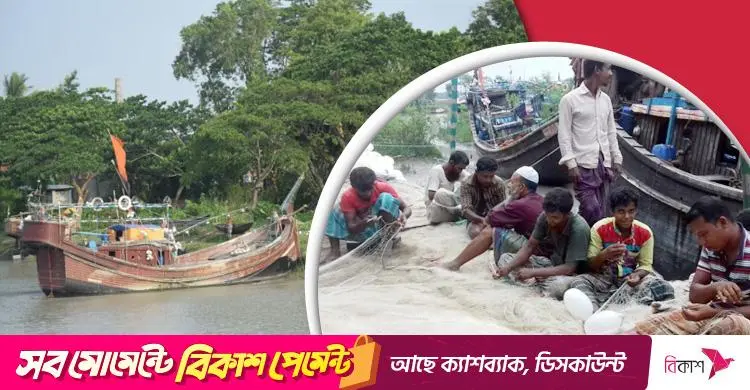
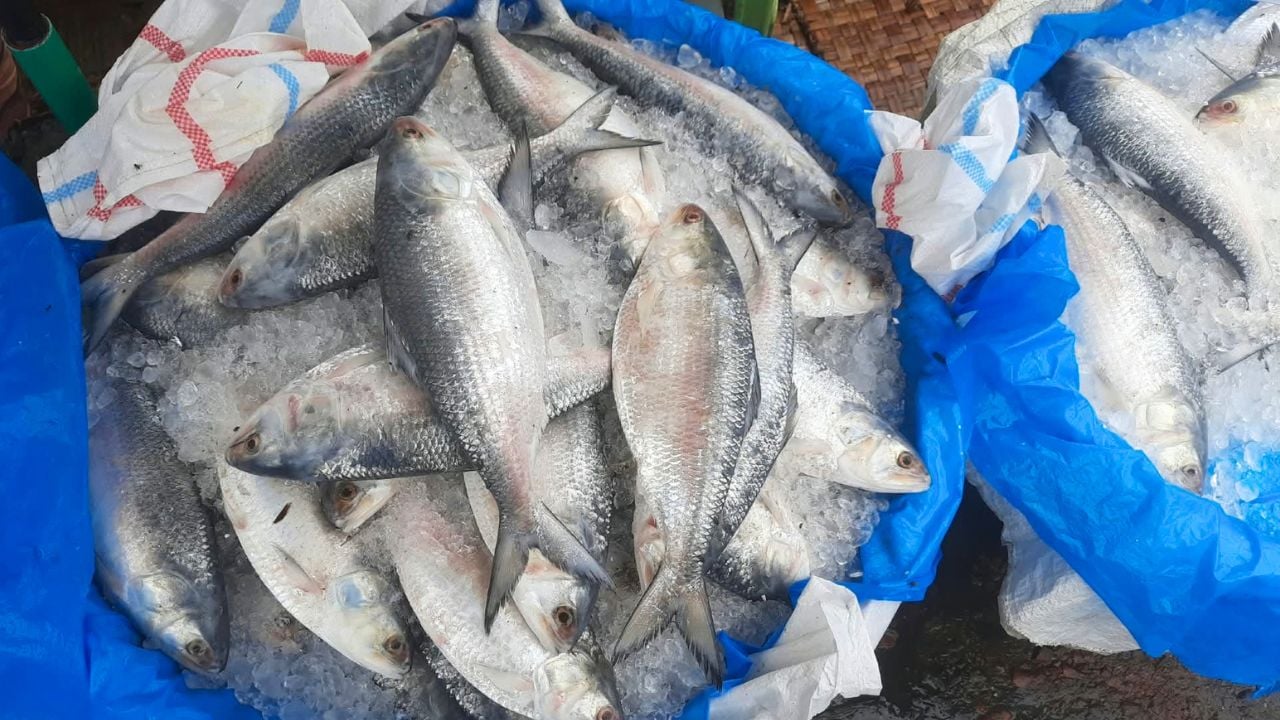
Patharghata in Barguna is famous for hilsa. The life of this coastal community revolves around the fish, and it was the hilsa fishermen whom a large network of Sundarbans pirates once targeted. Pirates were everywhere in Patharghata, on the water and in the forest.
That piracy has largely ended. Yet the lives of local fishermen have not improved and economic freedom has not come. They remain tangled in debt, NGO loans, dadon advances and many other difficulties. Every day their bodies are soaked in sweat from their labour, but the story of their lives does not change.
The end of the pirate gangs
Talking to fishermen on the ground, it emerged that even a decade ago several active gangs operated at sea, named Raju, Gama, Nasir, Nur Habib, Shahid, Sobhan, Nana, Mohubor, Boro Bhai, Maijja Bhai, Kabir, Badal, Mukul, Sakat, Anwar, Belal, Sajal, Jalal, Mahatab, Siddique, Jihad, Shishya and Badal Bahini. At various times many, including gang leaders, were killed by RAB. Various forces worked shoulder to shoulder with the administration to wipe out the pirates. Many were arrested by the Coast Guard and police, and most of the rest surrendered or handed in their weapons to the government.
That has brought much peace back to the fishing communities, and fishermen are more or less free of piracy. But their hard times have not gone. Many who came back after paying the pirates have still not become well off.
As the saying goes, wherever the unlucky look, the sea dries up. Patharghata's hilsa fishermen face just such a reality: as soon as one danger passes, another appears. They dream of becoming a little self-reliant, of building a decent house of tin and wood, of sending their children to school, of buying new clothes and saris, of wrapping a quilt or blanket over their kantha on cold nights. For fishermen, those dreams stay dreams.
Storms and the dadon trap
Local fishermen described many reasons for their poor finances. Fisherman Faruk Ahmed said that year after year disasters such as Amphan, Aila, Sidr and Fani strike the coast. Because of its location, this seaside community suffers most from storms and floods. A storm wrecks an orderly household, and it takes a long time to make up the loss and set things right again. Any savings are spent on repairing the house. Such hostile weather does not let fishing families regain financial stability.
The gist of fisherman Habib Howlader's comments was that another reason for the decline is the way fish are sold. What modern business calls an "advance" is known to hilsa fishermen as dadon, and their lives are bound up in the dadon cycle. Under this system a fisherman labourer is held hostage by the trawler owner, the trawler owner is bound to local aratdars (commission agents), and the aratdars in the mofussil are in turn bound to big wholesalers in the capital and elsewhere. Some middlemen sit in between. As a result, fish prices and the market are set by the moneylenders, and in the end the fishermen lose out. They cannot set the price of the fish they catch.
No insurance, no bank credit
Talking to local civil society representatives brought up many of the inconsistencies in fishermen's lives. One of them, Sakhawat Hossain Shoukhin, a highly educated young man from Patharghata, said: "Fishermen have to deal with many adversities. While every sector in the country has been digitalised, this one has been left out. Going to sea means going out of network. If they are caught in a storm, fate seems to be the fishermen's only hope. Storms change their course and the direction of the shore, so a trawler gets lost and its fishermen go missing. There is no modern device or indicator in the fishing fleet through which a trawler lost with its crew could be traced."
Safikul Islam Khokon, a local journalist in Patharghata, said: "Fishermen's trawlers cannot be insured, and without insurance they get no compensation. One of the main reasons is that these trawlers have no fitness certificates. Because of these complications, no fisherman can get a bank loan by showing his trawler as property (mortgage). Nor do banks have any scheme to lend for an occupation like fishing. Unable to mortgage movable or immovable assets, fishermen don't get personal loans either. Fishermen complain that while there are separate banks for Ansar-VDP, expatriates and BGB, there is no loan system for fishermen. For these reasons, desperate fishermen in financial hardship turn to NGOs and are caught in the trap of high-interest loans. Meanwhile, the burden of personal debt and the credit books at local shops keep growing."
He added: "Because of a lack of education and of proper knowledge of birth control, families keep growing. Four or five children in a fisherman's home is common. Everyone in a fishing family works to get two meals a day. Along with the head of the household, women do various jobs, and children too take on hard work. Because of work, school and education are lost from their lives forever."
Local journalist and development worker Jashim Uddin said: "With no balance between income and spending, want never leaves them. No seminars or symposiums are seen on improving fishermen's lives. Fishermen don't even know how much they contribute to the country's fisheries economy, or to its GDP. The country is praised for the hilsa GI, but not a trace of that joy reaches the fishermen's hearts. So fishermen cannot improve mentally either."
A changing sea
At the start of each season, the number of fishermen heading out for hilsa rises several times over. As the fish in the sea increase, so do hopes. Fishermen go to sea risking their lives and ignoring many fears. But lately the sea's behaviour has been changing, which puts fishermen in trouble. Because of climate effects, there is drought in the fishing season, while nets come up full during the dry spell. Often they return from the sea with nothing to show for their labour, and even when they suddenly catch fish they do not get a fair price. This fickle, hostile weather throws the rhythm of fishermen's lives off beat.
Year after year, life in the fishing community is hard, as if poverty were their constant companion. Even the little government aid that arrives is shared by hundreds of fake fishermen. In the end they blame fate, telling themselves that "God lives in that genteel neighbourhood".
Source: Jagonews24. First published in Bengali on The Agro News.
Comments
(0)