
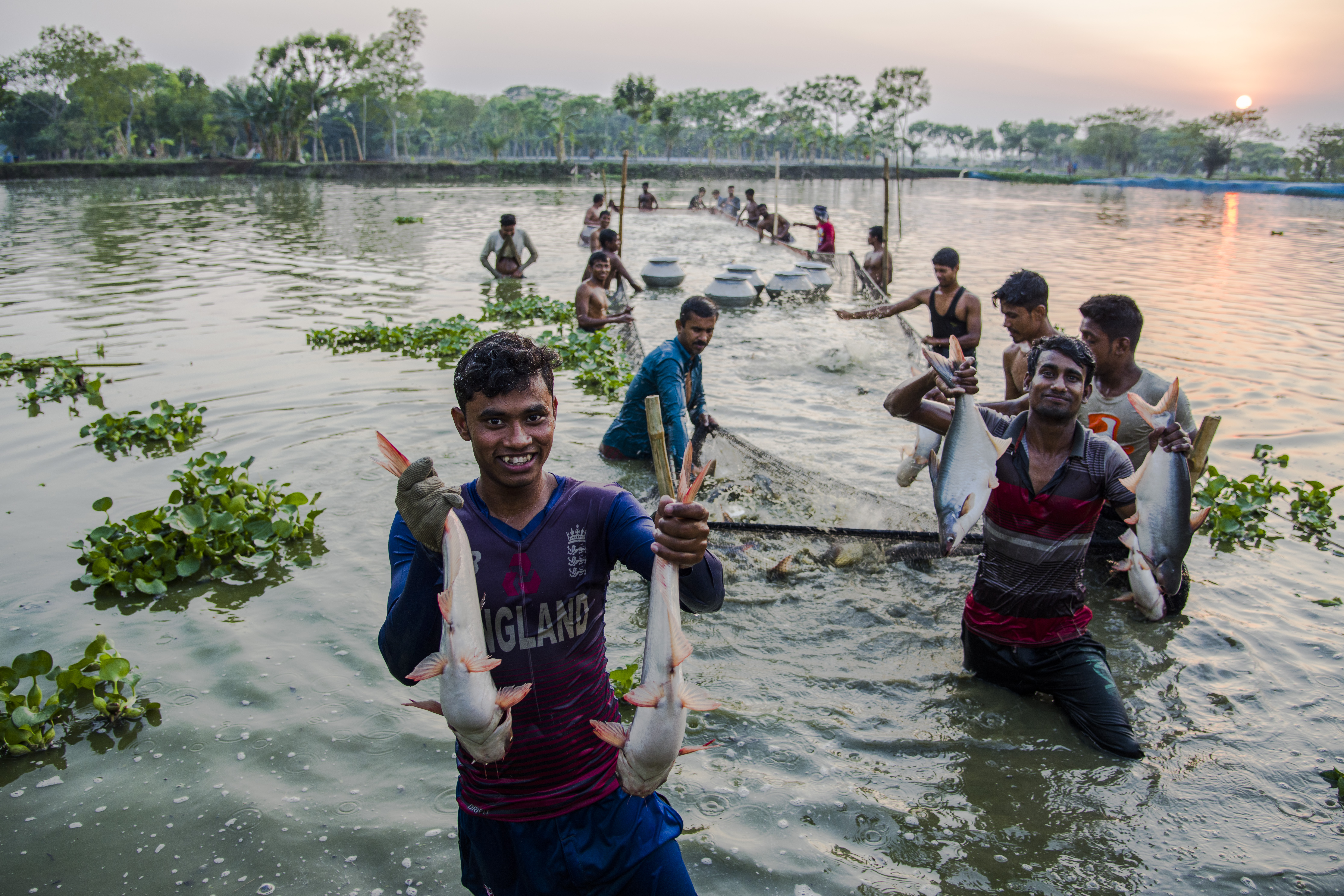
In October 2017 the Bengali news site Jagonews24 published a farming guide on raising Thai pangas, the striped catfish Pangasianodon hypophthalmus, together with other species in the same pond. The guide said that ponds and other water bodies in Bangladesh suit pangas well, and that tilapia, koi (climbing perch), galda (giant freshwater prawn), shing and magur can be raised profitably alongside it. It covered the choice of site, pond preparation, fingerlings, feed, care and sale. This report retells that guide and checks its advice against the Department of Fisheries (DoF), the Bangladesh Fisheries Research Institute (BFRI), the UN Food and Agriculture Organization (FAO) and WorldFish, using only what they had published by that time.
By 2017 pangas had become one of the country's main farmed fish. According to the DoF's Yearbook of Fisheries Statistics of Bangladesh 2015-16, published in April 2017, Bangladesh produced 504,674 tonnes of pangas in the 2015-16 fiscal year, 13.01 percent of its total fish production of 3,878,324 tonnes. Almost all of it, 494,357 tonnes, came from ponds.
What the October 2017 guide advised
On the site, the guide said pangas is very well suited to pond culture and can easily be raised in ponds or water bodies that hold water for five to six months. It advised choosing a pond that can be dried easily, that has a water supply when needed, from which harvested fish and feed can be carried to and from the bank without difficulty, and, above all, that receives enough sunlight.
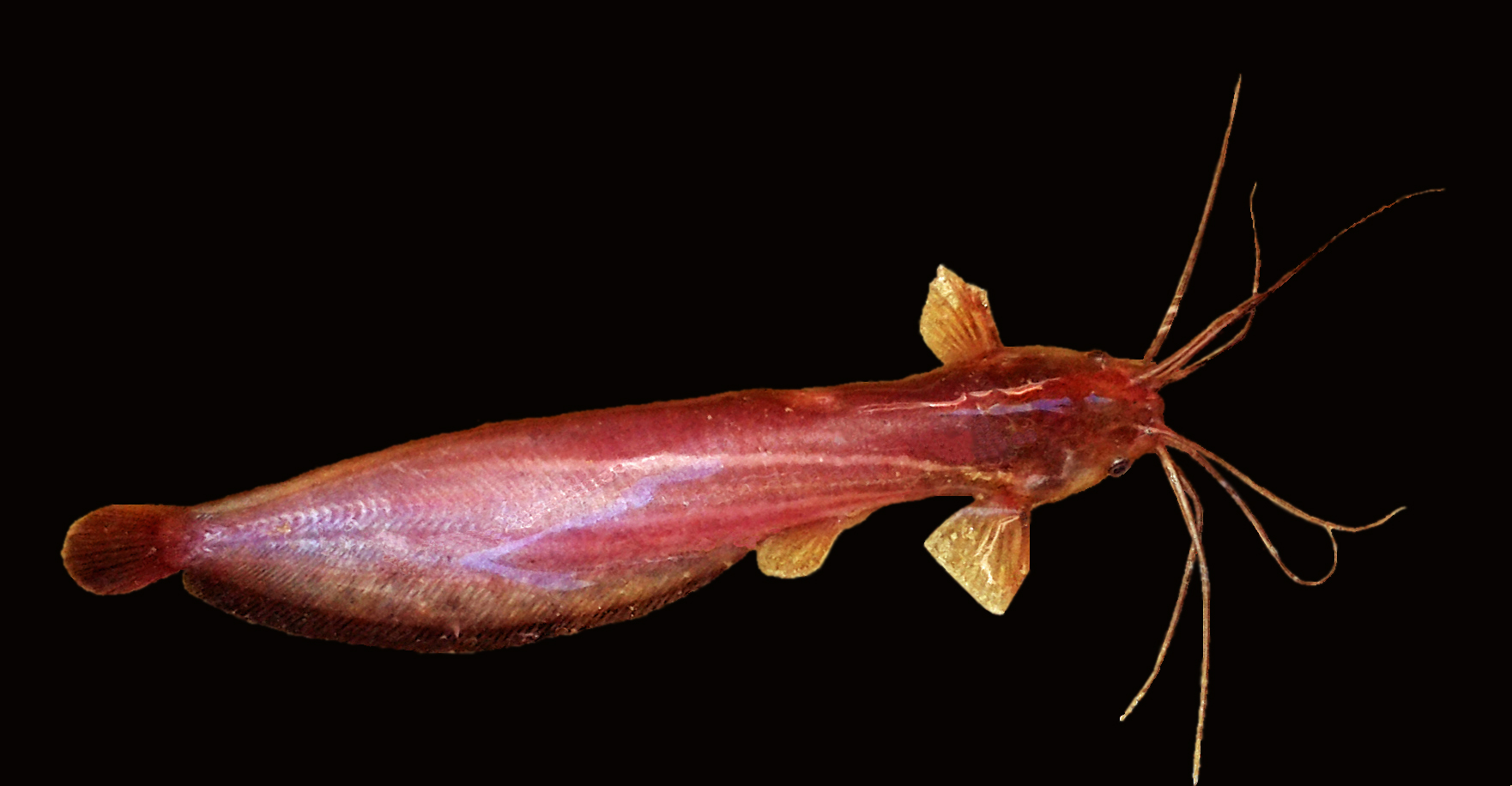
On the mix of species, it said that in Bangladesh a pond stocked with pangas together with tilapia, koi, galda, shing and magur and fed balanced pelleted feed could produce 8 to 10 tonnes of fish per acre in a year. Good-quality fingerlings of pangas, tilapia and shing were to be bought from a known fish farm, and carp fingerlings released as well. The guide stressed that the success of the crop depends largely on good fingerlings of the right size.
On the pond, it said the pond must be dried thoroughly and then limed at 1 kg per decimal, with the lime mixed well into any mud left on the bottom, and water let in four to five days after liming. The DoF's training module on pangas and tilapia culture gives a range of 1 to 2 kg of lime per decimal for pond preparation, so the guide's figure sits at the lower end of the official range.
On feed and care, the guide said the fish should get each day as much feed as they can eat, with protein-rich feed, and that fish in ponds where the water is changed regularly eat more and need more feed. Part of the water should be changed as conditions require; feed should never exceed need; water should be added if oxygen runs short; and feeding should be cut when the water turns too green. In a densely stocked pond, it noted, the fish rise to the surface at feeding time, where birds of prey can catch them, so a net may be stretched over the pond.
On sale, the guide said that seven to eight months after stocking, pangas reach an average weight of about 1,000 to 1,100 grams, and that pangas and the other fish in the pond are then ready for market.
How Thai pangas came to Bangladesh
The fish is not native to Bangladesh. FAO's species fact sheet says the striped catfish comes from the Mekong and Chao Phraya river basins in Cambodia, Laos, Thailand and Vietnam, and lists Bangladesh among the Asian countries where it was introduced for aquaculture. A DoF training module of June 2009 says Thai pangas was first brought from Thailand in 1990, through private initiative. An article by Peter Edwards of the Asian Institute of Technology and Manjurul Karim of WorldFish in the Global Aquaculture Advocate in 2007 also gives 1990 and says the government imported Thai pangas after unsuccessful attempts to breed the native pangas; a 2012 article in the same magazine lists the year of introduction as 1989.
Breeding at home was the turning point. A BFRI presentation published by FAO says the institute first developed breeding technology and mass seed production of Thai pangas in 1993, and the DoF module says farming spread rapidly after BFRI's success in producing fingerlings that year. A 2011 WorldFish review reports that commercial culture is widely said to have begun with a pioneering farm, Al Falah, in Trishal upazila of Mymensingh in 1993, and that the first private pangas hatchery was set up in 1995 at Adamdighi in Bogra. BFRI achieved captive breeding of the native pangas, Pangasius pangasius, in 2004, and collected new wild stocks of the Mekong fish from Thailand in October 2010 and from Vietnam in October 2011 to improve its brood stock.
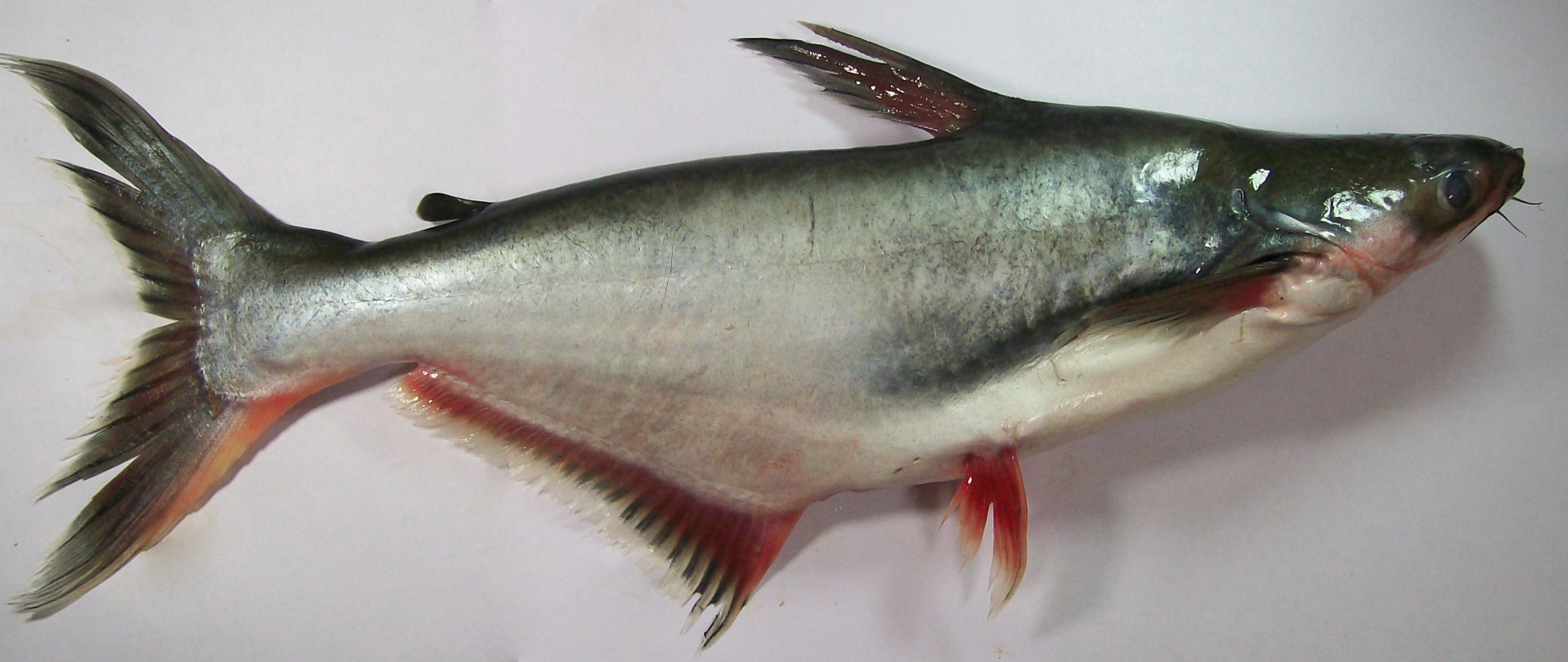
The DoF module describes the two fish separately. The native pangas lives in the coastal areas of Chittagong and Khulna and in the Padma, Meghna, Brahmaputra and Jamuna rivers, usually in deep water; it is silvery with a darker back and grows up to 150 cm and 30 kg. The Thai pangas is silvery-white with a bluish-black back and a bluish-black band running from the head to the base of the tail; it has short barbels and an adipose fin on the back.
The fish and why farmers took to it
FAO describes the striped catfish as an omnivore that feeds on algae, higher plants, zooplankton and insects, with larger fish also taking fruit, crustaceans and fish. In the wild it can reach 130 cm and 44 kg. It is a facultative air breather that tolerates dissolved oxygen as low as 0.05 to 0.10 mg per litre, which is why it can be stocked far more densely than carps. Females take at least three years to mature in captivity, and a 10 kg female can spawn more than a million eggs. The DoF module adds that the fish does not spawn in closed water bodies, so all seed comes from hatcheries, and that in farm ponds it moves through almost every depth of the water.
The same DoF module lists the advantages of pangas farming. The fish is not predatory, so it can be raised with other species; it is omnivorous and takes any supplementary feed; it grows fast, tolerates high density and survives well; it tolerates mild salinity, low oxygen and swings in pH and turbidity; its disease resistance is comparatively high; and it has wide market demand and can be exported. The module also lists the drawbacks: a comparatively low market price, seed not always available on time, poor growth caused by inbreeding, outbreaks of disease, high feed costs, harm to the environment from intensive ponds, waterlogging of higher neighbouring land when low land is dug into commercial ponds, foul-smelling water in some cases, and small farmers losing out under the marketing system of the time.
To keep the water healthy, the module advises against raising pangas alone and suggests stocking 5 to 7 percent carps with it. It also suggests removing a layer of the polluted bottom soil every one or two years and using it as fertiliser on crop land, planning farms so that they do not damage neighbouring fields, choosing good fingerlings, and asking hatchery owners to select brood fish honestly.
Pangas in the 2015-16 fisheries statistics
The DoF yearbook published in April 2017 shows how large pond farming had become. Of the 3,878,324 tonnes of fish produced in 2015-16, inland culture supplied 56.82 percent. Ponds alone, covering 372,405 hectares, produced 1,719,783 tonnes, or 44.34 percent of the national total, at an average of 4,618 kg per hectare.
Within that pond harvest, pangas was the largest single group at 494,357 tonnes, 28.75 percent of all pond fish. Tilapia followed with 315,851 tonnes (18.37 percent) and rui with 210,473 tonnes (12.24 percent). Of the other species named in the 2017 guide, koi produced 55,163 tonnes (3.21 percent) and shing and magur together 12,761 tonnes (0.74 percent).
The yearbook also sorts the country's 2,167,103 ponds by how intensively they are farmed. The 14,538 hectares classed as highly intensive, yielding more than 10 tonnes a hectare, produced 353,543 tonnes at an average of 24.319 tonnes a hectare, while 233,776 hectares of semi-intensive ponds produced 780,958 tonnes.
Mymensingh stands out. Its 29,371 hectares of ponds produced 318,385 tonnes in 2015-16, at an average of 10.840 tonnes a hectare, and pangas accounted for 171,571 tonnes, or 53.89 percent, of that pond output. The 2011 WorldFish review, citing several local informants, put the number of pangas farms at about 2,480 in Muktagacha, 1,720 in Trishal and 1,300 in Bhaluka, and also described clusters in Narsingdi, Naogaon and Bogra.
Official figures for pangas have not always been complete. The same WorldFish review noted that the DoF had recorded only 59,474 tonnes of pangas for 2009, while other studies put production at about 300,000 tonnes in 2008, falling to 200,000 to 250,000 tonnes in 2009 when overproduction depressed farm-gate prices and some farmers stopped stocking.
Preparing the pond, as the DoF manual describes it
The DoF training module, prepared under the DoF-Danida Strengthening Institutional Capacity of DoF project in June 2009, sets out what a pangas grow-out pond should look like:
- rectangular and of medium size, 25 to 100 decimals in area;
- 1.5 to 2.0 metres deep, with dikes sloping at 1:1.5 to 1:2 and a level bottom;
- loam, clay loam or sandy loam soil, with no more than 10 to 15 cm of mud on the bottom;
- six to eight hours of sunlight a day, with no trees or bushes shading the water;
- dikes high and strong enough to keep out flood water, and good road access, ideally near the farmer's home.
Before stocking, the module says, broken dikes and slopes should be repaired so that predatory and unwanted fish cannot enter, black and rotten mud deeper than 10 to 15 cm removed because it produces toxic gases and robs the water of oxygen, overhanging branches cut and bushes cleared so that fish-eating animals cannot hide there. Aquatic weeds take nutrients, block sunlight and hamper netting, and can be removed by hand, by biological means, with fertiliser or with chemicals.
Predatory fish such as boal, gazar, shol, chital, foli, kakila and taki must be removed; the module says a predatory fish eats about 10 to 12 kg of other fish to gain 1 kg. Drying the pond is the best way to do this. Where a pond cannot be dried, the module lists fish poisons, and their use should be agreed with the upazila fisheries officer.
Lime is applied at 1 to 2 kg per decimal. The module explains that it keeps the pH of soil and water at a level suitable for fish, helps keep alkalinity above 20 mg per litre, makes fertiliser work better, removes parasites and germs during pond preparation, releases phosphorus held in the mud and clears muddy water.
Fertiliser is then used at preparation to grow plankton, the natural food of young fish. The module's rates per decimal are 5 to 7 kg of cow dung, or 3 to 5 kg of poultry droppings, or 8 to 10 kg of compost, with 150 to 200 g of urea and 75 to 100 g of TSP, applied five to seven days after liming and eight to ten days before stocking, preferably between 10 and 11 in the morning on a sunny day. It adds that semi-intensive and intensive pangas culture needs no fertiliser after that. Before stocking, a few fingerlings can be held in a hapa net in the pond for 12 hours: if most of them, about 70 percent, survive, the water is not toxic.
Stocking the mixed pond
For monoculture the DoF module suggests pangas alone, with magur and catla for extra income; for mixed culture, pangas with tilapia, magur, shing, rui and catla. Its stocking rates depend on the level of management. For pangas alone it gives 75 to 100 fingerlings per decimal under traditional management, 200 to 210 under improved traditional management, 200 to 300 under semi-intensive and 300 to 700 under intensive management. For a mixed pond of pangas and tilapia it gives, for each of the two species, 40 to 50, 50 to 100, 100 to 150 and 150 to 350 fingerlings per decimal at the same four levels.
Seed was by then widely available. The module names BFRI in Mymensingh and Adamdighi in Bogra among the sources. The 2011 WorldFish review counted, from DoF statistics, 174 hatcheries in 14 districts producing pangas seed out of 802 registered hatcheries, and said Bogra was generally held to produce the best pangas seed in the country, with many nurseries and farms in Mymensingh using fingerlings from Adamdighi.
The module tells farmers how to judge fingerlings. Good fingerlings swim fast, are dark brown, move away quickly when a hand is put into the container and respond at once when the side of the container is tapped; poor fingerlings are slow, pale or whitish and respond slowly.
For transport, feeding should stop at least two hours before packing, because fish with full stomachs foul the water. Polythene bags should be checked for holes and used double, filled about one quarter with water and the rest with oxygen, kept free of pressure and covered with a wet cloth or sacking. At the pond, the bags should float on the water for 15 to 20 minutes, and the difference between the water in the bag and in the pond should be no more than 1 to 2 degrees Celsius. Then the bag is tilted so that pond water flows in and healthy fingerlings swim out on their own. Stocking is best done in the morning or afternoon, and not at midday on a cloudy or sultry day.
The other fish in the guide's mix are already part of this kind of farming. The WorldFish review notes that the commercial ponds dominated by pangas and Nile tilapia also produce koi, shing and magur, and that pangas, tilapia and koi were becoming dominant in Dhaka and other urban fish markets.
Feed and water quality
The DoF module says pangas feed should contain 25 to 30 percent protein. For farm-made feed it gives a mix of 35 percent rice bran or wheat bran, 45 percent oil cake, 5 percent fishmeal, 10 percent fish concentrate, 5 percent flour and 0.1 percent vitamin premix, which it says ensures about 30 percent protein. Pellet feed from the market can be used as long as it provides 30 percent protein. The daily ration runs from 8 percent of the fish's body weight down to 1 percent as the fish grow, given twice a day, with pellets spread over different parts of the pond and farm-made feed placed on trays.
Feed is the biggest cost. The 2011 WorldFish review cites a 2009 study by Munir that found feed made up 82 percent of total production costs in Trishal, with an average feed conversion ratio of 2.04, while Ali reported a ratio of 2 in the same year. FAO's fact sheet, describing farms in Vietnam, says feed represents 65 to 85 percent of grow-out costs.
Heavy feeding makes pond water rich in algae, and the mixed pond is partly a response to that. Edwards and Karim wrote in 2007 that farmers in Mymensingh developed polyculture to reduce the phytoplankton, stocking 5 to 10 percent Indian major carps and 5 to 10 percent tilapia with pangas; they first tried silver carp and then replaced it with tilapia, which withstands low oxygen better. A peer-reviewed study by Ali, Haque and Belton of 2009 farm data in Mymensingh, published in Aquaculture Research in 2013, found farms producing an additional 10 to 20 percent of carps and tilapia. The WorldFish review says these extra fish, about 15 percent of the harvested weight, need no additional feed and are sold regularly to help cover the cost of feeding the pangas.
When the water turns dark green, the DoF module warns, oxygen falls at night and the fish come up gasping at dawn. As immediate steps it advises adding clean, cool water from a shallow tubewell and stopping feed and fertiliser for a while, and stocking some silver carp fingerlings to graze the excess algae. When toxic gases form from excess feed and rotting matter on the bottom, the remedy is to reduce the number of fish, stop feed and fertiliser for a while and rake the bottom regularly.
Water quality also affects the taste of the fish. Research by Patuakhali Science and Technology University with the University of Copenhagen, reported in the DoF's National Fish Week 2013 compendium, traced the muddy and musty off-flavour of pangas and tilapia to geosmin and 2-methylisoborneol produced by blue-green algae and actinomycetes, which build up when heavy feeding degrades the water. It found that a probiotic and a sand filter improved water quality, and that holding harvested fish in flowing clean water (depuration) for up to 48 hours greatly reduced the off-flavour. The authors wrote that farmed rui then sold for 200 to 250 taka a kg while pangas sold for about 100 taka, and that farmers and consumers blamed the off-flavour for the low price.
Diseases and prevention
The DoF module lists the main diseases of pangas. Bacterial disease, which it says is common, begins with bleeding inside the eyes, followed by redness around the mouth and vent, mucus over the body, abnormal swimming near the surface and sudden deaths; it is caused by Aeromonas bacteria after the water becomes polluted. Ulcer disease is uncommon in pangas but sometimes seen in mixed ponds, and starts with the fungus Aphanomyces. The module also describes fish lice, tail and fin rot in pangas fingerlings, dropsy or belly swelling caused by Aeromonas, a head-crack disease seen only in pangas and linked to polluted water and a lack of vitamin C, and an open-belly disease of fingerlings caused by overfeeding that can kill about 70 percent of the fish within two months.
The module names antibiotics and other chemicals for some of these diseases. They are medicines, and their use, dose and withdrawal before sale should be decided with the upazila fisheries officer; FAO's fact sheet likewise notes that its own mention of antibiotics in treatment does not imply a recommendation. For ulcer disease, the module says no practical cure had yet been found and that liming at 1 kg per decimal can be used to improve the pond environment. For head-crack disease it advises feed rich in vitamin C and a cleaner pond, and for open-belly disease, feeding the right amount at the right time.
The module stresses that prevention is better than cure, because treatment is hard and often impossible for farmers. Its steps are: give the pond enough sunlight; dry and lime the pond regularly; never overstock fingerlings; keep out animals and outside water; keep the bottom free of excess mud; supply feed and fertiliser in measured amounts; avoid netting the pond often; and stop sources of muddy water. Frogs, snakes and monitor lizards are a separate danger: a frog can eat 100 to 200 fry a day, and the module advises keeping the banks clear of weeds and fencing the pond with old, dense netting.
Harvest, prices and returns
The 2011 WorldFish review says pangas in Bangladesh were typically reared for seven to eight months, up to a maximum of ten, and harvested at 0.6 to 1.0 kg, with better-financed farms growing them longer because larger fish fetch a better price. The main growing season ran from March to September, with some fish harvested as late as December, and fingerlings were held over the winter for stocking at the start of the season. The DoF module says pangas can be marketed once they weigh more than 500 grams and that live fish fetch a better price. In Vietnam, FAO reports, striped catfish reach 1.0 to 1.5 kg in six months or less.
Yields vary widely with management. The DoF module gives 20 to 30 tonnes a hectare for semi-intensive and 50 to 100 tonnes for intensive pangas culture. In the 2009 Mymensingh survey by Ali, Haque and Belton, mean pangas productivity was 36.9 tonnes a hectare, with 87.9 percent of farms producing between 15 and 65 tonnes a hectare. Edwards and Karim reported yields of 25 to 30 tonnes a hectare a crop in 2007.
The DoF module includes a sample budget, at 2009 prices, for one bigha (33 decimals) of pond stocked with 6,600 pangas, 50 catla, 80 rui, 20 mirror carp and 50 magur. Costs came to 137,910 taka, of which 4,725 kg of supplementary feed accounted for 122,850 taka. Assuming 10 percent mortality and pangas of about 600 grams, it projected 3,890 kg of fish worth 180,460 taka, a net profit of 42,450 taka from one crop, and warned that such a profit depends on balanced feed and sound management at every step.
Margins in practice were thin. The WorldFish review cites Munir's finding of an average farm-gate price of 46.39 taka a kg in Trishal, leaving a margin of just 2.53 taka a kg, though high output per hectare still made the total profit large. Almost all of the harvest was eaten at home: a 2012 article in the Global Aquaculture Advocate called pangas a poor people's fish because it was among the cheapest fish in Bangladesh, and the WorldFish review recorded only small export shipments, such as 4.6 tonnes of fillets sent from Khulna to Bulgaria in 2009.
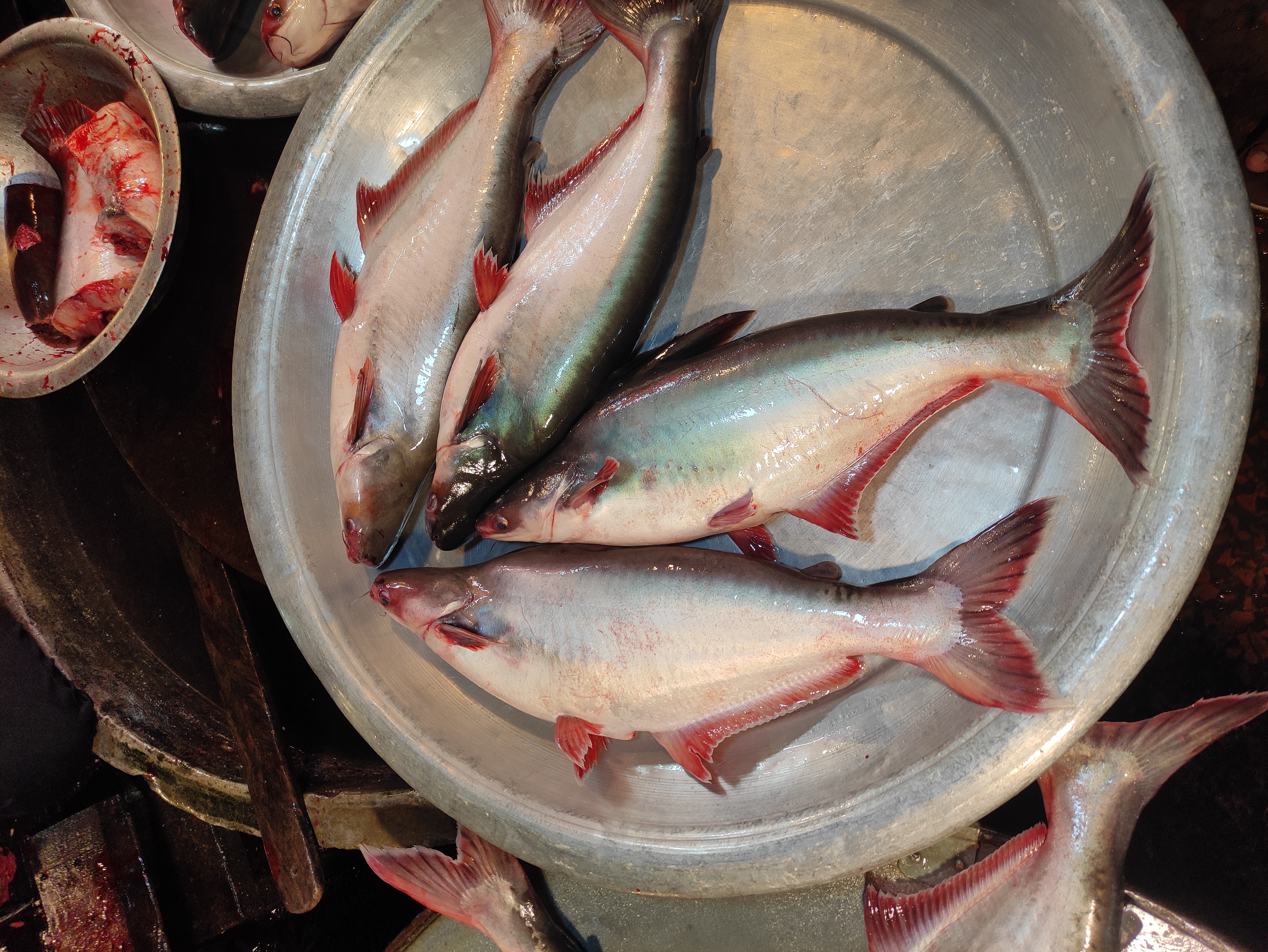
Photo: Ujjalmc / Wikimedia Commons (CC BY-SA 4.0)
Sources: Jagonews24, Department of Fisheries (Yearbook of Fisheries Statistics of Bangladesh 2015-16; training module on monosex tilapia and pangas culture, 2009; National Fish Week 2013 compendium), Bangladesh Fisheries Research Institute, FAO Cultured Aquatic Species Information Programme, WorldFish, Aquaculture Research, Global Aquaculture Advocate
Comments
(0)