
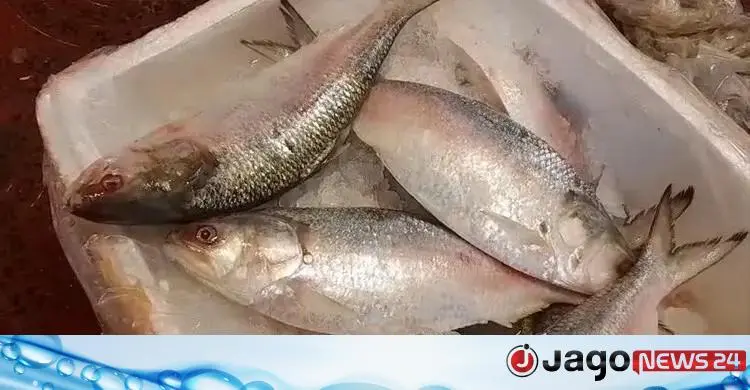
Hilsa holds a special place on the Bengali plate. Mustard hilsa with hot rice, hilsa fried with green chillies or in a curry: whatever the dish, the name alone makes mouths water. But when a hilsa bought at a high price fails to deliver its familiar aroma and taste once cooked, the regret is great.
Hilsa from several sources are now on the market. Fish also come from the western coastal areas of India, including Bharuch in Gujarat. As a result buyers are increasingly interested in the difference between river hilsa and hilsa that grow in a marine environment. It is hard to be sure of a fish's origin just by looking at it, but some general features can give an idea when choosing.
Hilsa from Gujarat
Hilsa are caught along the coast of western India, including the Bharuch region of Gujarat. These fish are also a type of hilsa and are often quite large. Demand for roe-bearing hilsa is especially high in Chattogram and Sylhet, so roe-filled hilsa are being imported from there.
The taste and aroma of hilsa raised in the sea are not the same as river hilsa. Hilsa from Bharuch in Gujarat in particular are large and heavy, but to many people their taste and smell are not like Padma hilsa.
One hallmark of river hilsa is the natural oil in the body, the soft flesh and the particular aroma released during cooking. When Padma-Meghna hilsa is cooked, the whole kitchen fills with an enticing smell; that aroma is not found in hilsa from Gujarat or Bharuch.
Body shape and colour
River hilsa usually look relatively broad, thick and rounded, with a well-filled belly. Coastal or sea hilsa are often comparatively long and slender.
However, these features can vary with the fish's age, breeding period and physical condition, so they are better treated as a general guide than as sure identification.
Hilsa normally have a bright silvery sheen, and the fresher the fish, the brighter it may look. After a long time on ice or in storage, that brightness can fade somewhat.
Colour alone cannot confirm a fish's origin either. The eyes, the firmness of the body and overall freshness need to be checked along with it.
Eyes and head
The eyes of Padma hilsa are perfectly clear and transparent, and the middle of the body is well filled. Around the eyes of Gujarat hilsa there is a somewhat dark red or bloodshot tinge.
The head of a Padma hilsa looks a little small and narrow in proportion to the body. In Gujarat hilsa the head and tail look somewhat large or uneven compared with the body.
What to look for when buying
Examine the body carefully when buying hilsa. If there are dark or copper-coloured patches, pale gills or a soft tail, it is better not to buy the fish. Be wary, too, if the eyes are cloudy or reddish, the head is unusually large for the body, or the fish is overly long and flat.
Before buying, check whether the tail is firm and straight, the body relatively slim and the scales a bright silver. Note whether the belly is thick and full and the area near it naturally soft. Clear, clean eyes are one of the main signs of fresh hilsa, and a narrow head that is small relative to the body also shows the fish's build.
The real trick to choosing good hilsa is to be sure of the source, check freshness and compare the outward features. That greatly reduces the risk of paying a high price and being disappointed after cooking. The report drew on the BBC and the Hindustan Times.
Source: Jagonews24. First published in Bengali on The Agro News.


Comments
(0)