
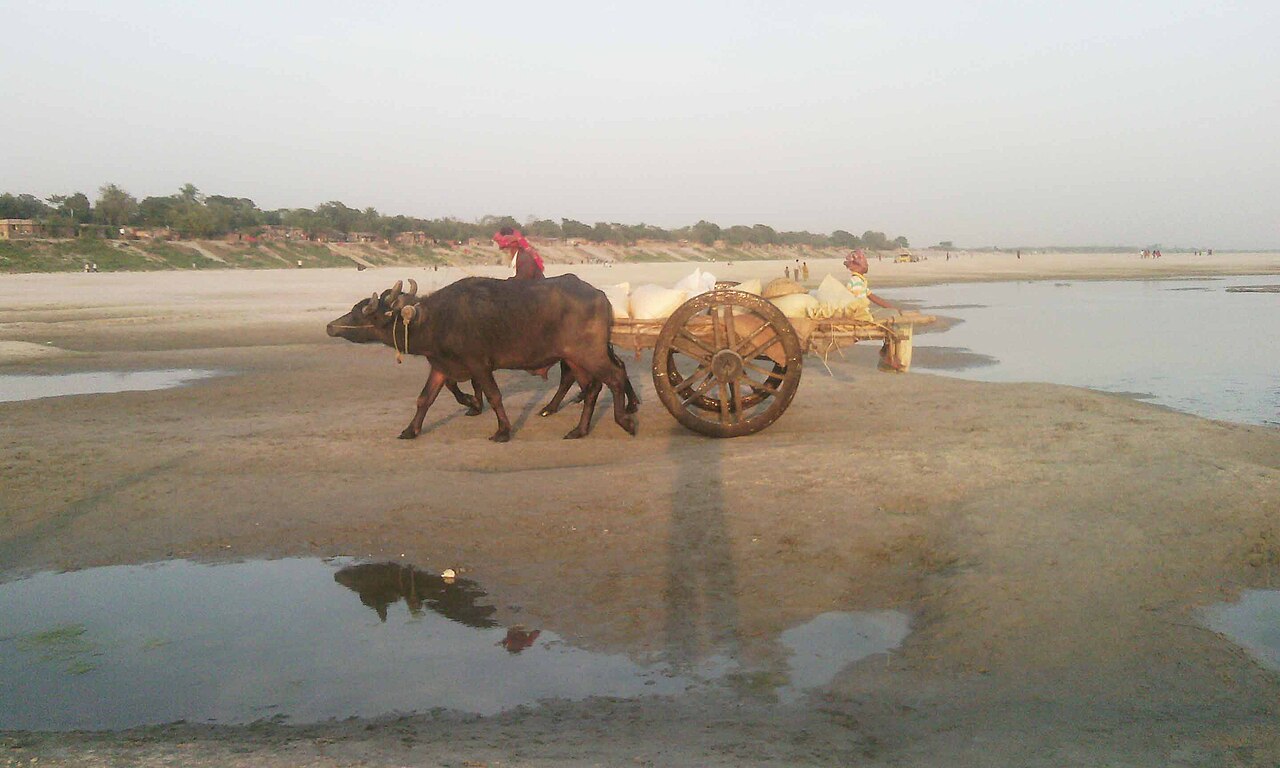
The Padma now carries 80 per cent less water in the dry season than before the Farakka barrage began operating upstream, and about ten rivers linked to it are close to dying for lack of water. The figures come from a study by the river organisation Riverine People, reported by BSS on 17 November and published by Channel i Online.
Because water is diverted from the Ganges at the barrage in Malda and Murshidabad, West Bengal, chars have risen in the Padma. The Pagla, Mahananda, Punarbhaba and Baral have dried up, and the Kapotaksha, Bhairab, Mathabhanga and Kumar are nearly dead. The Kapotaksha is knee-deep in places and dry in others.
At Charghat in Rajshahi, a huge char has formed at the Baral's mouth, its banks built up so that the river runs like a narrow drain. Mohammad Rezaul Karim, a teacher at Charghat, remembers big boats on the river, which once ran from the Padma through Natore to the Jamuna.
Water experts say the 2,240-metre barrage, built from 1961 to 1975, has brought sweeping environmental and social change to south-west Bangladesh. India has long argued there was no alternative to Farakka for protecting Kolkata port.
River researchers say the barrage has done serious harm to the Padma's course and its distributaries, with effects on livelihoods and biodiversity.
Photo: Mamun7291 / Wikimedia Commons (CC BY-SA 4.0)
Source: Channel i Online

Comments
(0)