
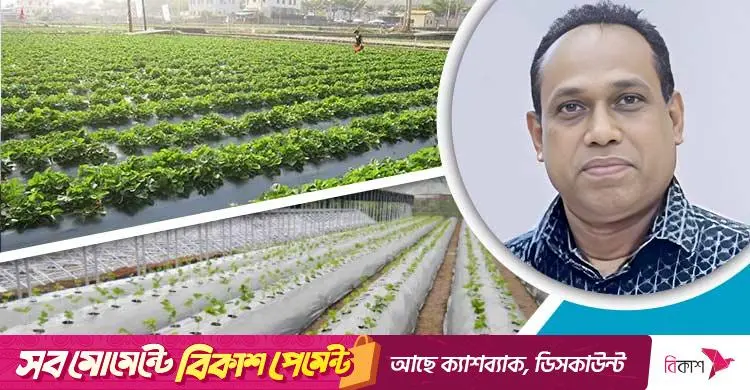
Mulching is becoming increasingly popular in farming to raise yields, control weeds and curb pests and disease. Worryingly, however, farmers are using more and more inorganic poly or plastic mulch, especially polythene-based mulch. The main reasons are its relatively low price, easy availability and the immediate improvement in yield. But behind these advantages lie serious threats to the environment and to farming.
The damage plastic mulch does
Plastic mulch blocks sunlight and air from entering the soil, which destroys the soil's natural organic structure. Earthworms and useful micro-organisms are killed. These inorganic materials do not rot easily; they stay in the field, turn into microplastics and pollute the environment. They also cause long-term problems such as waterlogging, loss of soil fertility and tiny plastic particles getting into farm produce. In view of this harm, farming and environmental experts have called for strict policies to be adopted now.
The agriculture departments and ministry concerned should draw up regulatory laws on the sale and use of plastic mulch on farmland and enforce effective monitoring. At the same time, farmers need to be made more aware of the use and benefits of organic or biodegradable mulch. Mulch made from straw, rice husks, tree bark, degradable paper or other natural materials protects the soil and does not harm the environment. Considering farmers' current needs, it is urgent to move now towards alternative, safe mulching for sustainable farming and environmental protection.
What mulching paper is
Mulching paper is a farming aid that is spread over the soil to help control the environment around plants. It helps suppress weeds, retain soil moisture, regulate soil temperature and reduce disease.
Eco-friendly mulching paper, made from straw, dry leaves, water hyacinth, coconut coir and similar materials, is now available on the market. It is used to keep soil moist, control weeds and raise yields. These papers are made mainly from biodegradable materials that break down into the soil within 3-6 months without harming the environment. Eco-friendly mulching paper is made by the Bangladesh Agricultural Research Institute (BARI) and several private companies.
Types of eco-friendly mulching paper
- Biodegradable mulching paper: made from natural materials such as maize, potato and wheat starch and cellulose. It mixes into the soil like organic fertiliser.
- Kraft mulching paper: made from jute or paper-based fibre. It breaks away quickly in water and does not harm the environment.
- Coated bio-film: mulching paper with a natural oil or colloidal coating that makes it more water-resistant.
With these papers less water is needed and there are fewer weeds, while soil structure and organic matter improve. Crop quality and output rise. Weeds are kept from growing, the need for irrigation falls, yields increase and quality is better. There is even less disease, and the soil keeps its nutrients.
Plastic mulching paper
Most mulching paper used today is made from poly paper-type (plastic) material. It comes in black, silver, or black and white on the two sides. Although it looks like ordinary poly paper, it is made specially for farming. It does not break down even in a hundred years and causes pollution, so it has to be removed.
Source: Jagonews24. First published in Bengali on The Agro News.
Comments
(0)