
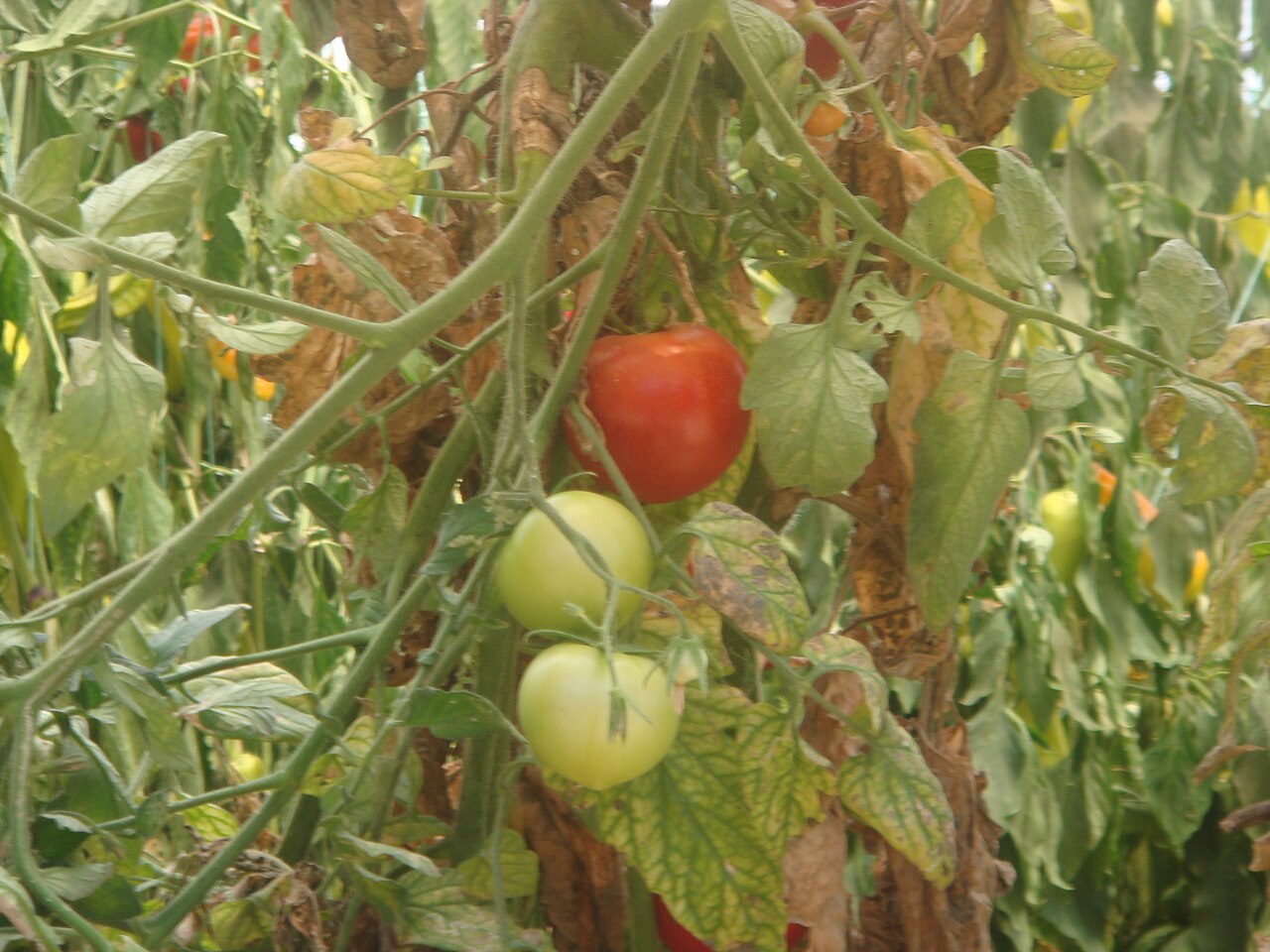
A commercial greenhouse in Ontario, Canada, has stopped routine manual crop scouting after seven months of running an artificial intelligence camera system, according to Fermata, the Tel Aviv company that makes it.
Loesen Farms, a 6-hectare greenhouse in Ruthven, Ontario, began installing 80 cameras in September 2025, about one for every 750 square metres of crop. They run Fermata's Croptimus platform, a computer vision and machine learning system that photographs the canopy continuously and flags signs of pests, diseases, viruses and nutrient deficiencies. The company says it can tell apart more than 20 categories of plant health problems from images alone.
Greenhouse scouting usually means staff walking the rows once or twice a week, turning leaves and checking hot spots, so a problem that starts between visits can spread unnoticed. Croptimus scans all the time and draws heat maps of where an issue is and how fast it is spreading; a grower can open the original photograph behind any alert.
By April 2026 the farm had phased out its routine scouting rotation and now uses the cameras as its main monitoring method, keeping staff time for treating the spots the system finds. Fermata argues that catching an outbreak while it is small reduces both labour and the amount of pesticide needed.
The platform has been on sale since 2020 and is installed at more than 60 sites in at least 10 countries, mostly in greenhouse tomatoes, cucumbers and peppers and in ornamentals. It won the Technology award at the Fruit Logistica Innovation Awards in 2025. Fermata was founded by Valeria Kogan, who holds a doctorate in bioinformatics and earlier co-founded an AI platform for oncologists; growers can also check the camera data remotely on their phones. The company says it is expanding into Greece and has started pilots in the United Kingdom and Thailand, the latter in a more tropical, open-field setting.
Photo: Lemur12 / Wikimedia Commons (CC BY-SA 3.0)
Source: Global Agriculture

Comments
(0)