
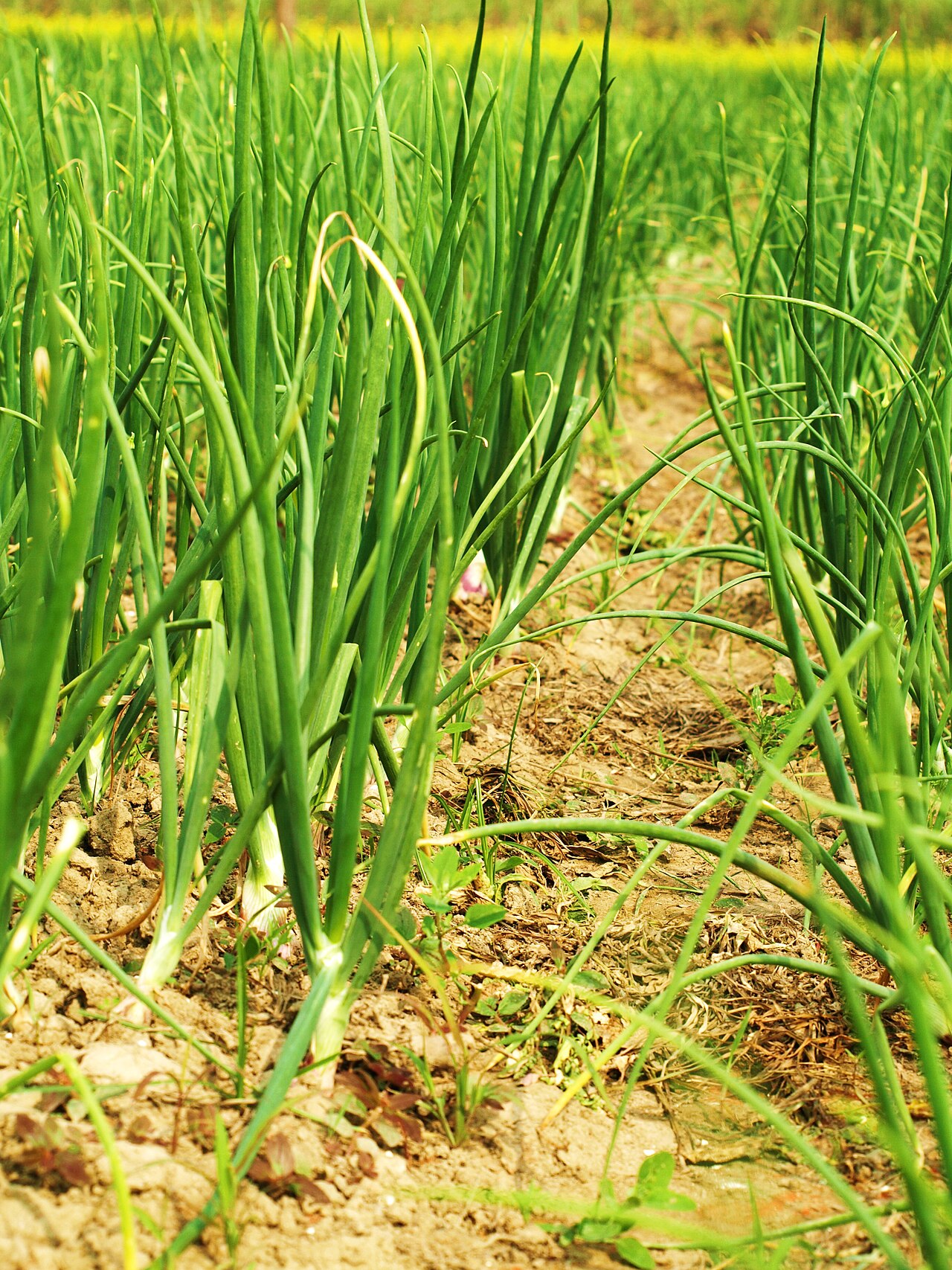
Bangladesh Agricultural University (BAU) trained farmers in growing quality onions, producing seed and storing the crop, and handed out onion seed and seedlings, on Monday (9 November). At the onion field beside the university's horticulture farm, 30 farmers received 3,000 seedlings in total and 30 grams of seed each.
The event was part of a research project on germplasm screening for quality bulbs, seed production and longer storage life in onion, funded by the Krishi Gobeshona Foundation (KGF). Professor Dr. Md. Harun-or-Rashid of the horticulture department, the project's lead researcher, said about 100 local and foreign onion lines were being studied, and several varieties suited to summer growing under polytunnels had been selected and had yielded well.
Bangladesh needs about 3 million tonnes of onion a year, he said, but 25 to 30 percent of the crop is lost for want of storage, and producing good seed in the country's climate is hard. Onions used to be grown only in winter; with new heat-tolerant varieties they can now be grown all year.
Dr. Md. Monowar Karim Khan, senior soil specialist at the Krishi Gobeshona Foundation, said onion output five years ago was 2.5 million tonnes and 0.8 to 1 million tonnes had to be imported because stored onions rotted. Production reached 3.819 million tonnes in 2025-26 and only 86,000 tonnes were imported this year. Demand jumps during Ramadan and festivals, he said, when a month of Ramadan uses about three months' worth of onions, so quality output must keep rising.
The event was chaired by Professor Dr. Md. Habibur Rahman, head of the horticulture department. The chief guest, Professor Dr. Ali Reza Faruk, dean of the fisheries faculty and acting vice-chancellor, said the country was largely self-sufficient in onion and expected the project to help raise quality output and extend storage life. Agriculture faculty dean Professor Dr. Masum Ahmad and BAURES acting director Professor Sharif R. Rafi also attended.
The report is by Musaddiqul Islam Tanvir of Agri Barta.
Photo: Shmunmun / Wikimedia Commons (CC BY-SA 3.0)
Source: Agri Barta

Comments
(0)