
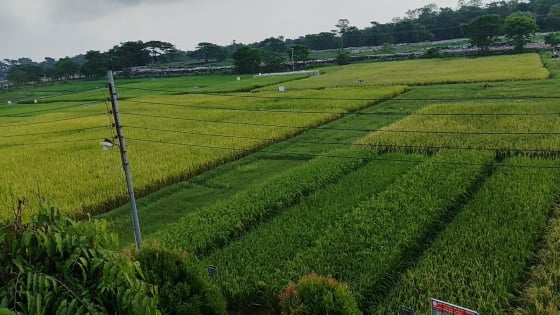
Hundreds of thousands of people in the haor wetlands of Sunamganj depend on a single boro rice crop. The Bangladesh Institute of Nuclear Agriculture (BINA) sub-station in Sunamganj is running needs-based research on local farmers' problems and taking the institute's varieties and technologies to them, with regular training to fit regionally suited varieties into existing cropping patterns.
BINA develops crop varieties using nuclear techniques. Senior scientific officer Md Shefaur Rahman said the institute has released 139 varieties so far, 96 of them through mutation breeding. Assistant scientific officer Md Amjad Hossain said BINA now ranks eighth in the world in variety development using nuclear technology.
At a farmers' workshop in Sunamganj, BINA's director (research) in Mymensingh, Dr Mahbuba Kaniz Hasna, said a project is under way with farmers to strengthen its research. Training covers regionally suited varieties including BINA Dhan-24, BINA Dhan-25, BINA Dhan-19, BINA Sarisha-11, BINA Chinabadam-4 and BINA Chinabadam-8.
Dr Md Mosharraf Hossain, additional director of the Department of Agricultural Extension for the Sylhet region, named water as the main problem for haor farming, along with shortages of machinery, seed and other inputs and the complications of land ownership and sharecropping. Technologies must be developed to meet farmers' needs, he said, and there is room to bring fallow land under cultivation. Md Amjad Hossain called for less chemical and more organic fertiliser, canal digging, and stronger farmer cards and subsidies.
Dr Md Mahbubul Alam Tarafder, director of the project to strengthen BINA's research, said research institutes, the extension department, seed suppliers and farmers must work together to spread the new varieties and technologies more widely.
Farmer Syedul Islam of Dhanpur in Shantiganj said many in his upazila have profited from growing rice the BINA way and more training is needed. Azizur Rahman of Baraghat in Sadar upazila said early floods submerge the haor boro crop every year, and farmers would benefit from access to BINA methods and training. Deputy commissioner Mohammad Minhazur Rahman called BINA one of the modern farming options available.
The report is a special report from Bangladesh Sangbad Sangstha (BSS) in Sunamganj.
Source: BSS

Comments
(0)