
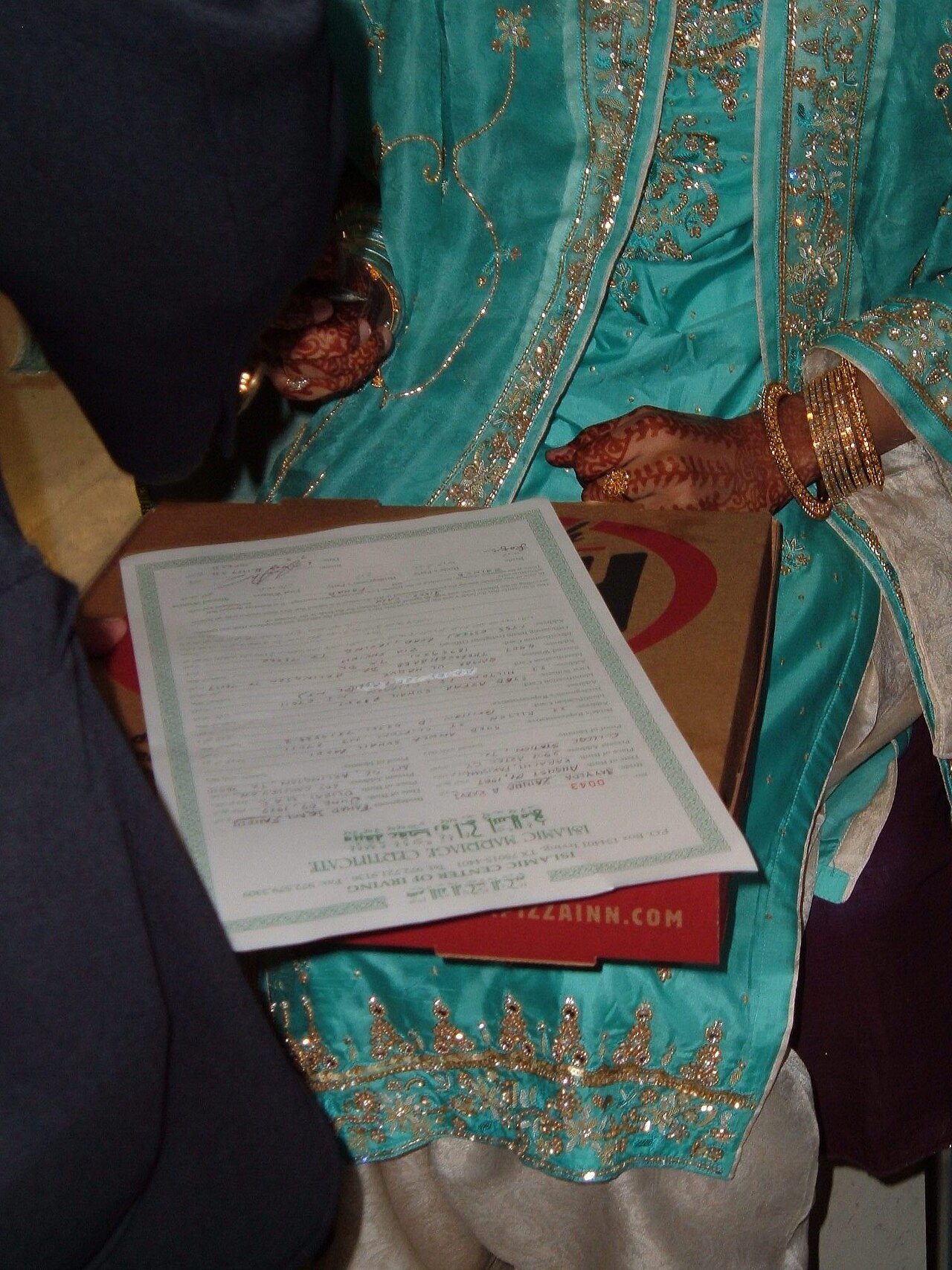
Islam treats marriage as an important act of worship. Encouraging young men who can afford it to marry, the Prophet (peace be upon him) said that whoever is able should marry, for it lowers the gaze and guards chastity (Bukhari, hadith 5066). Another hadith calls marriage the completion of half of one's faith (Tabarani, hadith 972).
A piece in Ittefaq's religion section sets out what makes a marriage valid under Islamic law. Its foundation is ijab and qabul, the offer and its acceptance that form the contract, and witnesses must be present. The guardian also matters: the Prophet said there is no marriage without a guardian (Tirmidhi, hadith 1101). Marriages should be made public, not kept secret.
Citing the jurists Alauddin al-Kasani and Ibn Nujaym, the piece says that if a man and a woman call each other husband and wife in front of witnesses, but no contract of offer and acceptance was made beforehand, no marriage has taken place. Declaring a relationship is not the process that creates one.
It also reminds readers that living together as husband and wife without marriage is forbidden in Islam. Verse 32 of Surah Al-Isra forbids even approaching adultery, and a hadith in Tirmidhi (2165) warns against a man and a woman who are not mahram being alone together.
The piece's conclusion: being known socially as husband and wife is not enough; the proper process, with offer, acceptance and witnesses, has to be completed.
The piece is from Ittefaq's digital desk.
Photo: Zainub Razvi / Wikimedia Commons (CC BY-SA 2.0)
Source: Ittefaq



Comments
(0)