
The Bangladesh Navy said on 14 May 2026 that it had carried out 716 drives at sea and in coastal areas under the 'Jatka Protection Programme-2026' and had seized about 3,44,45,745 metres (roughly 3.44 crore metres) of illegal fishing nets, with an estimated value of Tk 517,44,42,710 (about Tk 517.44 crore). The figures came in a press release from the Inter Services Public Relations Directorate (ISPR), datelined Chattogram, 14 May 2026, which said the drives were part of the navy's work to conserve hilsa, the country's national fish, to stop the killing of jatka, the young of the hilsa, and to ensure sustainable management of fish stocks at sea, along the coast and in the river basins.
The same release said that three navy warships had been on duty in the Bay of Bengal since 15 April 2026 to enforce the government's 58-day ban on all fishing at sea, supported by boats, small craft and, when needed, surveillance flights by maritime patrol aircraft, so that no Bangladeshi or foreign vessel could fish during the ban. The sea ban was to run until 11 June 2026.
716 drives in nine coastal districts
According to ISPR, the navy had been engaged in the 'Jatka Protection Programme-2026' since 15 February 2026 and in the '58-day ban on all fishing in the Bay of Bengal' since 15 April 2026. It said strong patrols, intelligence surveillance and special drives were continuing in coastal districts and in the main fishing grounds.
The 716 jatka-programme drives were carried out in nine districts, which ISPR listed as Chattogram, Cox's Bazar, Chandpur, Khulna, Bagerhat, Barishal, Patuakhali, Pirojpur and Barguna. The 3.44 crore metres of netting seized in them included large quantities of current nets, mosquito nets, China duari nets, thread nets and barrier (badha) nets. Separately, ISPR counted 882 banned nets of other kinds, including behundi nets, tong nets and China rings, and said 37 kg of jatka had been seized.
ISPR said the navy was also holding awareness sessions among fishers, encouraging them to fish only by lawful means, to protect brood hilsa and jatka, and to help protect marine biodiversity.
ISPR's release did not give the number of people detained or the names of anyone involved in the jatka-programme drives, and it gave the value of the seized nets as an estimate.
Three warships at sea for the 58-day ban
The second part of the release dealt with the sea. ISPR said the navy was working without pause to enforce the 58-day marine fishing ban, which the government had declared to conserve marine fish stocks, allow fish to breed safely and support sustainable fisheries management. Since 15 April 2026 three navy warships had been deployed in the Bay of Bengal. Alongside regular patrols by ships, boats and craft, air surveillance by maritime patrol aircraft continued as required, and the navy said it was keeping a round-the-clock watch on high alert to stop illegal fishers from entering the deep sea.
Under the sea ban, ISPR said, 120 drives in the Bay of Bengal had seized illegal nets and jatka with an estimated value of Tk 31,30,000 (Tk 31.30 lakh). The haul included about 26,500 metres of current, mosquito, China duari, thread and barrier nets, and a total of 48 banned behundi, tong and China ring nets. The seized nets were destroyed in the presence of the local administration, and the jatka was given to local orphanages.
ISPR closed by saying that the navy's prompt and coordinated action had markedly reduced the use of illegal nets and the killing of jatka in coastal areas, had built effective resistance against unscrupulous groups and had made fishers more aware of fishing within the law, with what it described as positive effects on hilsa output, biodiversity, the coastal economy and fishers' livelihoods. These assessments were the navy's own. The release added that the navy had received the 'National Fisheries Award-2025' in recognition of its contribution to conserving brood hilsa and developing the country's fisheries.
How the totals grew through the spring of 2026
The 14 May figures updated an ISPR release of 10 May 2026, issued from Dhaka. That release said the jatka programme was being run as a coordinated operation in the same nine districts, with the navy ship BNS Titas carrying out patrols and special drives in the Barishal area and a significant number of other navy ships and bases deployed in the remaining districts. As of 10 May, it put the haul at about 3,40,78,705 metres of illegal net worth about Tk 514,68,93,210 (about Tk 514.69 crore), plus 861 banned nets of other kinds, including behundi, tong nets and China rings, and one boat with 37 kg of jatka. It said the programme would continue until 15 May 2026.
The 10 May release also described how seizures were handled: illegal nets were destroyed under the rules in the presence of the local administration and a fisheries officer, and small hilsa recovered in the drives were handed to a representative of the Department of Fisheries. For the sea ban, it said the navy had made sure that every vessel, trawler and fishing boat at sea had returned to the coast by 14 April 2026, the day before the ban began, and that fishers had been informed and were cooperating. By 10 May the sea-ban drives had seized about 23,500 metres of illegal net and 41 banned nets of other kinds, worth an estimated Tk 27,40,000 (Tk 27.40 lakh).
Both releases followed a separate operation earlier in the year. According to the 10 May release, the navy ran a 'Special Combing Operation-2026' under 'in aid to civil power' arrangements in 16 coastal districts from 1 January to 23 March 2026. That operation seized about 2,26,54,160 metres of illegal net worth about Tk 158,32,70,000 (Tk 158.33 crore), along with 2,357 banned nets, five boats and 903 kg of jatka. The boats were handed to local police stations, the nets destroyed in the presence of the local administration and the jatka given to local orphanages.
One single raid in April accounted for a large share of the value. On 19 April 2026, ISPR reported a joint navy and Coast Guard drive on the bank of the Karnaphuli river in Chattogram. Acting on a tip-off that traders had been storing illegal nets for a long time at Dangarchar, in the area of Karnaphuli police station, the team searched a warehouse in the presence of a fisheries officer that afternoon and also took nets from two abandoned, ownerless trucks at the site. ISPR said 32,50,000 metres of illegal net were seized there, with an estimated market value of about Tk 312 crore, and that the nets were burned in the presence of the fisheries officer.
Jatka, the young hilsa, and the bans that protect it
Hilsa (ilish, genus Tenualosa) is the national fish of Bangladesh. Banglapedia describes it as an anadromous fish: adults migrate from the sea up the rivers to breed in fresh water, the eggs float freely, and the young grow in river channels before descending to the sea to feed and grow, returning later as breeding adults. The fish is highly fecund; a large female may produce up to two million eggs. Hilsa spawn more or less all year, with a minor season in February and March and a major one in September and October. Banglapedia notes that the body may reach 60 cm, though fish of 35 to 40 cm are more common, and that a large hilsa weighs about 2.5 kg.
Jatka is the local name for the juvenile stage. Banglapedia explains that the larvae stay in their river nursery grounds for six to ten weeks and then begin descending towards the sea, which is when they are most exposed to fine-meshed nets. It cites a Bangladesh Fisheries Research Institute survey of 1992 to 1994 which estimated that 3,500 to 4,000 tonnes of jatka were being caught every year in the January to April season, using gear such as jagat berjal, current jal and behundi jal, with more than half of the catch taken in the Meghna.
The jatka season that the navy was policing in May 2026 began on 1 November 2025. Bangladesh Sangbad Sangstha (BSS) reported that day, citing a press release from the Ministry of Fisheries and Livestock, that catching, transporting, marketing, buying, selling and storing hilsa smaller than 25 centimetres was banned nationwide for eight months, until 30 June 2026. BSS said the ban was enforced by the Department of Fisheries together with district and upazila administrations, the Bangladesh Navy, the Coast Guard, river police, the Rapid Action Battalion and other local law enforcement agencies.
At a press briefing on 6 April 2026, reported by UNB, the fisheries and livestock minister listed the main protection measures in force: the 58-day ban on all fishing in the Bay of Bengal from 15 April to 11 June; a 22-day ban on hilsa catching in the peak breeding season; the complete ban on catching, transporting and selling jatka from 1 November to 30 June; six hilsa sanctuaries; seasonal fishing bans in designated areas; 3,188 square kilometres of marine protected area; and food aid under the VGF programme and alternative livelihood support for fishers.
The minister said a 30-day 'Special Combing Operation 2026' had been held in January and February across 96 upazilas in 18 districts, followed by a 15-day drive in 79 upazilas in March, and that drives would continue until June. He identified current nets and behundi nets as major threats to hilsa production. He also said about 3,67,000 fisher families were receiving 40 kg of rice a month for four months, and that 6,19,312 families had received 25 kg of food assistance during the breeding season. National Jatka Conservation Week 2026 was observed from 7 to 13 April in 20 hilsa-rich districts, opening in Chandpur Sadar, under the theme 'If we stop catching jatka, rivers and seas will be filled with hilsa.'
Why the hilsa matters
At the same 6 April 2026 briefing, reported by UNB, the minister gave the government's figures on the fishery. Hilsa production reached 5,00,000 tonnes in the 2024-25 fiscal year. Hilsa contributes about 9.79 per cent of the country's total fish production and nearly 1 per cent of GDP. More than 80 per cent of the world's hilsa comes from Bangladesh's rivers, estuaries and sea, which places the country first among the 11 hilsa-producing nations, and the fish is registered as a Geographical Indication (GI) product of Bangladesh. Nearly 6,00,000 people are directly engaged in catching hilsa, he said, while 20 to 25 lakh others work in transport, trade, net and boat making, ice production, processing and export.
The minister also named the pressures on the fishery: rivers silting up, climate change, river pollution and rising pressure on fish stocks. Banglapedia lists similar causes for the long decline of the upstream hilsa fishery: lower dry-season flow in the Ganges after the Farakka Barrage and the siltation that followed, indiscriminate catching of jatka, disrupted migration routes, the loss of spawning, feeding and nursery grounds, river pollution and the heavy use of mechanised boats in coastal waters. It notes that the fishery, once spread along upstream rivers such as the Padma, Meghna, Karatoya, Rupsa, Shibsa and Payra, is now concentrated in the lower rivers, estuaries, the coast and the sea.
According to Banglapedia, adult hilsa are mainly caught with fixed or drifting gill nets (chandi jal), with smaller quantities taken in berjal and lift nets; on the rivers the work is done from non-mechanised boats, and at sea from mechanised boats of 10 to 13 metres or trawlers. Fishers catch migrating adults from May to October and juveniles from February to May.
The nets the navy seized
Most of the netting in the navy's figures was current jal. The Protection and Conservation of Fish Act, 1950, defines 'Current Jal' as fishing net made of monofilament synthetic nylon fibre of different mesh sizes. Banglapedia classes it as an entangling net, a kind of gill net: because the twine is a single fine filament, fish that swim into it are easily caught up in the mesh, whatever their size. The Act's definition of an ordinary 'fishing net' expressly excludes current jal.
Behundi nets, which appear in every navy tally, are bag nets. Banglapedia describes bag nets as nets held open vertically by a frame and stretched horizontally by the water current, set against the flow so that the current carries fish into them; the behundi and the sabadh are its examples. ISPR's releases also list mosquito nets, China duari nets, thread nets, barrier nets, tong nets and China rings among the banned gear.
- Current jal: monofilament nylon net, banned outright by section 4A of the 1950 Act.
- Behundi jal: a bag net set against the current, named by the minister in April 2026 as a major threat to hilsa.
- Mosquito net, China duari, thread net, barrier net, tong net and China ring: gear listed by ISPR as illegal or banned in the 2026 drives.
What the law said in May 2026
The bans rest on the Protection and Conservation of Fish Act, 1950 (East Bengal Act No. XVIII of 1950). Section 4 lets the government prohibit by notification, for a specified period, the catching, carrying, transporting, offering, exposing or possession for sale or barter of fish below a prescribed size of any prescribed species, across the country or in any part of it; the jatka ban is such a measure. Section 3 gives the government power to make rules, under which the Protection and Conservation of Fish Rules, 1985 were made.
Section 4A, inserted in 2002, says that no person shall manufacture, fabricate, import, market, store, carry, transport, own, possess or use current jal. The Act was amended again by the Protection and Conservation of Fish (Amendment) Act, 2026 (Act No. 25 of 2026), dated 10 April 2026, which took effect immediately, a month before the navy's 14 May release. After that amendment, section 5 of the Act provided:
- Breach of a rule made under section 3 or of a ban notified under section 4, such as the jatka ban: rigorous imprisonment of up to two years, or a fine of up to Tk 5 lakh, or both.
- Manufacturing, fabricating, importing, marketing or storing current jal: rigorous imprisonment of up to three years, and also a fine of up to Tk 10 lakh.
- Carrying, transporting, owning, possessing or using current jal: rigorous imprisonment of up to one year, or a fine of up to Tk 2 lakh, or both.
Section 5A requires a court that convicts a person under the Act or its rules to order the confiscation of anything used or intended to be used in the offence. The 2026 amendment also added a definition of a 'fish sanctuary', an area or whole water body declared by the government in the official gazette where fish and other aquatic life are protected so that they can breed, thrive and move freely; gave the government power to declare such sanctuaries, where catching fish may be banned permanently or for a set period; and added a section 4B allowing the government to take measures for sustainable fisheries in water bodies and to act against damage to fisheries ecosystems in beels, haors, baors and inland and coastal waters. When the jatka ban began in November 2025, BSS had reported the same two-year and Tk 5 lakh limits for breaking it, under the amending ordinance of 2025 and the 1985 Rules.
The navy's record in earlier seasons
Fishery protection has long been one of the navy's peacetime tasks; Banglapedia lists it alongside anti-smuggling, anti-piracy and pollution control. ISPR said on 1 March 2025 that the navy had been running special combing operations in the coastal districts since 2021. The 2025 operation, held in four phases between 12 January and 28 February 2025 in 16 districts, involved 303 drives with 12 navy ships and bases, and seized 1,76,65,800 metres of illegal net, 542 banned nets of other kinds and 109 kg of jatka, with a stated value of Tk 132,47,66,100. At that time seven navy ships and bases were deployed in nine districts against jatka fishing.
For the 2025 sea ban, which also ran for 58 days from 15 April to 11 June, ISPR reported on 12 June 2025 that four navy warships and a significant number of boats had patrolled the sea and coast, backed by daily maritime patrol aircraft flights. It said the navy had conducted 275 operations, seizing 36,28,110 metres of illegal current net, 2,744 other illegal nets, 57 boats with 505 fishers on board and 16,328 kg of fish, with an estimated market value of Tk 99,21,73,000. The boats and fishers were handed to the local administration, the nets destroyed and the fish given to orphanages.
During the brood hilsa campaign of October 2025, ISPR reported on 11 October that the navy ship BNS Shaheed Daulat, patrolling off Cox's Bazar and Kutubdia on 10 October, had found fishers catching hilsa during the ban and had seized about 11 trawlers, 50 behundi nets and a catch of hilsa and other fish, with an estimated value of about Tk 19.90 crore. The 235 fishers detained were handed to the Kutubdia upazila administration, and the boats, nets and fish to the upazila fisheries officer.
ISPR gave all of the values in these releases as estimates of market value, and the releases did not say how the estimates were made.
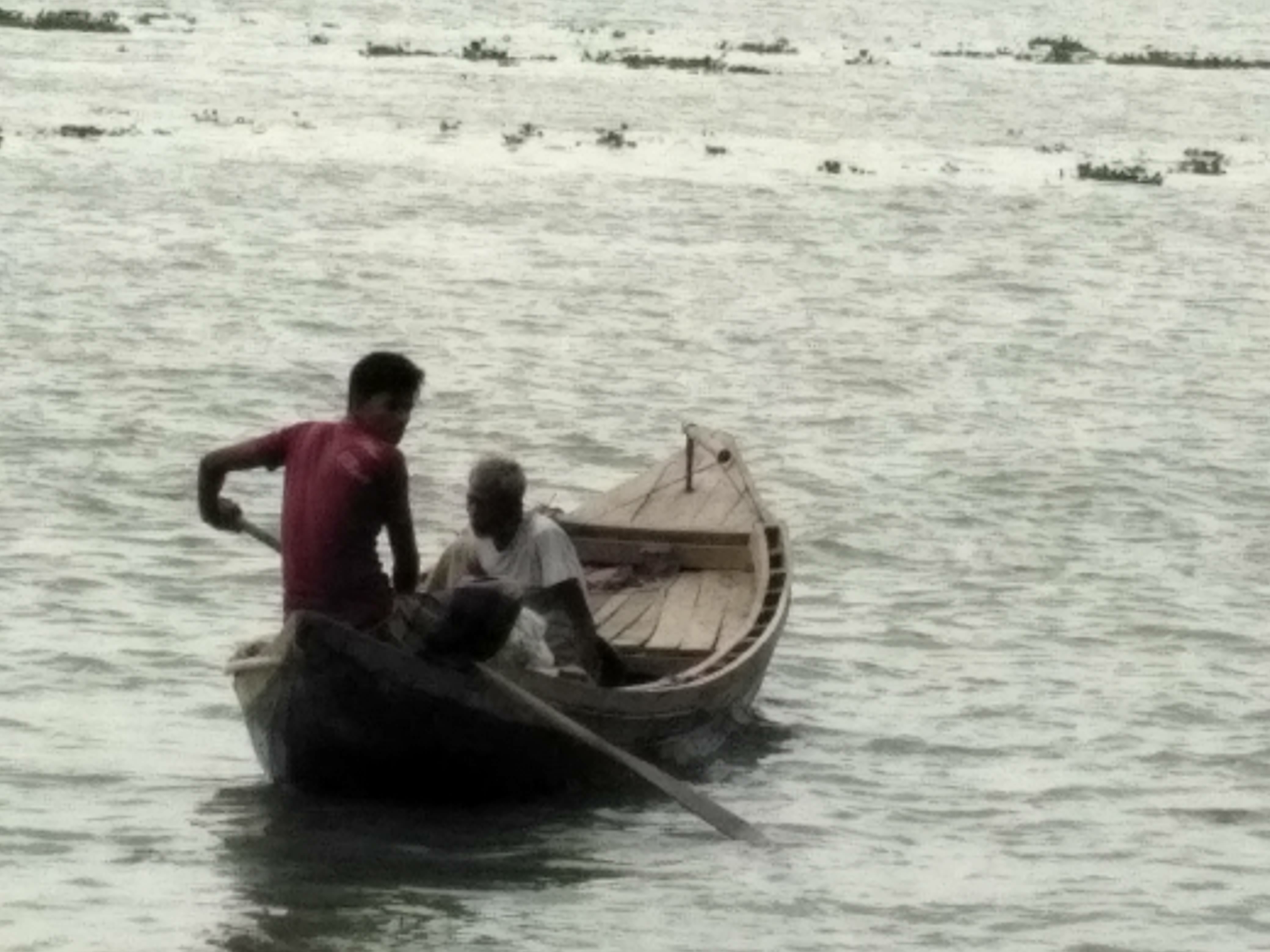
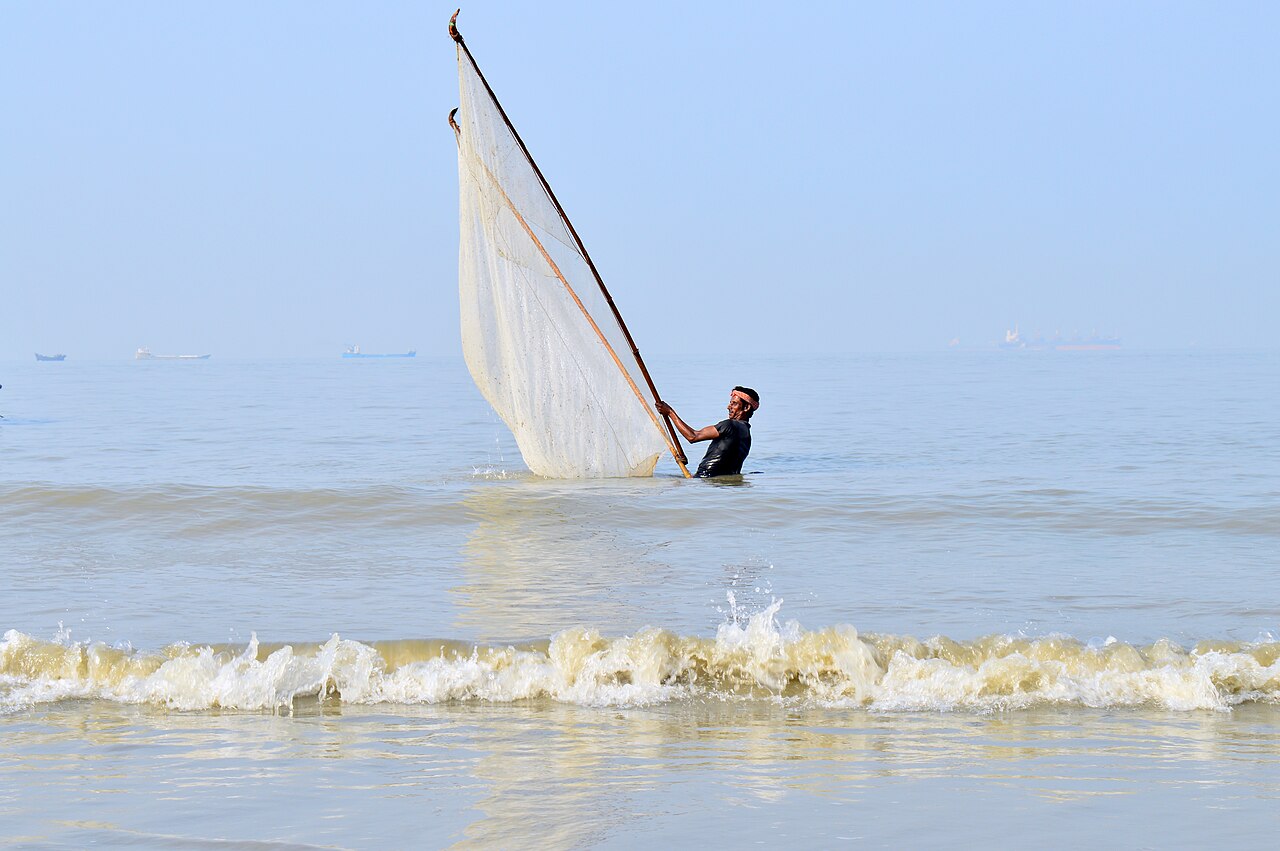
Photo: Jotiii / Wikimedia Commons (CC BY-SA 4.0). The top picture shows fishers catching hilsa on a river in Bangladesh, as background; it is not from the navy's drives.
Sources: Jagonews24 (14 May 2026), Inter Services Public Relations Directorate (ISPR releases of 14 May 2026, 10 May 2026, 19 April 2026, 11 October 2025, 12 June 2025 and 1 March 2025), Bangladesh Sangbad Sangstha (1 November 2025), UNB (6 April 2026, two reports), Laws of Bangladesh (Protection and Conservation of Fish Act, 1950; Protection and Conservation of Fish (Amendment) Act, 2026), Banglapedia (Hilsa; Fishing Gear; Bangladesh Navy)
Comments
(0)