
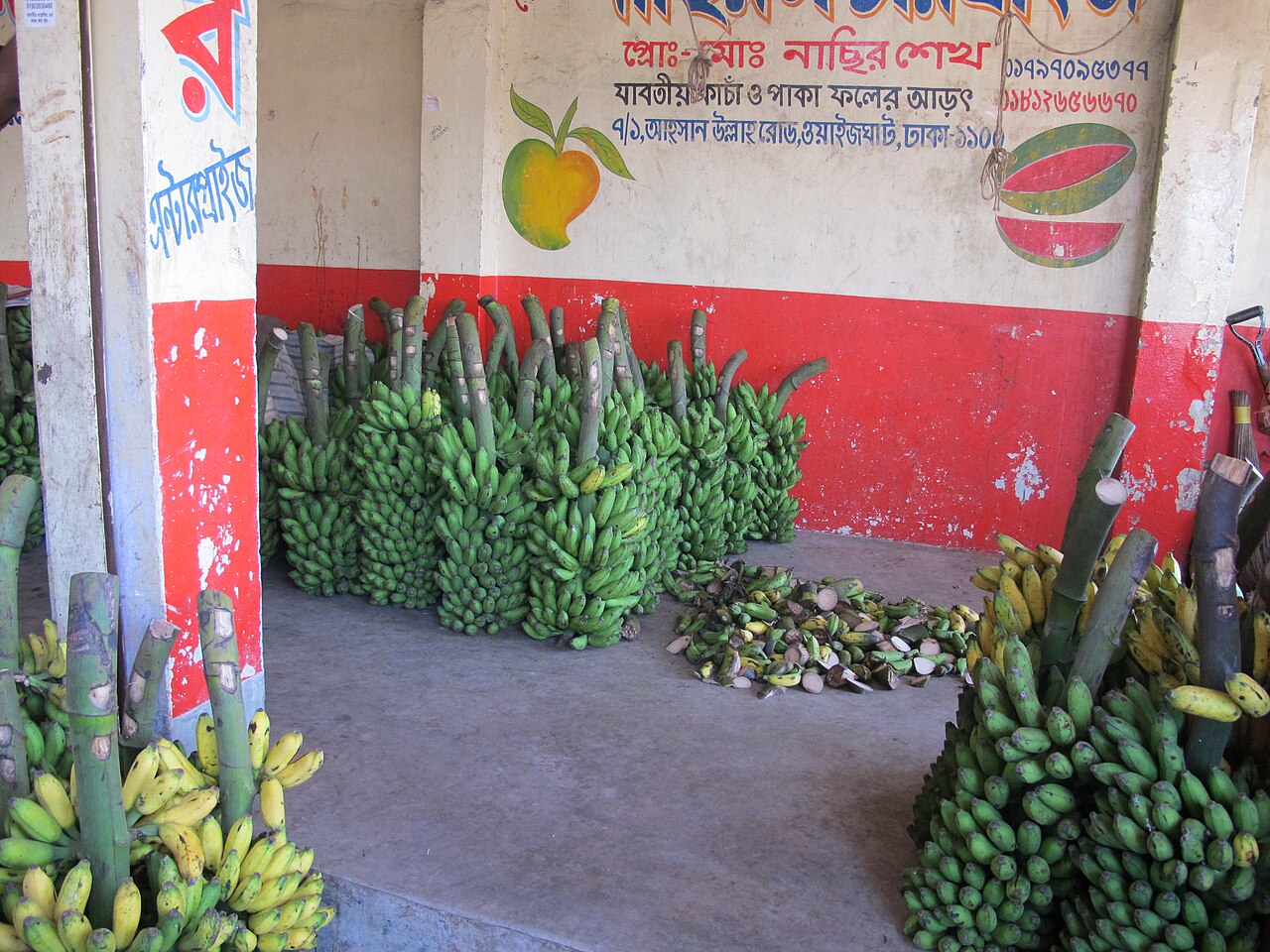
Many shoppers wonder whether the bananas they buy ripened naturally or were hurried along with something. A report by Bangla Tribune's lifestyle desk says the colour of the peel or the stalk alone cannot settle the question.
Spots on the peel, slightly uneven colour or a green stalk do not mean a banana was ripened artificially. Transport, storage and changes in temperature can all produce such differences in how a banana looks.
For ease of marketing, bananas are often harvested before they are fully ripe and ripened later in controlled conditions. Ethylene, a natural plant hormone, drives normal ripening, and approved methods use ethylene to speed it up. Ripening with banned or unapproved substances is the concern; calcium carbide is the best known, and its unauthorised use can harm health.
Rather than relying on one sign, buyers are advised to look at the fruit as a whole. A strong or chemical smell is a reason not to buy. So is an unnaturally bright colour, fruit that is hard to the touch yet fully yellow, or unusual marks.
The report suggests buying from known, trusted sellers, washing the peel in clean water at home, and not eating bananas that turn very soft or show signs of rotting. Avoiding suspicious fruit and buying from safe sources is the best protection.
Photo: Kritzolina / Wikimedia Commons (CC BY-SA 4.0)
Source: Bangla Tribune


Comments
(0)