
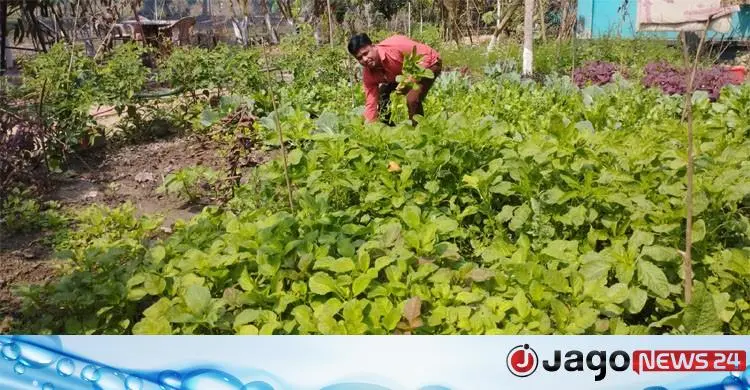
To meet his family's nutritional needs, Md Pallab of Bhaduli Danga in Narail municipality has built a toxin-free fruit and vegetable garden on 20 decimals of his homestead. It has many kinds of fruit trees and vegetables, and he says he has not bought vegetables from the market for 26 years.
What grows in the garden
The vegetables include beetroot, carrot, baliya shak, data shak, cabbage, thankuni, coriander leaves, tomato, chui jhal, kohlrabi, aubergine, papaya, mint, bottle gourd, sweet pumpkin, red amaranth, spinach, katanote shak, poranote shak, radish, red cabbage, cauliflower, flat beans, mankachu, latikachu, dastarikachu, dangairkachu and ghatkachu (varieties of taro), Indian spinach (pui shak), cucumber, chilli and capsicum.
The fruits include mulberry, rambutan, rose apple (golapjam), banana, guava, royal fruit, mango, apple kul, jhara lemon and pomelo. There are also spice trees such as cinnamon, bay leaf and cardamom.
Entrepreneur Md Pallab said: "Eating nutritious food is enormously important for preparing varied, nutritious meals for the family and staying healthy. So to meet my family's nutritional needs I have built this toxin-free fruit and vegetable garden with my own labour since 2001. I prepare food according to the amount the body needs each day."
He said: "I cook nutritious food regularly to keep my family healthy, and I supply it from my own vegetable garden. The surplus I give as gifts to relatives, brothers and friends. I have not bought any vegetables from the market for 26 years."
His message to everyone was: "Those who have a little land in their yard or a roof on their house should make a toxin-free vegetable garden. It will meet the family's proper nutritional needs and also reduce wasted money."
Narail Sadar upazila agriculture officer Md Roknuzzaman said: "I commend this farm entrepreneur. Anyone with even a little space in their yard should use it properly to build a family nutrition garden. That will meet food and nutrition needs and ensure safe food. The vegetables from such gardens are safe and toxin-free, which is good for health."
Source: Jagonews24. First published in Bengali on The Agro News.
Comments
(0)