
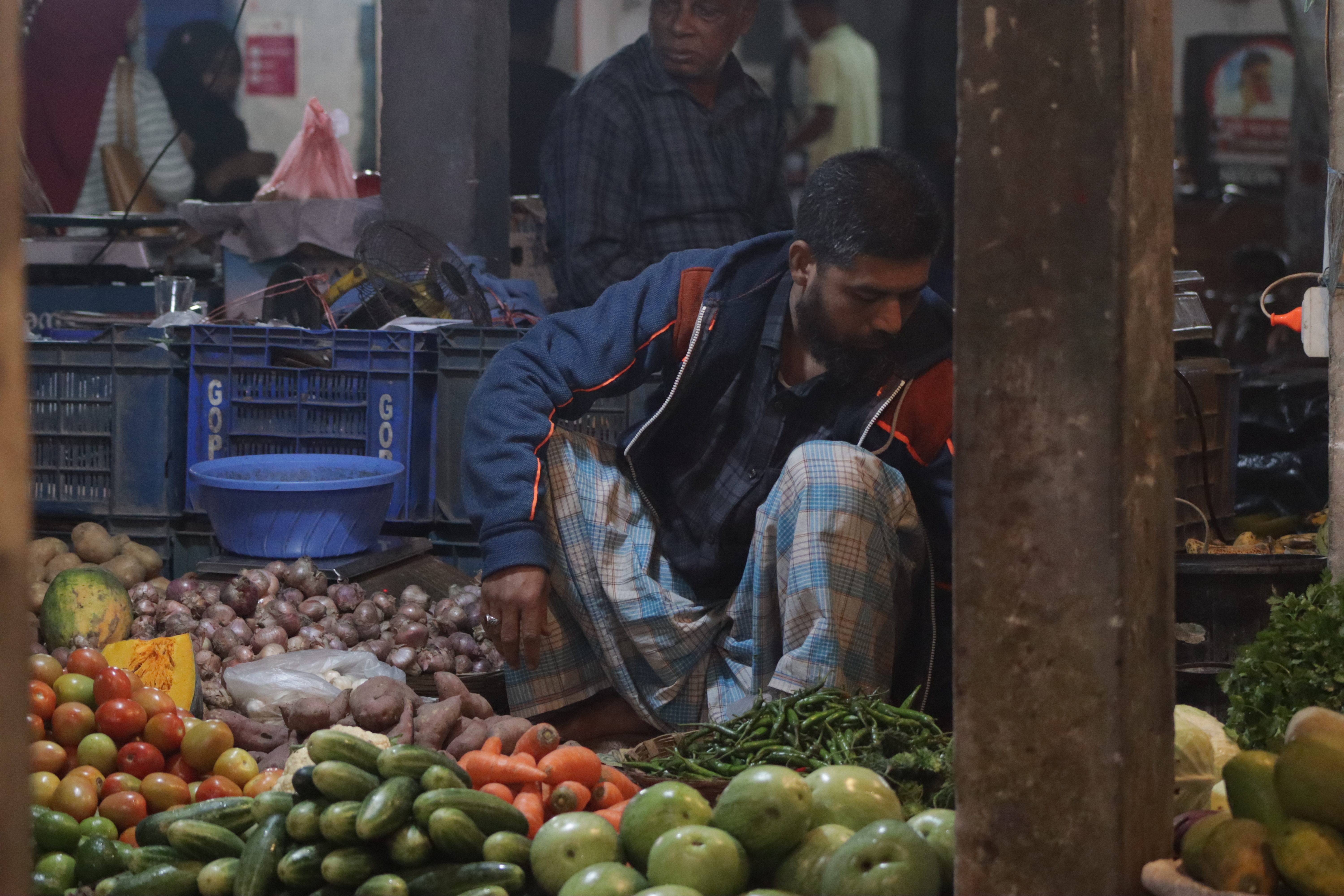
Vegetable and chicken prices fell at Mechhua Bazar, the traditional market of Mymensingh town, in the first week of Ramadan, bringing some relief to low- and middle-income shoppers. Jagonews24's Mymensingh correspondent visited the market on the afternoon of Thursday, 26 February 2026, and reported the next day that green chilli and drumstick had come down the most since the previous week, while broiler and Sonali chicken were Tk 10 a kilogram cheaper. Buyers said prices could fall further if officials monitored the market strictly and regularly, and the district's deputy commissioner said traders had been told not to raise prices without reason.
Vegetable prices at Mechhua Bazar
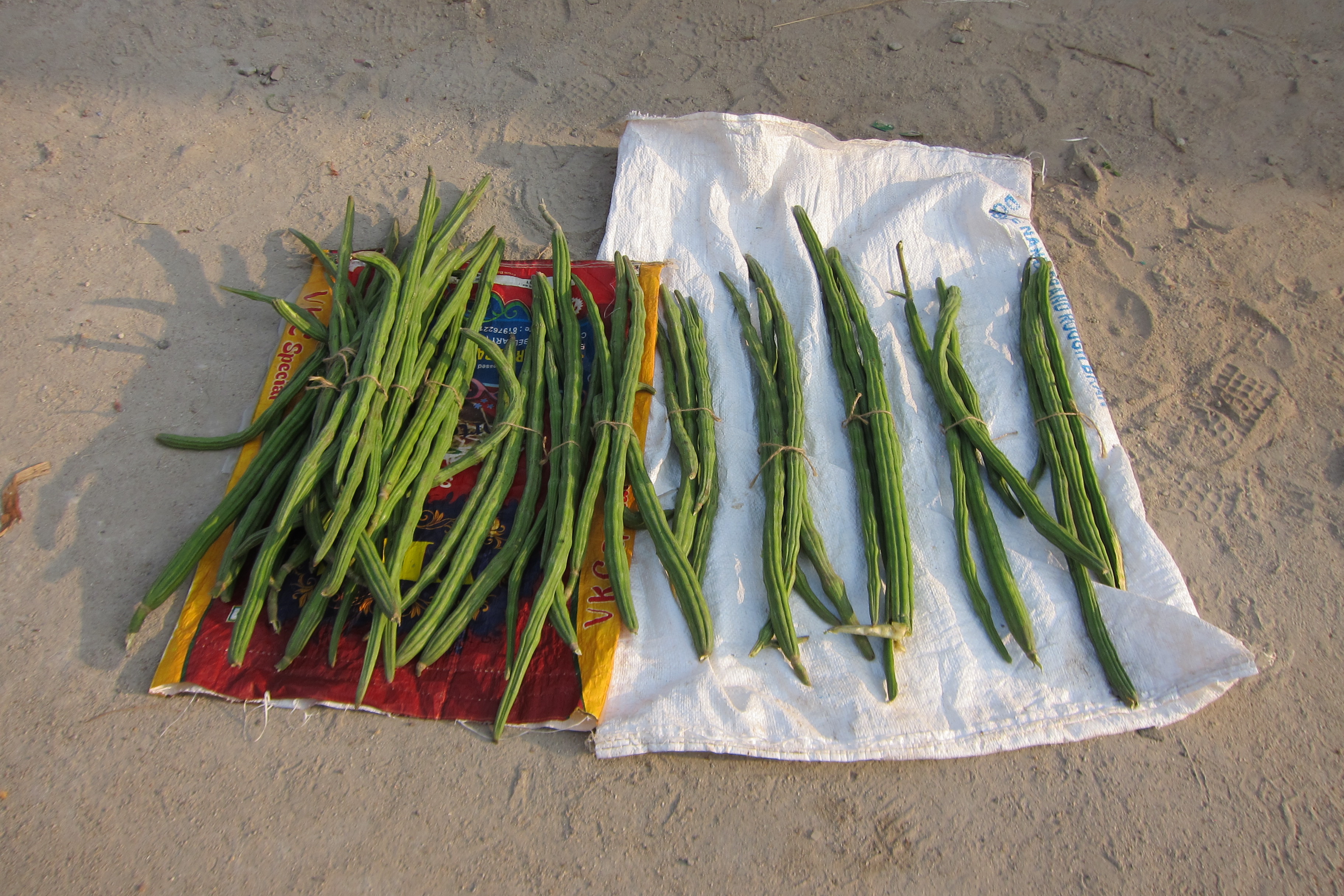
According to the buyers and sellers the correspondent spoke to, green chilli, which had sold at Tk 140 a kilogram the week before, was selling at Tk 90, and drumstick (sajna) had dropped from Tk 250 to Tk 200 a kilogram. These were the largest falls in the market that day.
Cucumber, aubergine, tomato and carrot were each Tk 20 to 30 cheaper. Cucumber fell from Tk 80 to Tk 50 a kilogram, aubergine from Tk 80 to Tk 60, tomato from Tk 40 to Tk 20 and carrot from Tk 50 to Tk 30. Smaller falls were reported for three more items: lemon came down from Tk 80 to Tk 70, flat beans (shim) from Tk 40 to Tk 30 and yardlong beans (barbati) from Tk 60 to Tk 50 a kilogram.
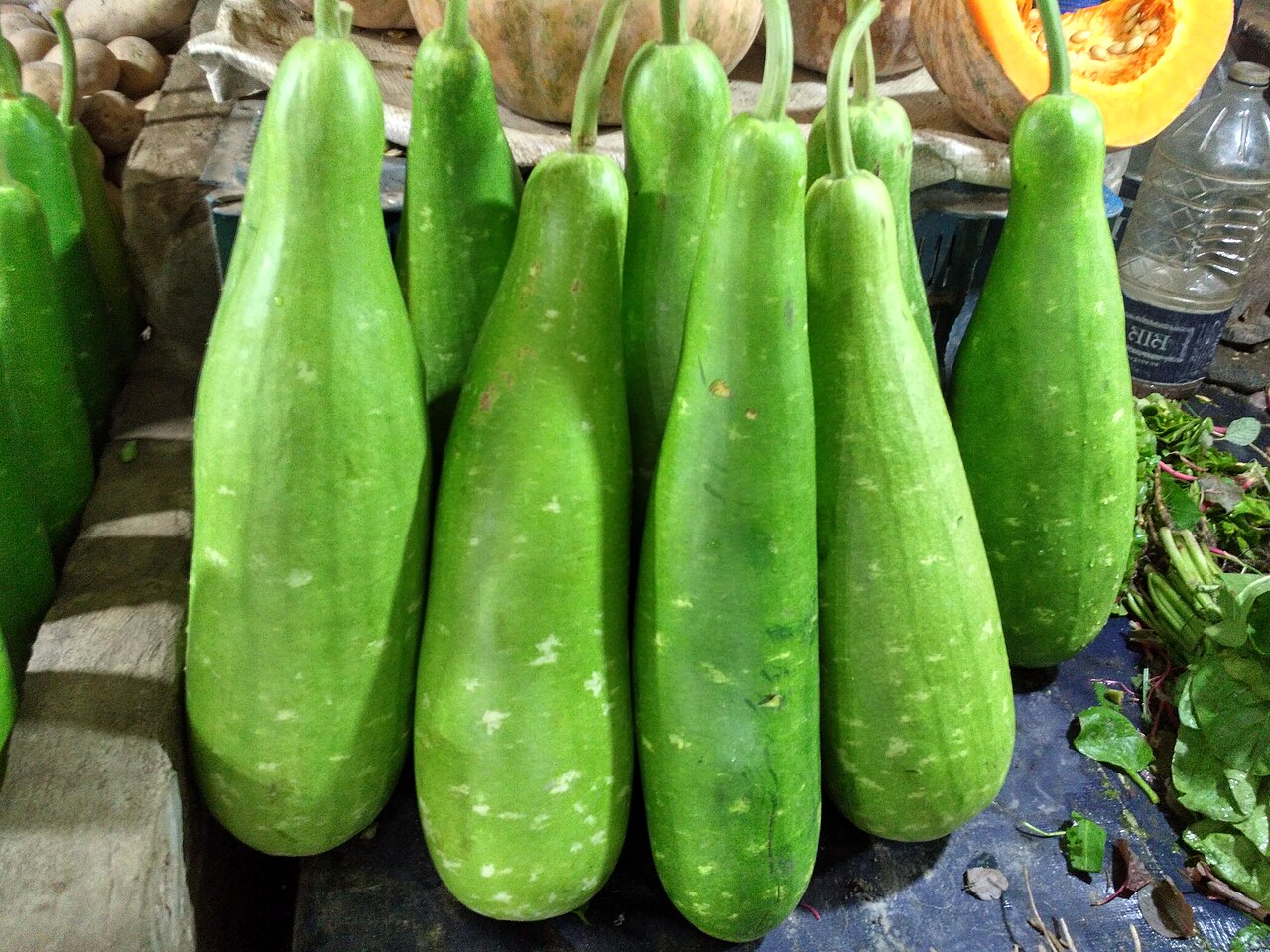
Several prices had not moved. Capsicum stayed at Tk 400 a kilogram and green papaya at Tk 30 a kilogram. Ash gourd (chalkumra) sold at Tk 60 each and cauliflower at Tk 40 each, green bananas at Tk 30 a hali (four pieces) and coriander leaves at Tk 20 a bunch.
Drumstick, one of the two vegetables that fell most, is the long, slender pod of the moringa tree, Moringa oleifera, a fast-growing, drought-resistant tree native to northern India and used widely in South and Southeast Asia. It is grown for its young pods and leaves, which are eaten as vegetables, and its common English name comes from the shape of the pods.
Chicken, eggs, meat and fish
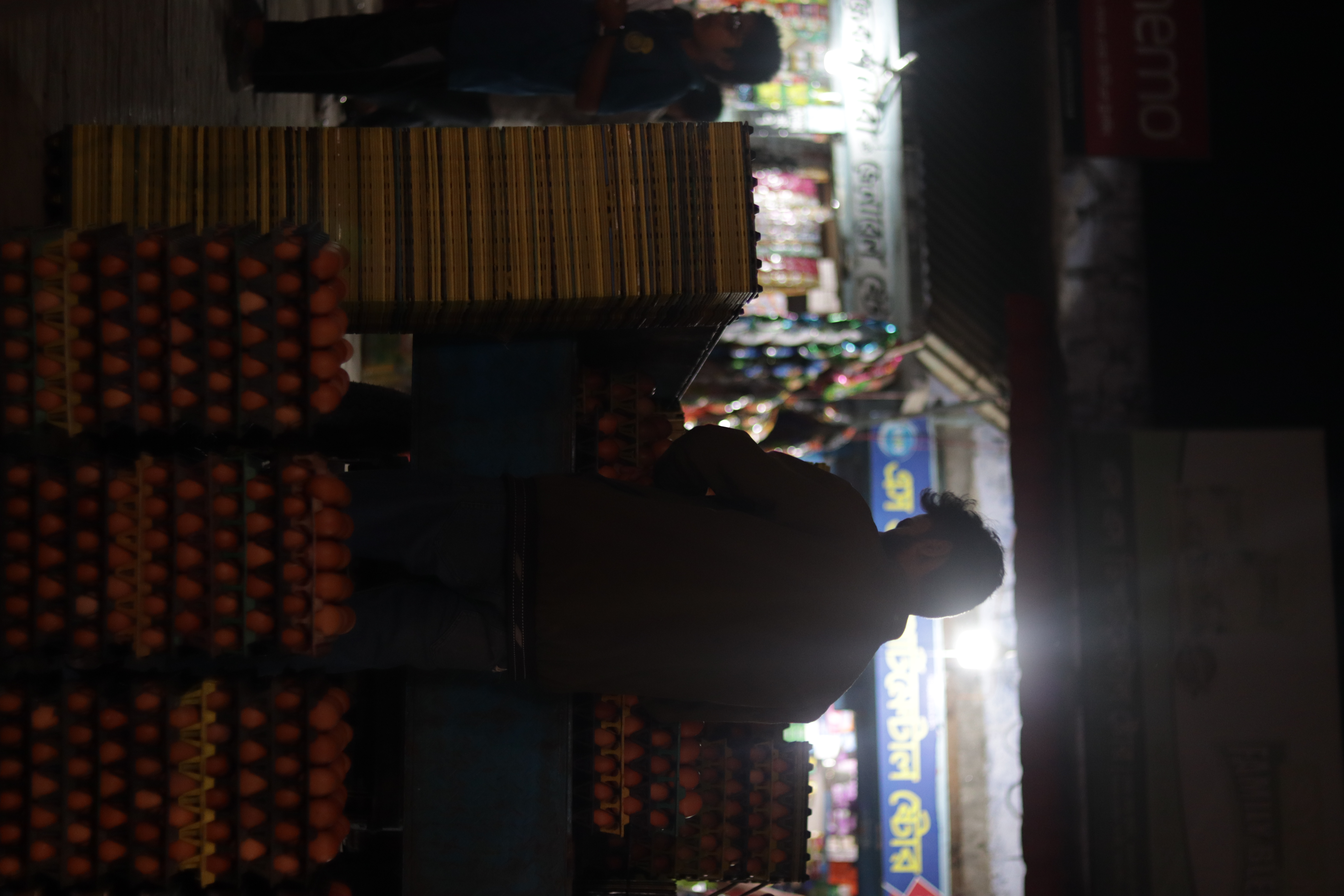
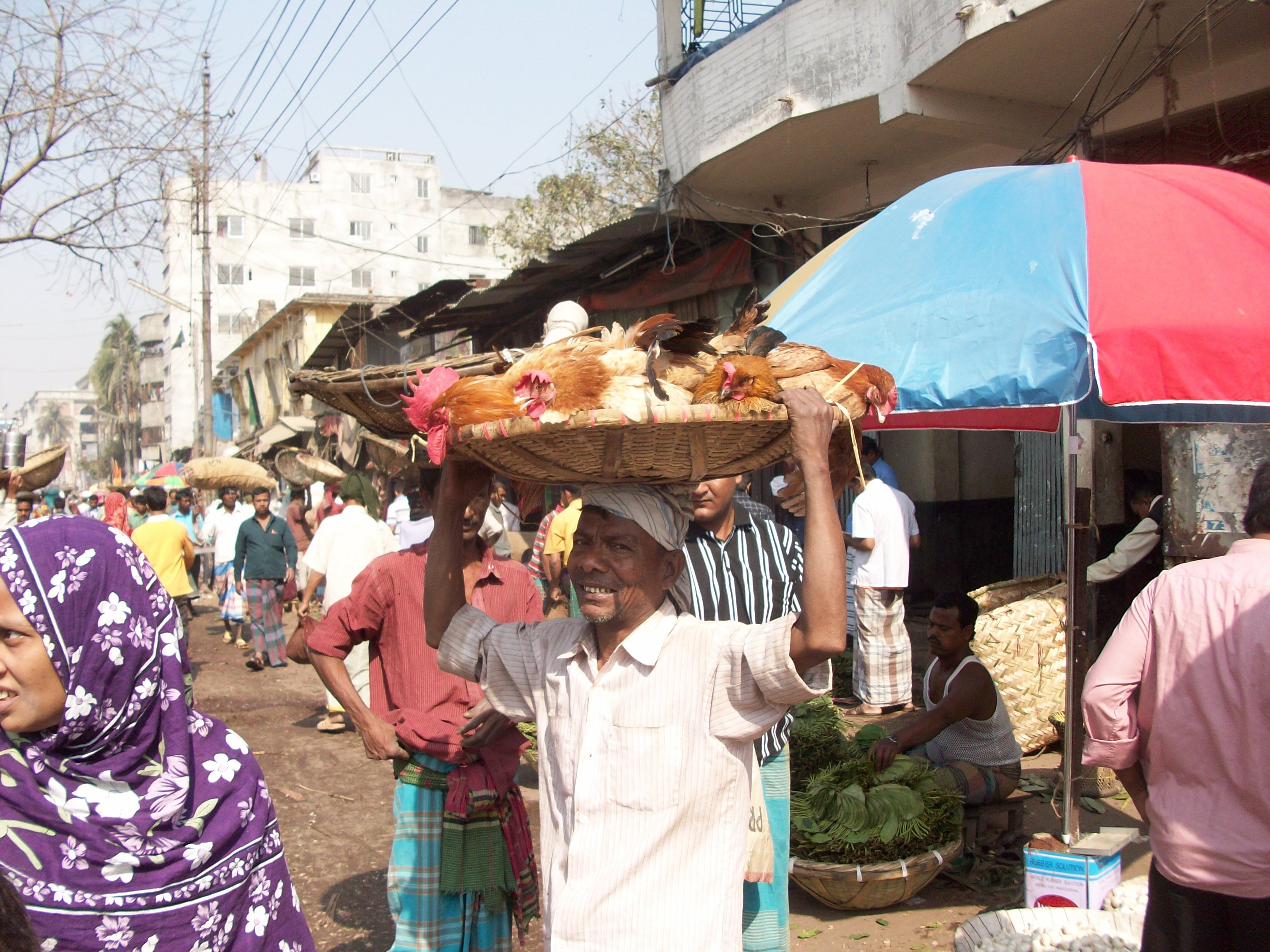
Chicken prices eased as well. Broiler chicken fell from Tk 180 to Tk 170 a kilogram and Sonali cock from Tk 300 to Tk 290, while white cock was unchanged at Tk 280 a kilogram. Duck eggs sold at Tk 60 a hali and farm chicken eggs at Tk 35 a hali. Beef was Tk 750 a kilogram and mutton (khasi) Tk 1,100 a kilogram.
At the fish stalls, the prices per kilogram were: mrigel Tk 280-350, pangas Tk 170-200, pabda Tk 430-550, tengra Tk 510-780, rui Tk 320-420, kalibaus Tk 300-370, catla Tk 340-440, shing Tk 350-650, silver carp Tk 210-280, shol Tk 540-600, tilapia Tk 200-280, taki Tk 410-540 and koi Tk 250-350. The report gave these fish prices as ranges for the day and did not compare them with the week before.
What buyers and the deputy commissioner said
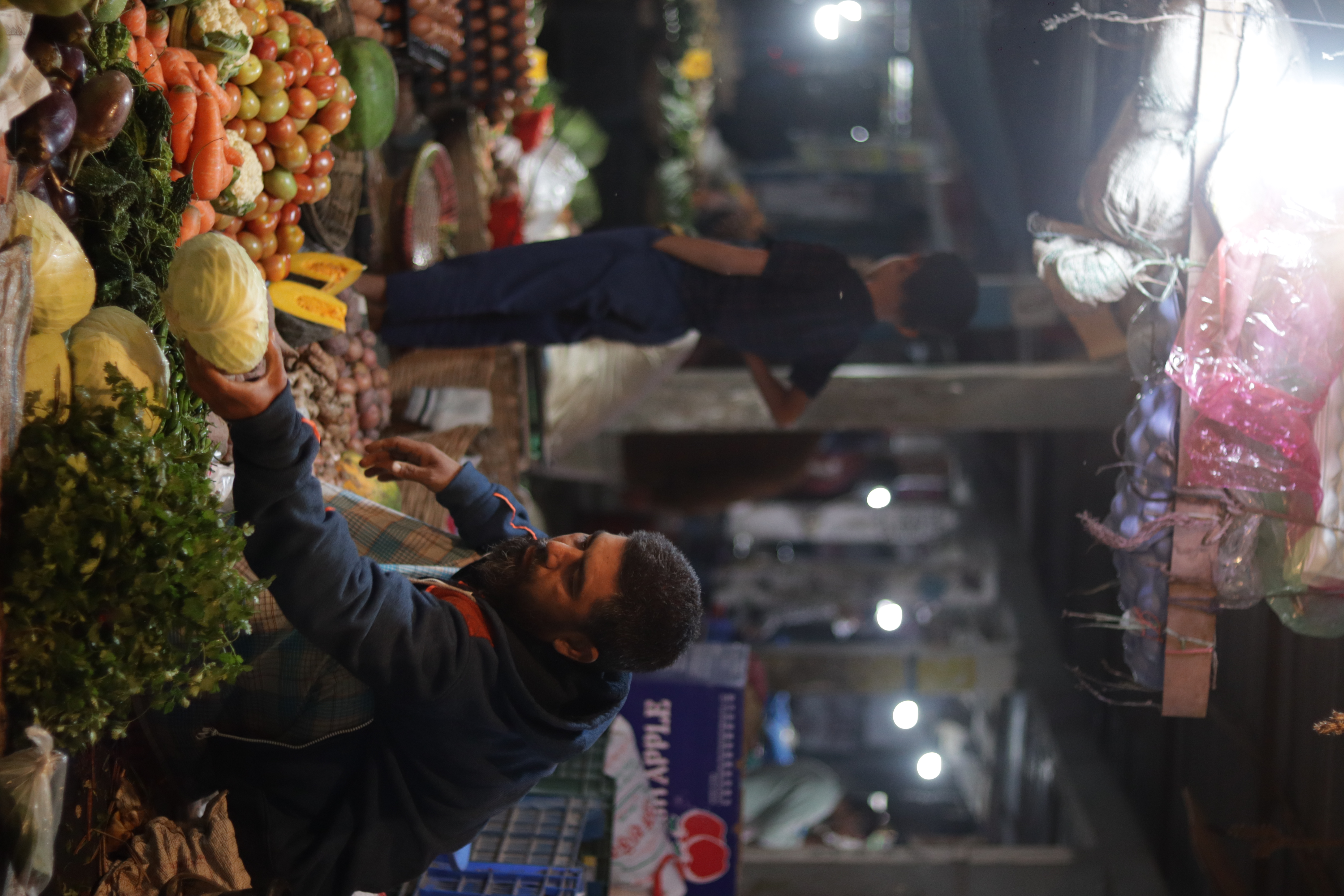
Mohiuddin, a shopper the correspondent met while he was buying vegetables, said most vegetable prices had fallen, so he had filled his bag with the different vegetables he needed. Low- and middle-income buyers could now buy vegetables with some relief, he said, but prices were likely to fall further if the officials concerned monitored the market strictly and regularly.
Azhar Ali, who was buying chicken, said he had bought four kilograms of broiler and Sonali chicken and had paid Tk 10 less for every kilogram. If prices fell further, he said, low- and middle-income buyers would be able to shop in comfort.
Mymensingh Deputy Commissioner Md Saifur Rahman said he had inspected Mechhua Bazar himself. Traders had been told not to raise prices needlessly, officials were monitoring the market, and the necessary action would be taken against any seller who raised prices unreasonably, he said.
The first week of Ramadan in other markets
Ramadan began in Bangladesh on 19 February 2026, a week before the Mymensingh visit, and the days around its start had brought sharp price rises in the capital. On the morning of 19 February, The Daily Ittefaq found at Karwan Bazar in Dhaka that aubergine, which had cost Tk 60-70 a kilogram a week earlier, was selling at Tk 140-150, cucumber at Tk 90-100 against Tk 70-80 two days before, and green chilli at Tk 100-140 a kilogram. A hali of medium lemons cost Tk 100-120. Broiler chicken, which the paper said had stayed just above Tk 150 a kilogram for two to two and a half months, had sold at Tk 190-200 the day before and had come down to Tk 170-180 that morning, while Sonali chicken was Tk 280. Ginger (Tk 130) and onion (Tk 50) were steady. A chilli seller told the paper that prices fall when supplies are large and rise when they are thin.
On 20 February, the second day of fasting, Ittefaq reporters at Dhanmondi, Rayer Bazar and Mohammadpur Town Hall markets found green chilli selling at up to Tk 220 a kilogram, round aubergine at Tk 160 and long aubergine at Tk 120-130, cucumber at Tk 120 and lemons at Tk 100-120 a hali, against Tk 40-60 about a week earlier. Winter vegetables were plentiful and some, such as potato, cauliflower, cabbage, local tomato and carrot, were somewhat cheaper. Cauliflower sold at Tk 40-50 each, flat beans at Tk 70-80, carrot at Tk 30-40 and green papaya at Tk 40-50 a kilogram, yardlong beans at Tk 80 and coriander at Tk 10 a bunch. Traders blamed higher wholesale prices and Ramadan demand and said they expected prices to come down within two or three days; one vegetable seller said that, compared with other years, vegetable prices were somewhat lower this time, with only two or three items dear.
Fruit stayed expensive. Visiting Karwan Bazar on 24 February, Ittefaq reported that the price of every kind of fruit had risen by Tk 50 to 100 a kilogram or a dozen within a week. Buyers it spoke to complained that the market lacked monitoring, while retailers blamed wholesalers and said fruit demand rises several times over in Ramadan.
By the end of the first week, the picture in Dhaka was mixed. Prothom Alo reported on the morning of 27 February that lemon, cucumber, aubergine, chilli, onion and chicken had all risen just before the fast began, that onion and chicken prices had fallen over the previous two or three days, but that lemon, cucumber and aubergine were still selling at high prices.
Mymensingh and its traditional market
Mymensingh district, in the division of the same name, covers 4,080.18 square kilometres. According to Banglapedia, it is bounded by the Garo Hills and the Indian state of Meghalaya to the north, Gazipur to the south, Netrokona and Kishoreganj to the east, and Sherpur, Jamalpur and Tangail to the west. Its main rivers are the Old Brahmaputra, Bhogai, Bajua and Kangsa. The district was formed in 1787, and the town was earlier known as Nasirabad. The 2011 census counted 4,812,052 people in the district, and Banglapedia lists agriculture as the main source of income for 64.14 per cent of them, with commerce next at 11.40 per cent.
Mechhua Bazar is in Mymensingh Sadar upazila, which covers 380.72 square kilometres along the Old Brahmaputra and had 775,733 people at the 2011 census. Banglapedia lists paddy, wheat and vegetables as the upazila's main crops, and paddy, banana, vegetables and leather among its main exports, and counts 50 hats and bazars in it. The upazila is also home to Bangladesh Agricultural University, founded in 1960, the Bangladesh Institute of Nuclear Agriculture and the Bangladesh Fisheries Research Institute.
Jagonews24 has reported from the same market before. In January 2025 its correspondent found native small fish that had once been feared lost on sale there beside the large fish. A trader told the paper that fish farms were now raising gulsha, pabda, shing, magur, koi, tengra, boirali and other native small fish, that large quantities reached the market every day, and that prices had fallen as supply grew; a buyer said pabda was then selling at Tk 380-400 a kilogram.
Winter vegetables: Mymensingh's output and the national picture
Most of the vegetables whose prices fell are winter (rabi) crops. Banglapedia names cabbage, cauliflower, tomato, aubergine, radish, hyacinth bean (shim) and bottle gourd as Bangladesh's major winter vegetables, and ash gourd and yardlong bean among the major summer ones, noting that aubergine is grown in both seasons. Tomato seedlings are usually planted in November and December and the crop is ready in 80 to 90 days; aubergine is planted in October and November and is ready for harvest in 90 to 100 days; carrot seed is sown directly between October and December and the roots are ready within three months. Chilli can be grown in both summer and winter.
The Yearbook of Agricultural Statistics 2024, published by the Bangladesh Bureau of Statistics (BBS) in June 2025, puts the country's total vegetable production in 2023-24 at 5,540 thousand tonnes from 1,247 thousand acres, of which winter vegetables made up 3,954 thousand tonnes and summer vegetables 1,586 thousand tonnes. Among the crops in the Mechhua Bazar report, winter (rabi) aubergine gave 485 thousand tonnes from 86 thousand acres, tomato 491 thousand tonnes from 77 thousand acres, cauliflower 430 thousand tonnes, cucumber 111 thousand tonnes, ash gourd 104 thousand tonnes and carrot 43 thousand tonnes. Chillies of both seasons together gave 748 thousand tonnes from 244 thousand acres.
For Mymensingh district, the same yearbook records 2,683 acres of tomato producing 31,706 tonnes in 2023-24, 3,437 acres of winter aubergine producing 29,196 tonnes, 1,258 acres of cucumber producing 8,056 tonnes, and 3,682 acres of winter chilli producing 15,338 tonnes, with a further 877 acres of summer chilli giving 1,522 tonnes. Banglapedia notes that the aubergine grown around Gaffargaon, an upazila of Mymensingh, is famous for its size and taste, and that the Bangladesh Agricultural Research Institute (BARI) has released aubergine varieties including Uttara, Shuktara, Tarapuri, Nayantara and Kazla.
Sonali, broiler and the chicken on sale
The three kinds of chicken in the report are different birds. A broiler is a chicken bred and raised specifically for meat; most commercial broilers reach slaughter weight at four to six weeks of age. Sonali is a crossbred chicken produced by crossing Rhode Island Red cocks with Fayoumi hens. A 2014 paper by M C Sumy, M K I Khan and M M Islam of Chittagong Veterinary and Animal Sciences University, published in the journal Livestock Research for Rural Development, describes Sonali as developed for villagers and notes that under semi-scavenging conditions Sonali hens were recorded laying 119 eggs a bird a year (Rahman and others, 1997) and 131 eggs (Khan and others, 2007), more than a Rhode Island Red and local Hilly cross. The same paper says Sonali chickens are reared by smallholders for eggs in the Bangladesh poultry model described by FAO in 2010.
The paper describes poultry farming in Bangladesh as mainly of the backyard type, kept by nearly all village farmers because it needs little capital and space, with the birds mainly owned and managed by women. Banglapedia adds that because local chickens produce relatively little meat and few eggs, farmers have increasingly set up small and large farms with improved breeds such as White Leghorn, Rhode Island Red and Plymouth Rock, and that the domestic chicken probably descends from the red jungle fowl of Southeast Asia.
The fish farms behind the fish stalls
Many of the fish on Mechhua Bazar's list, such as rui, catla, mrigel, pangas, tilapia, koi and shing, are species that farmers in Bangladesh raise in ponds. The Department of Fisheries' Yearbook of Fisheries Statistics of Bangladesh 2023-24, published in December 2024, records 345,001 tonnes of fish from Mymensingh district's inland waters in 2023-24, of which 324,345 tonnes came from ponds.
Nationally, the yearbook puts fish production in 2023-24 at 50.18 lakh tonnes, with aquaculture accounting for 59.34 per cent, and says fish supply about 60 per cent of the animal protein in the people's diet. It reports that the farming of native and exotic carps, pangas, tilapia and koi has expanded massively, and that native species such as koi, shingi, magur, pabda, gulsha and mola draw special attention among farmers. Citing FAO, it says Bangladesh ranked fourth in the world and third in Asia in tilapia production.
Much of the research behind native fish farming is done in Mymensingh. Jagonews24 reported in January 2025 that scientists at the Bangladesh Fisheries Research Institute (BFRI), which has its headquarters in the town, had achieved successful breeding of 40 native fish species described as near-extinct, and that fry of 12 of them, including shing, magur, koi, tengra, pabda, gulsha and boirali, were being produced widely in hatcheries around the country.
Who watches over market prices
The deputy commissioner's role in the market has a basis in law. Under the Consumer Rights Protection Act, 2009 (Act No. 26 of 2009, dated 6 April 2009), every district has a District Consumer Rights Protection Committee chaired by the deputy commissioner. Its members include the president of the district chamber of commerce and industry, the civil surgeon, the superintendent of police, a representative of the mayor of the municipality or city corporation and a representative of a recognised consumer rights organisation.
Section 11 of the Act gives the district committee the duty of supervising and monitoring the work of wholesale and retail businesses and other producers and sellers of consumer goods, and of raising public awareness of consumer rights. The Act makes it an offence for a trader to fail to display a price list in a clearly visible place where a law or rule requires one (section 38), and to sell or offer to sell a product above a price fixed under a law or rule (section 40).
Section 69 gives the district magistrate, within the district, all the powers and functions that the Act gives the director general of the Directorate of National Consumer Rights Protection, to be used without the director general's prior approval. The district magistrate may delegate them to an executive magistrate and must inform the director general in writing of any action taken.
Photo: Wasiul Bahar / Wikimedia Commons (CC BY-SA 4.0)
Sources: Jagonews24, The Daily Ittefaq, Prothom Alo, Banglapedia, Bangladesh Bureau of Statistics (Yearbook of Agricultural Statistics 2024), Department of Fisheries (Yearbook of Fisheries Statistics of Bangladesh 2023-24), Livestock Research for Rural Development, Consumer Rights Protection Act 2009 (Laws of Bangladesh), Wikipedia
Comments
(0)