
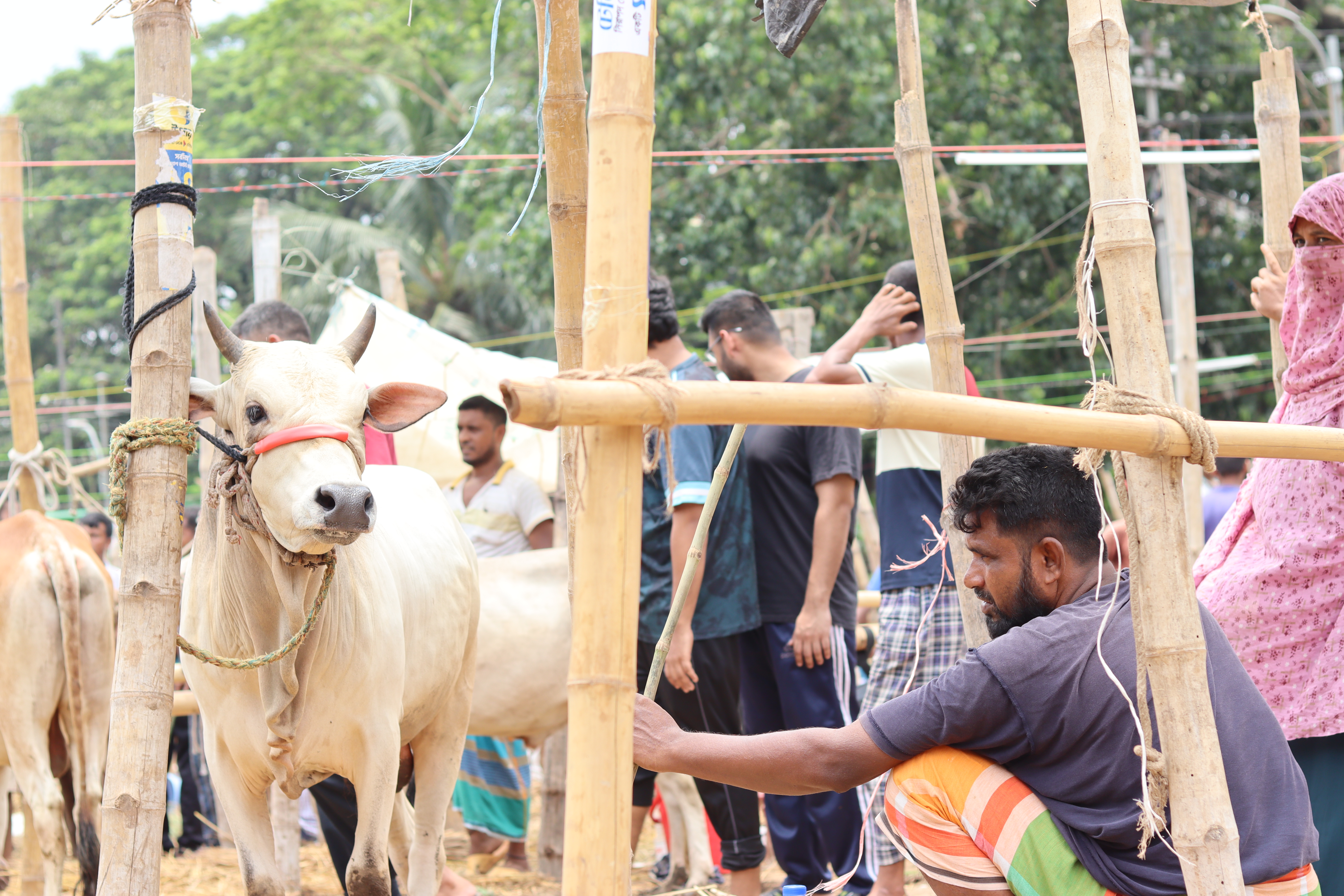
Five days before Eid-ul-Azha, on 23 May 2026, trade in sacrificial animals was already under way at the cattle markets of Moulvibazar district in north-eastern Bangladesh. According to the district livestock office, about 74,000 local animals had been prepared for the sacrifice that year, more than the district needed. Buyers told Jagonews24 that large cattle were comparatively cheap, but that sellers were asking much higher prices for small and medium cattle, which, as in earlier years, were the animals most in demand.
Buyers at markets across the district said cattle prices were low overall that year, but comparatively high for small and medium animals, while demand for large cattle was very weak. In the villages, they said, small and medium cattle are the ones most often sacrificed. Farmers gave the other side of the picture: across Moulvibazar's seven upazilas there were countless large and small farmers, who had begun bringing their cattle to market, and sales had started. Their complaint was that buyers did not want to pay a fair price, and they said high cattle-feed prices were the reason they were asking more.
Visiting markets around the district, the Jagonews24 correspondent found plenty of cattle but few sales. Because sellers were asking high prices, many buyers could not buy, especially when it came to small and medium cattle.
Buyers and farmers at the markets
The bargaining came through in the account of one buyer, Siam Chowdhury. He told Jagonews24 that he had bought a cow for the sacrifice for Tk 95,000. Sellers, he said, were reluctant to come down. He was first asked Tk 1,30,000 for the animal, though in his view its market value was about Tk 90,000, and he was able to buy it only after bargaining.
A farmer, Saidul Islam, described the seller's side. He had eight cattle on his farm, all prepared for the Eid sacrifice, and had sold only two, without getting the price he had hoped for. Buyers, he said, were offering low prices.
At several of the district's large markets, including Adampur Bazar, Tengra Bazar, Brahmanbazar, Shamshernagar Bazar and Bhairab Bazar, local middlemen were buying cattle from farmers one or two at a time and selling them on to the district's large wholesalers.
The district livestock office's figures
Citing the district livestock office, Jagonews24 reported that more animals than needed had been prepared in the district ahead of Eid that year. Moulvibazar had about 6,225 large and small farmers. The office listed the animals prepared as follows:
- Cattle: 39,481
- Buffalo: 1,446
- Goats: 30,822
- Sheep: 2,835
The office put the district's demand for sacrificial animals that year at 71,472, against 74,584 animals prepared.
District livestock officer Dr Md Ashraful Alam Khan told Jagonews24 that Moulvibazar had more sacrificial animals than it needed. Medical teams would be kept at every market to examine cattle, he said. Besides the farms, he added, farmers' households also kept many animals, which were being sent to other districts after local demand had been met.
The markets named: from Adampur to Brahmanbazar
The markets named in the report are long-established rural bazaars. According to Banglapedia, Kamalganj upazila covers 485.26 square kilometres and its main river is the Dhalai. It has 20 hats and bazaars, the best known of them Bhanugach Bazar, Shamshernagar Bazar, Munshi Bazar and Adampur Bazar. Its main crops are aman and aus paddy, wheat, sugarcane, tea, mustard, potato, betel leaf and vegetables, and its main exports are tea, sugarcane molasses, betel leaf and vegetables. Manipuri handloom weaving is the upazila's best-known cottage industry, and Lawachara National Park lies within it.
Adampur and Shamshernagar are old names. Under British rule both were parganas, or revenue units, of the South Sylhet subdivision, out of which Moulvibazar district later grew. Shamshernagar also has an airport.
Tengra Bazar is in Rajnagar upazila. Banglapedia gives Rajnagar's area as 338.15 square kilometres, with 32 hats and bazaars, the best known being Tengra Bazar, Munshi Bazar, Rajnagar Bazar, Haripasha Bazar and Sarkar Bazar. The Kawadighi haor wetland lies in Rajnagar, and its main crops are paddy, tea, potato, mustard, ginger, turmeric and vegetables.
Brahmanbazar is in Kulaura upazila, which Banglapedia records as covering 545.73 square kilometres, with 51 hats and bazaars, among them Brahman Bazar, Kaminiganj, Fultala and Robir Bazar. Kulaura has 33 tea gardens, and its main crops are paddy, wheat, potato, tea and rubber.
Moulvibazar: a district of tea gardens and haors
Moulvibazar is the south-eastern district of Sylhet Division. Banglapedia gives its area as 2,799.38 square kilometres. It is bounded by Sylhet district to the north, the Indian state of Tripura to the south, the Indian states of Assam and Tripura to the east and Habiganj district to the west. Its main rivers are the Manu, Dhalai, Juri and Longla, and Hakaluki, Hail and Kawadighi are its best-known haors, the seasonal wetlands of the north-east. Moulvibazar became a subdivision in 1960 and a district in 1984.
The district's seven upazilas are Moulvibazar Sadar, Kamalganj, Kulaura, Rajnagar, Sreemangal, Barlekha and Juri. The 2022 census counted 2,123,447 people. The district takes its name from a market: according to local history, around 1771 Moulvi Syed Qudratullah set up a small bazaar on his zamindari land by the river, and local people called it Moulvibazar, the market of the Moulvi.
Farming is the main livelihood. Census figures cited by Banglapedia put agriculture at 40.37 per cent of the district's main occupations, with commerce at 11.29 per cent. The district's main products include tea, bamboo, pineapple, cane, jackfruit, oranges, agar, rubber, mangoes and lemons. Sreemangal is known as the tea capital of Bangladesh and is home to the Bangladesh Tea Research Institute.
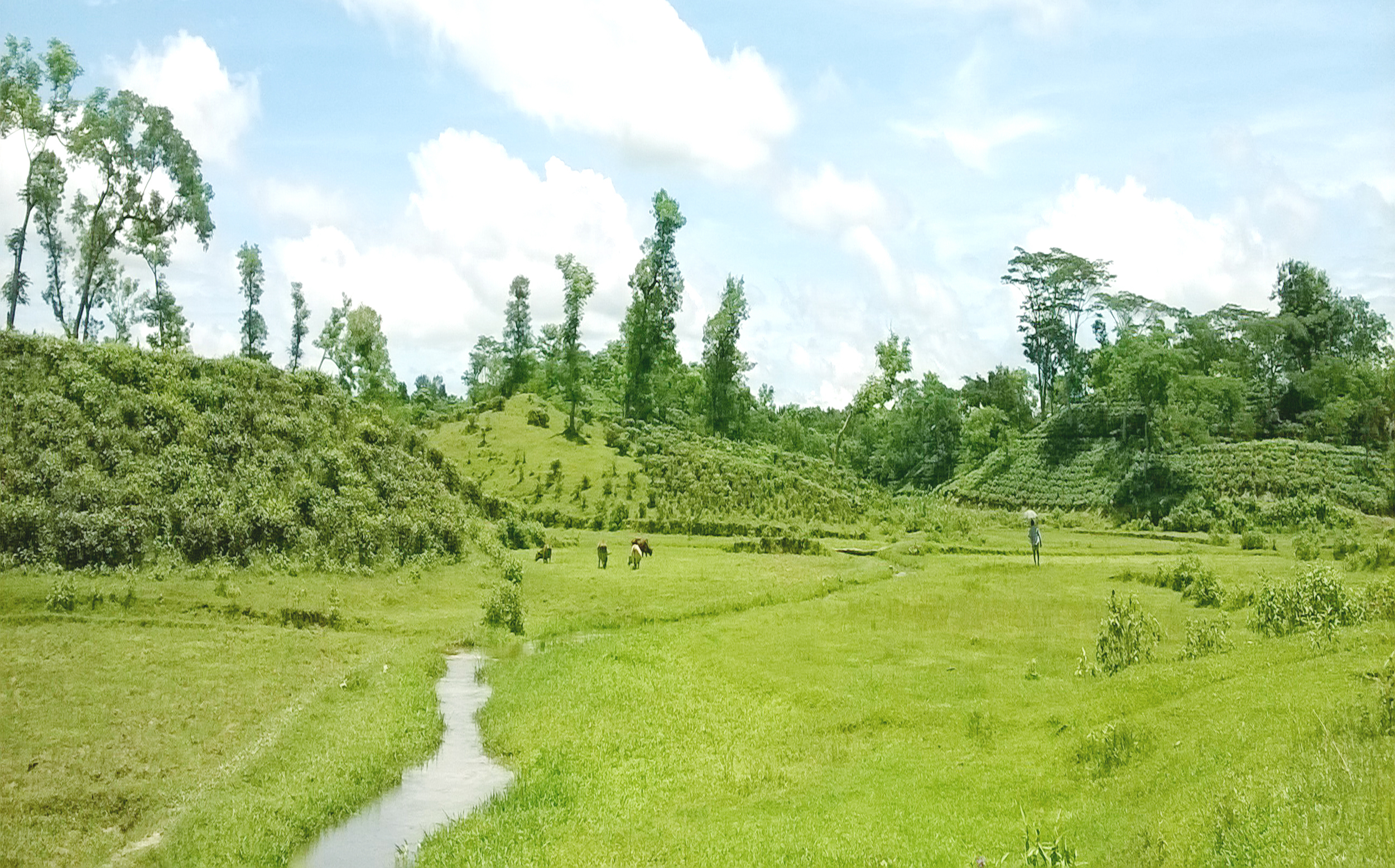
Moulvibazar's Eid markets in earlier years
The balance between supply and demand in Moulvibazar has shifted over the years. On 31 July 2020 Bangla Tribune, citing the district livestock office, reported that 50,972 cattle and buffalo and 19,328 goats and sheep had been prepared for the sacrifice in the district that year, against a total demand of more than about 95,000 animals. In that pandemic year, hand-washing points and disinfection chambers were set up at market entrances. Besides the market outside the M Saifur Rahman Stadium in the district town, markets were held at Sreemangal, at Adampur and Shamshernagar in Kamalganj, and in Rajnagar, Kulaura, Barlekha and Juri, and animals were also sold through a Facebook-based 'smart haat'.
A year later, on 10 July 2021, Jagonews24 reported that the district's seven upazilas had about 2,500 cattle farms, where about 68,000 animals had been fattened for sale at Eid-ul-Azha. The report said that because Indian cattle had stopped coming in for several years, the number of livestock rearers in Moulvibazar had grown. A strict Covid-19 lockdown had closed the markets, and farmers were worried. The then district livestock officer said demand and production of cattle in the district were roughly equal.
On 12 June 2024 Prothom Alo described a farm at Mostafapur in Moulvibazar Sadar upazila where 85 of 100 cattle had been sold before the local markets had even got going. The farm sold by live weight, at Tk 490 a kilogram for ordinary local cattle and Tk 510 for Sahiwal. It kept local, Sahiwal and Brahman-cross cattle, fed on rice bran, oil cake, wheat bran and grass, and its buyers came from Moulvibazar town and Kulaura as well as Sylhet, Chattogram and Dhaka.
These earlier reports show a district that once had fewer sacrificial animals than it needed, while in 2026 the livestock office reported more than enough. The reports do not say whether the figures for different years were compiled in the same way.
The national picture before Eid in 2026
Moulvibazar's figures were part of a national count. On 3 May 2026 the Ministry of Fisheries and Livestock held an inter-ministerial meeting and briefing on demand, supply and transport of animals for Eid-ul-Azha. According to The Business Standard, the ministry put the likely demand for sacrificial animals that year at 10,106,334, against 12,333,840 animals available, and said about 2,227,506 animals would be left over.
The ministry's breakdown of the animals available was:
- Cattle and buffalo: 5,695,878
- Goats and sheep: 6,632,307
- Other species (camels, dumba sheep and others): 5,655
The briefing said more than 3,600 cattle markets would be held across the country. The government would take a firm line against extortion from trucks carrying sacrificial animals, and law enforcers would be on duty round the clock to keep markets, buyers and sellers safe. To protect local farmers, a policy decision had been taken not to hold cattle markets in border areas. No market toll would be charged on animals bought online, and professional and amateur butchers were being trained so that hides would not be spoiled.
The date of Eid was settled on 18 May. According to Desh Rupantor, the National Moon Sighting Committee, meeting that evening at the Islamic Foundation's Baitul Mukarram conference room, announced that the crescent of Dhul Hijjah 1447 AH had been sighted, so Eid-ul-Azha, one of the biggest religious festivals for Muslims, would be celebrated on Thursday 28 May. A seven-day public holiday was also declared for Eid-ul-Azha that year.
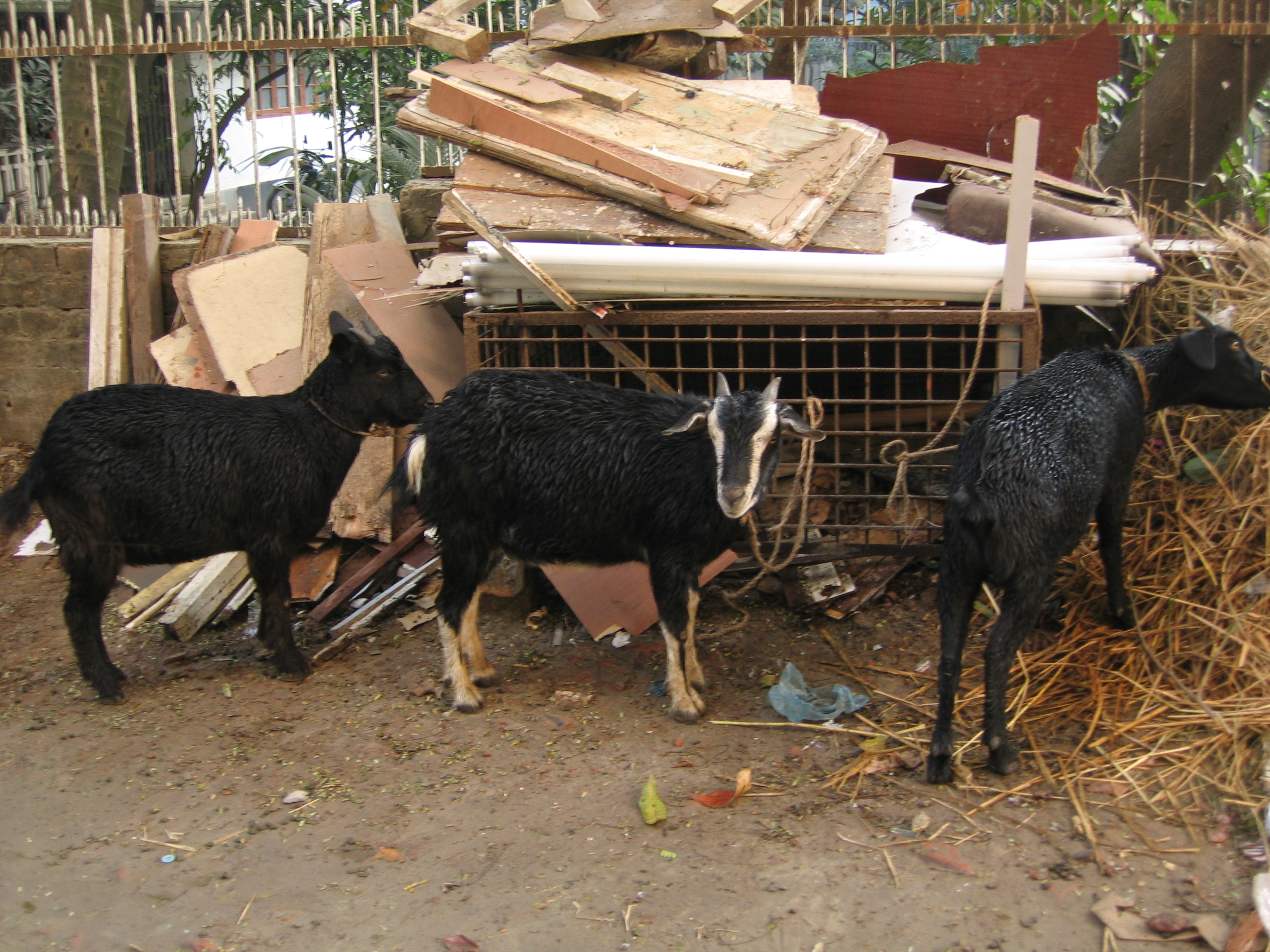
Market mood: farmers' claims and last year's count
On the morning of 23 May, the day the Moulvibazar report appeared, The Business Standard published a report on preparations at Dhaka's markets. It said that in recent years sellers had worried that prices would collapse at the last moment, but that this concern was much smaller in 2026. With border markets closed and stricter controls on moving cattle in India's West Bengal, fewer Indian animals were entering the market, the report said.
The same report carried farmers' claims that the Department of Livestock Services' figures did not match conditions on the ground. According to the farmers, a shortage of bank credit, high feed prices, cattle theft and the effects of political change had closed more than a thousand farms across the country in the previous year and a half, more than 500 of them in Chattogram alone. The report carried no response from the department to this claim. It also noted that, under the rules, temporary markets are supposed to open five days before Eid.
The previous year's count formed part of the background. Prothom Alo reported on 10 June 2025 that, according to the Department of Livestock Services, 9,136,734 animals had been sacrificed at Eid-ul-Azha in 2025: 4,705,106 cattle and buffalo and 4,430,668 goats and sheep. The year before, in 2024, the figure had been 10,408,918. In 2025, 3,310,603 sacrificial animals had gone unsold. The ministry said the count was based on stratified random sampling, with a sample of at least 1 per cent taken from three villages, small, medium and large, in every upazila.
By that count, Sylhet Division, to which Moulvibazar belongs, recorded the fewest sacrifices of any division in 2025: 319,823 animals. In 2024, according to ministry figures published by Jugantor on 18 June 2024, 393,742 animals had been sacrificed in Sylhet Division, comprising 201,143 cattle, 1,358 buffalo, 173,223 goats and 18,014 sheep. Md Ruhul Amin, dean of the Faculty of Animal Husbandry at Bangladesh Agricultural University, told Prothom Alo in 2025 that people's economic condition was perhaps not good, which was why fewer animals had been sacrificed, and that political leaders usually buy large cattle for the sacrifice.
Local cattle: size, breeds and feed
The animals prepared in Moulvibazar were local ones. According to Banglapedia, most of Bangladesh's cattle are non-descript indigenous zebu, humped multipurpose animals used for ploughing, carting, milk and meat. The zebu of the Indian subcontinent (Bos indicus) is generally smaller and slower-growing than temperate cattle, but resistant to some infectious diseases.
Banglapedia also notes the strengths of local cattle: they resist disease and parasites relatively well, make efficient use of low-quality roughage and are well adapted to harsh conditions. Some improved indigenous types have emerged through long selection, among them Pabna cattle, Red Chittagong, Munshiganj cattle and North Bengal Grey. To raise productivity, local cattle have been crossed with exotic breeds including Holstein-Friesian, Jersey, Sahiwal and Sindhi.
On beef fattening, Banglapedia says Eid-ul-Azha creates a seasonal demand for beef cattle in Bangladesh and that people generally prefer to sacrifice healthy animals. Yearling bull calves fed conventional and non-conventional feeds gain about 1 kg a day, while yearling local cattle of about 98 kg fed straw treated with urea and molasses, a method developed by the Bangladesh Livestock Research Institute (BLRI), grow by about 450 g a day. Most roughage for cattle comes from rice, wheat and pulse straw, along with bran, oil cake, molasses and grass from roadsides and embankments; the country has almost no defined pasture land, and grazing happens mostly along forest margins, roadsides and embankments.
The livestock sector is large in national terms. The Department of Livestock Services' 'Livestock Economy at a Glance 2023-24' recorded 250.13 lakh cattle, 15.24 lakh buffalo, 271.17 lakh goats and 39.03 lakh sheep in the 2023-24 fiscal year (a lakh is a hundred thousand). Livestock contributed 1.80 per cent of national GDP and 16.33 per cent of agricultural GDP at constant prices, and the department said 20 per cent of people depended on the sector directly and 50 per cent partly. Meat production that year was 92.25 lakh tonnes, against an estimated demand of 76.21 lakh tonnes.
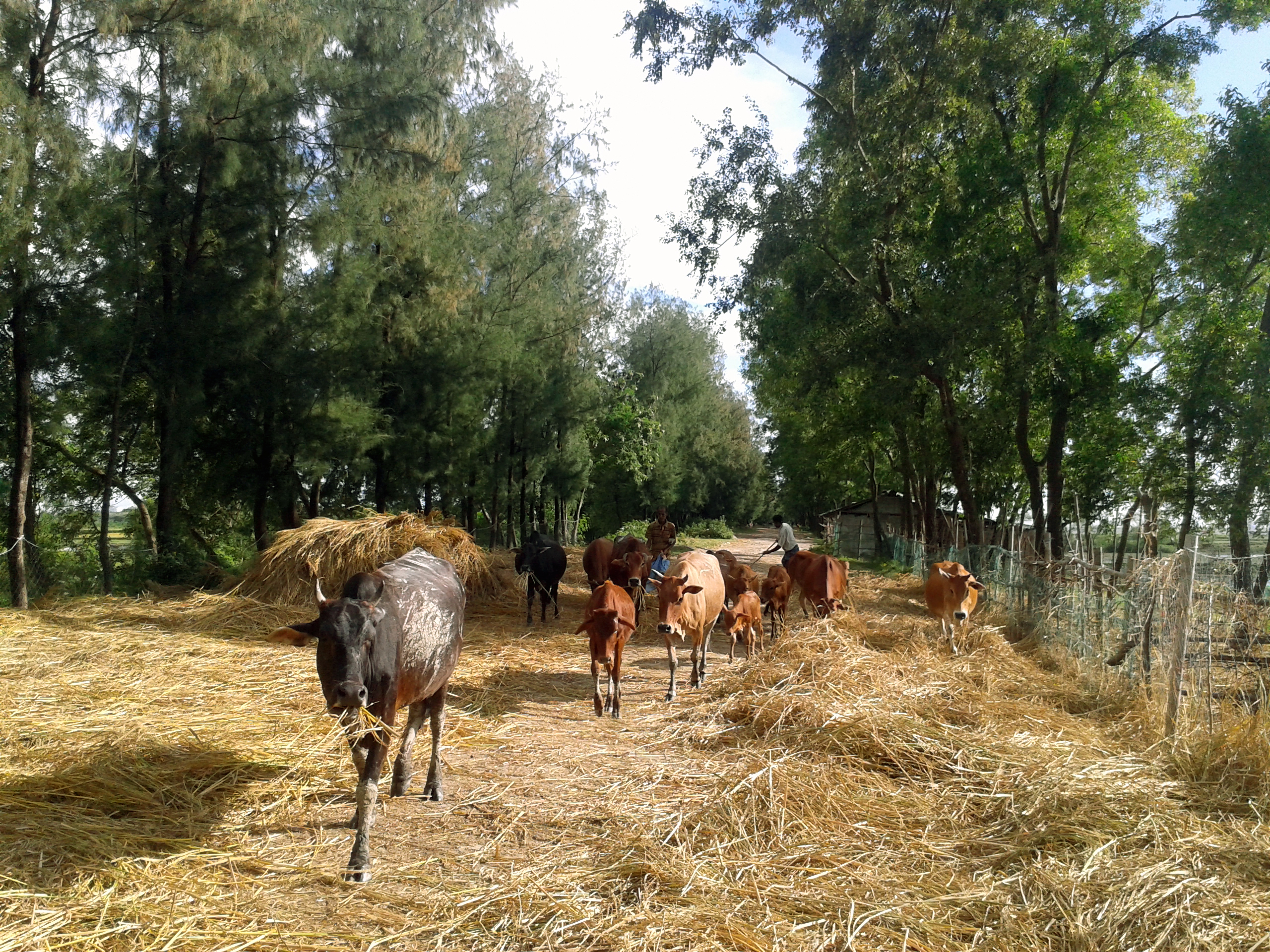
Banned substances and health checks at the markets
A major concern for consumers before Eid is the use of harmful drugs and hormones to fatten animals. In Bangladesh, the Fish Feed and Animal Feed Act, 2010 regulates feed for terrestrial and aquatic animals and, in particular, bans the use of hormones and growth promoters in animal and fish feed.
Monitoring of this had been promised in Moulvibazar before. In the 2021 report, the then district livestock officer told Jagonews24 that his office was regularly checking that nobody fattened cattle artificially with steroids, antibiotics or hormones, and was advising farmers so as to ensure safe animal protein. The farm described by Prothom Alo in 2024 fed its cattle rice bran, oil cake, wheat bran and grass.
In 2026 the district livestock officer said medical teams would be posted at every market to examine cattle. At national level, the 3 May briefing said veterinary medical teams would be on duty round the clock at Dhaka's cattle markets.
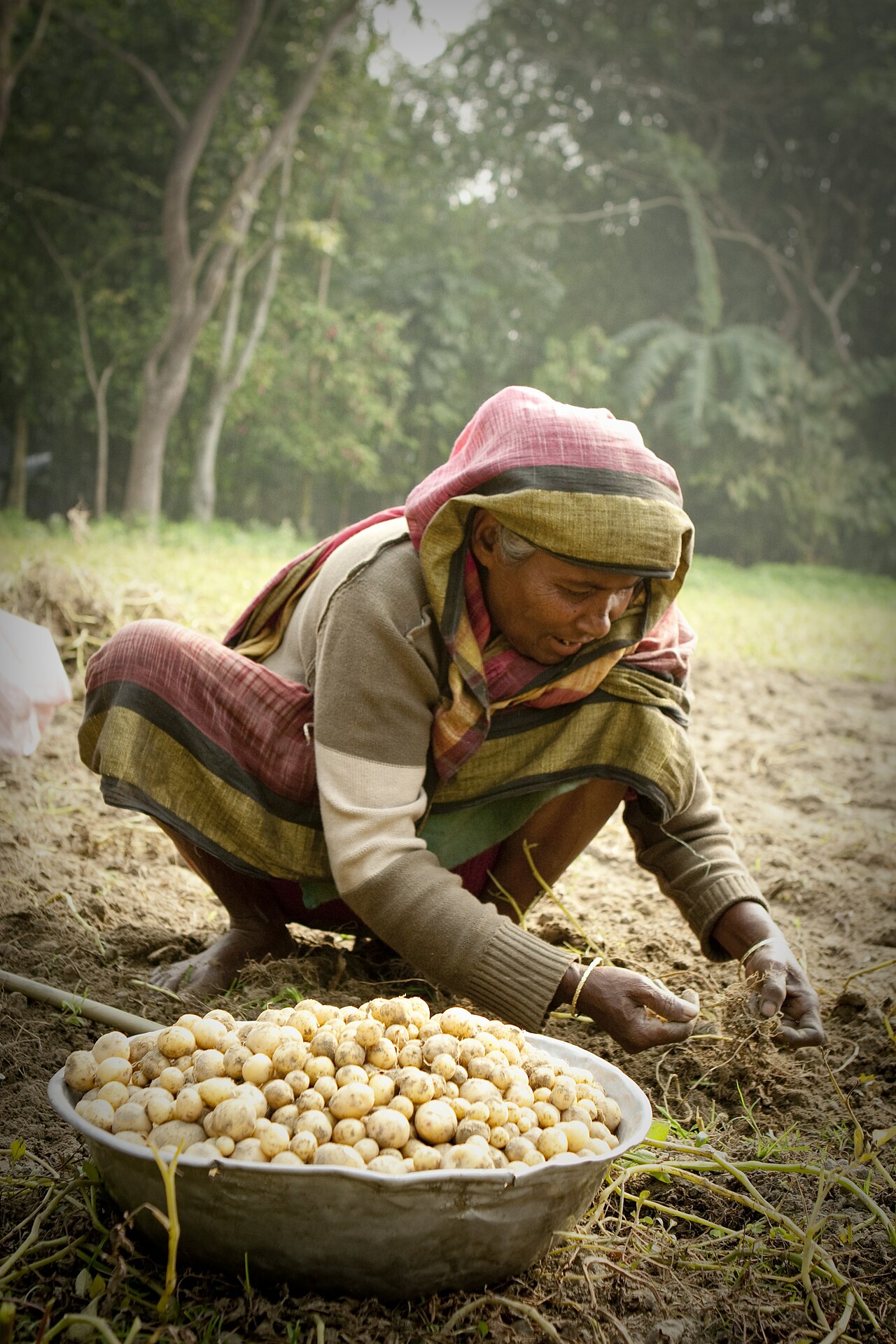
Photo: Wasiul Bahar / Wikimedia Commons (CC BY-SA 4.0)
Sources: Jagonews24, The Business Standard, Dhaka Times, Desh Rupantor, Prothom Alo, Jugantor, Bangla Tribune, Department of Livestock Services, Banglapedia, AMP EID, Wikipedia
Comments
(0)