
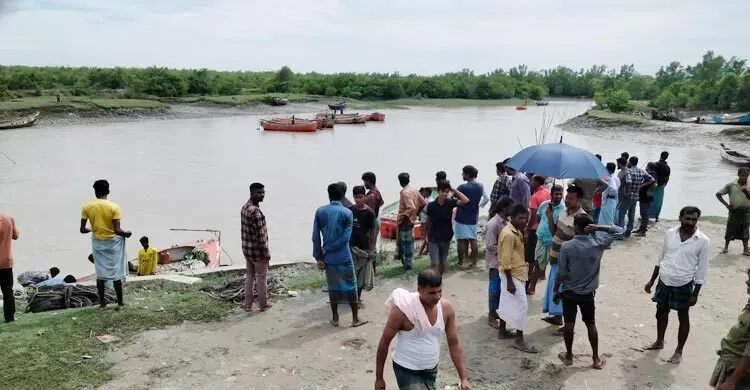
After a 65-day fishing ban, the expected hilsa are not turning up in the Mirsarai-Sandwip channel of the Bay of Bengal. Fishermen who went back to sea after the long break are often returning empty-handed, bringing hard times to 3,000 fishing families in 29 fishing villages here. The local fisheries officer says the fish may have shifted their range for environmental reasons.
To protect fish and other valuable marine resources, the government banned fishing in the Bay of Bengal for 65 days from 20 May to 23 July. The decision followed the success of bans imposed to stop the killing of jatka (young hilsa). The ban covered shrimp, crab and other catches as well as sea fish. Fishermen headed to sea after midnight on the day it ended, but came back to the ghat disappointed at not finding the hilsa they had hoped for.
Empty boats at Domkhali
At Domkhali in the upazila, fishermen were returning to the ghat one after another in engine boats, but nobody was smiling. They had gone to sea with high hopes after 65 days without fishing and had come back almost empty-handed. Their faces showed deep despair.
Swapan Jaldas, who lives in the fishing village at Domkhali in Saherkhali union, said: "After 65 days I went to sea with a lot of hope. But the fish I caught won't even cover wages. On one hand there are no fish in the sea, on the other I'm worried about my loans. I couldn't repay them during the 65 days without fishing. Now, with no fish, I don't know how I'll live or repay the loans."
Local fishermen said that after the ban, hilsa are being caught in shoals elsewhere in the country, but the picture here is the opposite. Even two or three years ago, hilsa from Saherkhali, Domkhali, Moghadia, Bamansundar and the Muhuri Project point in Mirsarai met the whole upazila's demand and were sent elsewhere as well. Now, with no fish, fishermen are on the verge of leaving the trade.
Debts and pollution
Balai Jaldas and Niranjan Jaldas, back from sea, said: "Fishing was closed for 65 days. In other places fishermen went to sea during this time, but here the coastguard was on guard round the clock. We spent those 65 days with our families in great hardship. At the start of the hilsa season we ran up a lot of debt, borrowing to buy and repair boats and nets. The NGOs didn't waive loans even during the ban. We hoped to catch hilsa after the ban and repay in four or five months. But with no fish, we don't know what to do."
Harilal Jaldas, general secretary of the Upokulio Jele Samannay Parishad, a coastal fishermen's coordination council, said: "Waste from the factories being built in the economic zone is polluting the sea water and destroying hilsa breeding. Sand extraction from the sea by dredging may be another reason. It is now the peak season, yet hilsa are not being found in the Mirsarai-Sandwip channel of the Bay of Bengal."
Mirsarai upazila senior fisheries officer Nasim Al Mahmud said that while fishermen elsewhere in the country are catching plenty of hilsa after the 65-day ban, the catch here is below expectations, which is very sad. One of the main reasons is that the fish have changed their range; the current environment here has affected where the fish move. Once fish change their range, they do not come back, he said. He hoped fish might come into the nets when the tide comes in.
Source: Jagonews24. First published in Bengali on The Agro News.
Comments
(0)