
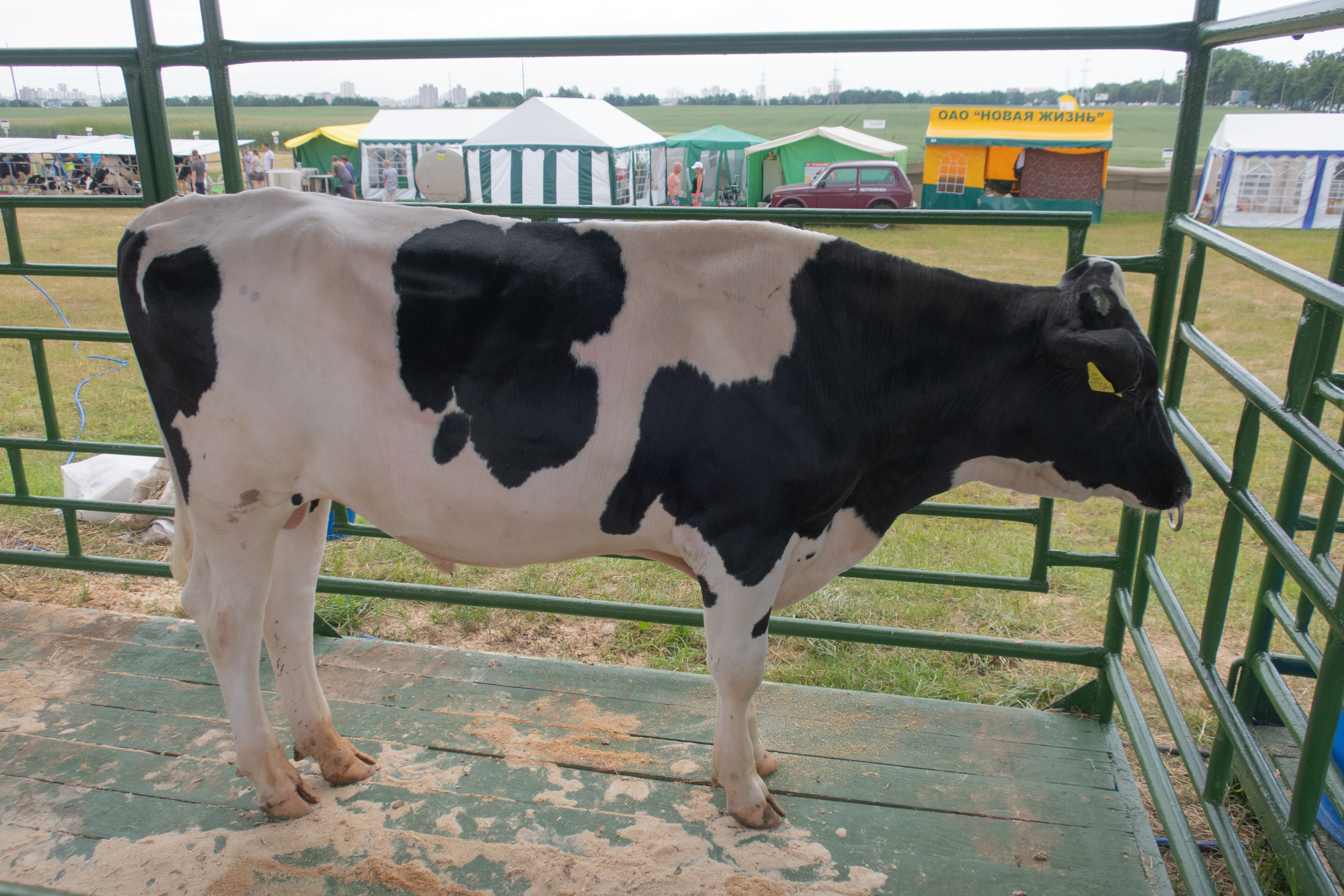
A huge Friesian named 'Kalo Pahar' (Black Mountain) drew buyers and onlookers at the Bortakia sacrificial animal market in Mirsarai upazila of Chattogram on Saturday, 23 May 2026. Farmer Abul Kashem, 50, had brought it to the market that day hoping to sell it. He put its weight at 20 maunds and asked Tk 7 lakh for it. Cattle markets across the country were starting to fill up ahead of Eid-ul-Azha.
Jagonews24's Mirsarai correspondent reported that night that by 7.30pm buyers had offered at most Tk 4.5 lakh. Without the price he wanted, Abul Kashem had not let go of the animal's rope, which meant it was still unsold at that point.
The animal had become the centre of attention for buyers and visitors at the market. Some asked its price, while others took photographs and videos.
The farmer's account: straw, bran and oil cake
Abul Kashem told Jagonews24: "I raised the animal with great care. I did not use any harmful pesticide. I raised it on natural feed, including fresh and dry straw, bran and oil cake. I hope I can sell it at a good price. It will weigh 20 maunds."
The weight and the feeding were the farmer's own account. The report gave no weighbridge reading and no comment from the upazila livestock office, and it did not say how old the animal was or how long it had been raised.
Straw, bran and oil cake are familiar cattle feeds in Bangladesh. Banglapedia, the national encyclopedia published by the Asiatic Society of Bangladesh, says in its entry on cattle that some people use both conventional and non-conventional feeds to fatten yearling bull calves, adding supplements such as green grass, wheat bran, rice bran, rice gruel, urea molasses blocks and urea molasses straw. The same entry notes that cattle in Bangladesh are mostly kept as part of traditional crop-based mixed farming, or for draught power and manure, although a number of small commercial dairy and beef farms have been set up in recent years, particularly in urban and peri-urban areas.
Feed prices were a major worry for farmers in the 2026 Eid season. On 12 May, a farm owner in Patiya, Chattogram, told the Bengali edition of The Business Standard that wheat bran, once available for Tk 25 to 30, was selling for Tk 70, and that soybean had reached Tk 80 to 85. In a report from Jashore on 17 May, Bangladesh Sangbad Sangstha (BSS) quoted a farmer as saying that the prices of straw, bran, maize and medicine had risen considerably over the past few years, along with transport costs.
In the same BSS report, the Jashore district livestock officer said farmers had been advised not to rely on concentrate feed alone but to give green grass as well, since feeding only concentrates pushes up the cost of rearing. He added that Bangladesh has no wide grazing land, so grass has to be grown before it can be fed. He also observed that all farmers raise animals for Eid-ul-Azha, so many animals reach the markets at the same time and prices fall.
What the law bans: hormones, steroids and insecticides
The kind of chemicals Abul Kashem said he had avoided are banned from animal feed by law in Bangladesh. Section 14 of the Fish Feed and Animal Feed Act, 2010 (Act No. 2 of 2010), published in the Bangladesh Gazette on 28 January 2010, says that no harmful chemicals, including antibiotics, growth hormones, steroids and insecticides, may be used in fish feed or animal feed, and that breaking this rule is an offence under the Act.
Section 20 of the Act sets the penalty for an offence under it at one year's imprisonment or a fine of up to Tk 50,000, or both. For animal feed, the licensing authority is the Director General of the Department of Livestock Services or a class I officer he empowers; for fish feed, it is the Director General of the Department of Fisheries or an officer he empowers.
Local authorities were watching for this before Eid. In a Jagonews24 report from Chattogram on 21 May, an estate officer of the Chattogram City Corporation said the corporation was regularly monitoring to prevent the artificial fattening of animals. In the same report, Chattogram district livestock officer Dr Md Alamgir said monitoring had been stepped up on farms to ensure healthy and safe animals, and that veterinary medical teams would also work at the markets.
Similar measures were announced elsewhere. In the BSS report of 17 May, the Jashore district livestock officer said a veterinary team would work at every market to make sure that no sick animal, pregnant cow or animal fattened by unhealthy means was sold. For Dhaka, the Ministry of Fisheries and Livestock said on 3 May that 20 veterinary medical teams would be on duty around the clock at the 27 markets in the two city corporations.
The Friesian: a dairy breed from the Netherlands
The report described 'Kalo Pahar' as a Friesian. Internationally the breed is known as the Holstein-Friesian, or simply the Holstein. According to the breeds of livestock database of Oklahoma State University in the United States, the breed was developed in what is now the Netherlands, more specifically in the two northern provinces of North Holland and Friesland on either side of the Zuider Zee. The original stock were the black animals and white animals of the Batavians and Friesians, migrant European tribes who settled in the Rhine Delta region about 2,000 years ago.
The same source says that for many years these cattle were bred and strictly culled to obtain animals that made the best use of grass, the area's most abundant resource, and that the result was an efficient, high-producing black-and-white dairy cow. Holsteins are large animals, marked black and white or red and white. A mature Holstein cow weighs about 1,500 pounds and stands 58 inches tall at the shoulder, and a healthy calf weighs 90 pounds or more at birth. The breed is best known for its distinctive colour markings and outstanding milk production.
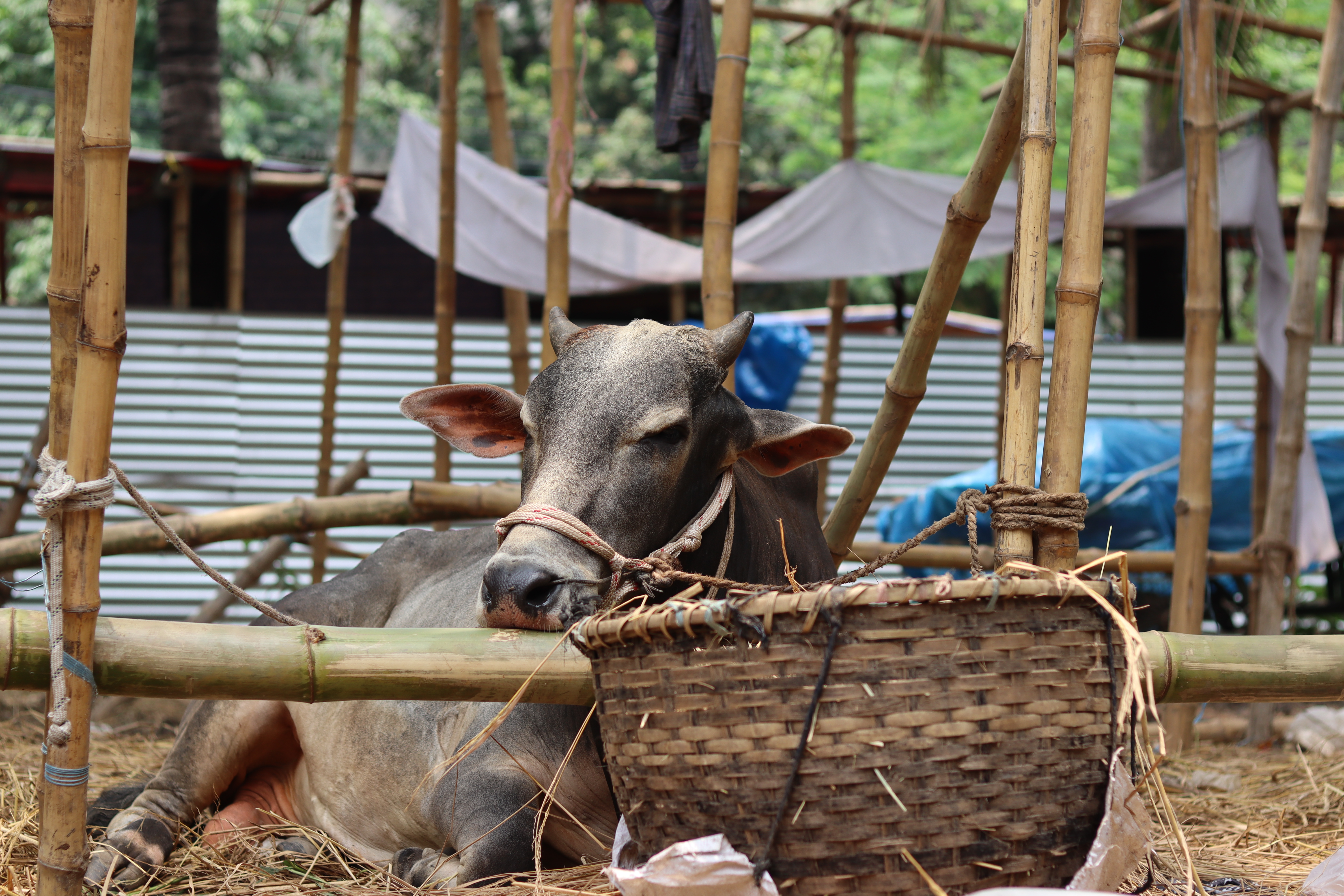
Banglapedia says that efforts were made several times in the past to improve local cattle by crossbreeding them with exotic breeds. The breeds introduced include the Holstein-Friesian, Jersey, Sahiwal, Hariana, Sindhi, Australian and Sahiwal-Friesian. Pure exotic breeds, their crosses and upgraded cattle are found on government dairy farms, commercial dairy farms, in milk pocket areas and in urban and semi-urban Bangladesh.
The entry lists the Friesian-Pabna cross and the Friesian cross among the crossbreds of Bangladesh, with milk yields of 1,460 and 1,800 litres per lactation respectively. Most of the country's cattle, by contrast, are non-descript indigenous zebu animals with an average yield of about 206 kg per lactation. Banglapedia also notes that pure-bred and crossbred cattle have higher nutritional needs, adapt less well and are more prone to parasites and disease than local cattle, which resist disease better, tolerate heat and make good use of low-quality roughage.
Chattogram has a local cattle type of its own. Banglapedia says the best local cattle are found in the Pabna, Sirajganj, Chittagong and Munshiganj areas, and that in Chittagong a beautiful red cattle with some distinct characteristics is seen. Known as Red Chittagong Cattle, it may produce about 2 litres of milk a day.
Maunds, prices and the market for big cattle
In rural Bangladesh the weight of cattle is usually given in maunds. According to Wikipedia, the maund is an old weight unit of the subcontinent equal to 40 seers. It was first standardised in British India in the Bengal Presidency in 1833, and its metric equivalent is 37.3242 kilograms, although in Bangladesh one maund is commonly taken as 40 kilograms. At markets the weight of a large animal is often the farmer's own estimate, and the 20 maunds given for 'Kalo Pahar' was the farmer's figure.
The picture from Chattogram's markets in May 2026 suggested that big animals had fewer buyers. In Jagonews24's report of 21 May, a trader at the city's Sagarika cattle market said people were budgeting carefully for the sacrifice, that small cattle were in greater demand than large ones, and that buyers were looking for animals priced between Tk 80,000 and Tk 1.5 lakh. The report linked the rising demand for cheaper animals to high inflation, household spending pressure and falling purchasing power. Traders said that although feed, medicine and transport costs had risen at farm level, there was little room to ask inflated prices because buyers could no longer afford them.
Gaps between what farmers asked for big animals and what buyers offered were reported elsewhere too. On 18 May, Bangla Tribune reported on a 35-maund black Friesian-Sahiwal bull raised by a farming couple in Nasirnagar upazila of Brahmanbaria. The couple said they had raised it over four years on grass, straw and bran without any fattening drugs. They were asking Tk 18 lakh and said a buyer from Dhaka had offered Tk 11 lakh.
The previous year's experience also weighed on farmers. In the BSS report from Jashore on 17 May, a farmer in Sadar upazila said that in 2025 there were few buyers at the markets in the final days before Eid and he had to sell cattle at Tk 400 to 450 per kilogram, at a loss. Another farmer said many animals had gone unsold in the end that year and that small farmers had not received fair prices.
Mirsarai: an upazila between the hills and the sea
According to Banglapedia, Mirsarai upazila covers 482.88 square kilometres. It is bounded by the Indian state of Tripura and the Chhagalnaiya and Feni Sadar upazilas to the north, by Sitakunda upazila and the Bay of Bengal to the south, by Fatikchhari upazila to the east, and by Sonagazi and Companiganj (Noakhali) upazilas to the west. Its main river is the Feni; the Sandwip Channel and the Isakhali, Mahamaya, Domkhali, Hinguli and Mayani canals are also notable. Mirsarai thana was formed in 1901 and became an upazila in 1983.
The upazila has two municipalities, Baraiyarhat and Mirsarai, and 16 unions. The Bangladesh Bureau of Statistics' 2022 census put its population at 472,794. In the figures Banglapedia cites, agriculture is the main source of income (38.93 per cent), followed by service (18 per cent) and commerce (13.26 per cent).
The same entry lists paddy, pulses, potato, brinjal, vegetables and bamboo as Mirsarai's main crops, and mango, blackberry, jackfruit, banana, papaya, litchi, pineapple and watermelon as its main fruits. Bamboo, fish, paddy, potato, banana and vegetables are sent out of the upazila. An older survey quoted in the entry counted 29 dairy farms, 576 poultry farms and 226 fisheries in the upazila.
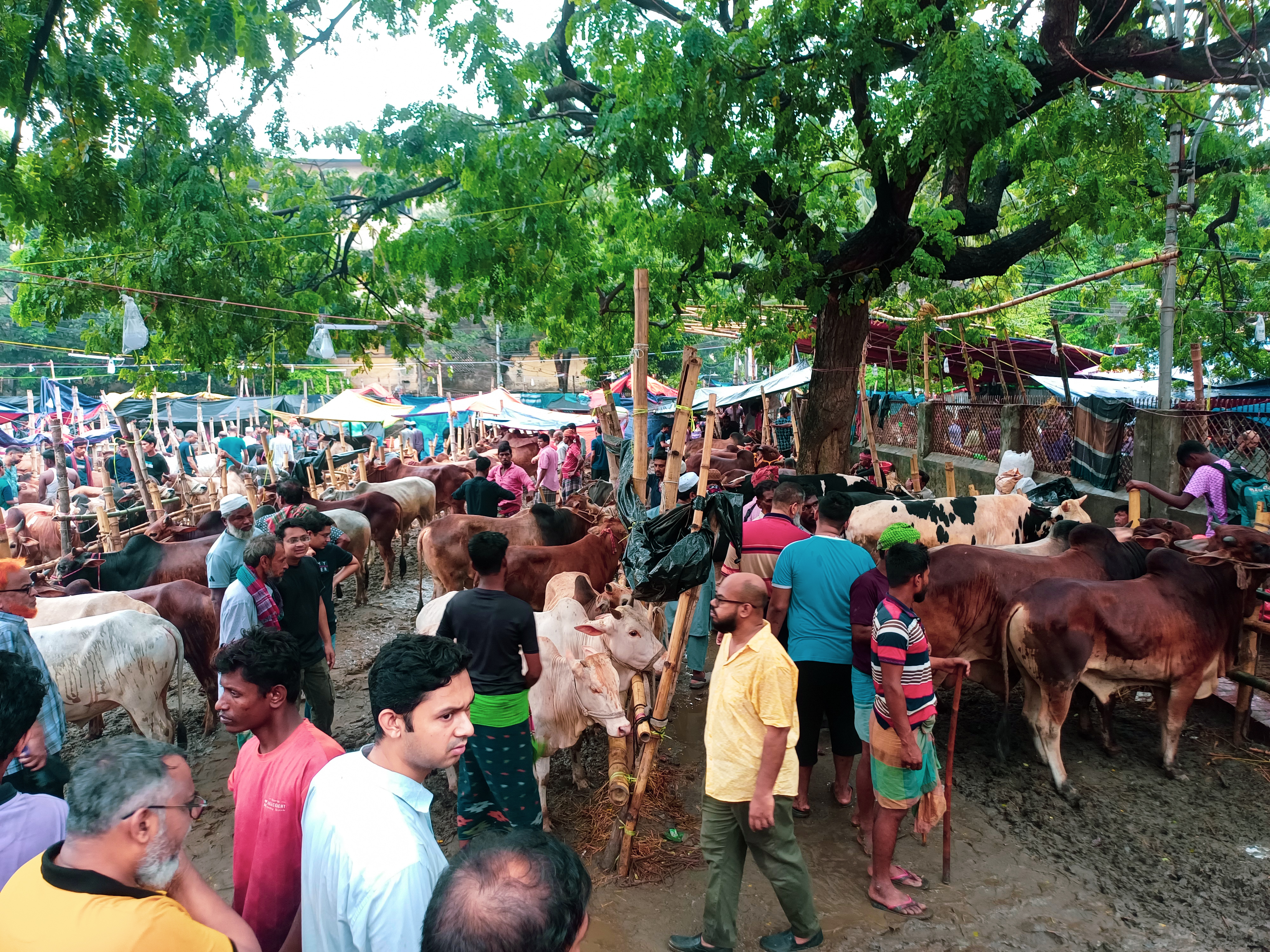
Mirsarai has 52 hats and bazars. Banglapedia names Abu Torab Bazar, Kamar Ali Bazar, Bara Daroga Hat, Mahajan Hat, Karer Hat, Baraia Hat and Shantir Hat among the most noted. The upazila also has a railway station called Bortakia on the Akhaura-Laksam-Chattogram line, which Wikipedia says opened on 1 July 1895. Banglapedia lists the Muhuri Project and the Karerhat Forest Range as places of recreation, and Mahamaya Lake in the upazila is another well-known spot.

Sacrificial animals in Chattogram district
According to Chattogram district livestock office figures published by Jagonews24 on 21 May, the district had 783,151 animals suitable for sacrifice in 2026: 547,113 cattle and buffaloes, and 236,038 goats, sheep and other animals. Demand was estimated at 818,671 animals, leaving a shortfall of 35,520.
The shortfall was concentrated in the city. On the livestock office's list, Sandwip had the largest surplus, 11,604 animals more than its demand, followed by Fatikchhari (7,818), Lohagara (6,976), Boalkhali (6,972) and Mirsarai (6,510), which made Mirsarai one of the district's surplus upazilas. The city's Double Mooring area, by contrast, was short of 47,020 animals, Kotwali of 31,158 and Panchlaish of 30,152. In total availability, Fatikchhari led with 69,478 animals, followed by Sandwip (62,310), Banshkhali (60,389) and Patiya (59,735).
District livestock officer Dr Md Alamgir told Jagonews24 that because there is little scope to raise animals in the city, these areas depend mainly on the rural upazilas and the hill districts for sacrificial animals, but that overall supply in the district was normal. The report said Chattogram's markets fill with animals from Kushtia, Jashore, Rajbari, Pabna, Ishwardi, Rajshahi, Naogaon, Satkhira, Kurigram and other districts of the north and south-west, and that the city corporation approves 10 designated markets each year before Eid-ul-Azha. Citing traders and farmers, it said local farmers were relieved that Indian cattle were not coming in illegally across the border that year.
Why local production had fallen was also under discussion. The Business Standard reported on 12 May that, according to the district livestock department, Chattogram had about 12,500 farms of all sizes a year and a half earlier, of which more than 500 had closed. The report gave the reasons as the political changeover, lack of bank loans, higher feed prices and cattle theft. Quoting livestock department statistics, it put the district's production at 842,165 animals in 2023 and 852,359 in 2024.
In the same report, several farm owners alleged that no government help was available for vaccines and that upazila livestock offices gave little effective support. In response, the district livestock officer said farmers had to go to the upazila office for help, that the budget for medicines was limited and was given to poor and needy farmers, and that his office would act on any written complaint from a farmer who had not been helped. He said the district's small shortfall would be met by animals brought in by traders from Bogura, Dinajpur, Kushtia and other areas.
National supply and preparations
At a briefing on 3 May 2026, the Ministry of Fisheries and Livestock said the likely demand for sacrificial animals that year was 10,106,334, against an availability of 12,333,840, leaving a surplus of about 2,227,506. The available animals included 5,695,878 cattle and buffaloes, 6,632,307 goats and sheep, and 5,655 camels, dumbas and other animals.
The ministry said more than 3,600 cattle markets would be held across the country, including 16 in Dhaka North City Corporation and 11 in Dhaka South. It said the government would take a hard line on extortion from trucks carrying sacrificial animals, and that law enforcement would be on duty around the clock to keep markets, buyers and sellers safe. It also announced a policy decision not to hold cattle markets close to the border, to protect local farmers. No toll or market fee would be charged on animals bought online, and professional and non-professional butchers had been trained so that hides would not be spoiled.
Dhaka Tribune's report of 3 May also carried the ministry's figures for the previous year: 12,447,337 animals were available for Eid-ul-Azha in 2025, and 9,136,734 were actually sacrificed.
For the wider picture, the Department of Livestock Services' Livestock Economy at a Glance 2024-2025 put the country's cattle population at 251.71 lakh, buffaloes at 15.32 lakh, goats at 272.91 lakh and sheep at 39.81 lakh in the 2024-25 fiscal year. Meat production that year was 89.54 lakh tonnes against a demand of 77.92 lakh tonnes. Livestock contributed 1.81 per cent of GDP at constant prices and 16.54 per cent of agricultural GDP.
Eid-ul-Azha and the rules of sacrifice
The National Moon Sighting Committee met at the Baitul Mukarram National Mosque on the evening of Monday, 18 May 2026, and announced that the crescent of Zilhaj 1447 AH had been sighted. Zilhaj began on 19 May, and Eid-ul-Azha, the 10th of Zilhaj, was set for Thursday, 28 May. According to Desh Rupantor, the committee confirmed the sighting after analysing information from the district administrations, the Islamic Foundation, the Bangladesh Meteorological Department and the space research agency SPARRSO. When 'Kalo Pahar' went to market, Eid was only days away.
Banglapedia describes Eid-ul-Azha as one of the two main Muslim religious festivals. It commemorates the sacrifice of Hazrat Ibrahim (AS), who was asked by Allah to sacrifice his dearest son, Hazrat Ismail (AS); pleased with his sincere intent, Allah ordered him to sacrifice an animal in place of his son. Following that event, pilgrims at Mina and Muslims all over the world sacrifice animals on the 10th of Zilhaj. The time for sacrifice begins after the Eid prayer and continues until sunset on the next two or three days.
Banglapedia also sets out some of the rules. Animals offered for sacrifice must be of a specific age and free from certain defects: they should not be blind, have broken legs or horns, or have ears partly or wholly cut off. A camel, cow or buffalo can be sacrificed in the names of seven people, while a sheep or goat is for one person only. In Bangladesh, cattle, goats and buffaloes are usually sacrificed. By custom, one third of the meat is kept by the owner, one third goes to relatives and the rest is given to the poor. The hide, or the money from its sale, should go to the poor or to poor students of madrasas and orphanages.
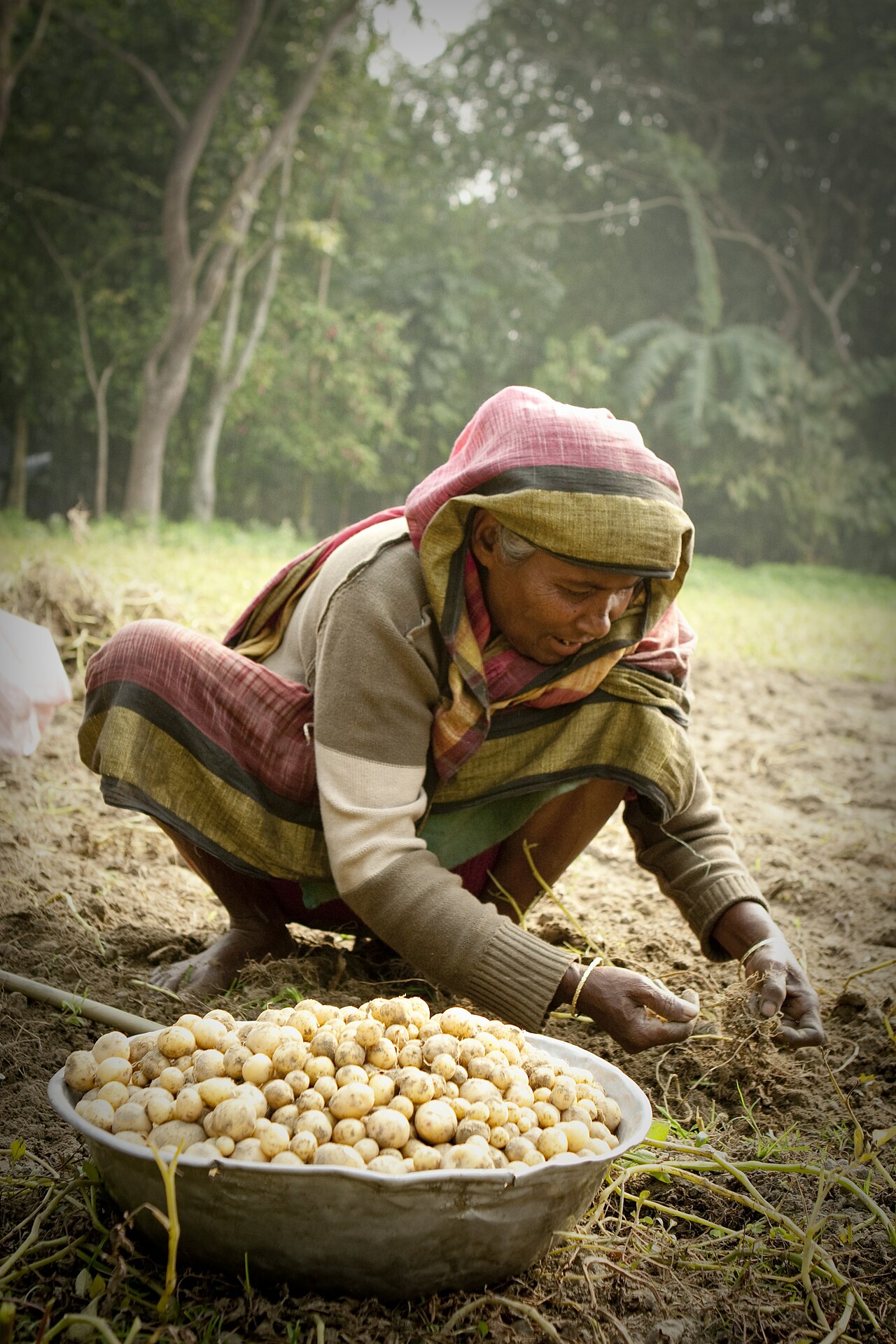
Photo: Homoatrox / Wikimedia Commons (CC BY-SA 3.0)
Sources: Jagonews24, The Business Standard, Dhaka Tribune, Bangladesh Sangbad Sangstha (BSS), Bangla Tribune, Desh Rupantor, Department of Livestock Services, Bangladesh Gazette (Fish Feed and Animal Feed Act, 2010), Banglapedia, Oklahoma State University, Wikipedia
Comments
(0)