
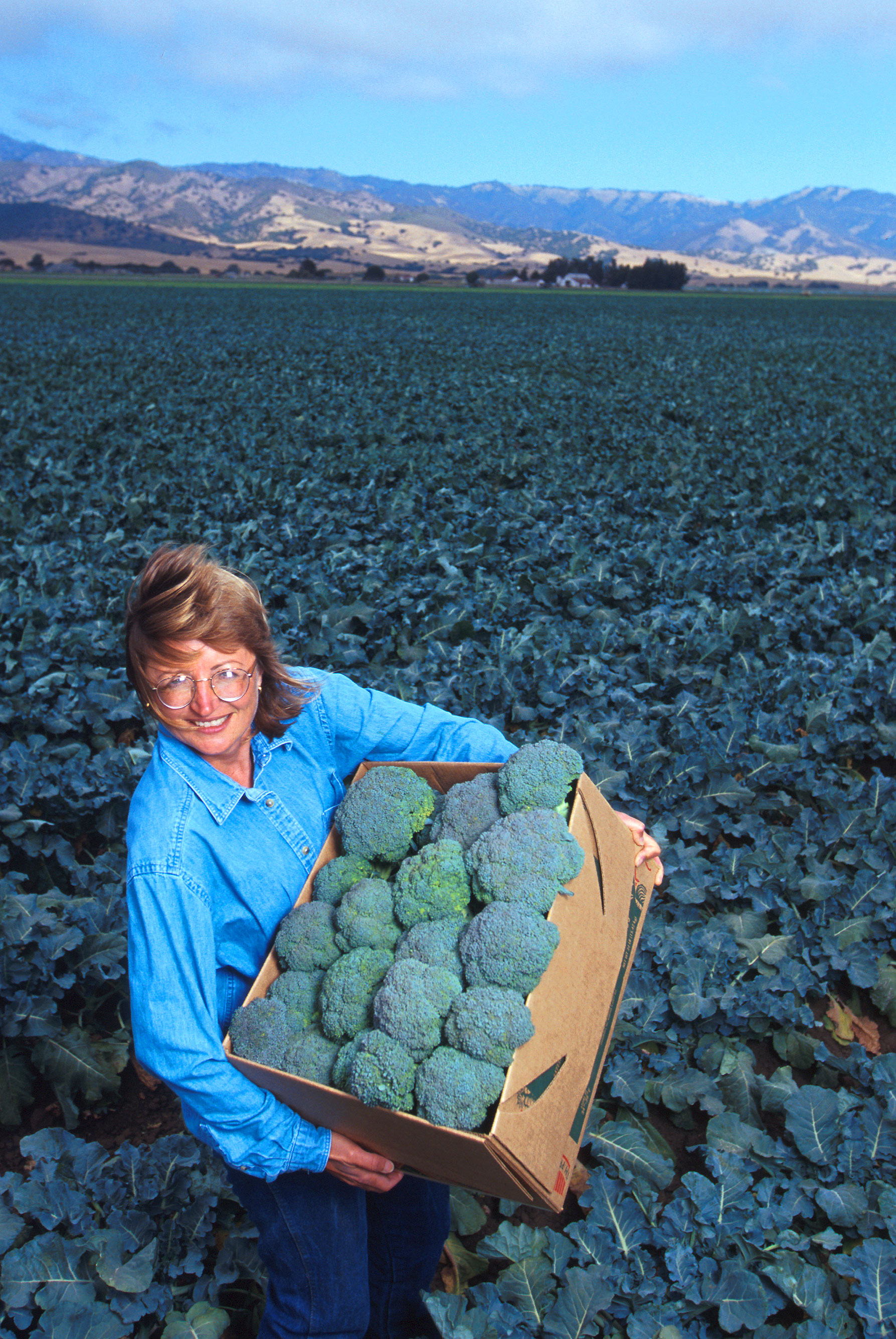
Mohammad Mamun, a young agri-entrepreneur in Mirsarai upazila of Chattogram, was harvesting a good broccoli crop in February 2025 from a demonstration plot set up with the upazila agriculture office, Jagonews24's Mirsarai correspondent reported on 16 February 2025. According to that report, broccoli of the Green Crown variety was being grown that season on 5 acres of the upazila through three demonstrations under the SACP project, and growers said it was selling at better prices than other vegetables. Mamun, however, said many buyers still did not know the vegetable, and the upazila agriculture officer said his office was holding field days to make it better known.
Fifteen farmers on five acres of demonstration plots
Citing the upazila agriculture office, the report said 15 farmers had grown broccoli as demonstrations on 5 acres in the winter season then under way. The report described broccoli as a nutritious vegetable that costs little to grow, and said that more farmers like Mamun were becoming interested in it. Growers told the correspondent that broccoli was fetching better prices than other vegetables.
Mamun lives in the Purba Moliaish area of the upazila. He grew broccoli on 50 decimals of his own farmland, about half an acre (in the Bangladeshi land measure 100 decimals make one acre), under a demonstration given by the agriculture office. On a visit to the field, the correspondent learnt that he had planted 1,500 broccoli seedlings there.
The weather had been favourable, the report said, and the yield was good: some heads weighed 700 to 800 grams. The broccoli was selling in the market for Tk 40 to 50, with the price varying according to the size of the head.
Mamun's father told the correspondent that the upazila agriculture officers had given them various advice on growing broccoli. "If we could get a higher selling price, we could make more profit," he said.
From a family patch to a commercial plot
Mamun said the idea had grown out of his own kitchen garden. "Last year I grew broccoli on a small patch for our own family. The yield was very good, so I planned to grow it commercially," he told the correspondent. "With a demonstration from the upazila agriculture office, I grew it on 50 decimals. The yield is good."
He put his cost at Tk 14,000 to 15,000 and said he hoped to sell Tk 40,000 to 50,000 worth of broccoli from the plot. These were his own figures and his own expectation at the time of the report; the report gave no final sales figure.
His main difficulty, as he described it, was not in the field but in the market. "People today are not very familiar with broccoli. Buyers are often not interested," he said. "But those who know about broccoli are different; they pay more than the set price. If ordinary people got to know it, it would be possible to sell at good prices and double the profit."
The agriculture office and its field days
Mirsarai upazila agriculture officer Protap Chandra Roy told Jagonews24 that broccoli is a nutritious vegetable. "It contains anti-cancer compounds and various vitamins that are very good for our bodies," he said. "Although many people do not know broccoli, there is reasonable demand. Alongside cultivation, we are holding field days to market it and bring it to people, and discussing its benefits and other matters in public. We hope cultivation will increase further."
The upazila agriculture office is the local arm of the Department of Agricultural Extension (DAE), the government's extension service under the Ministry of Agriculture. According to a Dhaka Tribune history of the service published in April 2023, the present department was established in 1982 through the merger of several agencies; before that, an Agriculture Directorate (Extension and Management) and a Jute Directorate had been set up in 1975, followed by crop-specific bodies such as the Cotton Development Board, the Tobacco Development Board and the Horticulture Board.
Demonstration plots of the kind Mamun received have been one of the ways the department has introduced broccoli. In December 2017 The Financial Express, citing the state news agency BSS, quoted a DAE deputy director in Rajshahi as saying that the crop had once been unfamiliar to rural farmers and consumers, that extension and research organisations had worked to popularise it, and that the department had grown it in demonstration plots. The same official said broccoli tolerated high temperatures better than cauliflower and cabbage.
What the SACP project is
SACP is the Smallholder Agricultural Competitiveness Project, a project of the Ministry of Agriculture co-financed by the International Fund for Agricultural Development (IFAD). The Jagonews24 report placed the Mirsarai broccoli demonstrations under it. IFAD's President's report to its Executive Board, dated 21 March 2018, says the project was designed around developing high-value crops in the southern districts of Bangladesh. It rested on the assumption that, once the Padma Bridge opened, farmers in the south would find it easier to send vegetables, legumes, fruits and other high-value produce to markets in Dhaka.
The document explains why the south was chosen. Barisal Division, it says, had the highest proportion of poor people in the country, 39.4 per cent, and according to the Census of Agriculture 2008 there were about 3.1 million farming households in southern Bangladesh, 2.7 million of them smallholders. The region is exposed to cyclones and storm surges, land erosion, salinisation, flooding and waterlogged soils. The project was framed as a response to the government's Master Plan for Agricultural Development in the Southern Region of Bangladesh (2013), and the IFAD loan was on highly concessional terms, with a maturity of 40 years including a grace period of 10 years.
According to the same document, the project was to be carried out in 11 districts covering 30 upazilas, with 250 unions selected under its targeting criteria. The 30 target upazilas had a total population of 7,018,218 in 1,246,021 households, and the project was to benefit at least 250,000 rural households directly. Around 80 per cent of beneficiaries were to be landless, marginal and small farmers, youth were to make up about 20 per cent and women's participation was set at around 30 per cent. The project was to run over six years.
The design has three technical components and a management component:
- Enhanced production of high-value crops and technology adoption: testing, evaluating and adopting new technologies and management practices by smallholders, with research to adapt them to local conditions.
- Processing and marketing of high-value crops: market linkages through multi-stakeholder platforms, post-harvest handling and primary processing, and food safety and nutrition along the value chain.
- Climate-resilient surface water management: irrigation and drainage infrastructure, with training for water users' groups.
- Project implementation and coordination, led by a project office in DAE.
The IFAD document names four implementing agencies: DAE, the Department of Agricultural Marketing (DAM), the Bangladesh Agricultural Development Corporation (BADC) and the Bangladesh Agricultural Research Institute (BARI), with the project coordinator seconded from BARI. DAE's Sub-Assistant Agriculture Officers and marketing facilitators engaged by DAM were to be the key field staff. The Financial Express reported in August 2018 that the project would cost Tk 9.26 billion, or US$109.85 million: an IFAD loan of $64.5 million and a grant of $2 million, $28.65 million from the government, $8.1 million from the private sector and $6.6 million from the beneficiaries. A November 2021 article by the United Nations in Bangladesh added that the Food and Agriculture Organization of the United Nations (FAO) provided technical assistance, including training of trainers, and described a lead farmer in Patuakhali who had sold cauliflower from a project demonstration plot.
Mirsarai: an upazila between the hills and the sea
Mirsarai is the northernmost upazila of Chattogram district. Banglapedia, the national encyclopaedia of Bangladesh, gives its area as 482.88 square kilometres. It borders the Indian state of Tripura and the Chhagalnaiya and Feni Sadar upazilas to the north, Sitakunda upazila and the Bay of Bengal to the south, Fatikchhari upazila to the east, and Sonagazi and Companiganj upazilas to the west. Its main river is the Feni; the encyclopaedia also lists the Sandwip Channel and the Isakhali, Mahamaya, Domkhali, Hinguli and Mayani canals.
Banglapedia records a population of 398,716 in 16 unions, among them Mithanala, Mayani, Durgapur, Karerhat and Zorwarganj. Agricultural landowners make up 51.30 per cent of households and landless households 48.70 per cent. The encyclopaedia lists the main crops as paddy, pulses, potato, brinjal, vegetables and bamboo, and the main exports as bamboo, fish, paddy, potato, banana and vegetables. Crops it describes as extinct or nearly extinct in the upazila include sugarcane, jute, arahar, mustard, sesame, linseed and groundnut, while its main fruits are mango, blackberry, jackfruit, banana, papaya, litchi, pineapple and watermelon.
How broccoli came to Bangladeshi fields
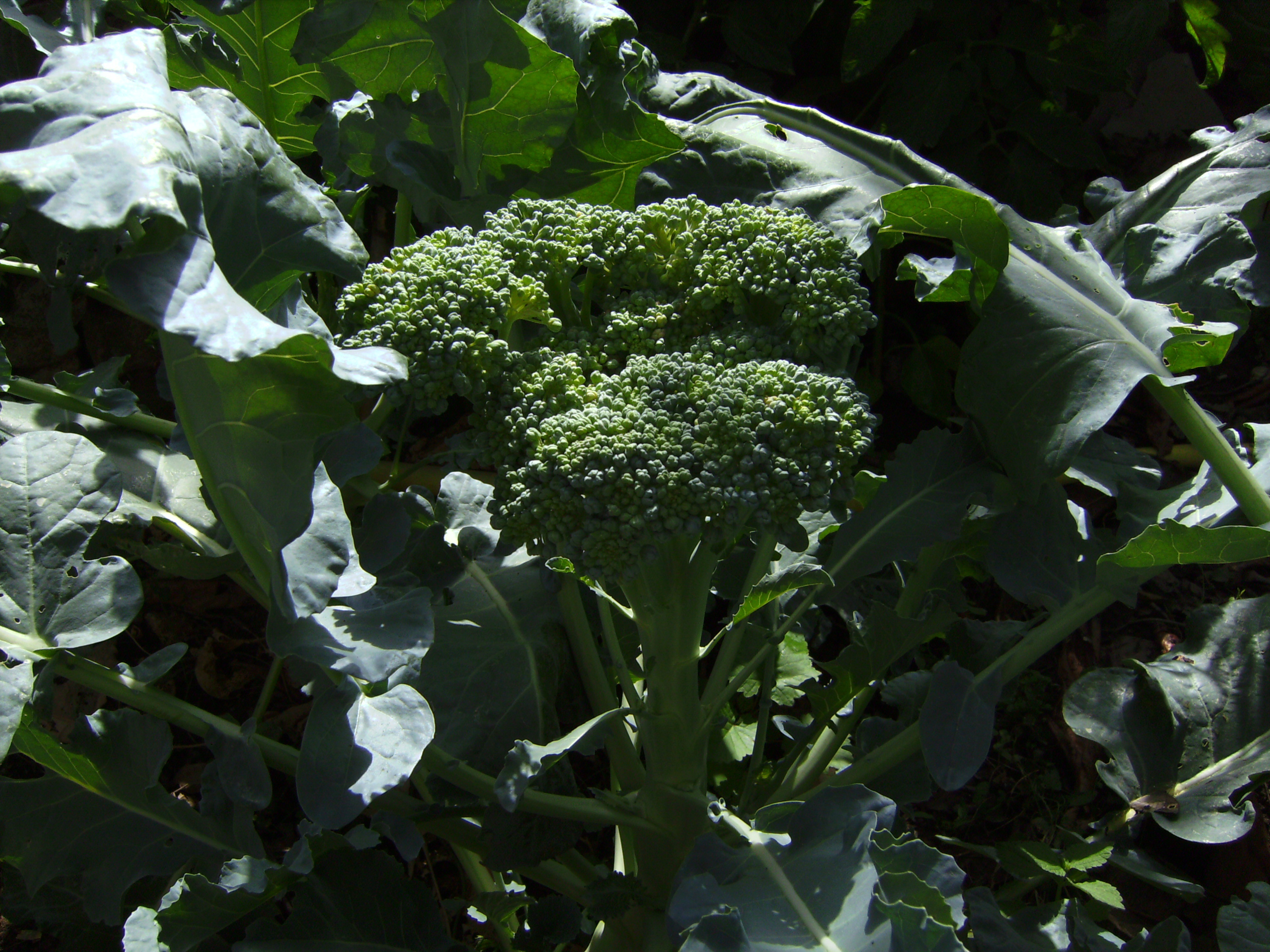
Broccoli (Brassica oleracea var. italica) is a member of the cruciferous, or Brassica, family of vegetables, which, as the US National Cancer Institute lists them, also includes cabbage, cauliflower, kale, radishes and turnips. In Bangladesh it is a winter crop and was, until recently, little known outside city markets. The Financial Express report of December 2017 described it as a non-conventional winter vegetable gaining popularity in Rajshahi because of its market price and growing demand from urban consumers, Chinese restaurants and hotels, and said it sold for three to four times the price of cauliflower. It quoted a senior scientific officer of BARI as saying that commercial broccoli farming had bright prospects in the northwest, where the prolonged cold weather of recent years suited the crop, which is locally known as green cauliflower.
The same report quoted a project director of the Barind Multipurpose Development Authority as saying that the farming method is similar to that for cabbage and cauliflower, and that at least 40,000 to 50,000 plants per hectare could be produced in 65 to 70 days.
In February 2019 the Dhaka Tribune reported that broccoli was being grown commercially on three hectares in Chapainawabganj district, two years after the local agriculture department began it as a pilot under the National Agriculture Technology Program 2 (NATP-2). The Shibganj upazila agriculture officer told the paper the crop was becoming popular quickly because it was rarely damaged by insects. One farmer there put his cost at Tk 10,000 to 15,000 a bigha and his sales at Tk 35,000 to 40,000, and wholesale prices were Tk 15 to 20 a head. The same grower said broccoli could be harvested less than 90 days after planting, and another said his first crop, on one bigha, produced 4,000 heads. The deputy director of the district DAE office told the paper broccoli could help fill the country's nutrition deficit.
In January 2020 the news agency UNB reported, in a story carried by the trade site FreshPlaza, that broccoli had first been grown in Manirampur in Jashore in 2016, at Palashi village, where a private organisation called Safal started the first cultivation. Farmers there said the crop was more profitable than conventional vegetables and less susceptible to pest attack, and that it was supplied to Dhaka, Chattogram and other parts of the country. These earlier reports describe the same pattern Mamun spoke of in Mirsarai: good yields and prices where buyers know the vegetable, and extension staff working to widen that market.
What research stations have found on sowing, spacing and yield
Bangladeshi researchers have tested broccoli in several parts of the country. A field experiment at BARI's Agricultural Research Station in Thakurgaon in the 2009-10 rabi season, published in the journal Tropical Agricultural Research and Extension, compared three sowing dates (1 October, 15 October and 30 October) and three plant spacings. Sowing on 1 October gave the highest yield, 21.39 tonnes a hectare, and sowing on 30 October the lowest, 13.6 tonnes. The closest spacing, 60 x 40 centimetres, gave 18.8 tonnes a hectare, statistically similar to 60 x 50 centimetres at 17.6 tonnes, while 60 x 60 centimetres gave 16 tonnes. The best combination, 1 October sowing at 60 x 40 centimetres, yielded 22.5 tonnes.
On saline coastal soil, BARI's On-Farm Research Division at Dawlatpur, Khulna, tested BARI Broccoli-1 and three other genotypes at three planting dates (21 November, 1 December and 11 December 2019) in the 2019-20 rabi season, on soil with a salinity of 2.6 to 4.8 dS/m. In the results, published in the Bangladesh Journal of Agricultural Research in December 2020, broccoli planted on 21 November formed heads earliest and gave the best curd yield among the dates, 12.69 tonnes a hectare, while the genotype Thailand-2 gave the highest curd diameter, curd weight and curd yield of the four, 16.01 tonnes. Thailand-2 planted on 21 November was the best combination, with heads of 419.74 grams a plant and 18.66 tonnes a hectare. The genotype Japan-1 grew the most leaves, an average of 25.44 a plant, but this was not reflected in its yield.
Closer to Mirsarai, a trial at a farm in Noakhali Sadar from October 2020 to January 2021, published in Research in Agriculture, Livestock and Fisheries in December 2023, compared organic manures. Plots given half cow dung and half vermicompost produced the highest marketable yield, 19.24 tonnes a hectare, while plots with no manure produced the lowest; heads formed in 55 to 61 days depending on the treatment.
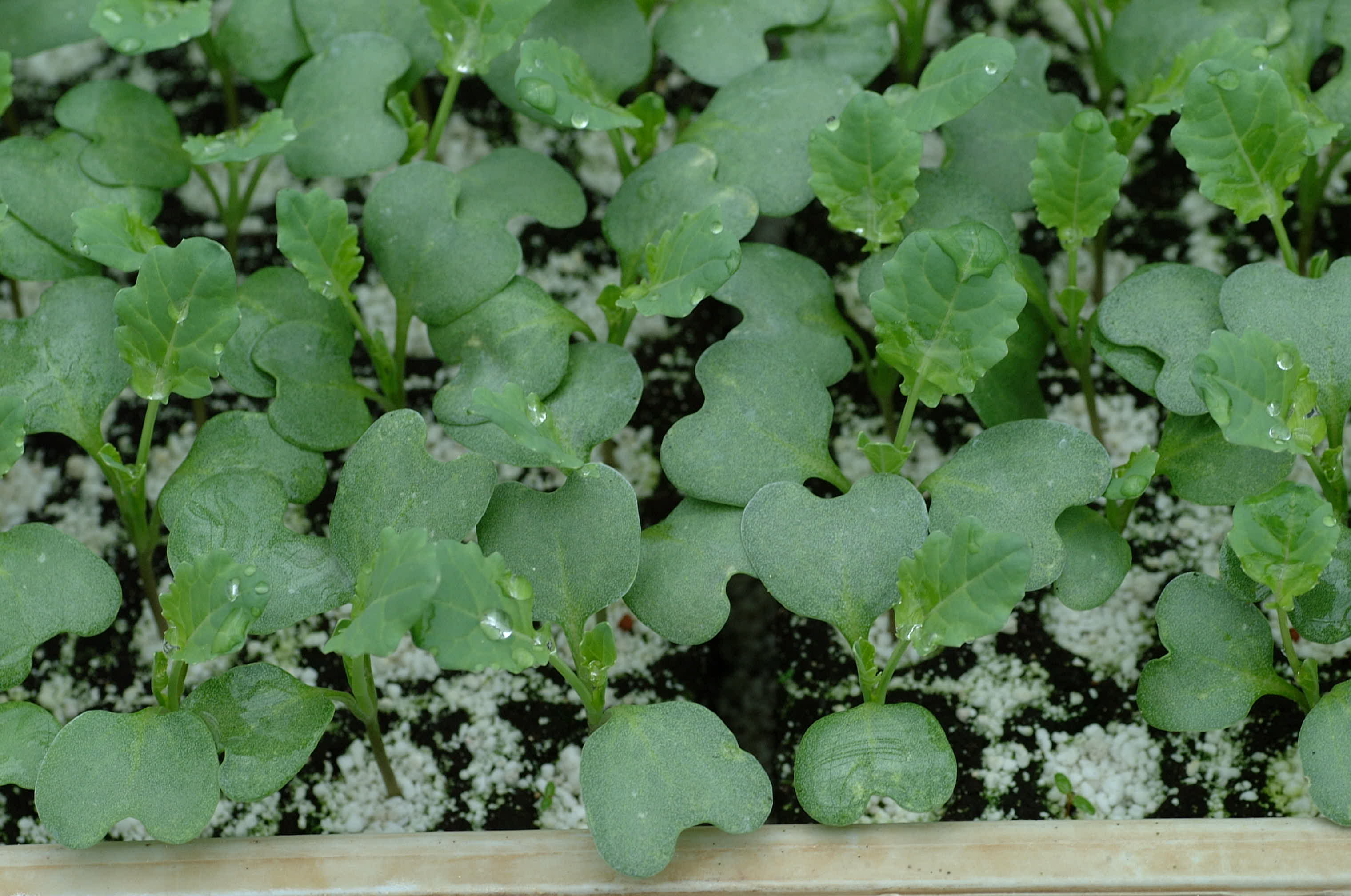
The Department of Agricultural Extension's agro-meteorological information portal (BAMIS) names BARI Broccoli-1 as a variety and gives mid-September to mid-October as the sowing time, with seedlings ready to transplant at 30 to 35 days old. It also advises against waterlogging and recommends draining the field after heavy rain. Because recommended doses of fertiliser and pesticide depend on the soil and the pest, growers are advised to take them from their upazila agriculture office.
Broccoli's nutrients and what science says
The upazila agriculture officer spoke of broccoli's vitamins and anti-cancer compounds. The US Department of Agriculture's FoodData Central gives the following values for 100 grams of raw broccoli: 89.3 grams of water, 34 kilocalories, 2.82 grams of protein, 6.64 grams of carbohydrate, 2.6 grams of dietary fibre, 89.2 milligrams of vitamin C, 101.6 micrograms of vitamin K, 63 micrograms of folate, 316 milligrams of potassium, 47 milligrams of calcium and 0.73 milligrams of iron.
On cancer, the evidence is less settled than the officer's remark suggests. The US National Cancer Institute's fact sheet on cruciferous vegetables, reviewed in June 2012, says these vegetables contain glucosinolates, sulphur-containing chemicals that break down during preparation, chewing and digestion into compounds such as indole-3-carbinol and sulforaphane, which are among the most studied for anticancer effects in laboratory research. Studies in humans, the fact sheet says, have shown mixed results. Broccoli is a nutritious vegetable to include in a varied diet, but anyone with a health condition should seek a doctor's advice about diet.
Photo: Scott Bauer, USDA ARS / Wikimedia Commons (public domain)
Sources: Jagonews24, International Fund for Agricultural Development (IFAD), The Financial Express, United Nations in Bangladesh, Banglapedia, Dhaka Tribune, UNB (via FreshPlaza), Tropical Agricultural Research and Extension, Bangladesh Journal of Agricultural Research, Research in Agriculture, Livestock and Fisheries, Department of Agricultural Extension (BAMIS), USDA FoodData Central, US National Cancer Institute
Comments
(0)