
By Md Rahul Sheikh
In Bangladesh, hilsa is not just a fish; it is a unique symbol of Bengali emotion, tradition and taste. If you want to enjoy hilsa by the river, under the open sky, with the cool breeze off the Padma, you have to talk about Mawa ferry ghat. Over time, Mawa ferry ghat has become not just a crossing point but an informal festival of hilsa eating.
An unplanned trip
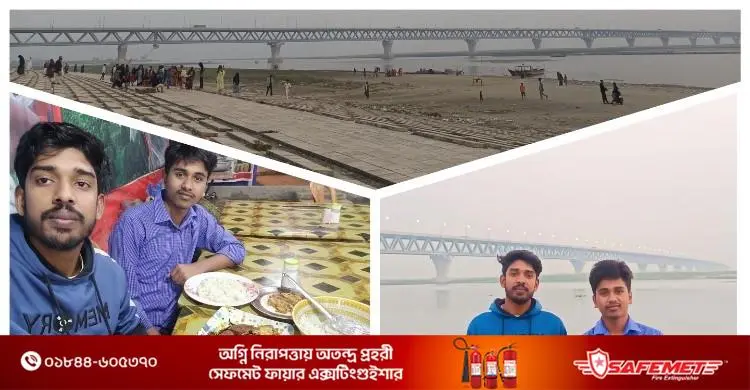
After finishing our midterm exams, two of us friends were wandering round the campus and chatting, and we missed the bus back to our hall. In the end we got on the bus to Munshiganj that leaves the campus at half past three. Suddenly my friend Hridoy suggested going to Mawa ferry ghat to eat hilsa. Seeing his craving for hilsa and the way he put it, I could not say no. We rode the university bus along the Dhaka-Mawa highway towards our destination. Racing along such a grand road in the university bus, with the outside air on our faces, reminded me of my first year.
Anyway, in high spirits we got off at the Sreenagar crossroads in Munshiganj. The sun was almost setting in the western sky. We set off on foot for the bank of the Padma next to the Padma Bridge. After ten minutes' walk we reached the riverbank, and it cooled our minds. Hridoy began talking about his bad experiences of Dhaka's traffic jams and dust, and comparing Dhaka with the Padma bank, we came close to the Padma Bridge. There were crowds all around: families, groups of friends and many locals, all watching the sun sink in the western sky beyond the bridge. Many were recording the scene on their phones.
We joined in with the rest and took quite a few photos. Eventually evening fell, and for safety's sake we decided to leave. We hired an auto-rickshaw for Tk 20 each and reached the new ferry ghat area, which is where hilsa lovers usually head. As we entered we heard music and realised a lively fair was on. We strolled through the fair, peering into the hilsa stalls. Besides hilsa, we saw many other kinds of unusual fish.
Mustard hilsa by the river
Having finished looking round the new ghat, we bought a hilsa from the market, explained everything to the shopkeeper and waited for our meal. The sight of hilsa frying in mustard oil with dried chillies made us even hungrier. At last a worker arrived with rice, mustard hilsa, dried chillies, mashed hilsa tail and mashed onion. We ate our fill with great relish. After eating, we paid the hotel manager and set about getting back to our hall.
Then came another funny moment. We did not have enough money left, so we could not hire a vehicle for the return. In the end we called our friend Sabur Kazi, who sent money straight away. We hired a CNG auto-rickshaw at Tk 100 each and set off for our hall at half past eight. Not having brought warm clothes, we felt quite cold. After about an hour in the CNG we reached the hall at half past nine.
That night we ate nothing more at the hall. The taste of hilsa still in our mouths and the memory of the lovely late afternoon on the Padma bank gave us a joy of a different kind.
The writer is an executive member of Jagannath University Feature, Column and Content Writers.
Source: Jagonews24. First published in Bengali on The Agro News.
Comments
(0)