
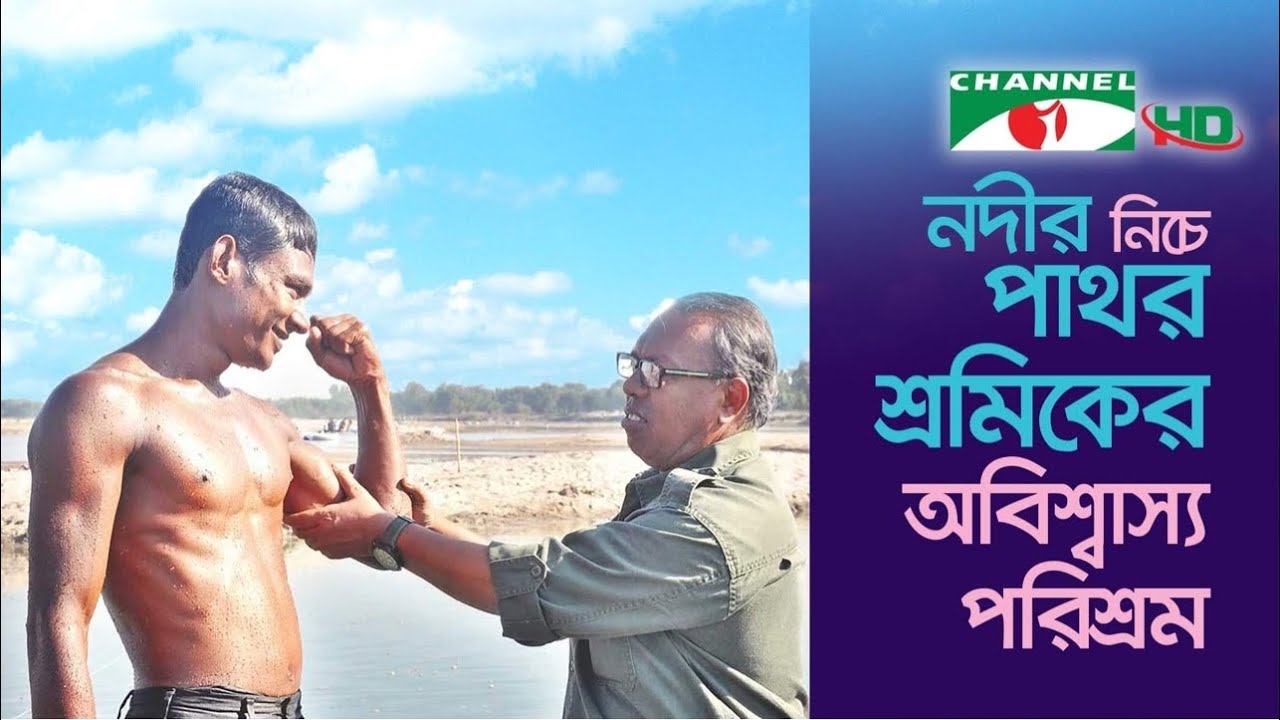
The Mahananda river runs along the border of Tetulia upazila in Panchagarh. It enters Bangladesh from India on the western side of the Banglabandha zero point, travels 32 kilometres and flows back into India south of the old Tetulia bazaar. The river marks the Bangladesh-India border.
We all know the Mahananda as a river, but now there is only a vast sandy char all around. Every monsoon the Mahananda carries down large quantities of small and large stones. As soon as the water recedes, many people go down in groups to collect them. Some of us may know what stone collecting looks like, but it is hard to believe without seeing it. The Mahananda shows a picture of almost impossible human labour.
The manual method of stone collection here is entirely different. Stone workers have been collecting stones from the Mahananda for generations, and it is a major source of livelihood for ordinary people in the area. They fill baskets with stones, carry them on their shoulders and sell them to contractors, looking for happiness in that work.
Source: Shykh Seraj. First published in Bengali on The Agro News.

Comments
(0)