
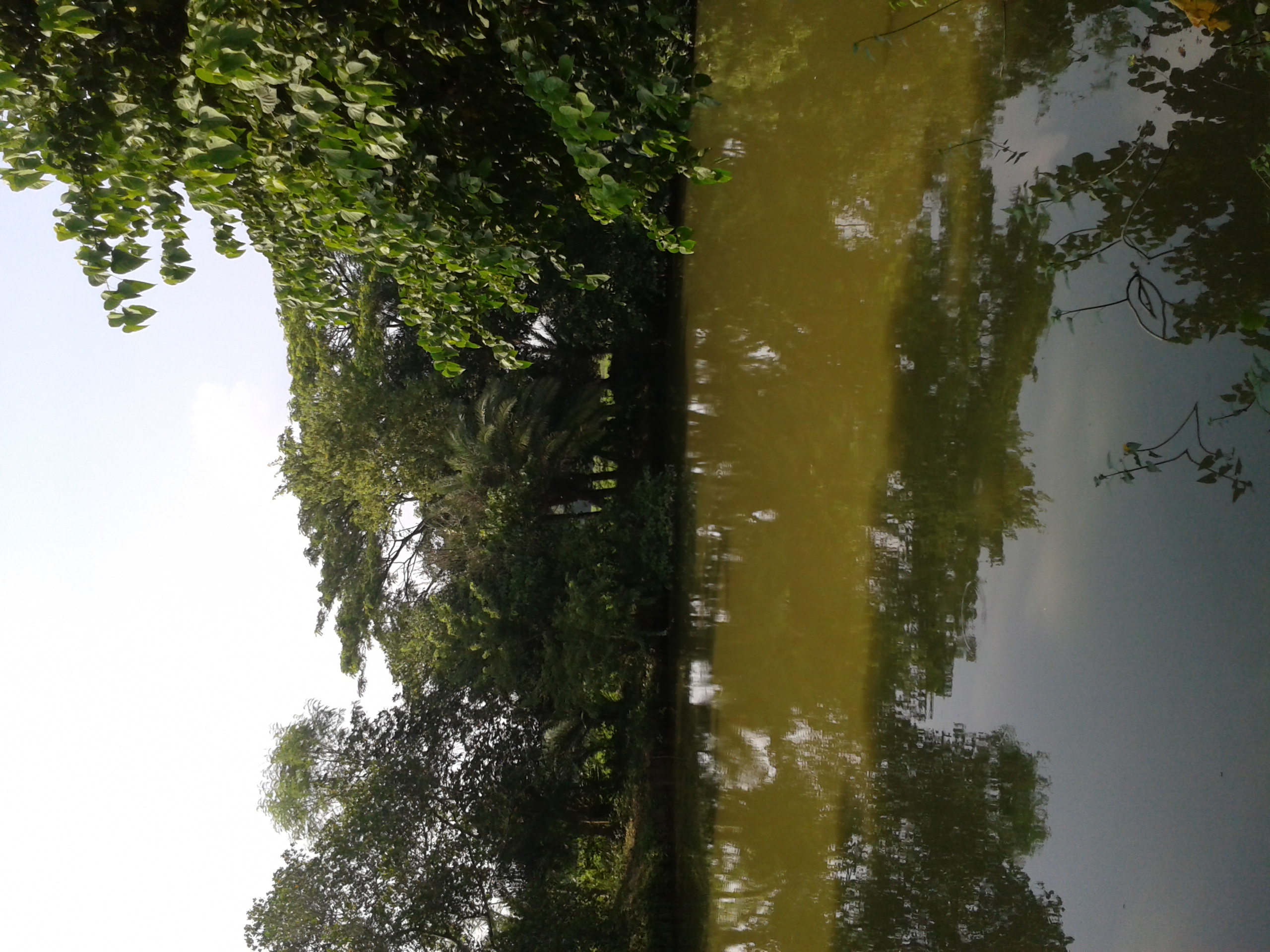
Indrajit Kumar Biswas, a fish farmer from Boira village in Shatkhali union of Magura district, said in April 2026 that he hoped to sell fish worth about Tk 80 lakh from seven acres of leased ponds, Jagonews24 reported on 10 April 2026. He had leased the ponds at Tk 1 lakh an acre, Tk 7 lakh in all, and that season, for the first time, he farmed on a large scale. Until then he had raised fish only in small ponds. In the new venture he stocked tengra, pabda, native rui, catla and silver carp.
By his own account, the total investment came to about Tk 52 lakh. He told the paper he had already sold about 140 maunds of fish and earned Tk 14 lakh, including about 30 maunds of white fish (the carps) sold on 10 April. The market prices he gave at the time were Tk 300 a kilogram for rui, Tk 220 for silver carp and Tk 330 for pabda. Taking everything together, he said, his total sales could reach about Tk 80 lakh. That figure was his expectation at the time of the report, not a completed sale.
Harvest sizes and the first pabda crop
Indrajit described how big the fish had grown. "Silver carp have grown to 5-6 kg, catla to 4 kg and rui to 2 kg," he said. "Pabda are coming at 8-10 to the kg. The tengra have not been fully harvested yet but come to about 50 kg. The tengra were supposed to be sold a month later, but the fish grew quickly. After a good response to the new pabda farming, I am now marketing them."
The harvest was counted in maunds (mon), the traditional unit still used in Bangladesh's fish and grain trade. A maund is 40 seers; its metric definition in the subcontinent after independence was 37.3242 kilograms, while throughout Bangladesh one mon is reckoned as 40 kg. When the report was written, the tengra had not yet been fully harvested and the pabda were just being brought to market.
Pabda is the fish that made the farm news. Indrajit's pabda were being harvested at 8 to 10 fish a kilogram, a size that both the support organisation and local fishermen singled out. For comparison, the Bangladesh Fisheries Research Institute (BFRI) says in its farming guide that pabda can be sold once they reach 40 to 50 grams.
Pabda success with ADI and PKSF support
Besides the district fisheries office, Indrajit was supported by Alternative Development Initiative (ADI), a non-governmental organisation. Mohammad Nur Amin Mukul, focal person of ADI's agriculture unit and a fisheries officer, told Jagonews24: "With the support of PKSF and ADI we have been implementing various technologies in Magura and Jashore since 2014, but we were not having much success with pabda. At last we have succeeded with pabda in Indrajit dada's pond. Pabda are now coming at 8-10 to the kg, which is a very significant success."
In his view, "People in this area believed pabda farming was not possible. But with technical support and proper management, that belief has changed."
PKSF, the Palli Karma-Sahayak Foundation, is an apex development organisation founded by the Government of Bangladesh. According to the foundation, it formally came into being on 13 November 1989 as a specialised institution for reducing poverty through employment generation. It works through partner organisations, non-governmental bodies that carry its funds and services to rural households, and its headquarters are in Agargaon, Dhaka. PKSF says it launched agricultural development as a mainstream programme in June 2013, spreading technologies for crops, fisheries and livestock through this work. The Jagonews24 report places ADI's fisheries work with PKSF in Magura and neighbouring Jashore from 2014.
The farm drew visitors. Sujon Kumar Biswas, who came to see the nets being pulled, said: "I heard that high-quality fish were being farmed here. Coming to watch the nets being pulled, I saw that there really were big rui, catla and silver carp, and pabda at 8-10 to the kg. I will try to farm like this myself in future. That is mainly why I came." Local fisherman Sunil Kumar Biswas said: "I haven't found pabda this big anywhere else this year. The catla, silver carp and rui are all of very good size. The fish from this pond are of good quality."
Shalikha and Magura: where the ponds are
Shatkhali is one of the seven unions of Shalikha upazila in Magura district; the others are Arpara, Gangarampur, Talkhari, Dhaneshwargati, Bunagati and Shalikha. According to Banglapedia, Shalikha covers 228.65 square kilometres. It is bounded on the north by Jhenaidah Sadar and Magura Sadar upazilas, on the south by Bagherpara and Narail Sadar, on the east by Narail Sadar, Magura Sadar, Lohagara and Mohammadpur, and on the west by Kaliganj of Jhenaidah and Bagherpara. Its rivers are the Chitra, the Nabaganga and the Fatki, and its beels include Jamla, Neura and Buruli. The main crops are paddy, jute, pulses, oilseeds, sugarcane, wheat and vegetables. The 2011 census counted 163,658 people in the upazila, and the 2022 census 179,666.
Magura district lies in Khulna division, in the south-west of Bangladesh. Banglapedia gives its area as 1,039.10 square kilometres, between Rajbari district to the north, Jashore and Narail to the south, Faridpur to the east and Jhenaidah to the west. Its main rivers are the Gorai-Madhumati, the Nabaganga and the Kumar. The district has four upazilas (Magura Sadar, Mohammadpur, Shalikha and Sreepur), 36 unions and 711 villages. Magura became a sub-division in 1945 and a district on 1 March 1984. The 2011 census counted 918,419 people, and Banglapedia lists agriculture as the main source of income, at 66.3 percent, followed by commerce at 12.34 percent.
The five fish in Indrajit's ponds
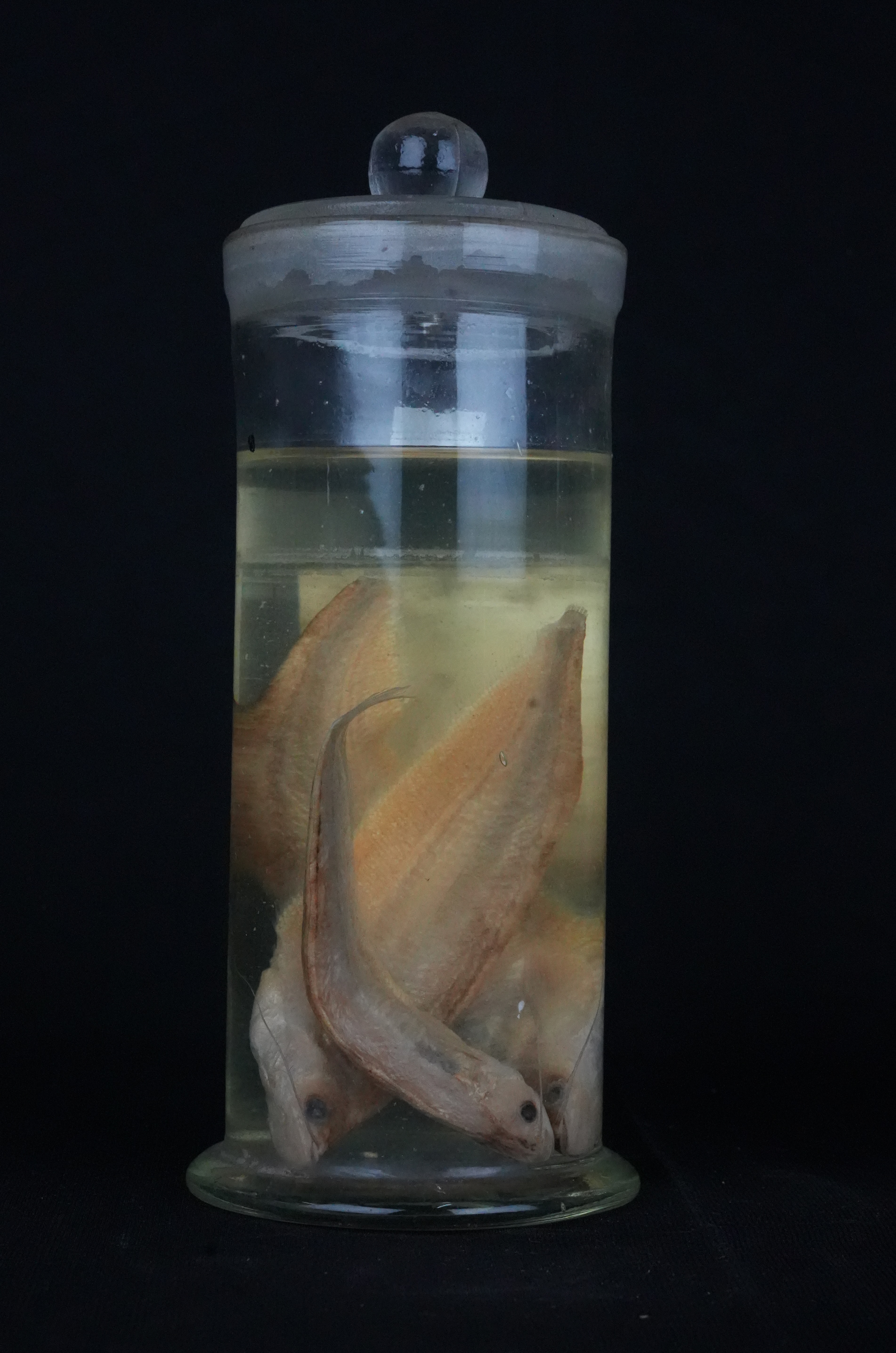
Pabda (Ompok pabda), the pabdah catfish, is a native catfish of the family Siluridae. FishBase records it from Afghanistan, Pakistan, India, Bangladesh and Myanmar, in clear and muddy rivers, streams, ponds and lakes, growing to a maximum of 30 centimetres. In the Red List of Bangladesh published by IUCN Bangladesh in 2015 (assessed on 22 September 2014), pabda is listed as Endangered. The assessors wrote that it was once fairly abundant throughout Bangladesh, but habitat shrinkage from massive siltation and wetland conversion, followed by over-exploitation and pollution, cut its numbers drastically in the 1980s, and that its population had probably declined by more than 60 percent over the previous ten years. Its Bengali names include madhu pabda, pabda and paibba.
Tengra is a name given to several small bagrid catfishes. One of them, Mystus tengara, known as bajari or guitta tengra, grows to 18 centimetres according to FishBase, can breathe air and lives in rivers and ponds in both flowing and standing water. IUCN Bangladesh assessed it as Least Concern in 2015, describing it as fairly common and widely distributed in all types of freshwater habitat in the country.
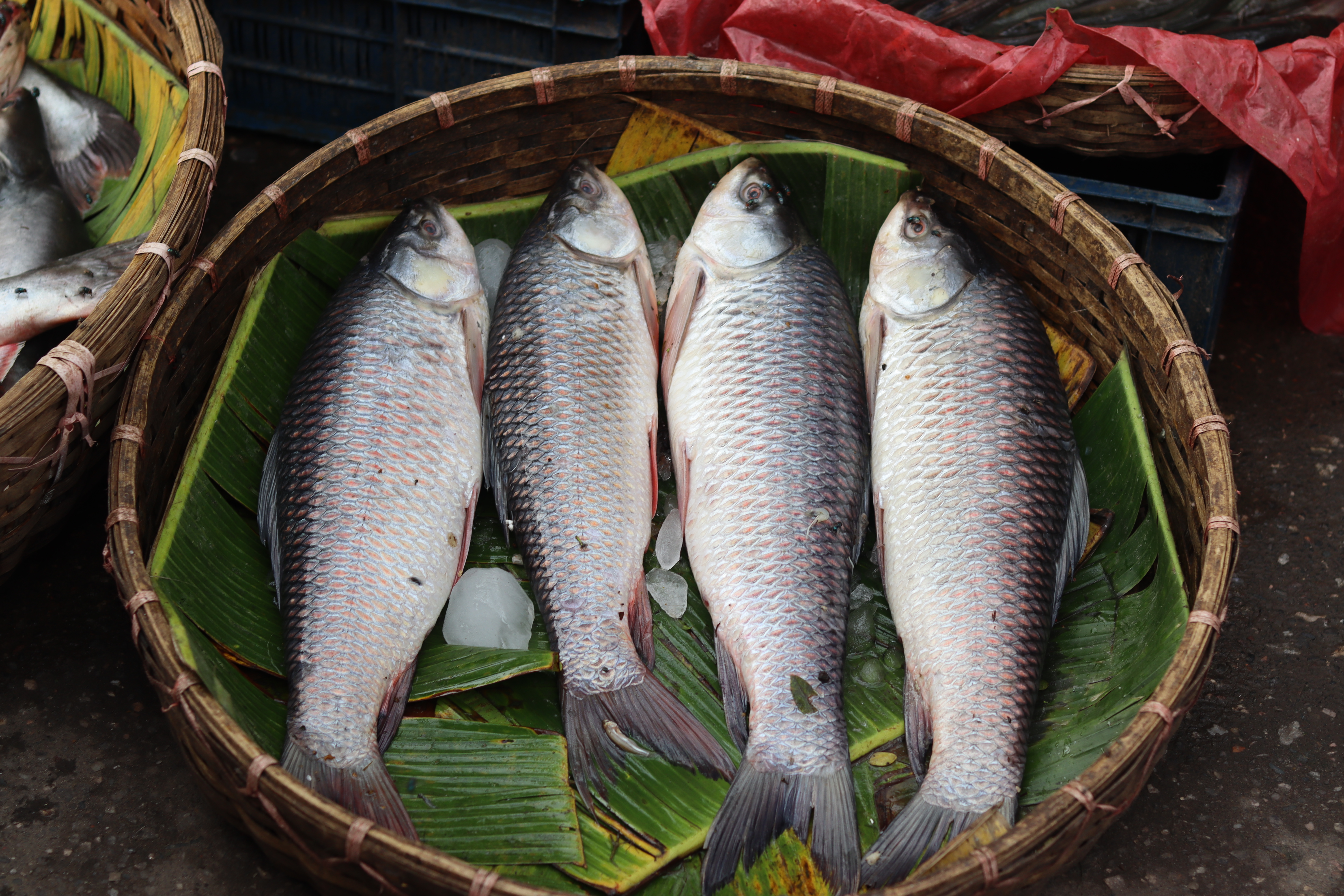
Rui (Labeo rohita) and catla (Catla catla) are Indian major carps native to Bangladesh, India, Myanmar, Nepal and Pakistan. FishBase notes that rui feeds on plants and that its spawning generally coincides with the south-west monsoon, in flooded rivers; catla feeds at the surface and in mid-water. The 2015 Red List assessed both as Least Concern in Bangladesh: rui is still found in good numbers and extensively cultured, while catla's natural abundance is low but captive breeding is widely practised and the fish is farmed in almost all parts of the country.
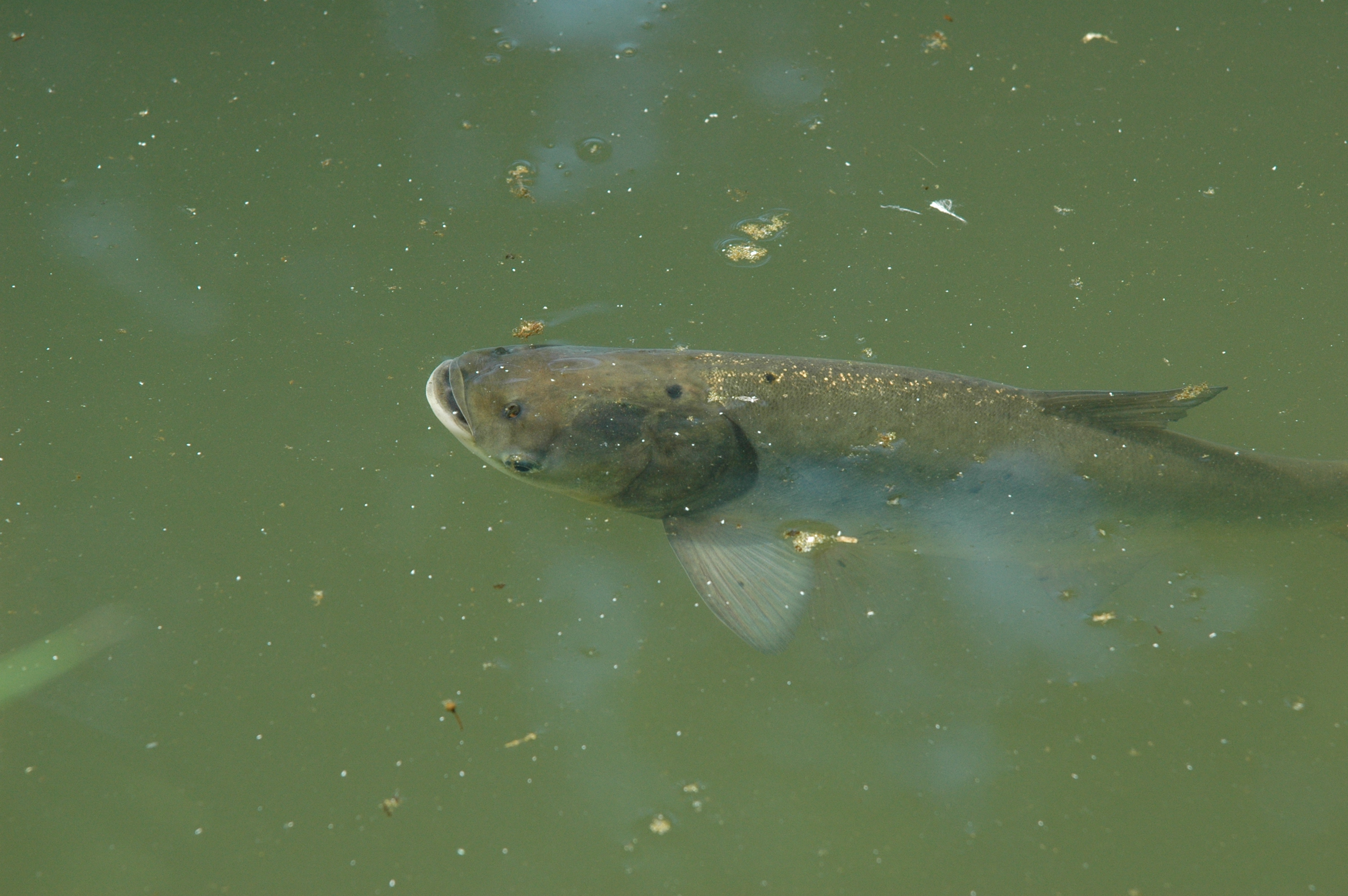
Silver carp (Hypophthalmichthys molitrix) is not native to Bangladesh. FishBase says it comes from the large river systems of East Asia, from the Amur to the Xi Jiang in China, and that adults feed on plankton; it has been introduced around the world for aquaculture and to control algal blooms. Banglapedia records that silver carp was brought to Bangladesh from Hong Kong in the late 1960s and that it has become one of the most important species in the country's pond polyculture.
How BFRI says pabda can be farmed
BFRI's guide to pabda and gulsha explains why the fish grew scarce. Rivers losing depth as char land rose upstream, unplanned embankments, pesticide use in paddy fields and the draining of beels to catch fish shrank its breeding and feeding grounds. The guide notes that an IUCN survey of 2003 placed pabda and gulsha on the list of endangered species, and that with low supply and high demand their price is much higher than that of the carps. BFRI researchers then succeeded in artificial breeding, raising the fry and developing farming methods. Pabda breed from May to July.
For farmers, BFRI recommends mixing pabda and gulsha with carps. Its method, as set out in the guide, runs as follows:
- Choose a pond of 40 to 60 decimals that keeps 4 to 6 feet of water for at least eight to nine months a year, and remove predatory and unwanted fish by netting repeatedly with a fine-mesh net.
- Prepare the pond with lime at 1 kg a decimal; three to four days later apply 6 to 8 kg of rotted cow dung, 50 grams of urea and 100 grams of TSP a decimal dissolved in water; stock fingerlings three to five days after fertilising, once the water turns greenish.
- Stock, per decimal, 50 pabda and 80 gulsha of 5 to 7 cm with 8 catla, 12 rui, 10 mrigal and 2 grass carp of 10 to 12 cm.
- From the next day feed a mix of rice bran (40 percent), wheat bran (25 percent), mustard oil cake (20 percent) and fishmeal (15 percent) at 3 to 8 percent of body weight; rake the bottom once a week, top up water when it falls and stop fertilising when transparency is within 20 cm.
- Harvest pabda at 40 to 50 grams and gulsha at 60 to 80 grams, and harvest the whole pond eight to nine months after stocking.
BFRI says this method yields 250 to 325 kg of pabda, 800 to 900 kg of gulsha and 4,500 to 5,000 kg of carps per hectare, and that mixed farming of pabda and gulsha with carps returns a profit of about Tk 2.5 lakh for an investment of about Tk 2 lakh per hectare. The guide warns that poor water quality slows growth and that fry and pond fish can fall ill; conditions vary from pond to pond, so farmers are advised to consult their upazila fisheries officer before following any rates.
The breeding work behind this has a history. The Business Standard reported on 15 September 2020 that BFRI had produced fry of 23 almost extinct local fish species, pabda among them, and had set up the country's first live gene bank of local fish; the fisheries minister of the time said pond production of small native fish had risen from 67,340 tonnes in 2009 to 2.41 lakh tonnes in fiscal 2017-18. In May 2021 The Financial Express reported from Mymensingh that researchers at BFRI's freshwater centre had achieved artificial breeding of 24 endangered fish species, including tengra, gulsha and pabda.
Pabda farming in the south-west before Magura
Indrajit's farm was not the first in the region to try pabda. In September 2020 Jagonews24 reported from neighbouring Jhenaidah district that pabda farming had become popular in Maheshpur upazila on good returns: it started with two farmers in 2016, there were 30 by 2020, and more than 150 tonnes of pabda were produced in the previous season. Farmers there brought fry from private hatcheries in Mymensingh, raised them on mixed and pelleted feed, and kept other species in the same pond to keep the water in good condition. A one-bigha pond cost about Tk 1.5 lakh to run and produced fish worth about Tk 3 lakh, and pabda sold at the pond side for an average of Tk 330 a kilogram.
The Maheshpur upazila fisheries officer, Alamgir Hossain, told the paper then that pabda farming was more profitable than any other branch of agriculture, that pabda from Maheshpur were sent to India under letters of credit, and that fry were usually stocked at the start of March and ready to harvest from six months later. The market price Indrajit quoted for pabda in April 2026, Tk 330 a kilogram, matched the average pond-side price reported from Maheshpur in 2020.
Magura's fish production and the shortfall
Magura district fisheries officer Sadhan Chandra Sarkar told Jagonews24: "The district produces a total of 19,692 tonnes of fish a year, while demand is 23,002 tonnes, a shortfall of 3,310 tonnes. To meet this shortfall we have focused on raising awareness, setting up sanctuaries to conserve native species and enforcing fisheries law."
The Department of Fisheries' Yearbook of Fisheries Statistics of Bangladesh 2023-24, published in December 2024, gives a breakdown for the district in the year to June 2024. It put Magura's inland fish production at 17,906 tonnes. Ponds were by far the biggest source, at 12,851 tonnes from 2,500 hectares, an average of 5.14 tonnes a hectare. Floodplains gave 3,128 tonnes, rivers 1,241 tonnes, baors 268 tonnes, beels 231 tonnes, seasonal cultured water bodies 129 tonnes and shrimp and prawn farms 58 tonnes. The district officer's figure of 19,692 tonnes is his own, quoted in April 2026, and may refer to a different year.
The yearbook also shows what Magura's ponds produce. Of the 12,851 tonnes in 2023-24, rui made up 2,602 tonnes, mrigal 2,203 tonnes, catla 2,178 tonnes and silver carp 2,045 tonnes. Pangas gave 875 tonnes, mirror and common carp 682 tonnes, bata 634 tonnes and tilapia 452 tonnes. Small native fish such as tengra and pabda are counted in the yearbook under "other inland fish", which came to 271 tonnes in Magura's ponds. In the same year neighbouring Jashore district produced 143,952 tonnes from ponds alone.
Sanctuaries, harmful nets and the fisheries law
Sadhan Chandra Sarkar described how the district was trying to bring native fish back. "At least one sanctuary is being set up in each upazila every year, and strict steps are being taken to stop the use of harmful nets," he said. "With the help of the NGOs CNRS and ADI, 20 sanctuaries have been built in the district this year. As a result of these efforts, near-extinct native fish species are coming back."
A fish sanctuary is a stretch of river, canal or beel where fishing is stopped so that brood fish can survive and breed and young fish can grow. The 2023-24 yearbook lists the establishment and maintenance of sanctuaries among the special programmes for inland open waters, along with community-based fisheries management, beel nurseries, stocking of fingerlings including endangered species, restoration of habitats for breeding and migration, fishers' identity cards and the enforcement of fish conservation laws. It says around 508 fish sanctuaries, along with six hilsa sanctuaries, had been established in selected river systems in the recent past.
The need is plain from the national figures. According to the yearbook, the share of inland capture fisheries in Bangladesh's total fish production fell from 62.59 percent in 1983-84 to 28.13 percent in 2023-24, which it attributes to over-exploitation, the degradation and loss of fish habitats, siltation of water bodies and pollution from industry and agro-chemicals. Among the causes of the decline of hilsa in the rivers it names the use of monofilament small-meshed nets, known as current jal.
Fishing rules are enforced under the Protection and Conservation of Fish law and its rules of 1985. When the eight-month ban on catching jatka (young hilsa) began on 1 November 2025, The Financial Express reported that, under the amended Fish Protection and Conservation Ordinance 2025 and the Fish Protection and Conservation Rules 1985, violators could face up to two years in prison, a fine of up to Tk 5 lakh, or both.
Bangladesh's fish production at a glance
Magura's shortfall sits within a national picture of growth. The 2023-24 yearbook put Bangladesh's total fish production at 50.18 lakh tonnes, above the target of 48.93 lakh tonnes. Aquaculture in closed waters supplied 29.78 lakh tonnes, or 59.34 percent; inland open-water capture 14.12 lakh tonnes, or 28.13 percent; and marine fisheries 6.29 lakh tonnes, or 12.53 percent. Ponds alone covered 4,24,168 hectares and produced 23,68,741 tonnes, an average of 5,584 kg a hectare, and accounted for 47.20 percent of all fish produced in the country.
Fish matters to the diet and to jobs. The yearbook says fish supplies about 60 percent of the animal protein Bangladeshis eat, with per capita intake of 67.80 grams a day against a target of 60 grams, and that around 12 percent of the population is engaged in the sector full time or part time.
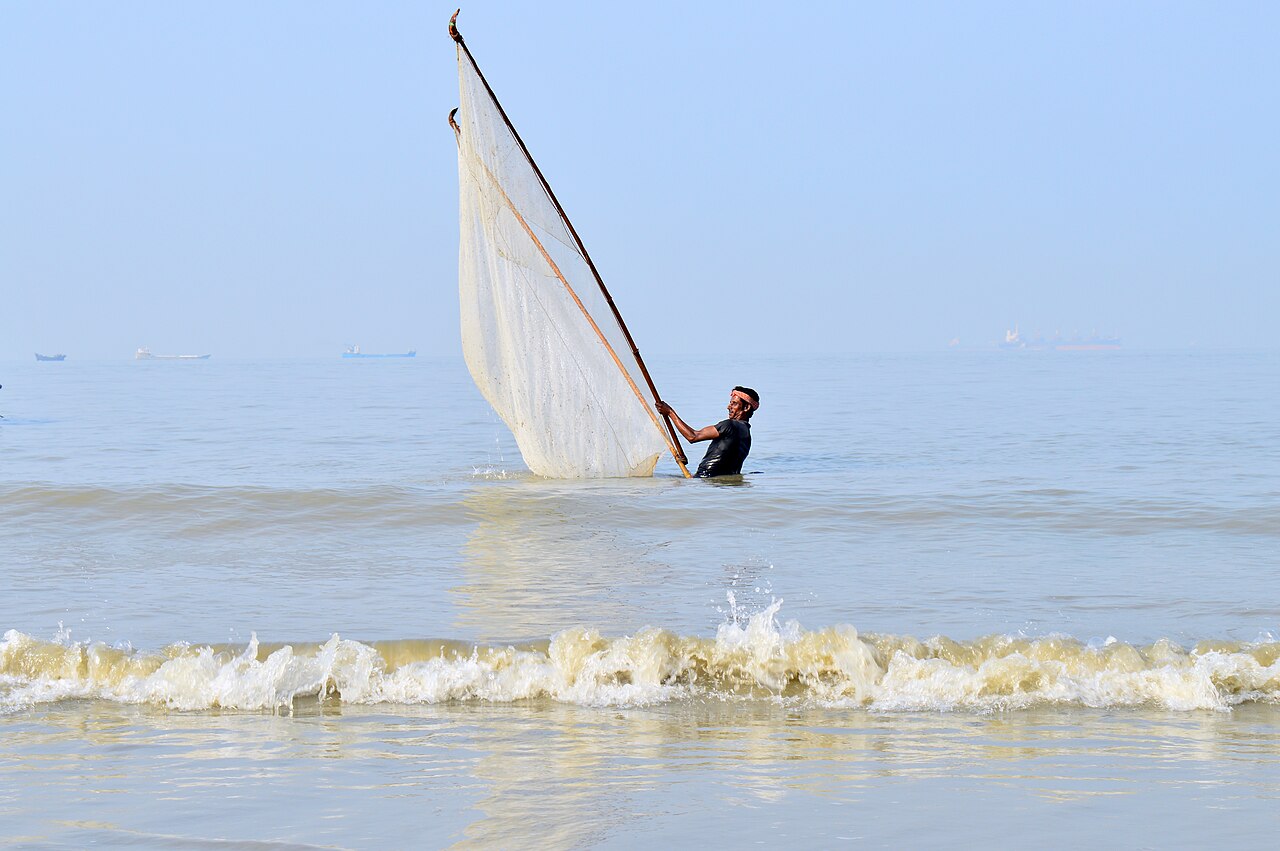
Photo: JIBON / Wikimedia Commons (CC BY-SA 4.0)
Sources: Jagonews24 (10 April 2026), Department of Fisheries (Yearbook of Fisheries Statistics of Bangladesh 2023-24), Bangladesh Fisheries Research Institute (pabda and gulsha farming guide), IUCN Bangladesh (Red List of Bangladesh, Volume 5: Freshwater Fishes, 2015), FishBase, Banglapedia, Palli Karma-Sahayak Foundation (PKSF), Jagonews24 (25 September 2020), The Business Standard (15 September 2020), The Financial Express (7 May 2021 and 1 November 2025), Wikipedia
Comments
(0)