
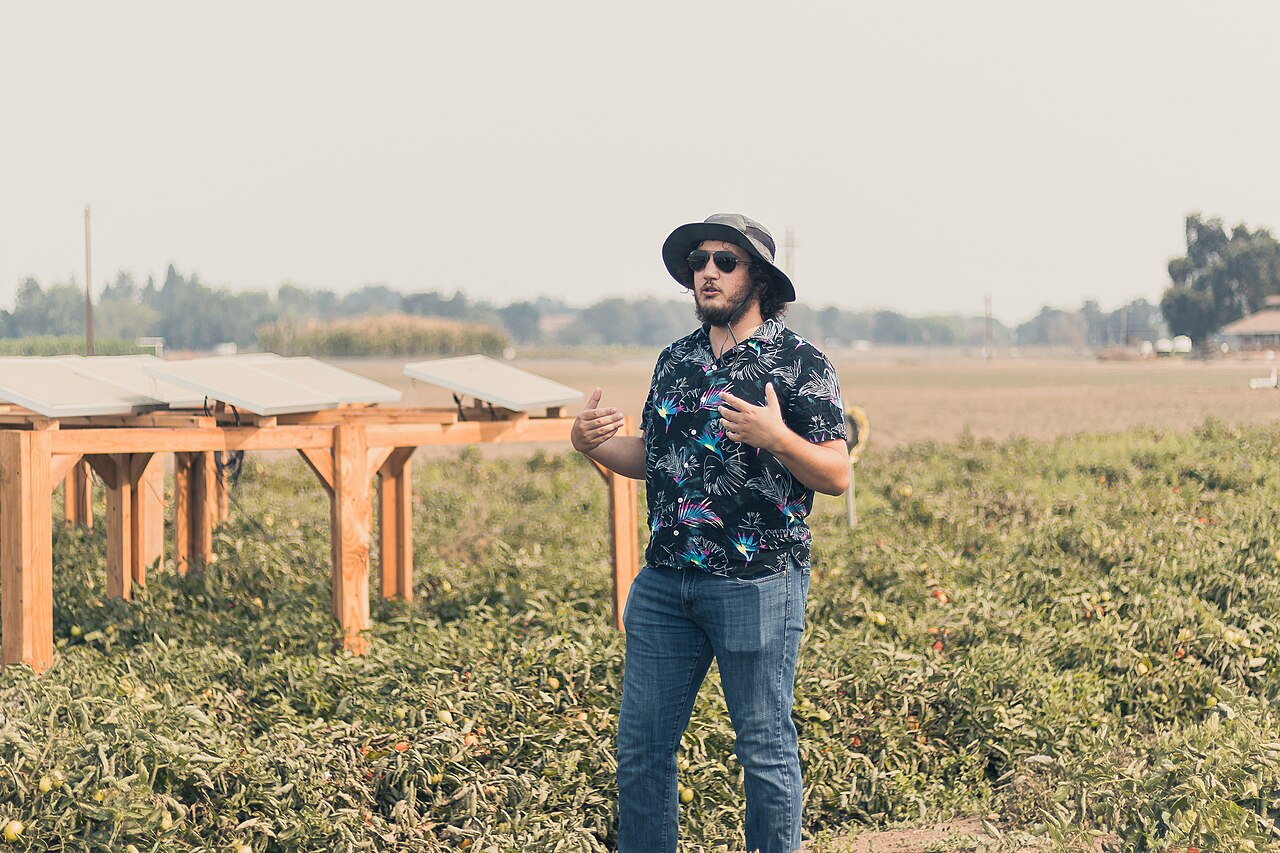
Broccoli grown under semi-transparent, magenta-tinted solar panels used sunlight about 4.5 times more efficiently than broccoli in open fields, researchers at Malardalen University in Vasteras, Sweden, have found. The study, led by Silvia Ma Lu and published on 2 October in Cell Reports Physical Science, adds evidence that coloured panels can let the same land produce both electricity and food.
The panels are thin-film cadmium telluride cells that filter light by colour. They let through the red and blue wavelengths plants rely on most for photosynthesis while still capturing part of the light for power. The team tested magenta, red and blue versions; magenta, which mainly removes green light that solar cells use poorly anyway, gave the best result for broccoli. The researchers describe the idea as deliberately splitting the solar spectrum between the two uses.
There were costs. Broccoli under the magenta panels took 25 more days to reach harvest, though it reached a comparable size. The panels produced about 100 megawatt-hours less electricity per hectare a year than ordinary unfiltered panels on the same land. Ramesh Rayudu, an independent expert cited in coverage of the study, said the commercial question is whether the extra crop value outweighs the lost power, which will vary with the crop, electricity prices and climate.
Most agrivoltaic systems so far use neutral semi-transparent panels or raised structures that simply give shade. Tuning panel colour to a crop's light needs points to designs chosen crop by crop. The research was funded by Sweden's J. Gust Richert Foundation, the Swedish Energy Agency, the Knowledge Foundation and the Carbon2Food initiative.
The work is still a small field trial, and broccoli's response may not carry over to crops with different light needs or growing cycles. Coloured thin-film cells also cost more to make than standard panels, a point the study does not resolve. Still, it gives agrivoltaic developers a measured efficiency figure to test on other crops and in other climates.
Photo: UC Davis College of Engineering / Wikimedia Commons (CC BY 2.0)
Source: Global Agriculture

Comments
(0)